

One of the most significant developments in recent care theory has been the drive to amplify the voices of thinkers, scholars and practitioners from beyond the Global North. We’ve seen an increasing emphasis on promoting hitherto marginalised perspectives from the Global South, and on highlighting what the Mexicana/mestiza educator Mia Sosa-Provencio described, when I interviewed her for Episode 19 of the Careful Thinking podcast, as the ‘intergenerational knowing’ of indigenous communities, the kind of customs of care that researcher Alisha Ibkar (Episode 25) remembered from growing up in a ‘deeply collective’ village community in West Bengal, where, as Pragya Dev, another Indian researcher, suggested, ‘care wasn’t just expected, it was woven into daily life’.
As the American care theorist Maurice Hamington noted, in his conversation with me in Episode 6 of the podcast, it’s easy for those of us in Europe and North America to make the assumption that care ethics began in 1982 with the publication of Carol Gilligan’s In a Different Voice (see this recent post). One of the strengths of Maurice’s own recent book Revolutionary Care: Commitment and Ethos, is the way it encourages readers to pay attention to the increasing geographical and cultural diversity of work in care theory. Another book published last year, the edited collection Decentering Epistemologies and Challenging Privilege: Critical Care Ethics Perspectives, also explores ‘how to decentre care ethics…via an encounter with non-Western philosophical traditions and alternative epistemologies’. And it’s good that next year’s annual conference of the international Care Ethics Research Consortium will take place in South Korea, making it the first one organised outside Europe or North America, and that contributors have been encouraged ‘to include learning from non-Eurocentric cultures’.
These are positive and overdue developments, and I like to think that this Substack newsletter, together with my Careful Thinking podcast, has made a modest contribution to the process, for example by featuring interviews with care theorists from the Indian subcontinent, like Alisha and Pragya, as well as Ira Chadha-Sridhar (Episode 15) and Priya Sharma (Episode 18). And as we look forward to 2026, I’m keen to feature more guests on the podcast from Asia, as well as Africa and Latin America (incidentally, for an excellent account of care theory in practice in Latin America, see this fascinating post by Mélina Magdelénat).
However, in the understandable rush to look to the Global South for new insights into care, it’s important that those of us in the Global North don’t ignore marginalised voices closer to home, and in particular European voices that tend to get overlooked in the mainstream conversation, for the simple reason that they aren’t speaking or writing in the dominant language of the global academic discourse, which is English.
Of course, there are some regions of Europe which are undeniably part of that international conversation about care, a prime example being the Netherlands, where influential theorists such as Frans Vosman and Annelies van Heijst were as much pioneers of care ethics as Carol Gilligan, Nell Noddings, Joan Tronto et al in North America. And of course the Netherlands, and particularly the University of Humanistic Studies in Utrecht, continues to be one of the world’s most dynamic hubs of activity in care theory, a number of whose leading scholars, including Carlo Leget (Episode 8), Inge van Nistelrooij (Episode 17), Merel Visse (Episode 21) and Andries Baart (Episode 20), have been guests on the podcast.
In a recent post I reviewed a new French collection on the phenomenology of care, and France is certainly another significant locus of care theory, associated as it is with a group of feminist scholars that includes Sandra Laugier, Patricia Paperman, Pascale Molinier and Fabienne Brugère, all of whom are recognised as important voices in the global conversation about care. Their voices reached an even wider audience with the appearance in 2020 of the collection Care Ethics in Yet a Different Voice: Francophone Contributions, as part of the Peeters Ethics of Care series, which featured English translations of key writings by French and French Canadian care theorists. Standing at a slight tangent to this group, and its ‘unwavering commitment to showing that care is fundamentally political’ (to quote the blurb from that book), is the work of the Paris-based philosopher and dancer Christine Leroy, who was my guest in Episode 7 of the podcast, the English translation of whose book on the phenomenology of dance and the ethics of care I reviewed in this post, and who in my view is one of the most interesting newer voices in care ethics and care aesthetics (N.B. Mélina Magdelénat also recently published her own interview with Christine here).
In addition to the Netherlands and France, there are a number of other centres of activity in care theory, including in central and eastern Europe, exemplified in the Czech Republic by the work of Petr Urban, my guest in Episode 4 of the podcast, and in neighbouring Slovakia by scholars like Adriana Jensenková, who will be appearing on the podcast in the New Year.
However, beyond these relatively well-known examples of European scholarship, I would suggest that there’s a rich seam of research and writing on care, particularly in southern Europe, that doesn’t attract the same degree of attention, simply because it is mostly untranslated and therefore, to a greater or lesser extent, unseen and unheard beyond its own national boundaries (see this post for my reflections on the issues around translating ‘care’ between languages). In this post, I want to focus specifically on some of the important work going on in three countries - Italy, Spain and Portugal - partly because they are countries that I know reasonably well, but also because my own thinking has been particularly enriched by discovering work from each of these national contexts.
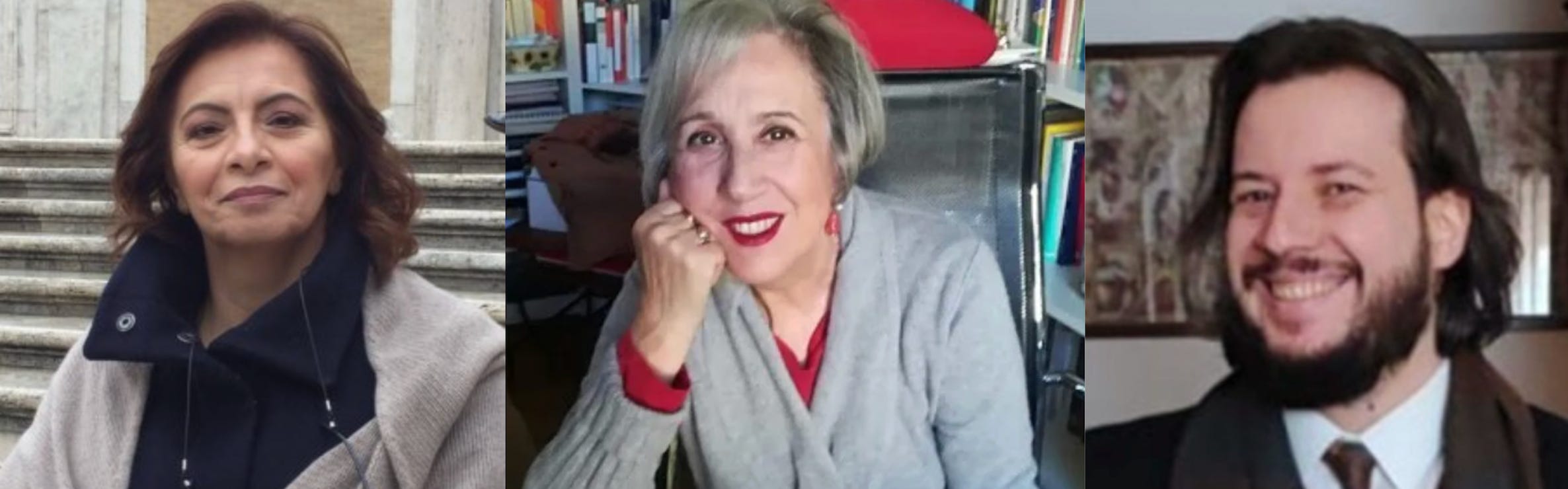
Of the three countries, developments in care theory in Italy are perhaps the best known at the international level, and the name of Luigina Mortari, arguably its leading care scholar, is certainly to the fore in discussions beyond her home country. Luigina directs the Melete Center of Philosophy for Care at the University of Verona, and she’s the author of many books, the best known being her Filosofia della cura (‘Philosophy of care’), which was published in 2015 and has been translated into a number of other languages. I heard Luigina speak at the inaugural conference of the international Care Ethics Research Consortium in Portland, Oregon, in 2018, and was impressed by the way her work connects contemporary care ethics with classical philosophy. Another important Italian voice in care ethics is the late Elena Pulcini, who taught at the University of Florence and was best known for her book La cura del mondo. Paura e responsabilità nell’età globale (‘Care of the world: fear, responsibility and justice in the global age’), and who sadly died in 2021, following complications from Covid.
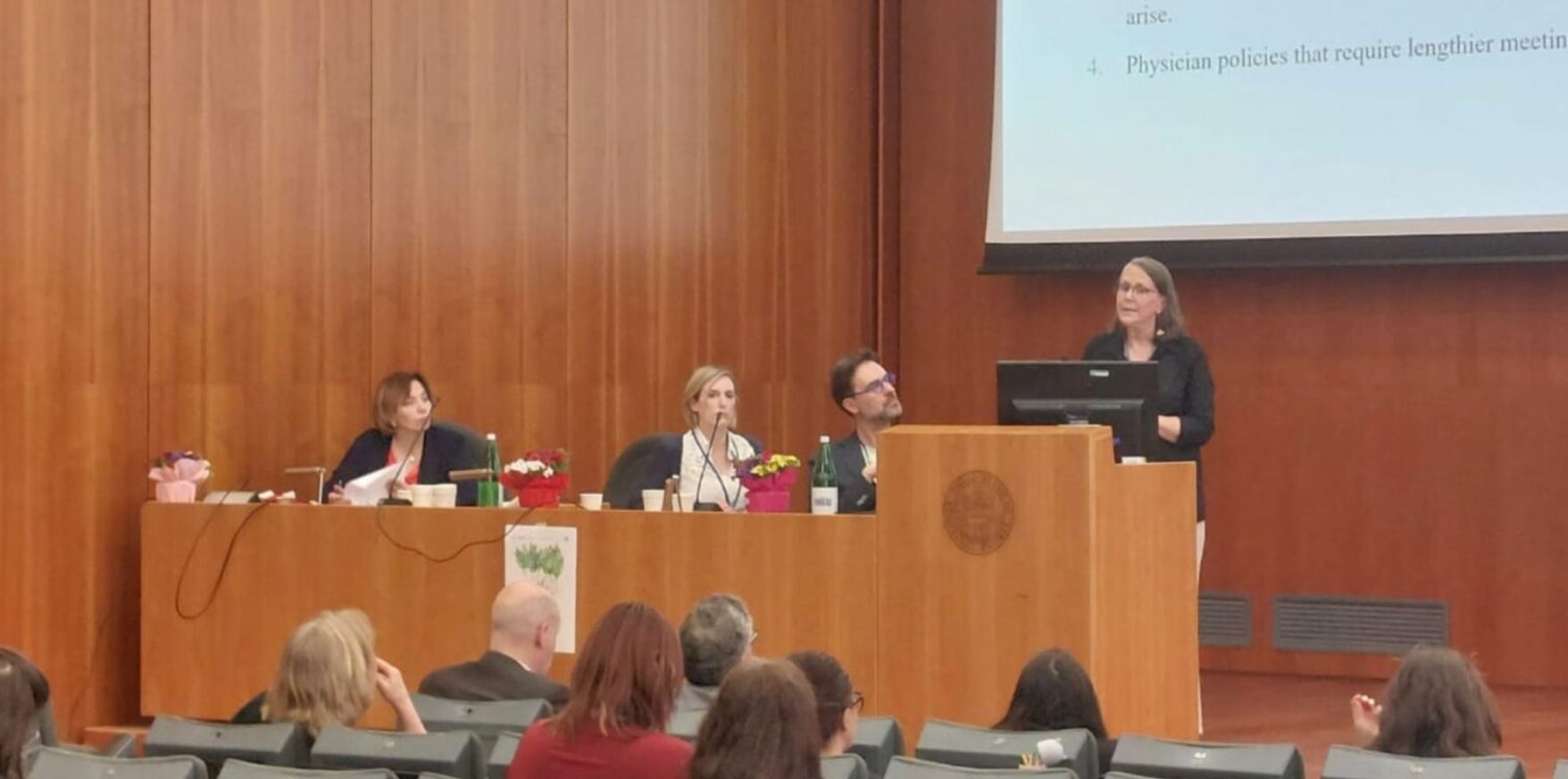
Text within this block will maintain its original spacing when published
    The late Ruth Groenhout (see Episode 5 of the podcast) speaking at the ‘Philosophy and
    Politics of Care’ conference in Verona, 2024, alongside Luigina Mortari and colleagues
                                                         (via univrmagazine.it)
In 2024 the Melete centre hosted an international conference on ‘Philosophy and politics of care’, which featured a number of speakers who have been guests on Careful Thinking, including Susi Ferrarello, the Italian-born philosopher and writer on empathy and the ethics of relationships, now based at California State University, who was my guest in Episode 14. As I noted in my recent post on the phenomenology of care, Susi is part of a network of predominantly Italian philosophers whose research applies phenomenological insights to issues in mental health and medicine.
However, if these Italian care scholars are relatively well known internationally, either because they write in English or because their work has been widely translated, there are certainly others, writing mainly in Italian, whose contribution has yet to be recognised elsewhere, but in my view deserves to be. My current research exploring the ideas of the French philosopher Gabriel Marcel as a resource for the ethics of care has brought me into contact with an international network of Marcel scholars, who in turn have introduced me to some lesser known European writers on care. For example, an Italian doctoral student working on Marcel recently recommended the work of the Rome-based philosopher Antonio Di Somma, and in particular his important new book Essere e speranza nella dimensione della cura. Valutazioni teoretico-pratiche a partire da M. Heidegger, K. Jaspers, G. Marcel (‘Being and hope in the dimension of care: theoretical and practical evaluations starting from M. Heidegger, K. Jaspers, G. Marcel’), which is one of the few texts I’ve come across that discusses Marcel in relation to care theory in any detail, and which incidentally also draws extensively on Luigina Mortari’s work. I’ve discovered that Antonio has also published journal articles on a wide range of topics in the ethics of care, and especially palliative care, which I’m looking forward to exploring.
Before moving on from Italy, I should also mention the work of Giacomo Lampredi, a young sociologist and research fellow at the University of Milan, who has written on political activism as care, and whose work provides an interesting parallel with Alisha Ibkar’s research on protest, performance and care, which she discussed with me in her recent appearance on the podcast. Giacomo is also scheduled to be a guest on the podcast in 2026.
Text within this block will maintain its original spacing when published
L to R: Luigina Mortari, Elena Pulcini, Antonio Di Somma
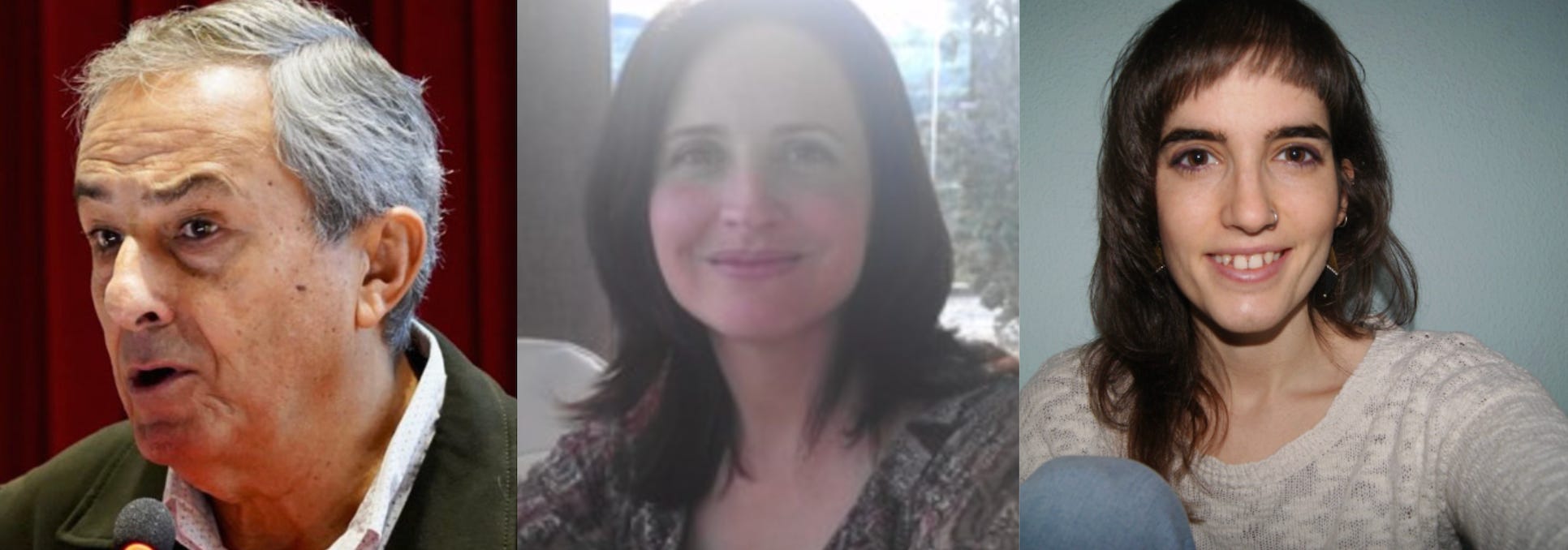
Another of the speakers at last year’s Verona conference was the Spanish philosopher Agustín Domingo Moratalla, from the University of Valencia, which prompted me to look up his work online. As someone with an interest in personalist philosophy, I was intrigued by the fact that Agustín’s 2013 book El arte de cuidar: atender, dialoguer y responder (‘The art of caring: attention, dialogue and response’) and his 2022 publication, with its Latin title – Homo Curans (lit. ‘caring person’) – and Spanish subtitle - el coraje de cuidar (‘the courage to care’) - draw on some key thinkers in the tradition of ‘communitarian personalism’, including Jacques Maritain and Emmanuel Mounier, as well as on the ideas of Marcel and Ricoeur. Agustín, with whom I’ve had an exchange of emails, has a particular interest in the ethical implications of new technology, and in ethics as applied to the professions.
Regular readers of this newsletter will know that I’m also an admirer of the work of another (and very different) philosopher from Valencia. I interviewed Irene Comins Mingol, who is based a little further up the coast at the University of Jaume I in Castellón, for this post earlier in the year. I continue to be intrigued by Irene’s application of feminist care ethics to the field of peace studies, in works like her 2008 book La ética del cuidado y la construcción de la paz (‘The ethics of care and peacebuilding’) and Filosofía del cuidar: una propuesta coeducativa para la paz (‘Philosophy of care: a co-educational proposal for peace’) from 2009, as well as by her more recent work on caring masculinities and ecophilosophy.
Moving even further along the Spanish coast to Catalonia, I’ve come to realise that Barcelona is a particularly fertile hub of care scholarship. I’m grateful to Maurice Hamington for introducing me to Iris Parra Jounou, who describes herself as a nurse, philosopher and poet, and who was recently awarded a doctorate for her research exploring the intersections between bioethics, political theory and public health from a feminist perspective. Iris is an impressive younger scholar, who has already translated the writings of American care theorist Joan Tronto into Catalan, and is currently co-editing a volume on feminist public health ethics for the Peeters Ethics of Care series. I’m pleased to say that Iris has also agreed to be interviewed for the Careful Thinking podcast in the New Year.
Text within this block will maintain its original spacing when published
L to R: Agustín Domingo Moratalla, Irene Comins Mingol, Iris Parra Jounou
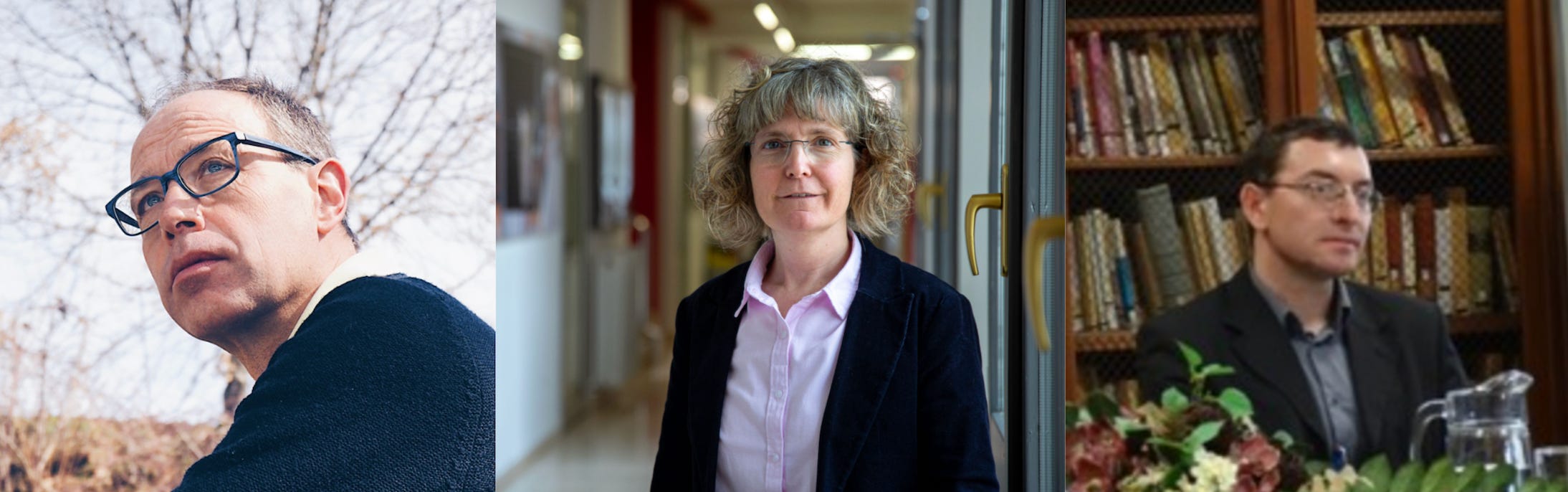
Staying in Barcelona, I’m grateful to Rafael Gómez, a recent Substack connection, for directing me towards other interesting work on care happening in that city. Rafael is a medical director and specialist in geriatric and palliative medicine at the University of Seville, though he actually recommended the writings of two Barcelona-based scholars. The philosopher and theologian Francesc Torralba is a prolific author whose many books, published in both Spanish and Catalan, have explored topics as diverse as bioethics, ecology and the philosophy of Soren Kierkegaard. Two of Torralba’s most recent books have been deeply personal reflections on the tragic death of his teenage son in a climbing accident, reminding me of other recent ‘grief memoirs’, for example by the Australian rock musician Nick Cave and the American screenwriter Colin Campbell, both of them fathers who lost children in tragic accidents, which I wrote about in the recent book on Men and Loss that I co-edited with my colleague Kerry Jones (and it’s interesting that the titles of Torralba’s books, which translate roughly as ‘There are no words’ and ‘The word that sustains me’, echo Campbell’s Finding the Words).
2023 saw the publication of La cura del món, des altres I d’un mateix (‘Caring for the world, others and ourselves’), which Torralba co-wrote with Javier de la Torre, and with Ester Busquets, another Catalan scholar whose work was recommended to me by Rafael. The question of the connection between care for self, the other, the community, and the planet, and whether one inevitably nurtures the other, is one that I’ve explored with a number of guests on the podcast, and that continues to intrigue me.
Like Iris Parra Jounou, Ester Busquets has a background in nursing. I was interested, as someone with a growing interest in the intersection of care ethics with literary studies (see this post), to learn that Busquets’ doctoral thesis, published in book form in 2023, explores the ethics of care through an extended discussion of Tolstoy’s novella, The Death of Ivan Ilylich. This was also one of the works discussed in Inge van Nistelrooij’s book on sacrifice and self-sacrifice in care, which I discussed with her when she was a guest on the podcast. Busquet’s book makes reference to some of the key names in Anglophone care ethics, such as Gilligan, Noddings and Tronto, but also includes discussion of the work of her fellow Spaniards, including Comins Mingol and Domingo Maratalla.
Finally, this brief survey of southern European care theory takes us westwards to Portugal, and to the ancient university of Coimbra, where I recently made contact with José Manuel Beato, another Marcel scholar. In addition to his work on Marcel, which is mostly in Portuguese, José has also contributed to two significant English-language collections on Philosophy of Care: New Approaches to Vulnerability and Therapy (2021) and The Ethics of Care: Theoretical and Practical Perspectives (2024), edited by his Coimbra colleague Joaquim Braga. These books, which emerged from the ‘Roads to Care’ colloquia organised at the university over the past few years, are a rich source of recent work on care, primarily in Portugal, Spain and Italy. While they demonstrate a familiarity with key debates in Anglophone care ethics, the contributors to these publications offer a refreshingly different, and distinctively southern European perspective, on those discussions.
Text within this block will maintain its original spacing when published
L to R: Francesc Torralba, Ester Busquets, José Manuel Beato
Inevitably, this has been a brief and selective survey of some recent developments in care theory in these southern European countries. But I hope it gives an impression of the richness and variety of research on care that’s happening in that part of the world, which, because it’s published mainly in languages other than English, risks being overlooked in wider international discussions.
When I met up with the Australian care scholar Steven Steyl, during his recent visit to England (see my last post), the Careful Thinking podcast had just celebrated its second anniversary, and I’d just published the twenty-fifth episode. Steven thought it was a timely moment to ask me about my vision for the future of the podcast. I said I already had a number of guests lined up for 2026, and I was happy just to keep on doing more of the same kind of thing. But, on reflection, perhaps the podcast, and this Substack newsletter, are in need of a bolder vision. And maybe that’s something to do with bringing these unheard, or less heard voices, from Europe and elsewhere, to a wider audience. I hope to be doing some more of that in 2026. So watch this space…
…
The header image for this post is the painting ‘Girl before a mirror’ (1938) by Pablo Piccaso, Museum of Modern Art, New York City.
No posts
Comments
Nothing yet. Say the first thing.
Sign in to join the conversation.