

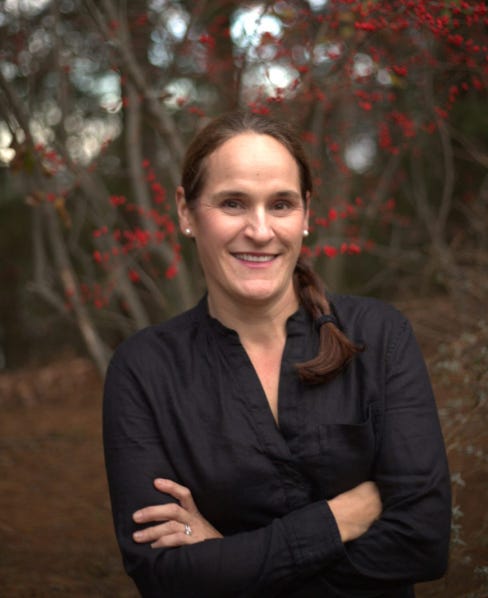
My guest for the 26th episode of the Careful Thinking podcast is the American legal scholar Erika Bachiochi, who joined me for a wide-ranging conversation about the history of feminism, men’s and women’s roles in care, the ways in which the law and public policy can support caregivers, and what a Catholic feminist perspective on care might look like.
Erika is a Fellow at the Ethics and Public Policy Center and Professor of Practice and Director of the Mercy Otis Warren Initiative at the School of Economic Thought and Leadership at Arizona State University, where she also serves as Editor-in-Chief of the online journal Fairer Disputations. A 2018 visiting scholar at Harvard Law School, Erika is a Senior Fellow at the Abigail Adams Institute in Cambridge, Massachusetts, where she founded the Wollstonecraft Project. She has published numerous articles in legal and political journals and in publications such as The New York Times, The Wall Street Journal, and The Atlantic.
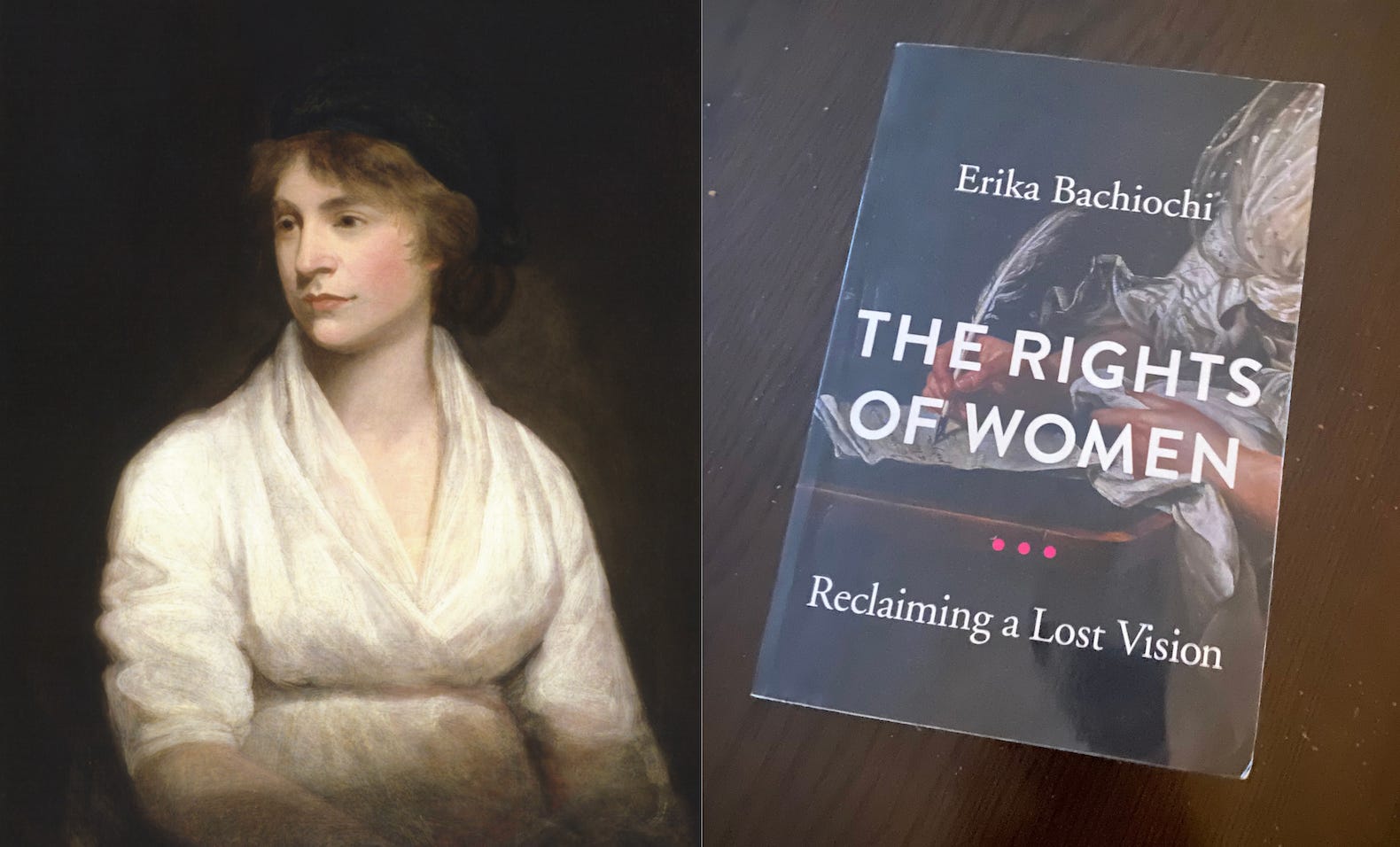
Erika’s book The Rights of Women: Reclaiming a Lost Vision, which was published in 2021, offers a revisionist history of the early women’s rights movement, including a radical reassessment of the work of the pioneering eighteenth-century feminist philosopher Mary Wollstonecraft.
Text within this block will maintain its original spacing when published
Erika Bachiochi
I’ve been following Erika’s work closely for some time, and I’ve found her insights into the complexities surrounding the issues of gender, care and the family both stimulating and at the same time challenging to some of my own preconceived ideas. On a personal level, Erika’s work bringing feminist ideas into dialogue with Catholic Social Teaching has been a great help to me in my own journey. In the interests of full disclosure, I should also mention that Erika was kind enough to publish an article of mine in Fairer Disputations, and since then we’ve corresponded via email about questions concerning men and care. However, this interview was the first time we’d actually had the opportunity for a proper conversation, even if it was at a distance.
Erika isn’t the first of my podcast guests to cite Catholic Social Teaching as an influence on their thinking about care: previous guests who have done so include Xavier Symons (Episode 2), Melody Escobar (Episode 22), and most recently Lorraine Krall McCrary (Episode 23), with whom I had an extended discussion about the key principles of subsidiarity and solidarity as they affect the provision of care. And in their recent book on Relational Caring and Presence Theory in Healthcare and Social Work, which they discussed with me in Episode 20, Andries Baart and Guus Timmerman acknowledged that Andries’ theory of presence had its origins in his research with Catholic pastoral workers. Also, as I noted in a post last year about ‘Faith in care’, a number of other guests on the podcast, including Carlo Leget (Episode 8) and Inge van Nistelrooij (Episode 17) have cited Catholic thought as an early influence on their work on care, even if they have since become more critical in their attitudes to the Church.
There were a number of other parallels between this episode and previous episodes of the podcast. One of the feminist pioneers discussed in Erika’s book, and mentioned in my conversation with her, is the social reformer Jane Addams, whose work on poverty and public health I discussed with Lorraine McCall McCrary in Episode 23. Addams is also a central figure in Maurice Hamington’s groundbreaking 2002 book Embodied Care, which I discussed with him in Episode 6. And, in fact, an emphasis on the importance of embodiment is something else Erika shares with Maurice and other care theorists who have featured on the podcast: it’s perhaps no accident that two of her articles, which we discuss in this episode, have the titles ‘Embodied Equality’ and ‘Embodied Caregiving’.
Earlier podcast guests have also, like Erika, combined religious belief with a feminist perspective on care. In Episode 13 I explored what a Muslim feminist ethic of care might look like, in conversation with Sarah Munawar, and in the most recent episode of the podcast, Alisha Ibkar cited the influence on her thinking of a number of prominent Muslim feminist scholars. And in Episode 16, Elissa Strauss described the ways in which feminism and Judaism have together informed her thinking about care. My interview with Erika Bachiochi offers further evidence that a feminism informed by a deep spirituality and a faith-based belief in the equal dignity of women and men can make a distinctive contribution to current debates about care - and perhaps supply something that’s missing in secular feminist care ethics.
Text within this block will maintain its original spacing when published
Mary Wollstonecraft
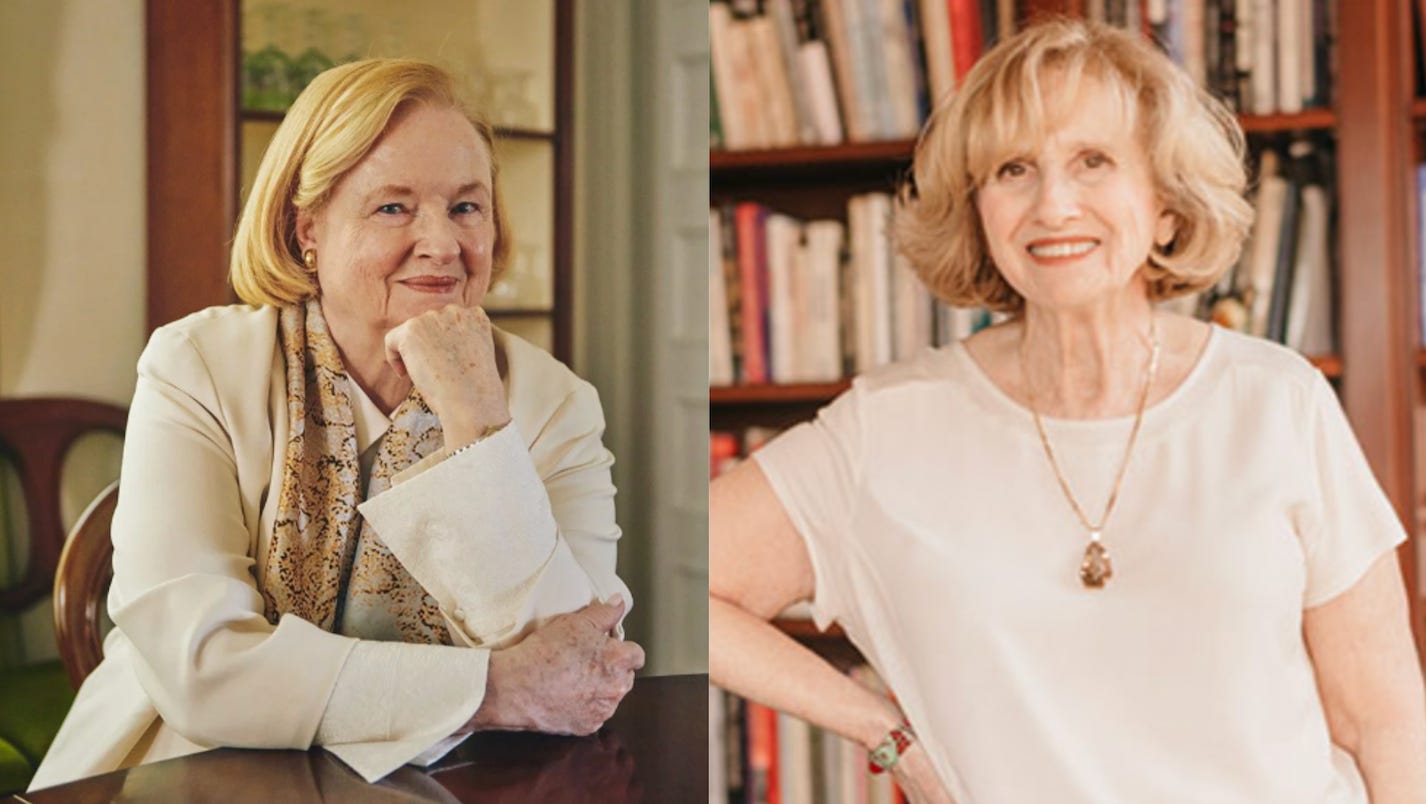
My conversation with Erika on the podcast began by exploring her journey to becoming a legal scholar, which proved difficult to disentangle from her personal story of a tumultuous childhood, and her youthful exploration of a variety of lifestyles and philosophies, culminating eventually in a turn to Catholic faith, while at the same time holding on to her deep-seated feminist beliefs. We then discussed the rationale for Erika’s book The Rights of Women and its focus on Mary Wollstonecraft, before moving on to explore what the latter had to say about the balance between rights and moral duties, and about virtues, as well as her perhaps surprising ideas about gender, care and the family. This led on to a discussion of Erika’s revisionist account of early feminism, bringing the story up to date with a focus on the legal battles around abortion, and then introducing the work of Erika’s mentor Mary Ann Glendon, who sought to redress the balance between care, work and the family through law and public policy.
Turning to Erika’s critique of feminist care ethics, we talked about her nuanced assessment, in an article published in 2016, of the work of Eva Feder Kittay, tracing both the commonalities in their thinking, but also what Erika sees as Kittay’s failure to acknowledge the distinctive contribution of fathers, as well as her recourse to the state as the preferred provider. This offered a useful link to talking about Erika’s own proposals for government support for caregivers. In the final part of the episode, we discussed the similarities and differences, in their approaches to care, between Catholic feminism and liberal and radical feminism, ending with Erika’s plans for a sequel to The Rights of Women which will focus on contemporary debates around women, work and the family.
Text within this block will maintain its original spacing when published
Mary Ann Glendon Eva Feder Kittay
Here are some quotes by Erika from our conversation:
Older accounts of law...coming from Aristotle and Cicero and Christian thinkers who are really formative in my own thinking...point out that law...and politics really is about friendship ultimately and about pointing us in the direction of living well and living happily with one another. So, of course, law can’t get us there; clearly that would be awful if law wanted to get into every single aspect of our life and tell us how to live well. But law is always a tutor or...a nudge. And so we have to have an account of the kinds of human beings we are, whenever we’re thinking about law...And so I’m eager to go after older wisdom that has been really formative to me in my own thinking things through about how human beings can flourish, both personally, but then in families and in societies. That has a lot to do with cultivating of the human virtues, just the basic cardinal virtues of justice and courage and moderation and really practical wisdom, and then also of friendship, learning how to be friends together. And I think that really underlies a lot of my work in understanding care as well.
...
My college had this...whole month on religion. And I found myself...in a lecture on the Catholic Worker Movement and recovery from drug addiction. And I really went...with the intention of being, like, what do these Catholics know about recovery from drug addiction? And I had no idea what the Catholic Worker Movement is...founded by Dorothy Day, who’s kind of a progressive Catholic, had these houses of hospitality where she...took people in who are suffering, who are poor, who are disadvantaged, and really ministered to them. And so this man who spoke...his whole way of seeing the world was so attractive to me...it brought concern for the poor that I had deeply a concern for...the broken-hearted, the drug- addicted, with this edifying vision of care and concern for one another, a solidaristic way of seeing the world where we really go out to care for others...There was an answer here that was so new and that I just was so intrigued by...and so it just sent me on this massive journey that was many years long that was...spiritual, religious, moral and intellectual...The quick part is that I...fell in love with the Catholic Church, which is so weird because I was so anti-Catholic, because it was the most patriarchal institution on Earth. But then I went and studied theology for two years, and in the whole process, I would just say, I kept being surprised. And I’ve seen this happen with people today, in my own work, with just engaging other feminists (because I still call myself a feminist and still see the world in terms of interests and advocacy for women), that I think people are really surprised that Catholicism could have any answers, because maybe they haven’t been paying attention, I think, to the modern magisterium, the really beautiful articulation of the collaboration between men and women as having full human dignity.
...
I think it’s hard for us, as moderns who really do tend to think of rights today as tools for autonomous self-creation, and moral duties as something that are imposed by some theocratic government, or something like that. But really, I think most people have, if they’re really honest about it, a moral apparatus that undergirds their thought, undergirds their politics. I mean, we certainly see this on the progressive left in terms of a moral account about the community’s responsibility for the vulnerable, for not only vulnerable children, but for immigrants, for the environment. And so there is a robust moral account there that I think really has to do with our responsibilities to one another. And so we’re not free from obligations, we’re not free from moral imposition, every politics has some sort of moral undergirding...As human beings, we’re called to be virtuous and wise. And that’s what being a rational animal is. And [Wollstonecraft] wanted that not only for men, which she definitely wanted…But she also wanted that for women, to be really motivated by both the intellectual and moral excellences which really enable them to be free.
...
[Wollstonecraft] did regard the care of children in infancy to be one of the ‘grand duties’ annexed to the female character by nature…She sees the care of young children...first in the womb, but then also nursing, she saw breastfeeding as this great way that the child and the mother become so closely bound. But then she also saw it as a grand duty of fathers as well...She thinks women should enter the professions...but she really does see these familial relationships as being so core to who both men and women are, and that it really is the place where they become really happiest and most fulfilled. And I think we see that really corroborated in a lot of data today, in terms of what gives people meaning.
...
[Mary Ann Glendon] was...a distinguished professor of Harvard Law School, so did her own balancing of work and home, had her own three children. And so she really wants to...make work in politics and economics more humane and more centred, I would say, and more cognisant...of the really important caregiving work and work of nurturance that is at the heart of any type of regime. One way she puts it, I think is really helpful, is that in modern thinking we tend to have the individual, the market and the state, and those are the three actors. And we forget entirely about…the work of care in the family...but even some scholars who think about care a lot tend to want to talk about care infrastructure or care architecture. And they move directly from the need for care straight up into the political and economic realm or the market and the state and really maybe give short shrift to the family...She basically thought we had a caregiving crisis that couldn’t be solved by just putting all the children in daycare, that women and men tend to want to spend time with their children and they see it as their responsibility...And I think she was really prescient in that regard because, as we know in our time, we still hear a lot of negativity around marriage and motherhood and caregiving today.
...
I do want to just reiterate how much I love [Eva Feder] Kittay’s work, in particular that book [Love’s Labor]. And I do see us as both critics of liberalism and the idea of this kind of mythical, autonomous individual as being the lode star in our thinking about politics and economics...And I really just think that the way she articulates responsibilities for others is the exact right one, so that they arise out of need and vulnerability. And so she talks about that they arise out of a relationship. And so I just think talking about that we are each some mother’s child is a really beautiful way of putting that...And so what’s strange to me is this sort of asymmetry that I think happens in her account...She...doesn’t want to look to the traditional provider...who was for centuries the husband, but she wants to right away go to the modern state. And I think that…there’s this asymmetry, because she really lines up the mother as the caregiver as someone who has...a natural affinity and obligation to nurture and care...And so why wouldn’t we say the same of the father or...the one who is uniquely situated because he is biologically related to the child, to defer his own desires and even needs to meet the needs of the dependent caregiver and the child?...And so, why do we assume that there couldn’t be a trusting relationship between the two, that we just ... make an assumption that I don’t think is grounded in the way in which we see...so many fathers today, who are invested in caregiving for their own children...I just think that there’s a way in which we can elevate that paternal ethic of care. We can call more upon men to engage in an ethic of care in the family...And so I just think there has to be within care feminism some kind of account..[that] men can also be...really invested in the care of vulnerable people, most especially in their own families.
...
I do think there should be provision for families...I would want to see more cuts in other places so that we could really in justice give, especially those in need more material help. And that may be with housing, certainly with healthcare and education. But I do think we ought not have those who are caring for children be disadvantaged by the work that they’re doing in the economy. And I think that’s just, again, a way in which Mary Ann Glendon was so prescient and right about this, that we do still tend to see the economy and the way we think about economy and the tax system as kind of these mythical and usually male autonomous individuals who have no dependents, and that we really ought to be thinking a lot more about the family unit as a whole, and the needs that the family has, and the way in which the state can support that really important work of care.
...
I guess what I would say about what is distinctive about the Catholic feminist position would be...two things. One, and this would certainly be shared with the radical feminists, but not so much with liberal feminists, is the real importance of embodiment of the female body and the way in which the female body is more vulnerable in pregnancy, in breastfeeding. And I think the beauty of that, that it’s not just a vulnerability that is something that we should escape, but is a vulnerability that is transformative for so many women in the caregiving they do, that they just come to see the interdependence that they have with their own children and that gift, but then the interdependence in terms of...reliance on husbands. So I guess that would bring me back to the second point...just a real beautiful place for me is...part of the Catholic tradition, that there’s a way in which men are expected to take their roles and their contribution as fathers just as seriously as women take their roles and contributions as mothers, in terms of the care and formation and nurturance of children, that it’s really seen to be like the most basic vocation...So the idea of maternity and paternity is so baked into the family that is the Church...that kind of collaboration and integration of care is just so basic, like the relations of care between man and woman, the relations of self-gift and self -giving care is just so basic to the Catholic understanding.
You can listen to the whole episode here, or wherever you get your podcasts.
You can download a transcript of the episode here:
In other news...
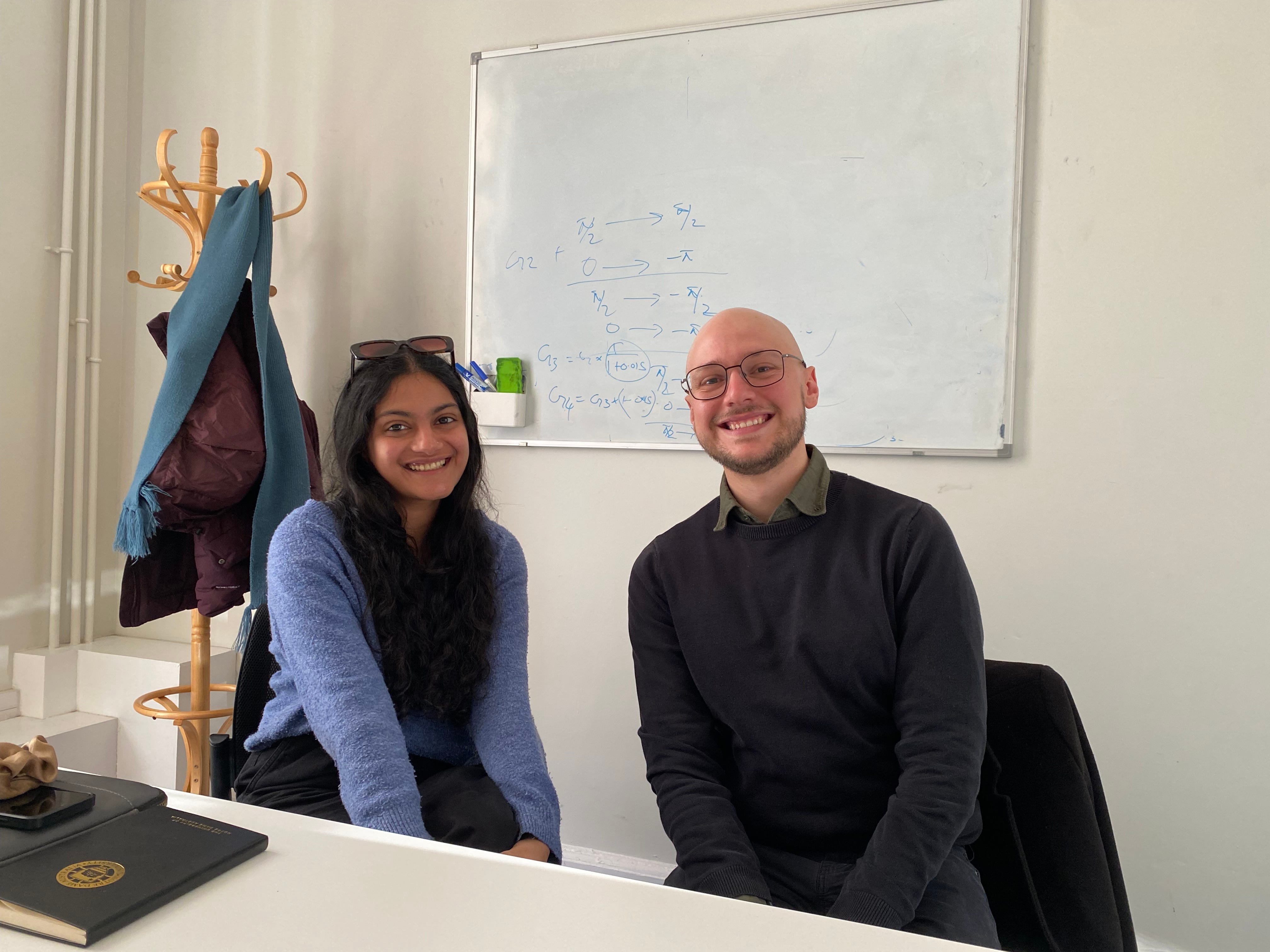
Recently I had the privilege of meeting two of my former podcast guests – Steven Steyl (Episode 10), who was visiting England from Australia, and Ira Chadha-Sridhar (Episode 15) – in person for the first time. Ira kindly hosted us at Hughes Hall in Cambridge for a fascinating conversation about the current state of care ethics, and much more besides. I’m also grateful to Ira for recently giving a presentation on her research to our new Open University Care Ethics Interest Group (which I mentioned in this post). Finally, congratulations are due to Ira on being awarded a publishing contract with Oxford University Press for her forthcoming book on Care and the Mandate of Medical Law.
…
The header image for this post is the painting ‘Hidden Life in Nazareth’ by the contemporary Ukrainian icon painter and muralist Ivanka Demchuk. It was used as the cover image for Zechariah Mickel’s recent book The Unthinkable Sacrifice: An Essay on Fatherhood, which I reviewed in this post.
No posts
Comments
Nothing yet. Say the first thing.
Sign in to join the conversation.