
For many careers leaders, record-keeping can feel like a compliance task. It’s just something the Government says we should do. So why does the statutory guidance insist :-
For school pupils who change schools during the secondary phase, information about careers participation and advice given previously should be integrated into a pupil’s records, where this information is available. Records should begin to be kept from the first point of contact or from the point of transition.
For colleges and ITPs, records of participation and advice given should be integrated with those given at the previous stage of the learner’s education (including their secondary school), where these are made available. Records should begin to be kept from the first point of contact or from the point of transition.
All learners should have access to these records and use them ahead of any key transition points to support their next steps and career development.
Having read that it may be that you do it because the guidance says you should, Or, and this is the danger, you’ve been told you should so it falls off the list of must do things because time is short and you can’t see the point. Or is that just me and my neurodivergent brain? However, this particular requirement is one of the few that genuinely underpins the quality and impact of your entire careers programme.
Handled well, whichever system you use to record information, it becomes the thread that connects everything a learner experiences. Handled poorly, it’s just a spreadsheet no one looks at.
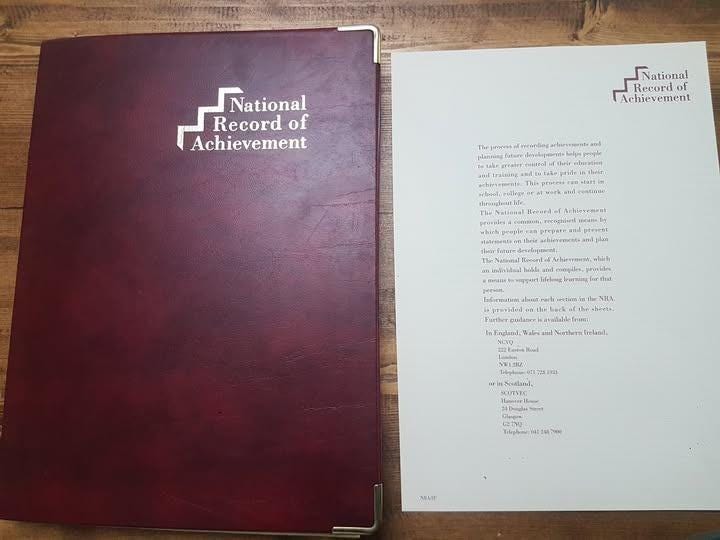
Luckily for us, record keeping has moved on since the days of the National Record of Achievement, aka the wine list as it was known. Where students kept certificates etc to show at interview. Careers record keeping is now possible via a number of different programmes, and can now be accessed by both staff and students alike. So why make it a priority and how can we make it manageable?
Students don’t experience their careers journey in neat, self-contained chunks. They move schools, change courses, miss events, have different advisers, and sometimes disengage altogether.
Without a consistent record:
the same conversations get repeated
key gaps go unnoticed
support becomes reactive instead of planned
Gatsby benchmark 3 totally goes out of the window.
When records are transferred and built on, you create continuity. A Year 10 student arriving mid-year doesn’t start from scratch. A college tutor can see what guidance has already been given. An adviser can pick up the story, not restart it.
That’s where the real value sits.
Good guidance depends on knowing the learner. Not just their predicted grades, but:
what they’ve already explored
what they’ve ruled out
what experiences they’ve had
A well-maintained record turns a 40 -minute guidance interview into something much more powerful. It allows advisers to challenge, build, and move the student forward, rather than spending half the time gathering basic information.
It also helps avoid one of the most common issues in schools: advice that feels generic.
The guidance is very clear that learners should access their records before key transitions. This is often the missed step.
When students can see:
the activities they’ve taken part in
the advice they’ve been given
their evolving interests
they make more informed decisions. It encourages reflection, which is something many young people struggle with unless it is structured.
This is particularly important at:
Year 9 (options)
Year 11 (post-16)
Year 13 (post-18)
At these points, the record becomes a tool for decision-making, not just a log.
From a leadership perspective, these records give you something powerful: visibility.
You can see:
who has not had meaningful encounters
who has missed guidance
which groups are underrepresented in certain activities
When shared throughout the school, it provides useful information for pastoral heads and form tutors. This makes it much easier to target support and demonstrate impact, whether that’s for internal review or inspection. It can also give you fantastic evidence when you ask for time or money from SLT and/or govenors.
For colleges and training providers, receiving incomplete or no information is a constant frustration. Starting again is inefficient and often leads to poorer outcomes for learners.
Where records are shared and used:
onboarding is quicker
support is better targeted
learners feel recognised rather than reset
It also strengthens relationships between institutions, which is becoming increasingly important in local skills systems. What’s more it adds to your list of local employers who will engage with your school and may well offer you engagement opportunities.
Introducing this well is the difference between “another thing to do” and something staff actually use.
Introduce it as a way of solving problems, such as repeated conversations
Let staff know what is in it for them?
Keep your expectations simple and short
Show staff how it works
Build it into existing routines
Let them spend a few minutes having a go. Allow them to compare with other staff
Make sure they know that you’ll be doing spot checks as part of your role and that the records will be used by students at transition points,
Paid subscribers have access to 2 fully editable PowerPoints to use in staff briefings.
Why CEIAG records need to be kept
How all staff can support
A flowchart of how records can be kept and used for lessons and activities as well as quality control and improvement.
The key is not to treat this as a one-off task. It works best as a cycle that aligns with natural points in the academic year. What’s more it can be a shared responsibility and not just land on one person’s desk.
Create or update records for all learners
Integrate any available information for new starters
Ensure systems are in place for staff to log interactions
This is also the moment to brief staff. If they don’t understand what to record and why, gaps appear quickly.
Spot-check records for completeness
Identify students with little or no engagement
Prompt staff to update after autumn term activities
This prevents the “we’ll catch up later” problem.
Focus on Year 9, Year 11 and Year 13
Ensure records are up to date before options or applications
Encourage tutors or advisers to actively use records in discussions
This is where records start to influence real decisions.
Give learners structured access to their records
Build in tutor time or careers sessions to review them
Link reflection to next steps and applications
This step is often missed but has a big impact on decision quality.
Finalise records for key year groups
Ensure they are complete, accurate, and transferable
Put processes in place for sharing with next providers
Think of this as preparing a handover, not just closing a file.
Review how effectively records were used
Identify gaps in participation or recording
Adjust processes for the next academic year
This is where you move from compliance to continuous improvement.
This isn’t really about records. It’s about making sure every learner’s careers journey is joined up, visible, and useful.
If the record is only ever used for accountability, it will always feel like an extra job. If it’s used to shape conversations, decisions, and transitions, it becomes one of the most valuable tools you have.
Comments
Nothing yet. Say the first thing.
Sign in to join the conversation.