
Walking the Beijing Auto Show last week (reportedly the largest auto show in history: 380,000 square metres, 1,451 vehicles, 181 world premieres, more than 2,000 companies from 21 countries), the verdict we heard from many Western designers was how the EV price-war has compressed everyone into the same large three-row SUV, that stands lacked brand storytelling, and that Chinese design has stalled. Much of this is evidently true, but these perspectives also tell of the divide between Chinese and Western audiences because there are some key ways that Chinese car design is very much advancing, but on its own terms.
Truly there are strong similarities between many Chinese cars in their typology, exterior and interior design. But if form is not the substance of design, then the substance is the value design creates for customers and brands, and in this respect Chinese brands are leading the world in rethinking the role of the vehicle around how cars are used, the ‘third space’, and the wider related identity of the car.
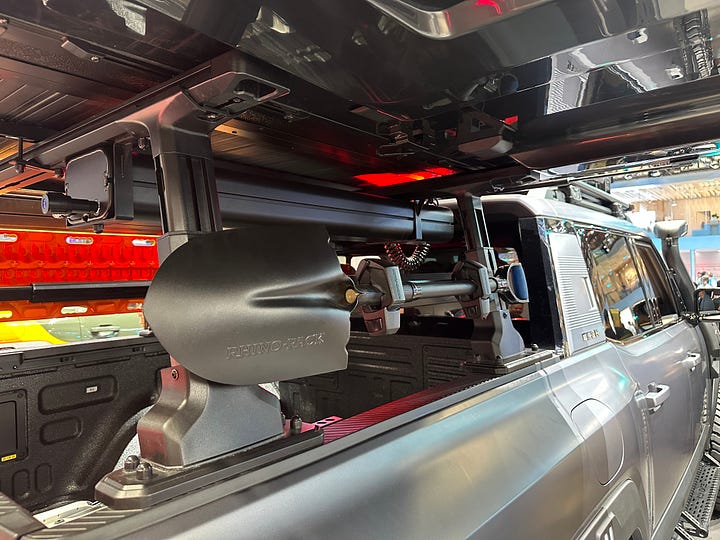
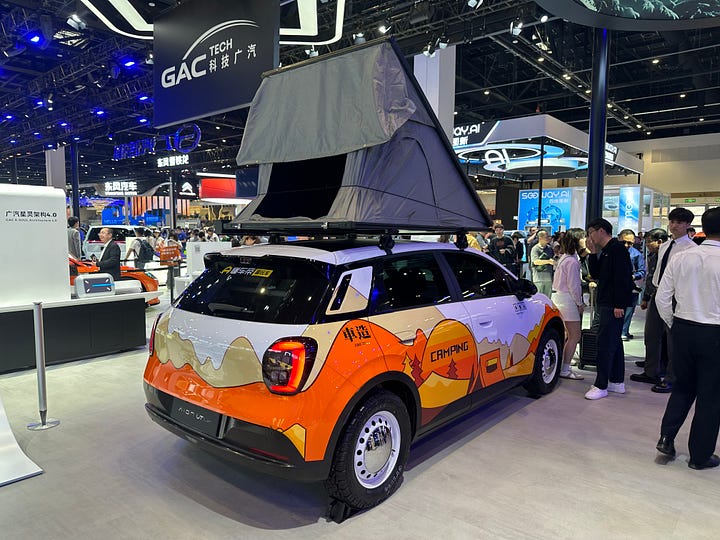
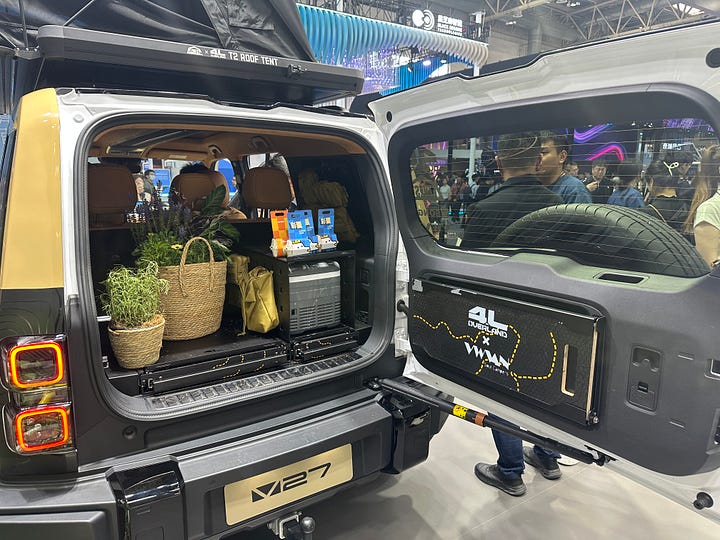
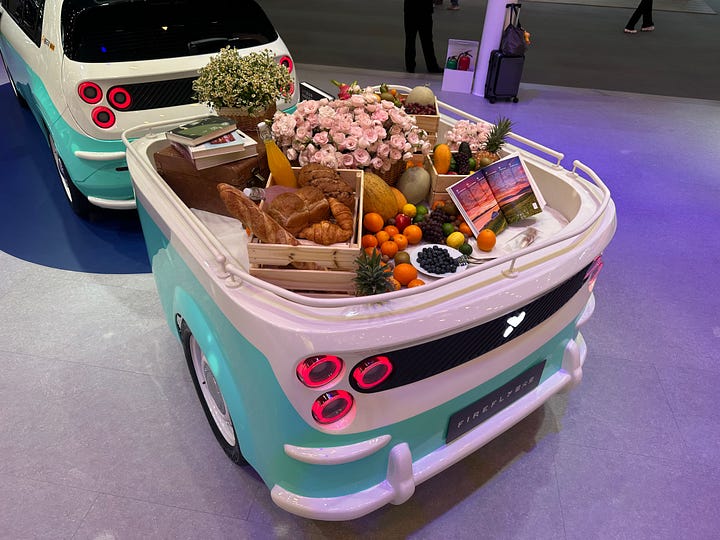
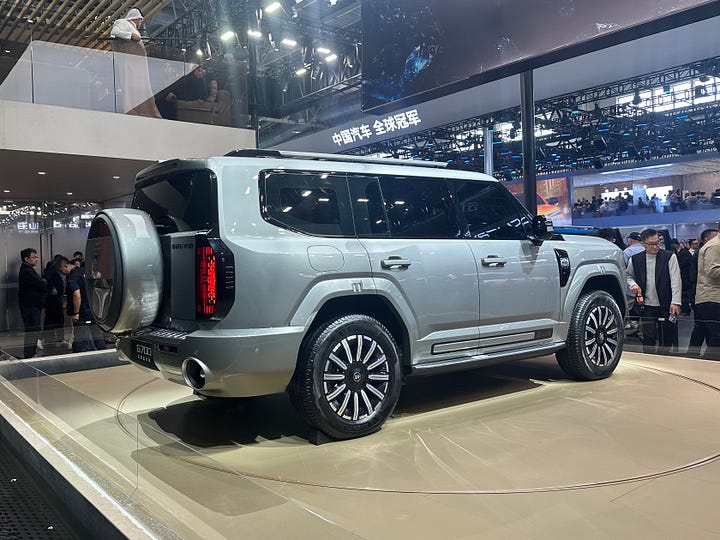
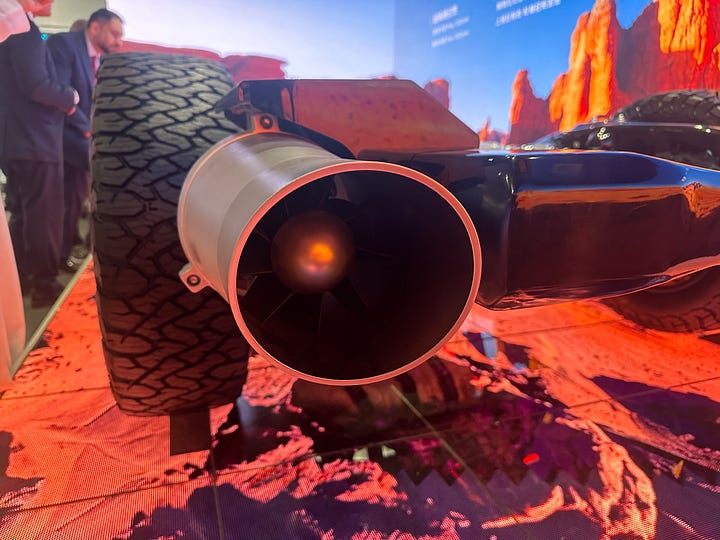
At Beijing there were OEM overlander designs for extreme off-road and off-grid use (multiple Chinese OEMs are now developing overlanders in-house, leveraging their EV tech to enable use-cases ICE overlanders cannot, e.g. operating as a sustained power source for off-grid camping), designs with immersive entertainment to rival an IMAX (see video below of the Nio ES9 which combines sound and air suspension to enhance the viewing experience). Even a concept picnic trailer. And what these pictures cannot show is how much attention these designs were getting from show-goers. To be seen to be engaging with ‘third space’ is important for Chinese brands in a way that has no parallel for those operating outside the region, it is how brands bring customers in and sells them a lifestyle.
The criticism of a lack of story-telling by Chinese car brands is more than valid. Few present a coherent or consistent brand message, have stories about their place-of-origin or their customers, none talk of their unique purpose or mission. But then, few western brands did this for the first half century of the car, and clearly Chinese brands do not have the heritage that many western brands leverage (and which has apparently less and less equity in China). But we are seeing a new and different type of stories coming from Chinese car brands and the most discernible is that of toy-like young-at-heart. A growing minority of Chinese brands have designs or versions of designs with a young at heart aesthetic, playful features built into interior, and CMF and UX offers that also feature toy-like feel.

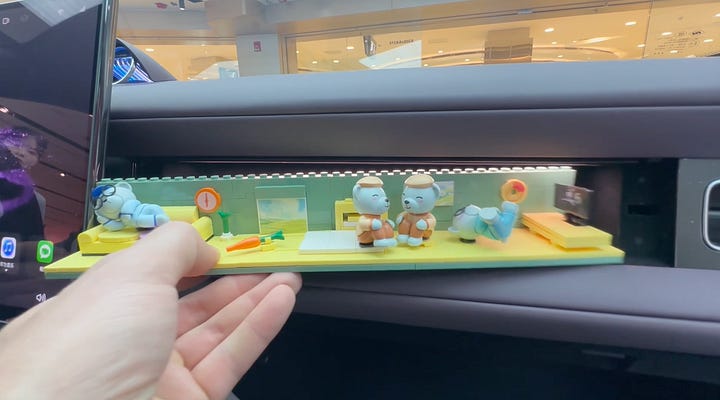
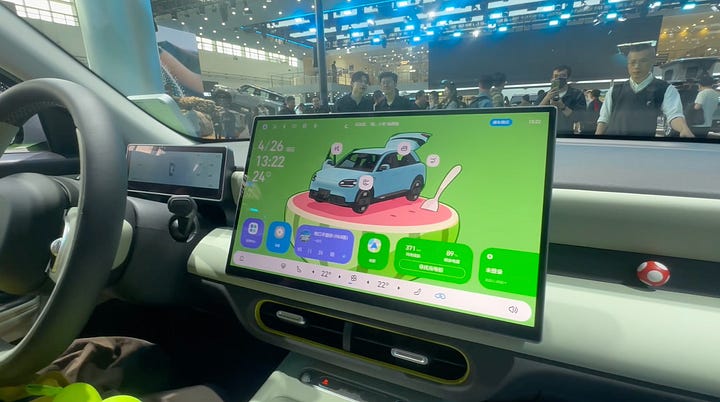

And many of these designs are leveraging partnerships with leading toy and entertainment franchises to amplify their value. This form of storytelling might not resonate with many in the West, but this playful work is serious in delivering value to a younger digital native Chinese customer.
Many Chinese designs emulate the leading designs of their class to the extent that now the core sectors of the Chinese market are very defined. Whilst in the West such close emulation evidences a lack of original thinking and even authenticity, in China it helps a less mature market navigate choice, reassures customers, and plays to an audience that view similarity without the negative connotation it has outside of the region. So whilst Beijing presented a sea of new designs that differed little from one another in design, they coalesced around quite specific Chinese market sectors in a way distinct to the US and Europe. On the surface there was a lot of sameness, but this sameness is very specific to China - it is not the same as other places.

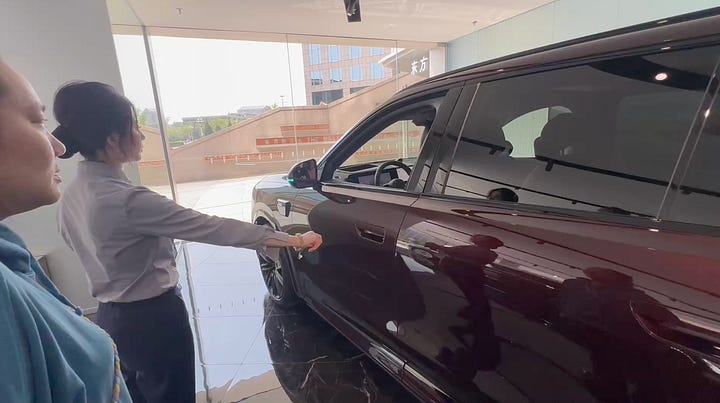
None of this is to say Chinese brands need not seek new paths that seek greater divergence, richness to meet as yet unmet needs. We have consistently called for it, and as the domestic market matures distinction will matter more, especially for those intending to compete in Europe. But Chinese design has been walking a tightrope. Take too much risk to deviate from what is selling at home and the brand goes out of business. Emulate the sector’s leading design and the West rolls its eyes. This is a dilemma hard to escape.
Beijing 2026 was the show that took place behind a firewall, in a market the West is now structurally separated from. Yi-Ling Liu’s recent book ‘The Wall Dancers’ describes the Chinese internet as a space the West can no longer access or understand; the same is becoming true of design. Two cultures are being developed in isolation, and a role of design in a splitting world is to translate between them.
At present neither side is attempting this act of translation. In China today Western brands are not delivering the contemporary tangible high value offers that Chinese consumers want. Meanwhile Chinese brands in Europe are not building distinct offers that leverage unique associations of Chinese origin (technology leadership, third space pioneering, or a more informal and youthful take on premium). If these two design cultures cannot learn to design for each other, the split will widen, and both sides will be poorer for it.
No posts
Comments
Nothing yet. Say the first thing.
Sign in to join the conversation.