
This post was written in collaboration with my colleague at the Center on Global Energy Policy, Dr. Chris Bataille, an industrial decarbonization expert.
The first post in this series made the case for electrification as the first lever for a more competitive, lower-cost, and less-carbon-intensive oil and gas industry. The second was on the importance of enhanced oil recovery, especially as shale inventories stagnate and decline.
There is a pretty tight and true heuristic, whether holding high environmental stewardship standards in oil and gas, or decarbonizing industry, power and transport: net profit comes and wins first, immediate local concerns like jobs, air and water quality come second, and greenhouse gas emissions a distant third. Upstream methane abatement is the same story, arguably even more so. Many interventions that reduce methane emissions either pay for themselves or are cheap enough to pencil out under almost any reasonable carbon price scenario. And yet the industry, in aggregate, still leaves an enormous amount on the table, often because it can take scarce management time away from the bottom line. Some very light-touch policy and regulatory interventions can change that calculus and make cleaning upstream worth all operators’ time and investment.
This post is about why that is, what it actually costs to fix it via a case study on what EQT has demonstrated is possible, and where policy could and should push the whole sector to follow.
Around 200 billion cubic metres (bcm) of methane was emitted by the fossil fuel sector globally in 2024. According to the IPCC this represented 18% of global GHG emissions from energy supply and 6% of all human GHG emissions. The IEA estimates that about 70% of those emissions could be avoided with existing, commercially-available technology. Roughly 100 bcm of that is currently being lost but could instead be captured, processed, and sold. The IPCC further states around 50% of the methane emitted from oil and gas infrastructure can be mitigated and sold at net-profit, and 50–80% of methane emissions from coal, oil and gas could be avoided with currently available technologies at less than USD $50 tCO2. At recent Henry Hub prices ($3 mmbtu at time of publishing), that is a meaningful chunk of revenue being vented, leaked, or flared into the atmosphere.
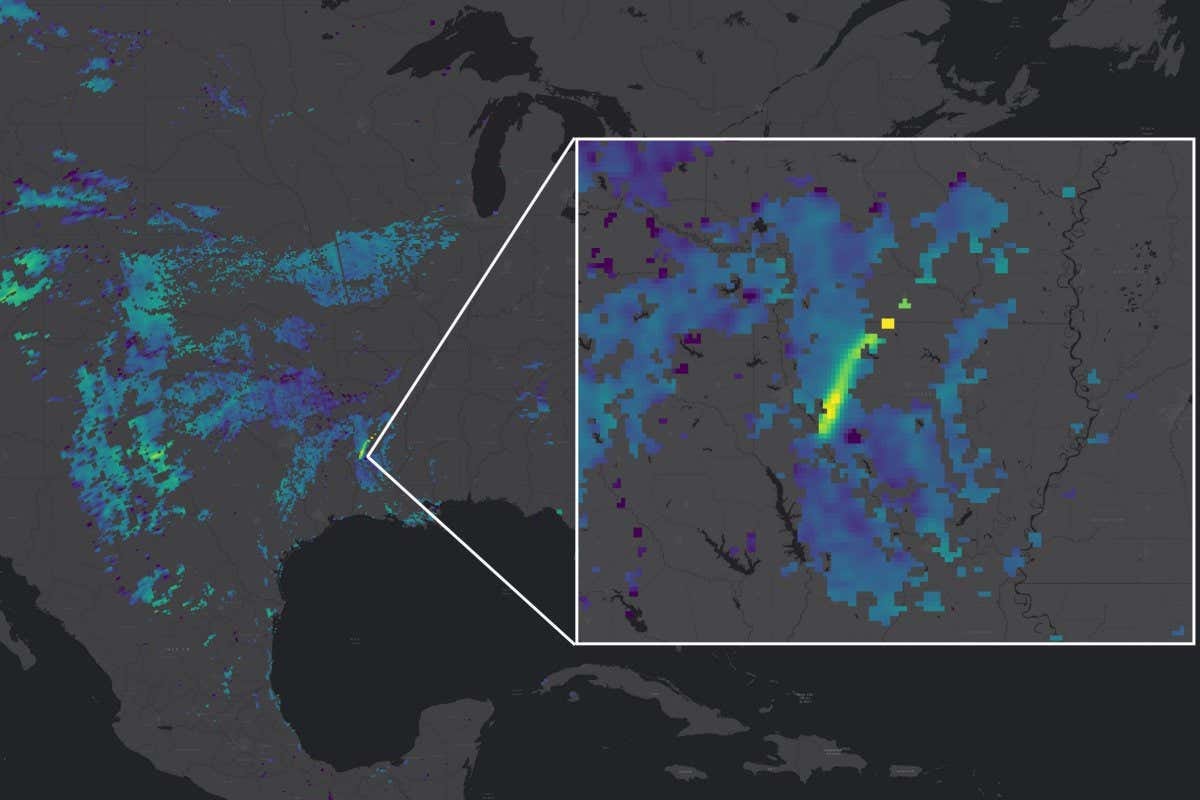
Upstream operations wellpads, separators, compressors, and gathering lines are where the bulk of the opportunity sits. About 30% of onshore methane emissions come from fugitive leaks at static seals: valves, connectors, regulators. An additional, significant share comes from intentional sources: pneumatic devices, which use pressurized natural gas as a working fluid to control and automate equipment, and routine venting and flaring during completions or upset conditions.
The distribution of leaks is deeply skewed; across almost every producing basin that has been rigorously studied, a small fraction of facilities referred to as “super-emitters” account for the vast majority of total emissions. In the Permian, sources emitting above 100 kg per hour account for 40-80% of production site-wide total emissions. This has important implications for how you design a detection and repair strategy: if you find and fix the top of the distribution, you get most of the benefit for relatively little cost.
The toolkit for upstream methane abatement has matured considerably over the last decade, and it now spans several generations of technology with very different cost profiles.
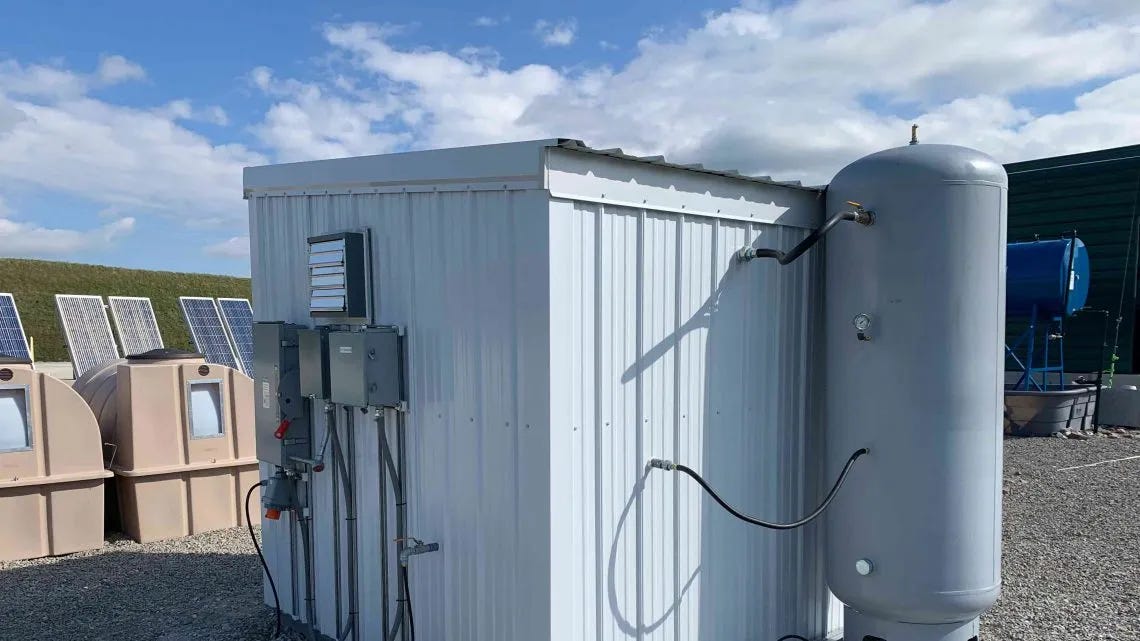
Pneumatic device replacement is the first and most direct intervention. Gas-powered pneumatic controllers are the devices that manage liquid levels in separators, scrubbers, and filters and are continuous, intentional sources of emissions. Replacing them with electric or instrument-air alternatives eliminates a persistent source entirely. EQT’s own experience showed that pneumatics accounted for 47% of its Scope 1 production segment GHG emissions in 2021. Their $28 million initiative to replace approximately 8,000 pneumatic devices across their operations was one of the single largest contributors to their emissions reduction story. The math on device replacement is usually favorable. The devices themselves are not prohibitively expensive, and the gas that is no longer being vented has real market value.
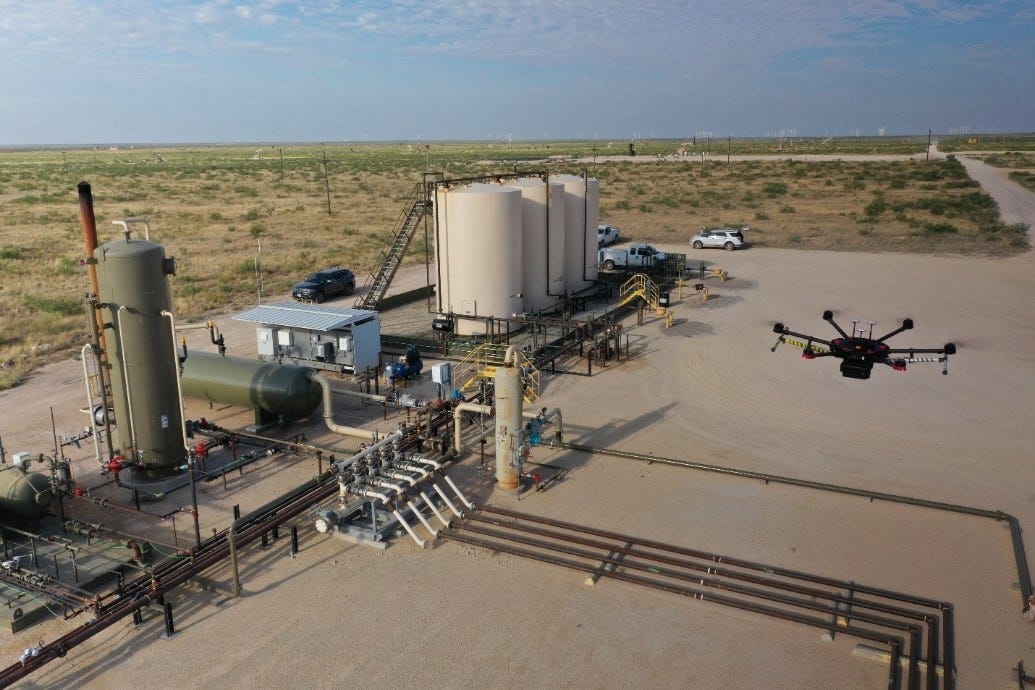
Leak detection and repair (LDAR) is the workhorse of the abatement stack. Traditional LDAR uses a technician with a handheld optical gas imaging (OGI) camera or a flame-ionization detector to walk a facility, identify leaks, and flag them for repair. This approach, required under EPA’s NSPS regulations, is effective but labor-intensive. Survey costs run a few thousand dollars per facility per visit, and the limiting factor is coverage frequency if you only survey twice a year - a large leak that emerges the day after a survey can run for six months before it is found and fixed. This strategy is ripe for transformation using automated and even AI managed drones, scanning thoroughly every few days using OGI and infrared cameras. Stanford research showed a drone-mounted camera can cover large areas of gas fields efficiently and is, per unit of methane detected, the most cost-effective method available, with initial hardware cost ranging up to $300,000 depending on capabilities.
The marginal abatement cost for upstream LDAR programs is genuinely attractive. Estimates range from $0 to around $6 per CO2e, depending on facility type and monitoring frequency. When you compare that to the value of the gas recovered at even modest prices, the economics are often net-positive. The gas saved frequently offsets a significant fraction of the program cost, and in some cases the entire thing. Automation can also save significant labor costs, adding to the bottom line, while freeing labour to do more productive things.
The newer generation of detection technology combined with a more systematic strategy has fundamentally changed the cost-effectiveness calculation. A tiered approach pairing wide-area satellite surveillance with targeted aerial or drone surveys and ground-based confirmation is now the operational playbook for leading operators. High-resolution methane satellites, including MethaneSAT and Tanager-1 which became operational in 2024, can detect emissions at the 100 kg/hour threshold and pinpoint them to a 25-meter area. That sensitivity matters because it captures the super-emitters that drive a disproportionate share of total emissions. A December 2024 case in point from the Permian: a satellite detected an emission at over 1,000 kg/hour, the operator was alerted within hours, and confirmed mitigation was verified by follow-up observation. Left unabated, that single event would have cost the operator over $1.3 million in lost gas annually. The satellite subscription cost is a rounding error relative to that figure. Satellites aren’t just helpful for super-emitter events - they can also show where methane concentrations are rising, and can help operators to send first sensor drones and then human maintenance to control leaks.
Vapor recovery units (VRUs) round out the toolkit, capturing gases that would otherwise be vented from storage tanks or during liquid unloading. Like LDAR, VRUs are in the win-win category, they reduce emissions and recover a marketable gas stream.
It’s easy to get wrapped up in the possibilities of methane mitigation, but operators are building this in the real world. EQT has been at the forefront of methane mitigation. In 2024, EQT became the first large-scale traditional energy company to achieve near net-zero Scope 1 and Scope 2 greenhouse gas emissions across its upstream operations ahead of its 2025 target, and while producing over 3.5 billion cubic feet of gas per day.
Since 2018, EQT stated that it had reduced its production segment GHG emissions intensity by approximately 69%, from a baseline that was already competitive. According to their 2024 ESG report their production segment Scope 1 methane emissions intensity reached 0.0070% in 2024, surpassing their own 2025 target of 0.02% by 65%. To put that in industry context, the OGCI’s 2018 collective target for upstream methane intensity was 0.25%. EQT is running at less than 3% of that level.
How did they do it? A few things in combination. The pneumatic device replacement program, as noted above, was foundational, removing the largest single source of intentional emissions from the system entirely. The combo-development drilling strategy, which concentrates development of multiple multi-well pads simultaneously, reduced the total infrastructure footprint and therefore the number of potential leak points per unit of gas produced. On acquired assets, like the Alta Resources acquisition, EQT installed emissions control equipment, eliminating approximately 35,000 metric tons of CO₂e from those assets. And critically, they built a measurement and monitoring infrastructure that gave them the data to know where they stood.
EQT co-founded the Appalachian Methane Initiative (AMI) a coalition of producers that runs a sector-wide, technology-agnostic aerial monitoring network across the basin. In 2024, the AMI deployed more than 15,000 aerial surveys across approximately 20,500 square miles of the Appalachian Basin. The geographic approach, monitoring at basin scale rather than operator-by-operator, is a better fit for how methane actually behaves in the atmosphere, and it enables coordination on remediation that individual operator surveys cannot.
The commercial logic behind EQT’s push is also worth naming directly. Toby Rice has been consistent about the LNG export opportunity and the case for U.S. natural gas as a lower-carbon alternative to coal for emerging markets, especially for critical chemical products like ammonia for fertilizers. That argument only holds if the methane intensity of U.S. gas production is genuinely low. If lifecycle methane emissions erode the climate advantage of gas over coal. There is a non-trivial amount of academic literature showing how quickly that math can flip depending on assumed leak rates,, which can collapse the entire market proposition. EQT’s fugitive methane emissions performance is not incidental to its business strategy. It is THE strategy for ensuring that gas can be credibly called cleaner than coal on all dimensions
MiQ certification and Equitable Origin’s EO100 standard give EQT the third-party verification needed to differentiate its molecules commercially. As the global gas market increasingly demands certified, low-methane-intensity product, particularly in Europe and among buyers with Scope 3 reporting obligations, the ability to prove your emissions performance at the well-pad level becomes a genuine commercial differentiator. EQT has now certified a significant fraction of its production, covering more than 4.5% of all U.S. natural gas supply.
EQT’s performance is genuinely impressive, but EQT is the exception, not the rule. Emissions intensities across U.S. oil and gas production vary by more than a factor of 100 or more between the best and worst performers. That variance demonstrates that, like much of the emissions mitigation discussion, it is a policy and regulatory issue, not a technical one.
The regulatory scaffolding that was being assembled to close that gap has had a complicated couple of years. EPA’s NSPS OOOOb/EG OOOOc rules, finalized in March 2024, established comprehensive requirements for new and existing sources, including LDAR requirements, restrictions on pneumatic devices, and standards for completions. Those rules are real and largely on track, though EPA finalized deadline extensions for some provisions in late 2025.
The Waste Emissions Charge (WEC), embedded in the IRA and structured as a fee starting at $900 per metric ton of methane above specified waste thresholds and rising to $1,500 per ton by 2026, was the more aggressive fiscal lever. The fee was designed to create a direct financial cost for excess emissions, making the economics of abatement investments obvious even for operators who did not see the competitive logic on their own. Congress repealed the implementing rule in February 2025 using the Congressional Review Act, and prohibited the collection of the fee until 2034.
The underlying statutory requirement in the IRA still exists, but it is not being enforced, and few expect the current administration to revisit it. The Subpart W reporting requirements, which underpin the WEC calculation and are also the backbone of the GHGRP’s oil and gas data infrastructure, face a proposed delay to 2034, alongside a complete repeal for the rest of the program.
This is a genuine setback. The WEC was not a punitive instrument. It was designed to close the gap between what is economically rational at the firm level and what is environmentally necessary at the systems level. Absent a carbon price or a methane fee, the business case for abatement depends entirely on internal carbon prices, voluntary certification premiums, and reputational considerations. Those forces are real but they are not sufficient to move the whole market.
What could actually drive broader adoption? A few levers remain operative or could be reinstated:
The NSPS OOOOb/EG OOOOc rule, with its equipment-level standards and LDAR requirements, remains in effect for existing sources even with compliance deadline extensions. Strengthening and accelerating implementation of those requirements would push the rest of the industry closer to where EQT already is. State-level regulations, particularly in major producing states that have historically been ahead of the federal floor on methane, remain an important piece of the mosaic. New Mexico, Colorado and California have all maintained robust programs.
On the positive incentive side, the EPA and DOE have invested $850 million in competitive grant funding for methane measurement and reduction. That capital, deployed well, can de-risk technology deployment, fund monitoring infrastructure like the AMI, and help marginal conventional well operators, who face worse economics for abatement investments, make the necessary upgrades. Whether that program is carried out under this administration is yet to be seen.
The emerging market for certified, low-carbon gas freqently known as “differentiated gas”, tied to LNG export or domestic use, is the commercial driver that could do what the fee could not. If European buyers or hyperscalers, with their own Scope 3 obligations and exposure to the EU’s Carbon Border Adjustment Mechanism or climate commitments, start attaching a real price premium to verified low-methane gas, that creates a pull that no domestic fee is required to generate. The GHGRP is the data backbone that makes the market credible. The recent EPA proposal to gut the GHGRP’s oil and gas reporting requirements is, from this perspective, counterproductive; it would strip the credential of its value.
The techno-economics of upstream methane abatement are unusually favorable. A significant fraction of the problem is addressable at zero or negative net cost. The technology is there. The monitoring infrastructure is maturing rapidly. EQT has already demonstrated what is achievable at scale.
The challenge is getting the rest of the industry to move with something approaching EQT’s urgency. That requires either a price signal like the WEC, a carbon price, a credible certification premium or a regulatory floor that forecloses the option of not acting.
Right now, the U.S. is partly dismantling both. The WEC is gone. The GHGRP faces potential repeal. The NSPS compliance timelines are being stretched. None of that changes the underlying economics of the problem or the technology available to address it. But it does change the timeline on which the laggards will be forced to catch up.
The good news is that the window is not closed. Export markets, third-party certification, and basin-wide monitoring coalitions like the AMI are building the commercial architecture for a differentiated gas market from the bottom up. There is a growing interest for lower carbon intensity gas domestically as well. Differentiated gas gives the ability for retail, commercial, or industrial customers to source lower-carbon-intensity gas. However, the market creation around differentiated gas is still in conception, and there are many considerations to ensure we reward good actors and incentivize clean up of the leakiest infrastructure.
The companies that have invested and continue to invest in their emissions performance are better positioned for a future that internalizes the cost of carbon, CO2, or CH4.
No posts
Comments
Nothing yet. Say the first thing.
Sign in to join the conversation.