
I didn’t date a whole lot when I was in my twenties. Part of this was because I largely worked with teenagers, first as a teacher and then as a youth director. Sure, I hung out with my friends, who were mostly women, but then I also spent a fair amount of time hanging out with “kids,” which is what we called all those teenagers.
Even though I didn’t identify it as part of the problem back then, I was also deeply entrenched in evangelicalism at the time. We may not have called ourselves evangelicals, but for all intents and purposes, dear reader, we were evangelicals. And in this world, at least at that time, in that world, you didn’t date unless you had a really good reason to date — unless this particular beau1 had a real chance at taking you to the marriage altar.
So, I didn’t date, at least not with any regularity. I talked about dating, a lot, and I imagined dating, a lot, but when boys (for they weren’t yet men to me), didn’t ask me out for a coffee date, well, I didn’t go out on a whole lot of coffee dates.2
There is so much I could unpack in those three short paragraphs alone, but suffice it to say, when a whole lot of not-dating continued to be the story of my life, my best friend encouraged me to adopt a new outlook on dating.
The whole purpose of dating is to find out what you like and don’t like in another person, she said. You don’t try and figure out whether or not you’re going to marry them on the first date: you just see what attracts you in another person.
You begin to figure yourself out, in other words.
Eventually, I joined this little thing called Match.com.3 I wasn’t always good at sifting through the rubble of profiles, but I began to date, a little bit here and there. I began to learn how to put myself out there and not worry if the man sitting across from me in a coffee shop4 would someday put a ring on it. Instead, I mostly learned what I liked and didn’t like in another person.
I don’t think it’s all that different with the books we read. Sure, some adages might tell us that the more you read, the more you know — and while that’s true, other adages might tell you that the more you read, the more you discover what you like and don’t like in a book.
What then do I tend to like and not like in a book?
Don’t like: science fiction & fantasy, boring historical nonfiction, celebrity memoirs, horror, brainless beach reads, thriller & suspense.
Do like: spiritual memoir, poetry, nature writing, historical fiction, Young Adult (YA), middle grade, mystery, contemporary fiction.
The same can — and dare I say should — be asked of your reading habits (so, tell us, what do you tend to like and not like in a book?)
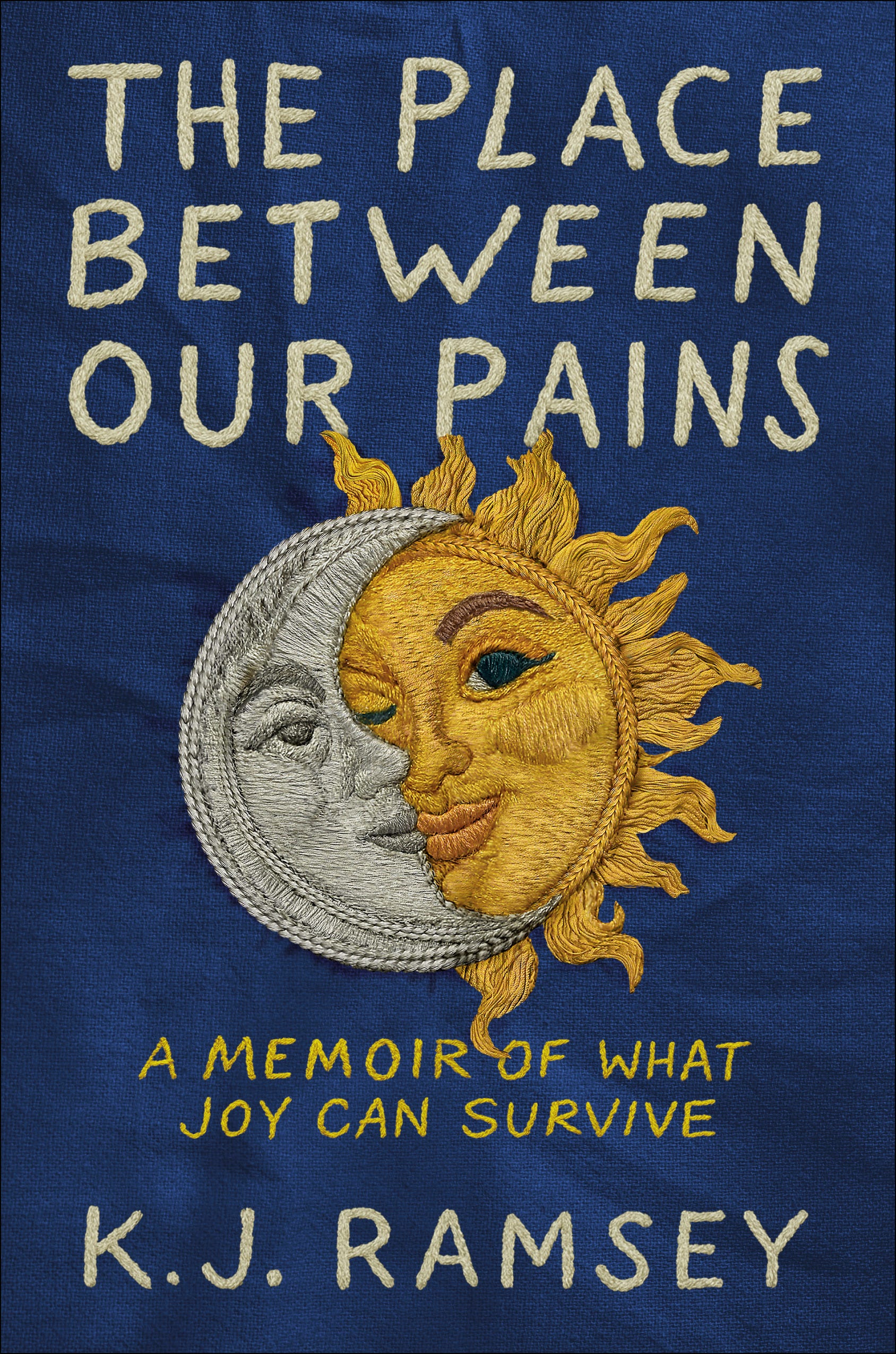
How fun to then find a book that included three of my likes. The Place Between Our Pains by K.J. Ramsey is a hybrid mix of spiritual memoir and poetry and nature writing, which as you might recall from the aforementioned list are three of my favorite book genres. As the book jacket notes, it’s “a poetic, darkly funny memoir of one woman’s trip across the national parks straight into life-threatening illness and the joy that still holds us, no matter how much life hurts.”
If you haven’t yet had the chance, let this be the reminder to pick up a copy of K.J’s book5 — perhaps to confirm what you like and don’t like in a book, but even more, to simply be absorbed in a good story.
I’ve included an excerpt of one of my favorite parts for good measure.
Happy reading!
c.
From The Place Between Our Pains:6
I stand at the edge of the forest and close my eyes in open-hearted prayer. Just as I open my eyes, I notice something slimy and yellow on the fallen log in front of me. A mustard-colored banana slug rests there, chewing a tiny bite of moss. Tears fill my eyes. I can’t deny the delight that the love pulsing through the earth hears our hearts, holds our hopes, and conspires to meet us with what we need.
I step over the mossy log to observe the hermaphroditic slug from every side—their four tentacles like periscopes to see and sense, their nearly invisible razor tongue of 25,000 teeth, the mucus that lets them travel without getting stuck.
Banana slugs are detritivores. Great decomposers, slowly unwriting the score of strength and weakness in the forest. They digest the death of trees, plants, and animals, recycling their matter into nutrient-dense material that enriches the soil. They chomp on the plants that compete with redwoods for shade but refuse to bite redwood saplings. Banana slugs protect and nourish the life that shelters and shades them. Though they are small, they are essential.
I watch the slug, its keel glistening in the humid air, as it crawls across the cut log. And I am seven again yet thirty-four, transfixed by a delight that has never fully departed.
And I know it might be silly to have prayed to see a slug, but sometimes we need substance to reveal what’s invisible and much harder to imagine. And right now, I can see it: Suffering has never been able to stop my sense of wonder nor kill my desire to share it with others. The truth is that no pain can change the core of who I am. Delight has always decomposed discouragement. And it always will. Before I turn to leave, I spot one more banana slug traveling across the serrated frond of giant sword fern. This trip has planted hope within me that there will always be more wonder to see.
I need not spell out how exclusively heteronormative we were in our beliefs.
Those dates always started with coffee, didn’t they?
And, as the story goes, later on, this other little thing called eharmony, where I met my husband
Because yes, I still went on a lot of coffee shop first dates.
Any time you click on a book link, you support my writing. Thanks for supporting my writing!
Excerpted from The Place Between Our Pains by K.J. Ramsey Copyright © 2026 by K.J. Ramsey. Excerpted by permission of Convergent Books. All rights reserved. No part of this excerpt may be reproduced or reprinted without permission in writing from the publisher.
No posts
Comments
Nothing yet. Say the first thing.
Sign in to join the conversation.