

There are moments in history when the warning signs are subtle.
And then there are moments when history kicks the fucking door in.
What happened at Leipzig/Halle Airport in Germany should be treated as one of those moments.
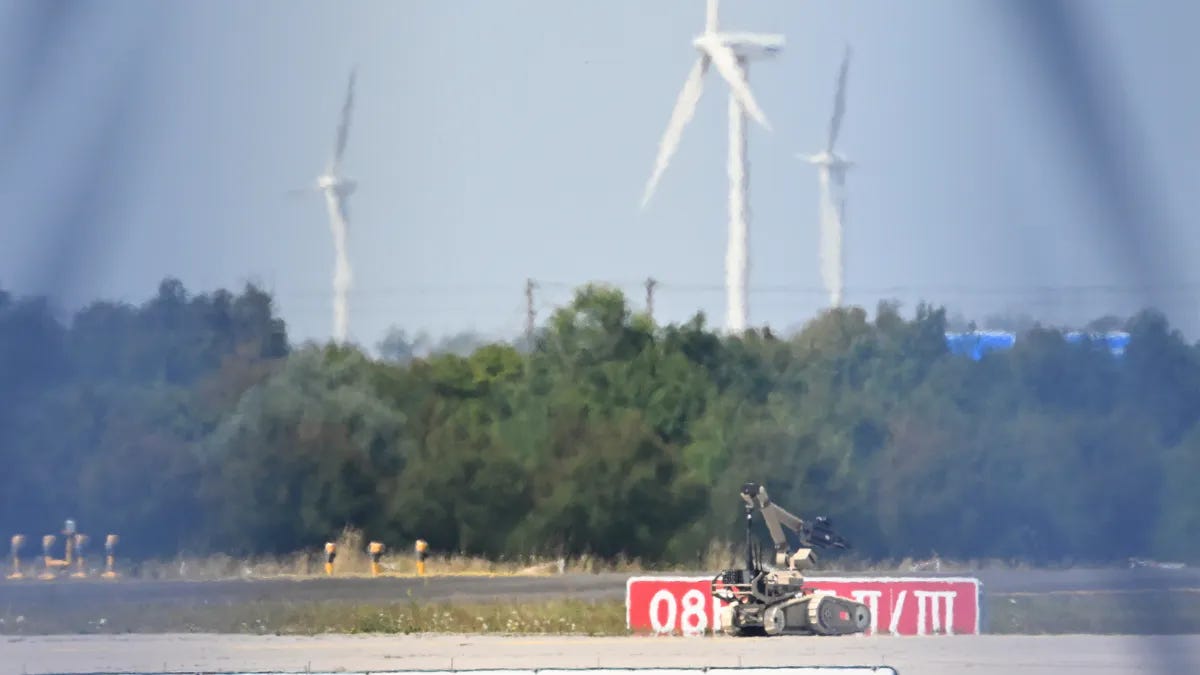
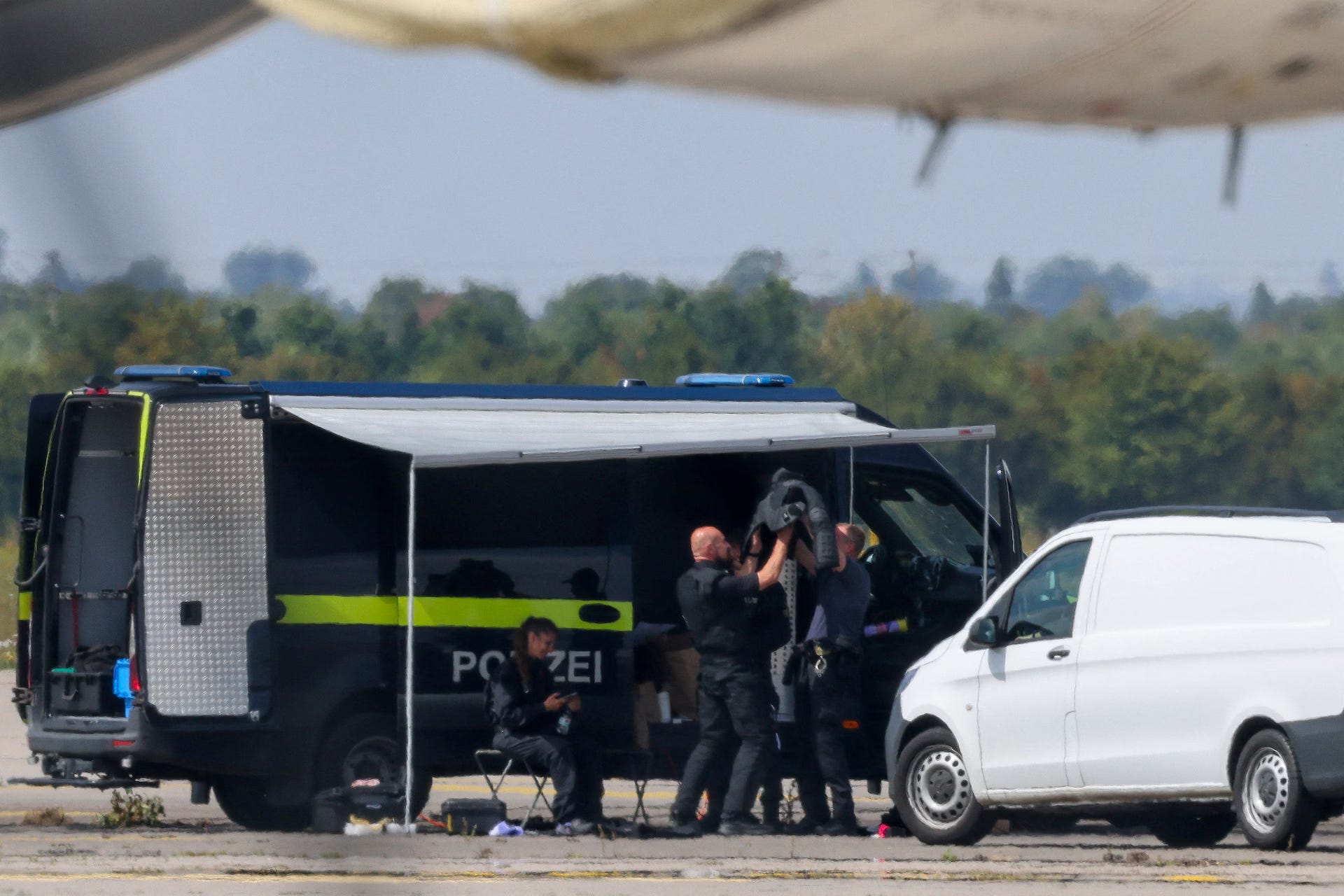
A drone carrying an explosive device was discovered near the airport’s southern runway, reportedly in the vicinity of a Ukrainian cargo aircraft. German authorities deployed a bomb-disposal robot and removed the detonator from the explosive component.
At almost the same time, a DHL cargo aircraft approaching Leipzig/Halle was involved in a collision with an unidentified object during a go-around. The aircraft subsequently diverted to Hannover, where it landed safely and was found to have sustained light damage to its forward section.
The German judiciary has launched a terrorism investigation into the incidents.
The airport was temporarily closed. Aircraft were diverted. Security services were mobilised.
And Europe should be paying very, very close attention.
Because this is not merely another strange incident involving a drone.
It is a warning.
A fucking serious one.
We need to stop pretending that the war against Ukraine exists neatly behind a border that separates “their problem” from “ours.”
It does not.
The security environment has changed.
The battlefield has changed.
And Russia has demonstrated repeatedly that modern conflict does not require tanks crossing a NATO border to threaten European security.
For years, I have warned that we are not finished with Vladimir Putin.
For years, I have warned that Europe cannot continue treating Russia’s war against Ukraine as a geographically contained conflict that can be watched from a safe distance.
For years, I have warned that the West needs to prepare for the possibility that Russian aggression will increasingly manifest itself through sabotage, cyberattacks, intelligence operations, drones, infrastructure attacks, disinformation and other forms of hybrid warfare.
Now we are watching exactly the kind of environment in which those threats become impossible to ignore.
Let me be absolutely clear.
At the time of publication, German authorities have not publicly established who was responsible for the explosive-equipped drone or the unidentified object involved in the DHL incident.
We must not invent evidence.
We must not declare a perpetrator before investigators have completed their work.
But we must also stop being fucking naïve.
Russia must be treated as a serious possibility whenever the evidence and circumstances justify that investigation.
The Kremlin has demonstrated both the capability and strategic incentive to conduct operations below the traditional threshold of open warfare.
European countries have already investigated suspected Russian sabotage and intelligence activity.
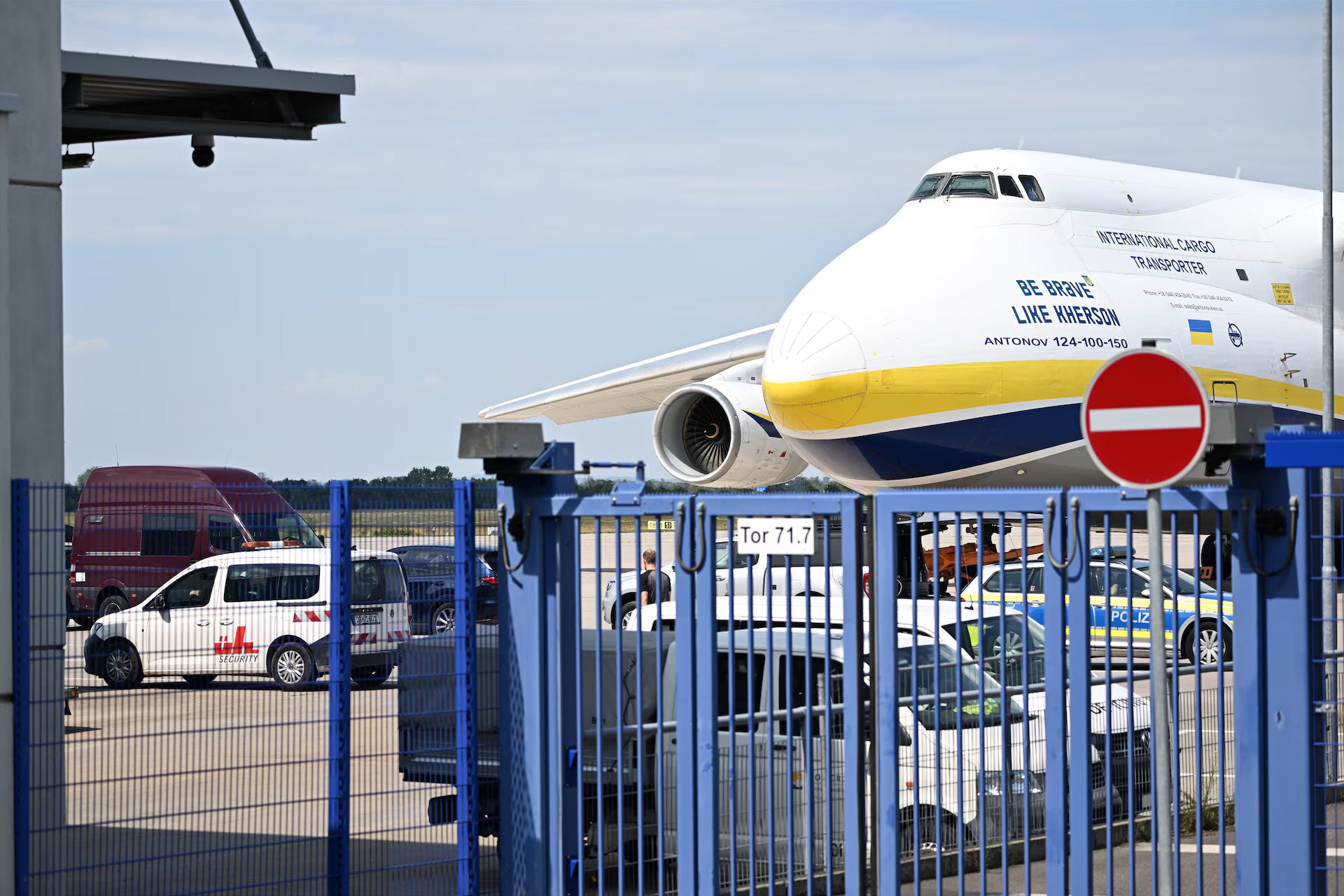
Germany itself has previously dealt with suspicious incidents involving logistics networks and shipments connected to Ukraine.
And Leipzig/Halle is not an insignificant piece of infrastructure.
It is a major cargo and logistics hub.
It is connected to DHL operations.
It handles Ukrainian cargo.
It is used in military and NATO-related logistics.
That makes it strategically important.
And strategically important infrastructure is exactly the kind of environment hostile intelligence services will study.
That does not prove that Russia was responsible for what happened at Leipzig/Halle.
It does prove that Russia’s potential involvement must be taken seriously.
There is a difference.
A very important one.
But there is an even bigger issue here.
Europe is still thinking about security primarily in terms of conventional warfare.
That thinking is dangerously outdated.
A modern adversary does not necessarily need an army to attack an airport.
It needs intelligence.
It needs access.
It needs technology.
It needs patience.
And sometimes it needs nothing more sophisticated than a cheap drone.
That should terrify us.
Because the cost of launching a small drone is insignificant compared with the economic and psychological consequences of disrupting a major airport.
The same principle applies to railways.
Ports.
Energy infrastructure.
Telecommunications.
Military facilities.
Fuel depots.
Data centres.
Industrial sites.
Undersea cables.
Government networks.
Logistics centres.
The modern European state is connected to thousands of vulnerable systems.
An adversary does not need to destroy everything.
It only needs to discover where the weak points are.
That is the essence of hybrid warfare.
Probe.
Observe.
Test.
Adapt.
Repeat.
And eventually exploit.
One drone may be an isolated incident.
But ten incidents across different countries become a pattern.
One cyberattack may be criminal activity.
A coordinated series of attacks against critical infrastructure becomes something else.
One suspicious fire may be an accident.
Repeated fires at strategically relevant facilities demand investigation.
One unidentified object near an aircraft may be a technical anomaly.
Repeated incidents involving military or Ukrainian logistics demand serious intelligence analysis.
This is why Leipzig/Halle matters.
Not because we can already tell the entire story.
But because we need to understand what the story could become.
For too long, European security policy has been dominated by the assumption that peace is the default condition.
It is not.
Peace is something you maintain.
Peace requires deterrence.
Peace requires intelligence.
Peace requires preparation.
Peace requires resilience.
And sometimes peace requires people willing to stand between civilians and those who want to hurt them.
There is nothing peaceful about being unprepared.
There is nothing responsible about leaving vulnerabilities exposed because fixing them is politically inconvenient.
And there is absolutely nothing intelligent about waiting for the second attack before preparing for the first.
Europe needs layered protection.
Not one security guard.
Not one police unit.
Not one radar.
Not one intelligence agency.
Not one military response.
Layered protection.
Detection.
Identification.
Intelligence.
Physical security.
Counter-drone systems.
Cybersecurity.
Emergency response.
Medical response.
Rapid investigation.
Infrastructure redundancy.
Information sharing.
And coordinated national and international decision-making.
This is how modern security works.
The days of thinking about security as a single wall around a single facility are over.
The threat exists across multiple domains simultaneously.
That means our response must do the same.
If a drone enters restricted airspace, someone needs to detect it.
Someone needs to identify it.
Someone needs to determine whether it is hostile.
Someone needs to communicate that information to the right authorities.
Someone needs to protect aircraft and personnel.
Someone needs to respond on the ground.
Someone needs to investigate the origin.
Someone needs to determine whether the incident is connected to something larger.
And someone needs to make sure the same vulnerability cannot simply be exploited again tomorrow.
That is layered security.
That is resilience.
That is deterrence.
And that is what Europe urgently needs.
There is another uncomfortable truth we need to confront.
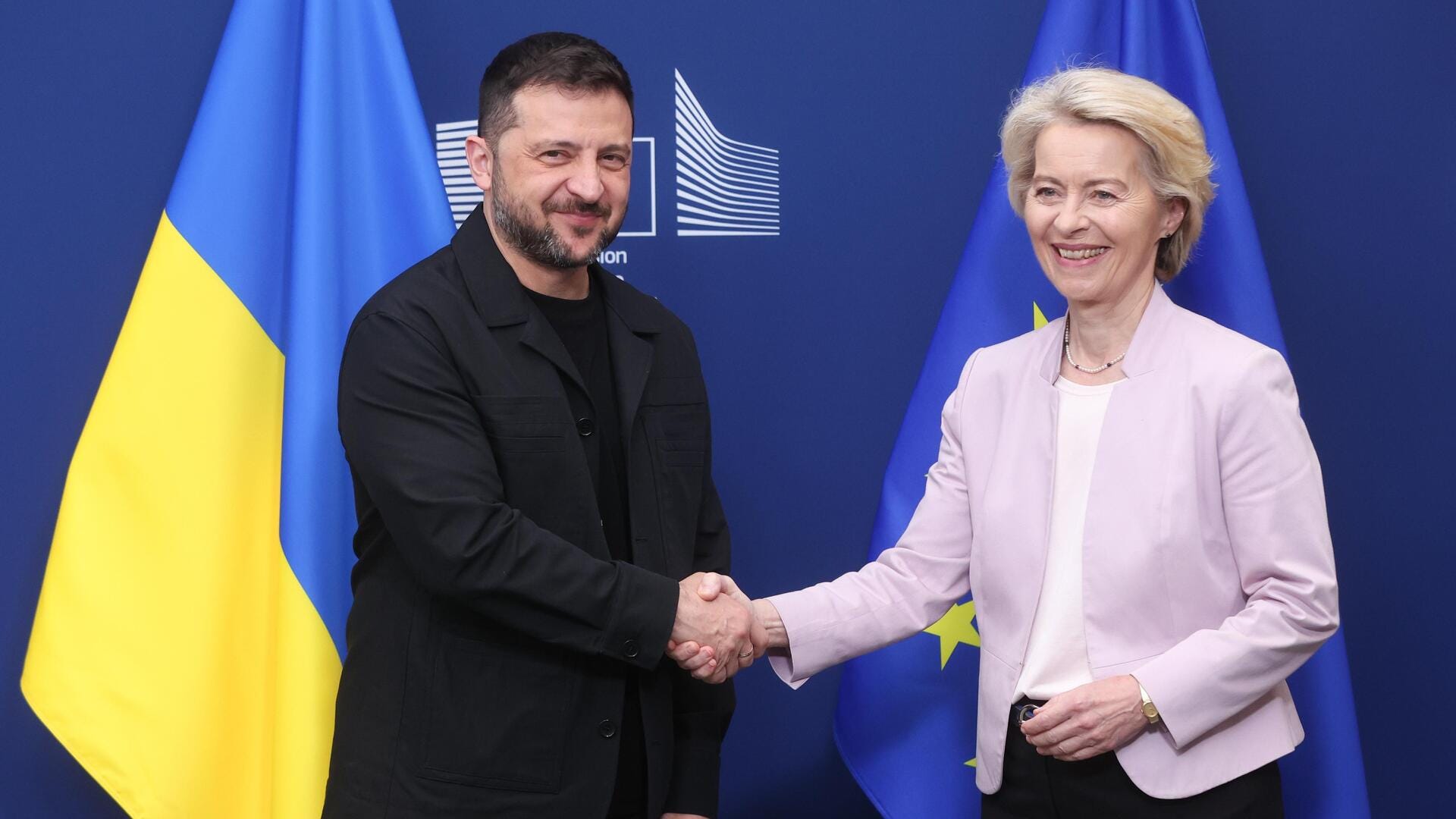
Supporting Ukraine is not simply an act of charity.
Ukraine is fighting a war that directly affects European security.
Ukrainian soldiers are confronting Russian military capabilities every single day.
They are dealing with drones, electronic warfare, missiles, sabotage, cyber operations, intelligence operations and conventional military forces at a scale most European countries have not experienced for generations.
They are learning lessons through blood.
Europe should be learning those lessons through intelligence.
Every drone intercepted in Ukraine is a lesson.
Every Russian tactic identified in Ukraine is a lesson.
Every electronic warfare system encountered is a lesson.
Every logistical vulnerability exposed is a lesson.
Every successful Ukrainian defensive adaptation is a lesson.
We should be studying all of it.
Instead, parts of Europe still behave as though supporting Ukraine is an optional political preference.
It is not.
Ukraine is standing on the front line of European security.
If Ukraine loses, the strategic consequences will not stop at the Ukrainian border.
The security architecture of Europe will change.
Russia will have learned what worked.
Russia will have learned what failed.
Russia will have learned where Europe hesitated.
And our adversaries will remember every weakness.
That is why Ukraine must be supported.
Not because we want endless war.
Quite the opposite.
We support Ukraine because we want the war to end on terms that do not reward aggression.
We support Ukraine because deterrence matters.
We support Ukraine because allowing military aggression to succeed teaches every future aggressor the same lesson:
Attack first.
Wait for political hesitation.
Exploit divisions.
And eventually the West will get tired.
That cannot be the lesson.

There is another issue that needs to be confronted directly.
Europe needs to stop treating responsible private security and humanitarian initiatives as an inconvenience simply because they do not fit comfortably inside existing bureaucratic structures.
Governments have responsibilities.
Armies have responsibilities.
Police have responsibilities.
Intelligence services have responsibilities.
But there are gaps.
Real gaps.
Anyone who has worked in high-risk environments knows this.
There is a massive difference between humanitarian organisations that are designed primarily to deliver aid and military organisations designed to conduct warfare.
Between those two worlds exists an enormous security gap.
Who protects humanitarian logistics?
Who secures critical civilian infrastructure in unstable environments?
Who provides defensive capabilities where governments cannot respond quickly enough?
Who protects aid workers without transforming humanitarian missions into military operations?
Who provides medical, logistical, investigative and defensive expertise under strict legal oversight?
These are legitimate questions.
And they deserve legitimate answers.
This is where initiatives such as AEGIS Guardian Initiative should be considered.
Not as replacements for governments.
Not as private armies.
Not as organisations operating above the law.
But as examples of what can happen when experienced professionals attempt to build lawful, defensive capabilities that bridge the gap between humanitarian operations and traditional security structures.
The answer cannot always be:
“No.”
The answer should sometimes be:
“Show us how you can help.”
Then establish the rules.
Establish oversight.
Establish accountability.
Establish legal boundaries.
Establish transparency.
And if the initiative meets those standards, fucking use the capability.
Because Europe does not need fewer people trying to solve security problems.
It needs more competent people working together.
The enemy does not care which European institution technically owns a problem.
Why the fuck should we?
Russia is dangerous.
But complacency is an amplifier.
A capable adversary becomes significantly more dangerous when confronted by a divided, slow and bureaucratic opponent.
Our greatest vulnerability may not be technological.
It may be institutional.
We have intelligence agencies that do not always share information quickly enough.
Governments that operate in silos.
Military structures that sometimes struggle to coordinate with civilian authorities.
Private companies protecting their own systems without sufficient national integration.
Humanitarian organisations that lack security capabilities.
Security organisations that lack humanitarian expertise.
And politicians who often prefer a comfortable press conference to an uncomfortable preparedness programme.
That has to change.
Now.
Not tomorrow.
Not after the next attack.
Now.
The most dangerous thing about hybrid warfare is that individual incidents can look insignificant.
A drone.
A fire.
A cyberattack.
A damaged cable.
A GPS disruption.
A suspicious package.
An attempted intrusion.
An unexplained explosion.
A disrupted railway.
A compromised logistics system.
Individually, each can be dismissed.
Together, they can form a campaign.
And campaigns change societies.
You do not necessarily need to destroy a country.
You can destabilise it.
You can create uncertainty.
You can undermine confidence.
You can force governments to spend enormous resources responding to incidents.
You can create economic disruption.
You can make civilians afraid.
You can make businesses hesitate.
You can make politicians fight among themselves.
You can make allies question one another.
You can create exhaustion.
And you can wait.
That is why resilience is so important.
We need systems capable of absorbing attacks without collapsing.
We need redundancy.
We need rapid recovery.
We need trained personnel.
We need exercises.
We need intelligence cooperation.
We need public-private partnerships.
We need serious counter-drone capabilities around critical infrastructure.
We need protection for logistics.
We need stronger cybersecurity.
We need better emergency response.
And we need to stop treating these requirements as optional expenses.
They are insurance.
And like every insurance policy, you hope you never need it.
But if the day comes when you do, you will fucking wish you had paid for it.
Let me make another point absolutely clear.
Preparing for war is not the same as wanting war.
Building deterrence is not aggression.
Protecting civilians is not militarisation.
Supporting Ukraine is not warmongering.
Strengthening infrastructure is not escalation.
And preparing for hostile activity is not paranoia.
It is responsible governance.
We should not seek World War III.
We should do everything within reason to prevent it.
But prevention requires strength.
It requires credible capabilities.
It requires unity.
And it requires making sure that any adversary understands that attacking Europe will not produce easy victories.
That is deterrence.
The strongest defence is often the one that makes the attack never happen.
But deterrence only works when the capability behind it is real.
So here is the message.
To European governments:
Stop waiting for another warning.
To NATO:
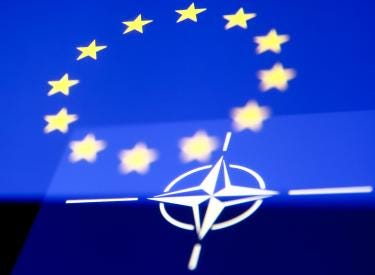
Continue strengthening the eastern flank and improve protection against hybrid threats.
To intelligence agencies:
Share information faster.
To law enforcement:
Treat infrastructure protection as a strategic priority.
To private industry:
Invest in resilience.
To security professionals:
Work together.
To humanitarian organisations:
Demand serious protection for your personnel and missions.
To responsible private initiatives:
Build capability, maintain discipline and operate within the law.
To politicians:
Stop playing institutional games while security vulnerabilities remain exposed.
And to every European citizen:
Pay attention.
Because this concerns you.
It concerns your airport.
Your railway.
Your electricity.
Your communications.
Your economy.
Your family.
Your children.
This is not abstract geopolitics.
This is the environment in which they will grow up.
And if we continue behaving as though history ended in 1991, we are going to learn a very fucking expensive lesson.
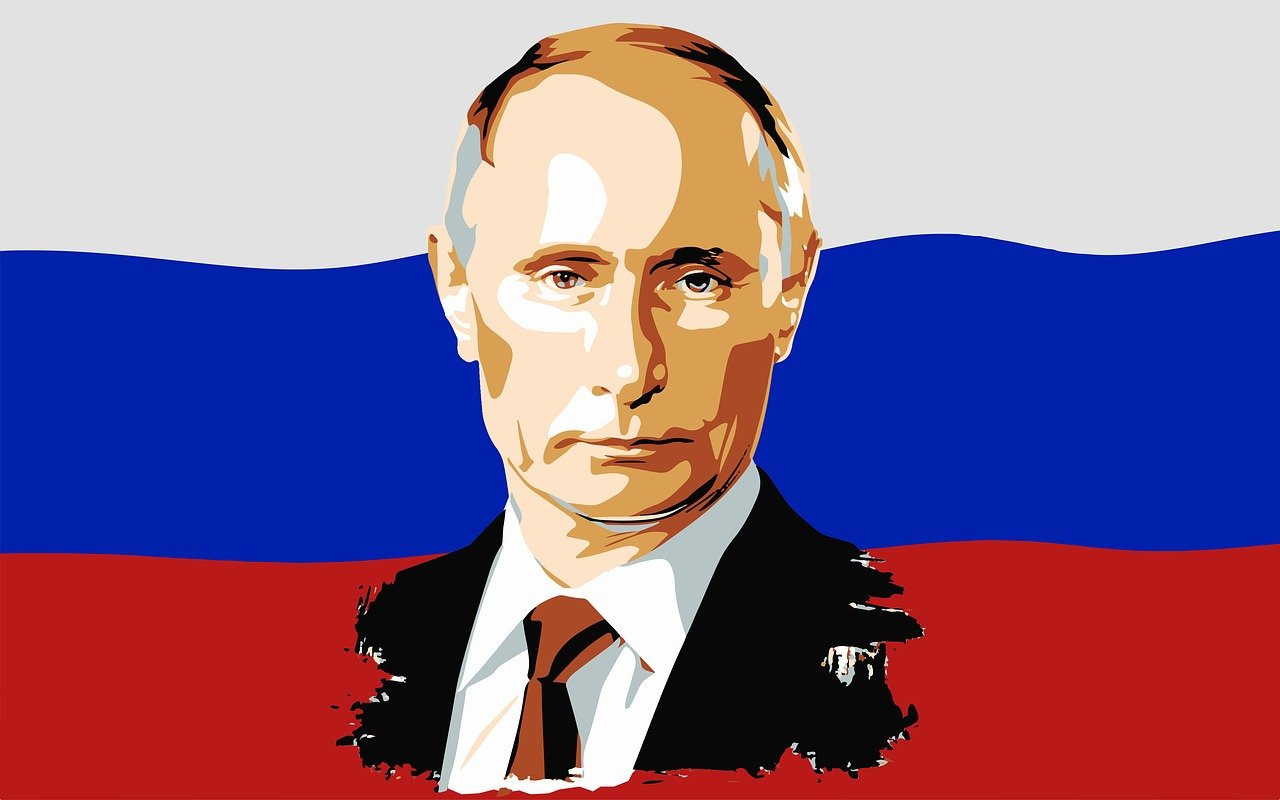
I have been warning for years that we are not done with Putin.
I will continue to say it.
Do not confuse the absence of Russian tanks crossing a NATO border with the absence of Russian aggression against the West.
The battlefield has expanded.
The methods have changed.
The technology has changed.
The threat has changed.
Our response must change with it.
We need to be prepared for the possibility that Russia will continue testing Western resolve through methods designed to remain ambiguous.
That means we need to be able to respond without immediately jumping to conclusions.
Evidence first.
Attribution second.
Response third.
But preparedness must come before all three.
Because once the attack begins, preparation time is over.
Europe does not need another decade of committees.
We need action.
We need Ukraine supported.
We need NATO strengthened.
We need European defence strengthened.
We need critical infrastructure protected.
We need airports protected.
We need logistics protected.
We need counter-drone systems deployed where appropriate.
We need cyber and physical security integrated.
We need intelligence sharing improved.
We need public and private expertise connected.
We need responsible initiatives supported rather than automatically obstructed.
And we need to start doing it now.
Not yesterday.
Not tomorrow.
NOW.
Because before you know it, the unthinkable becomes normal.
And before you know it, the war that everyone believed was “somewhere else” is suddenly sitting on our doorstep.
At that point, there will be no shortage of people explaining what should have been done.
There will be politicians saying they had no warning.
Officials saying nobody could have predicted it.
Experts appearing on television explaining how complicated the situation was.
And people will ask the question that history always asks:
Why the fuck didn’t you prepare when you still had the chance?
I do not want that question asked of us.
I want us to act before it becomes necessary.
I want Europe to understand that security is not a luxury.
I want Ukraine to receive the support it needs.
I want European countries working together instead of competing against one another.
I want responsible private initiatives brought into the security ecosystem where they can contribute legally and effectively.
I want layered protection around the infrastructure upon which our societies depend.
I want intelligence agencies, police, military, industry and civil society communicating.
I want resilience.
I want deterrence.
I want preparedness.
And above all, I want our children to inherit a Europe that understood the danger early enough to defend itself.
Because that is what this ultimately comes down to.
Not politics.
Not ideology.
Not institutional prestige.
Not fucking bureaucracy.
Our future.
Their future.
The future of Europe.
So, Europe, wake the fuck up.
The warning lights are flashing.
The threats are evolving.
Our adversaries are watching.
Ukraine is fighting.
And history is moving.
We have a choice.
We can continue pretending that everything will somehow work itself out.
Or we can stand up, get serious, build the capabilities we need, work together and defend the future before someone else decides it for us.
I know which choice I want.
And I know which choice history will respect.
Support Ukraine.
Protect Europe.
Build layered defence.
Strengthen resilience.
Work together.
Back those who are prepared to contribute responsibly.
Stop the bureaucratic bullshit.
Stop waiting.
Because if we keep waiting until the threat is undeniable, it may already be too fucking late.
Wake the fuck up.
The war is closer than you think.
And the time to prepare is NOW.
Comments
Nothing yet. Say the first thing.
Sign in to join the conversation.