
There comes a moment when warning people is no longer enough.
There comes a moment when governments have to stop talking, stop calculating every political risk, stop hiding behind bureaucracy , and start fucking acting.
I believe Europe has reached that moment.
For almost five years, Ukraine has stood between Russian aggression and the rest of Europe. Ukrainian soldiers have fought, bled, lost friends, lost limbs, lost homes and buried brothers and sisters while defending something much larger than their own borders.
They have been defending the right of a nation to exist.
They have been defending democracy.
They have been defending sovereignty.
They have been defending the principle that borders cannot simply be redrawn by whoever has the biggest army and the least respect for human life.
And whether some European politicians like hearing it or not, Ukraine has also been defending us.
Europe has provided money and weapons. That matters enormously.
But Ukraine has paid the bill in blood.
That difference should never be forgotten.
And now, finally, something is changing.
Europe is waking up.
The West is beginning to understand that this war cannot be managed forever through carefully worded statements, half-measures and endless discussions about whether the Kremlin might become offended.
Fuck that.
We are dealing with a regime that has already demonstrated what it is prepared to do.
The answer is not panic.
The answer is not hatred.
The answer is strength, preparation and unity.
And above everything else:
Look around Europe.
Governments argue.
Institutions compete.
Political parties attack one another.
National interests collide.
Military organisations operate in their own lanes.
Police operate in theirs.
Emergency services operate in theirs.
Humanitarian organisations operate separately.
Private security and defensive initiatives are often treated with suspicion simply because they are not part of the traditional state structure.
And while we are busy arguing about who owns which responsibility, our adversaries are studying every fucking gap between us.
That is the strategic weakness Putin understands.
He does not necessarily have to defeat Europe militarily if he can make Europe politically exhausted, socially divided and institutionally paralysed.
He wants us fighting among ourselves.
He wants governments blaming governments.
He wants citizens losing confidence in institutions.
He wants Europeans asking whether supporting Ukraine is “worth it.”
He wants us frightened of escalation.
He wants us to hesitate.
He wants us to become so consumed by internal arguments that we forget who started the war.
We cannot give him that victory.
We have spent enough time fighting each other like five-year-old children arguing over a fucking toy.
Enough.
We can disagree about politics.
We can disagree about budgets.
We can disagree about ideology.
We can disagree about how defence should be organised.
But when the security of an entire continent is at stake, we have to be capable of standing in the same room and saying:
“This is the threat. This is our objective. This is what each of us is responsible for. Now let’s fucking get it done.”
That is leadership.
That is maturity.
That is deterrence.
Europe does not need to turn every civilian into a soldier.
It does not need dozens of competing private armies.
It does not need institutions pretending they can replace national armed forces.
It needs something much more intelligent:
layered resilience.
The military has its mission.
Police have theirs.
Fire and emergency services have theirs.
Medical teams have theirs.
Local authorities have theirs.
National governments have theirs.
Humanitarian organisations have theirs.
And properly regulated, legally compliant independent defensive organisations can have a defined supporting role as well.
Everyone knows what they are responsible for.
Everyone knows who commands what.
Everyone knows where authority begins and ends.
And everyone trains together before the crisis happens.
That is how a modern democratic society should prepare.
Not by creating chaos.
By eliminating it.

This distinction matters enormously.
The AEGIS Guardian Initiative should never be presented as a replacement for a national military.
It is not.
It should never attempt to take over military functions.
It should not operate outside democratic civilian authority.
It should not become some romanticised private army.
That would be precisely the wrong direction.
The concept should be much more practical:
support the system so the military can concentrate on winning the military fight.
If soldiers are forced to spend enormous amounts of time protecting every piece of civilian infrastructure, every humanitarian route, every logistics node and every essential facility, then military capacity is being diverted from the battlefield.
That makes no fucking sense.
Imagine a layered system in which properly trained and authorised defensive personnel work alongside local authorities, emergency services, police and humanitarian organisations to support the protection of designated civilian infrastructure and logistics.
Power infrastructure.
Water facilities.
Hospitals.
Emergency centres.
Humanitarian supply routes.
Evacuation infrastructure.
Critical logistics.
Communication resilience.
Civilian protection.
That does not replace the army.
It helps free the army.
And that distinction could become strategically important.
The soldiers should be able to concentrate on defeating the armed threat.
The civilian-security layer should concentrate on keeping society functioning.
The emergency services should concentrate on saving lives.
The police should concentrate on public security and law enforcement.
The local government should concentrate on keeping communities functioning.
The national government should concentrate on strategic coordination.
And everyone should be connected.
That is what a functioning defence ecosystem looks like.
One of the biggest mistakes Europe could make now is protecting institutional boundaries instead of protecting people.
“We don’t do that.”
“That’s the military’s responsibility.”
“That’s the police.”
“That’s civilian.”
“That’s private.”
“That’s federal.”
“That’s local.”
“That’s somebody else’s department.”
Fine.
Put those arguments aside.
Because missiles do not give a shit about departmental boundaries.
Sabotage does not care which ministry owns a facility.
A destroyed bridge does not care whether it belongs to the municipality, the federal government or a private company.
A humanitarian crisis does not stop because two agencies cannot agree about jurisdiction.
And an adversary certainly does not respect our paperwork.
So build interoperability.
Build joint planning.
Build communication systems.
Build exercises.
Build legal frameworks.
Build trusted partnerships.
Know who calls whom.
Know who provides what.
Know where resources are.
Know which facilities require priority protection.
Know how emergency logistics continue when infrastructure is damaged.
Know how civilians are evacuated.
Know how humanitarian corridors are supported.
Know how local government continues operating.
Do this before the crisis.
Because once the shit hits the fan, it is too late to organise a meeting about cooperation.
Ukraine does not need another European speech saying how deeply concerned we are.
It needs capability.
It needs air defence.
It needs ammunition.
It needs drones.
It needs intelligence.
It needs logistics.
It needs industrial support.
It needs the technology required to survive and ultimately force Russia to abandon its attempt at conquest.
And it needs sustained Western political commitment.
Not support that lasts until the next election.
Not support that depends on whether the headlines are favourable.
Not support that collapses whenever Moscow threatens escalation.
Sustained support.
Because the Kremlin’s strategy depends upon endurance.
It hopes Ukraine will become exhausted.
It hopes Europe will become tired.
It hopes American politics will become divided.
It hopes Western voters will eventually say:
“Enough. Just give Putin something.”
That cannot become the strategy.
If negotiations eventually happen, Ukraine must negotiate from strength.
Not desperation.
Not exhaustion.
Not surrender.
Strength.
That means the West must make continued aggression increasingly expensive and increasingly unsustainable.
Not because we want endless war.
Because we want a peace that actually fucking lasts.
There is nothing contradictory about wanting peace while demanding stronger military support for Ukraine.
Quite the opposite.
If we genuinely want peace, we must ensure that aggression fails.
A dictator does not negotiate seriously because we ask nicely.
He negotiates when the strategic calculation changes.
That is why Ukraine needs the capability to stop Russia from achieving its objectives.
That is why Europe needs the ability to defend itself.
That is why sanctions and economic pressure matter.
That is why defence production matters.
That is why air defence matters.
That is why intelligence cooperation matters.
That is why resilience matters.
And that is why unity matters.
The objective is not revenge.
The objective is not destroying people because they are Russian.
The objective is defeating a strategy of imperial aggression.
There is a massive difference.
We should never confuse the Russian people with the Kremlin’s war machine.
Our fight is against aggression, authoritarianism and the doctrine that says powerful states have the right to decide which neighbours are allowed to exist.
That doctrine must fail.
Europe also needs to understand something Ukraine has already learned the hard way:
Modern war does not stay neatly inside a battlefield.
Energy infrastructure becomes a target.
Communications become a target.
Railways become a target.
Ports become a target.
Cyber networks become a target.
Civilian morale becomes a target.
Information becomes a weapon.
Supply chains become vulnerable.
Emergency services become overloaded.
And critical infrastructure becomes strategically important.
So defence cannot simply mean buying more tanks and putting them behind a fence.
We need a national and European resilience architecture.
Military defence.
Civil defence.
Cyber defence.
Infrastructure protection.
Emergency preparedness.
Medical resilience.
Energy resilience.
Transport resilience.
Information resilience.
Humanitarian logistics.
Local preparedness.
And coordinated law enforcement.
All connected.
One system.
Many capabilities.
One purpose.
This is perhaps the most important point.
We now have an opportunity.
Europe is finally discussing defence more seriously.
European governments are increasing defence spending.
Ukraine is developing one of the most experienced defence ecosystems in the world.
Western industry is beginning to understand that production capacity matters.
NATO is adapting.
European governments are increasingly aware that strategic dependence carries enormous risks.
The political environment is changing.
So we have a fighting chance.
But a chance is not victory.
A plan is not implementation.
A declaration is not capability.
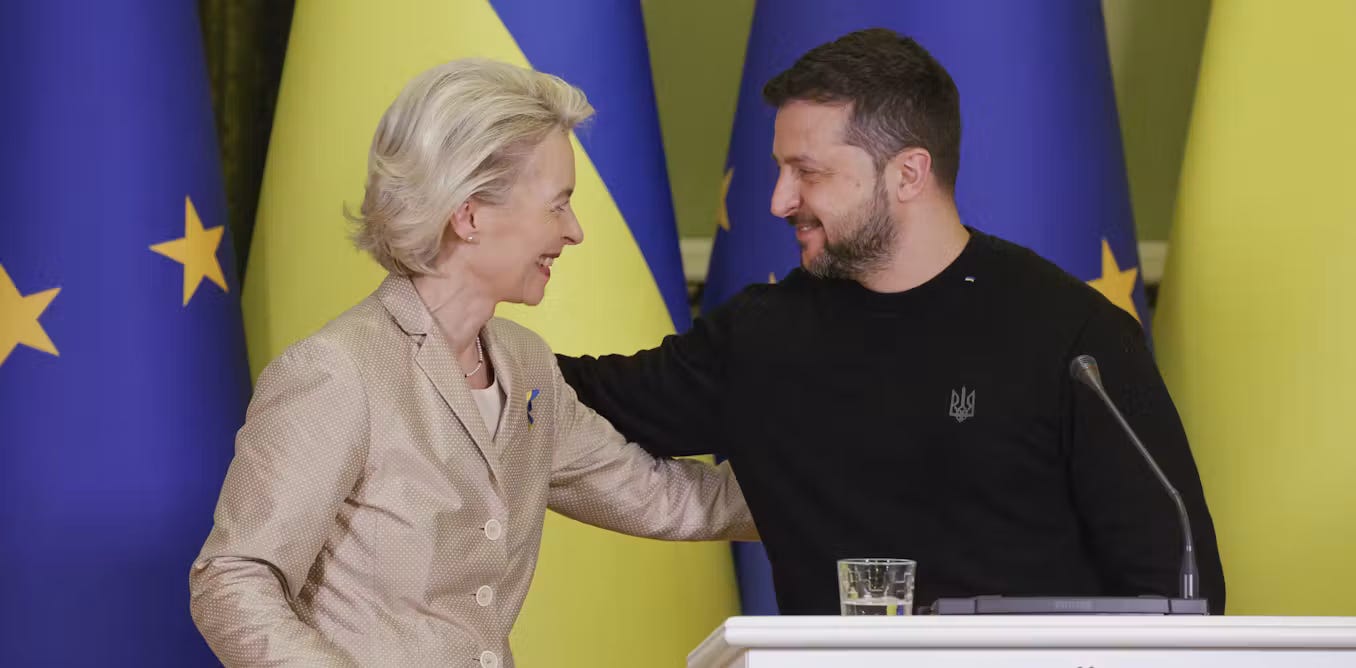
And a summit photograph is not deterrence.
We need to turn political momentum into permanent structures.
Build.
Train.
Coordinate.
Exercise.
Produce.
Stockpile.
Integrate.
Prepare.
Repeat.
That is how deterrence is built.

Civilian resilience does not mean handing civilians weapons and telling them to fight.
It means preparing society to function under pressure.
People should know where reliable information comes from.
Communities should understand emergency procedures.
Hospitals should have contingency plans.
Municipalities should have backup communications.
Emergency services should have resilient logistics.
Critical infrastructure should have continuity plans.
Companies operating essential infrastructure should understand their responsibilities.
Humanitarian organisations should have established coordination mechanisms.
And governments should have already tested these systems before the emergency arrives.
That is civil resilience.
That is responsible government.
And that is how you make society harder to intimidate.
Police cannot be an afterthought.
Neither can intelligence services.
Neither can emergency responders.
Hybrid warfare frequently operates below the threshold of conventional war.
Sabotage.
Espionage.
Cyberattacks.
Disinformation.
Infrastructure interference.
Coercion.
Organised criminal networks being exploited by hostile intelligence services.
These threats require coordination.
Police need information.
Local governments need information.
Infrastructure operators need information.
Emergency services need information.
And national security authorities need information flowing upward from the local level.
That requires trust.
It requires protocols.
It requires exercises.
And it requires something Europe desperately needs:
people who stop protecting their institutional turf and start protecting the fucking public.
I keep coming back to this.
Because behind every statistic is a human being.
A son.
A daughter.
A father.
A mother.
A brother.
A sister.
A friend.
A medic.
A volunteer.
A firefighter.
A journalist.
A soldier.
A civilian.
Someone who had plans for tomorrow.
Someone who expected to go home.
Someone who never did.
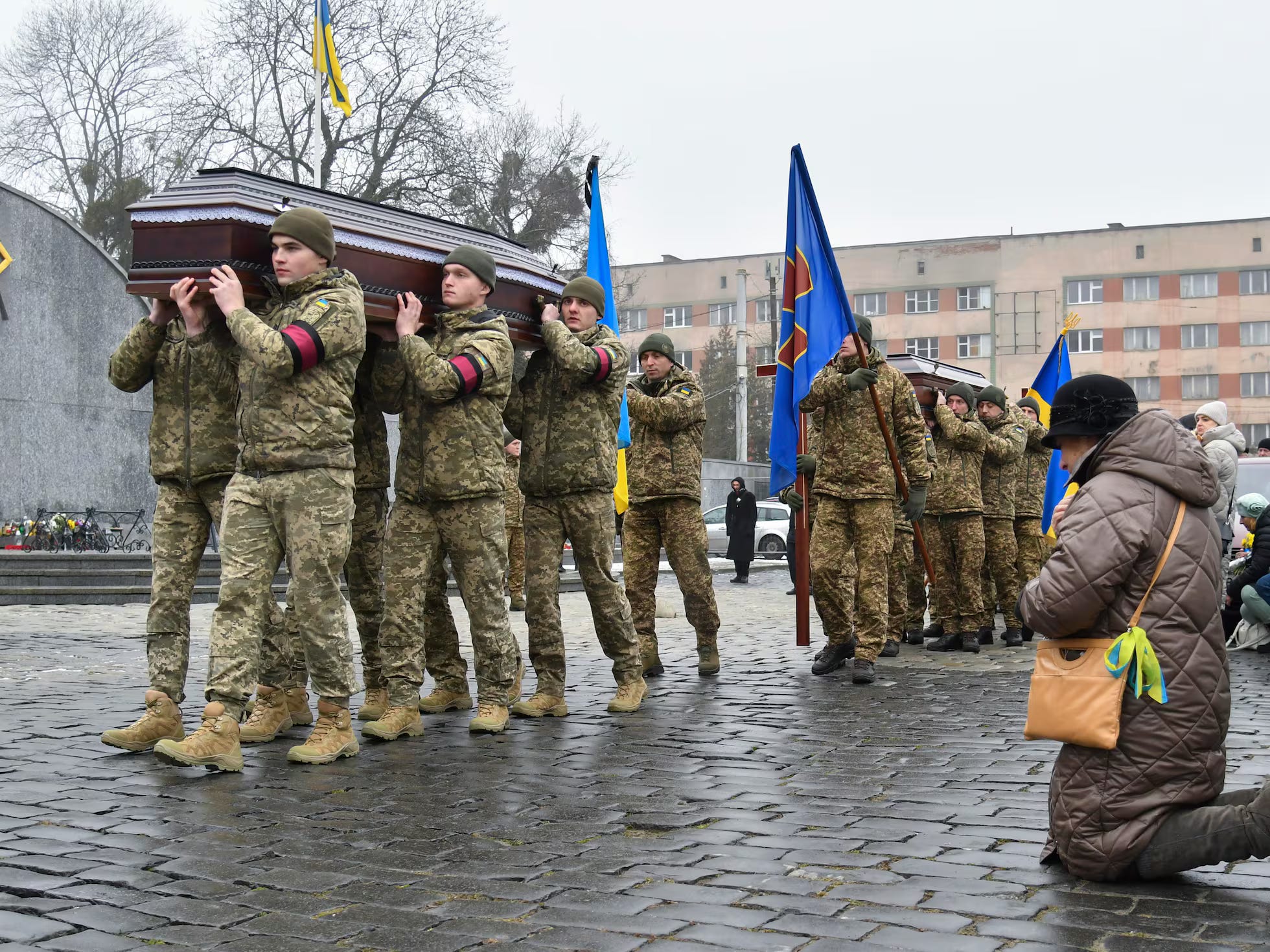
Ukraine’s fallen did not die so European politicians could spend another five years arguing over terminology.
They did not die so governments could issue beautifully written statements.
They did not die so we could say:
“We stand with Ukraine.”
They died defending the principle that freedom cannot simply be taken by force.
So yes.
We should stand with Ukraine.
But standing with Ukraine means doing something.
Send the weapons.
Build the factories.
Strengthen the air defence.
Protect the supply routes.
Support the wounded.
Help the civilians.
Train the institutions.
Build resilience.
Maintain the pressure.
And do not abandon them when the political attention moves elsewhere.
We have spent too long pretending that unity means agreeing about everything.
It doesn’t.
Unity means understanding which things are bigger than our disagreements.
Europe can fight over budgets.
Europe can fight over migration.
Europe can fight over taxation.
Europe can fight over political ideology.
Europe can fight over domestic policy.
But when an authoritarian state attempts to destroy the sovereignty of a European nation, there must be a common strategic response.
Otherwise all the arguments become irrelevant.
Because if we lose the security environment that allows democracy to function, we lose the ability to argue freely about anything else.
That is the brutal reality.
Freedom requires protection.
Democracy requires resilience.
Peace requires deterrence.
And deterrence requires capability.
This is the model we should be building.
The armed forces provide the military power.
Police provide law enforcement.
Emergency services save lives.
Medical teams treat the wounded.
Local governments maintain communities.
National governments coordinate national strategy.
European institutions coordinate continental resources.
Humanitarian organisations deliver assistance.
Industry produces the equipment and infrastructure.
And independent defensive initiatives such as AEGIS Guardian Initiative can, where legally authorised and properly supervised, help fill civilian protection and resilience gaps.
Not above the state.
Not outside the law.
Not competing with the military.
Supporting the system.
That is the constructive answer.
That is the professional answer.
And frankly, it is the fucking sensible answer.
Not next year.
Not after another summit.
Not after another election.
Not after another Russian attack.
Now.
Europe has finally started to understand the seriousness of the threat.
Good.
Now prove it.
Arm Ukraine.
Strengthen European defence.
Build layered resilience.
Protect critical infrastructure.
Integrate emergency planning.
Improve law-enforcement cooperation.
Support humanitarian logistics.
Expand defence production.
Build strategic stockpiles.
Train together.
Exercise together.
Plan together.
And when negotiations become possible, make sure Ukraine sits at the table with the strongest possible hand.
Because peace should be the result of strength , not the reward for aggression.
This phrase must become more than a slogan.
It must become a doctrine.
No more waiting until the missiles arrive.
No more pretending that threats disappear because we refuse to discuss them.
No more allowing bureaucracy to defeat preparedness.
No more allowing institutions to fight each other while hostile actors exploit the gaps.
No more abandoning Ukraine because supporting Ukraine became politically inconvenient.
No more allowing dictators to believe that democratic societies can be bullied into surrender.
And absolutely:
NO MORE DIVIDING OURSELVES FOR THE BENEFIT OF OUR ENEMIES.
We have already seen where division leads.
We have already seen what hesitation costs.
We have already seen what happens when dictators believe democratic nations are too afraid, too tired or too divided to resist.
We cannot repeat that mistake.
Not this generation.
Not the next one.
Not ever again.
So to the governments of Europe:
Get your fucking act together.
To the institutions:
Stop protecting your turf and start protecting the people.
To the military:
We support you. We will build the resilience behind you so you can concentrate on your mission.
To law enforcement:
You are part of national resilience, not an isolated island.
To emergency services:
You should never have to face a strategic crisis without the support architecture you deserve.
To local governments:
You are on the front line of civilian resilience. Build your networks now.
To industry:
Produce what freedom requires.
To humanitarian organisations:
Keep saving lives. We need you.
To responsible independent initiatives such as AEGIS Guardian Initiative:
Build professional capability, stay within the law, work with legitimate authorities, and prove that civilian resilience can strengthen , not undermine , the state.
And to Ukraine:
You are not alone.
Europe has heard the alarm.
Now Europe must answer it.
Because the Ukrainian defenders have already done what we asked them to do.
They stood.
They fought.
They endured.
They protected their country.
They protected their families.
And whether some people want to admit it or not, they also bought the rest of us time.
Now it is our turn to use that time wisely.
Not with fear.
Not with hatred.
Not with reckless escalation.
With preparation.
With capability.
With unity.
With courage.
And with the absolute refusal to allow aggression to become normal.
The future of Europe will not be decided by one speech, one weapon or one summit.
It will be decided by whether we finally learn to operate as one strategic community.
Different nations.
Different governments.
Different institutions.
Different people.
But one common understanding:
An attack on the security of one democratic nation threatens the security of all of us.
So build the shield.
Support Ukraine.
Strengthen Europe.
Protect civilians.
Protect infrastructure.
Protect humanitarian routes.
Protect the people who protect the people.
Let the military concentrate on the military mission.
Let the emergency services save lives.
Let law enforcement enforce the law.
Let governments govern.
Let humanitarian organisations deliver aid.
Let responsible civilian-security initiatives fill clearly defined gaps.
And let every part of this machine work together.
Because that is what a united Europe should look like.
Not perfect.
Not identical.
But coordinated.
Resilient.
Prepared.
And absolutely unwilling to be bullied.
The alarm bell is screaming.
We have heard it.
We have finally fucking heard it.
Now answer it.
NO MORE.
NO MORE CONQUEST.
NO MORE DIVISION.
NO MORE HESITATION.
NO MORE ABANDONING THOSE WHO STAND ON THE FRONT LINE OF FREEDOM.
NO MORE LETTING DICTATORS SET THE RULES.
NO MORE.
EVER.
AGAIN.
Build the shield.
Stand with Ukraine.
Stand together.
And make sure that when history looks back at this generation, it does not say that we saw the warning and did nothing.
Let it say that we finally woke the fuck up.
And when we did, we stood together.
One Europe. One united West. One purpose.
A free Ukraine. A secure Europe. And a peace built on strength strong enough that no dictator ever again mistakes our restraint for weakness.
Comments
Nothing yet. Say the first thing.
Sign in to join the conversation.