
Let us stop bullshitting ourselves.
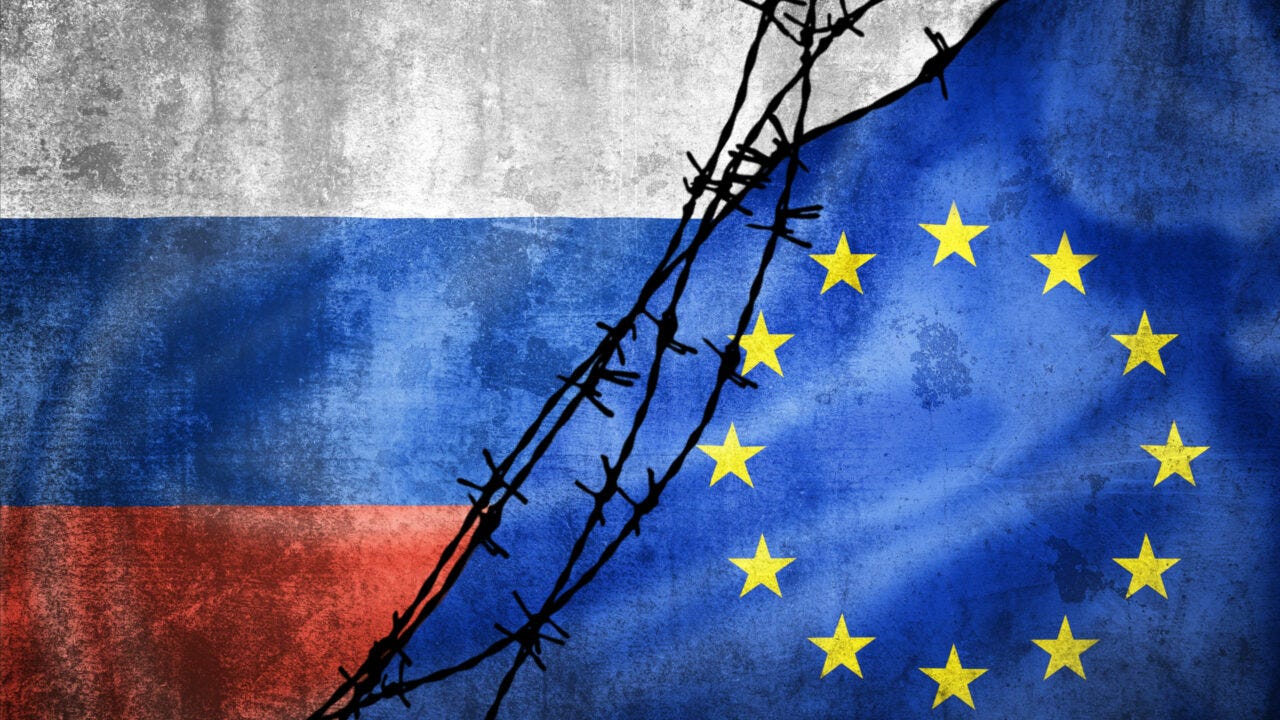
Europe is not prepared for the security environment it has entered.
We can dress it up in diplomatic language. We can hide behind committees, strategic reviews, classified assessments and carefully polished statements from ministries.
We can keep saying that Europe is “monitoring the situation.”
We can keep saying that there is “no confirmed attribution.”
We can keep congratulating ourselves every time another incident is contained before people are killed.
But sooner or later, that complacency is going to cost lives.
The incident at Leipzig/Halle Airport should be a fucking wake-up call.
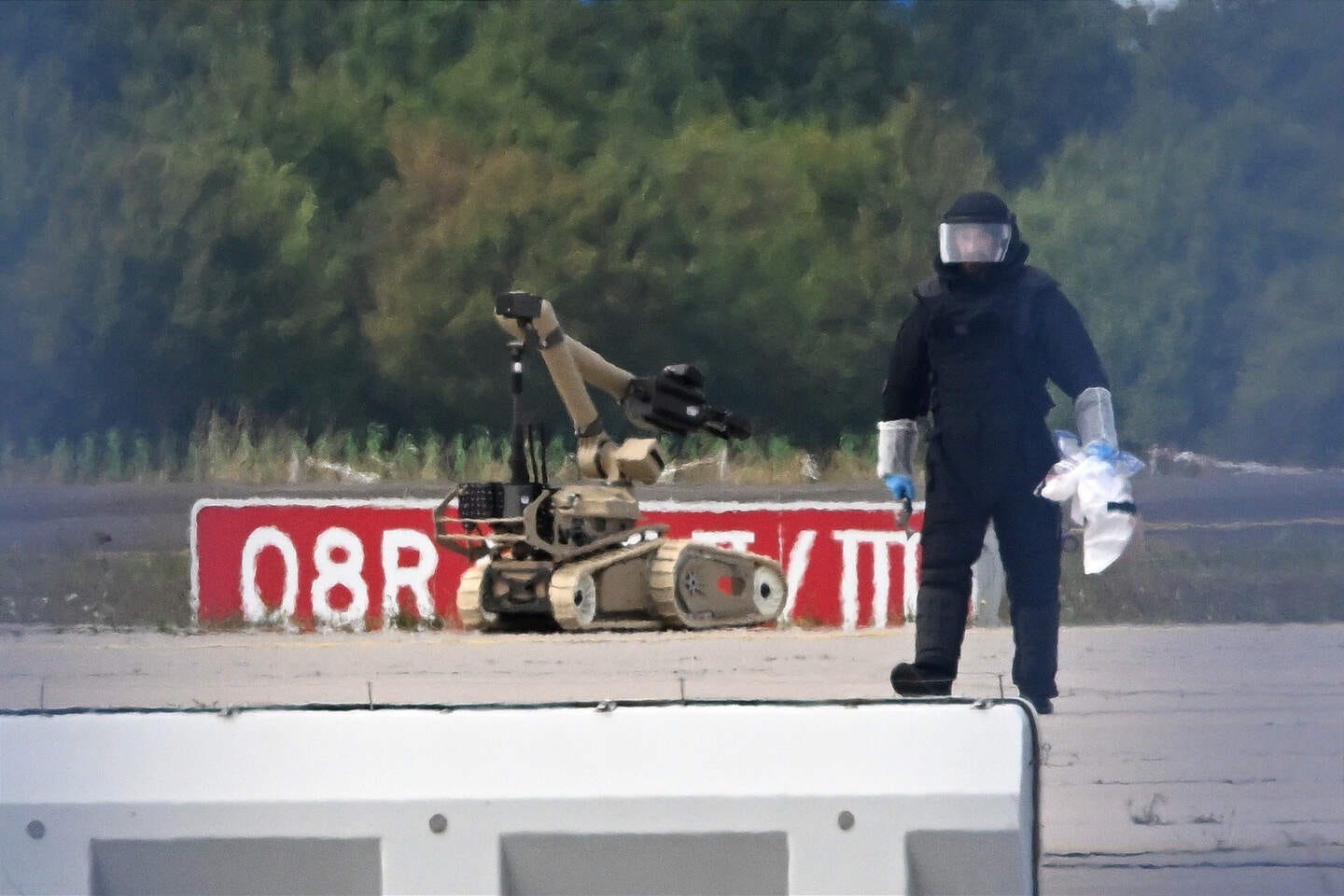
An explosive-equipped drone was discovered close to Ukrainian cargo aircraft at one of Germany’s strategically important airports. Authorities launched an investigation. Russia has denied involvement and called the incident a staged provocation. German officials have not established who was responsible.
Fine.
Investigate it.
Follow the evidence.
Identify whoever is responsible.
But while the politicians argue about attribution, there is a much bigger question sitting directly in front of them:
Why the hell are we still allowing critical European infrastructure to remain vulnerable to relatively cheap unmanned systems, sabotage and hybrid attacks?
That is the question.
Not tomorrow.
Not after another attack.
Now.
Because if Europe waits until there are bodies on the ground before it finally decides that layered protection is necessary, then Europe has failed at the most basic responsibility of government:
protecting its people.
The Russian embassy says there is no Russian hybrid warfare campaign.
Russia denies responsibility.
Others point toward Moscow.
Others warn of false-flag operations.
Intelligence services investigate.
That is how it should work.
Nobody should convict a state publicly without evidence.
But here is where European policymakers are getting dangerously confused:
Uncertainty about who attacked us is not the same thing as uncertainty about whether we need better protection.
If Russia was responsible, strengthen protection.
If a proxy was responsible, strengthen protection.
If a criminal network was responsible, strengthen protection.
If an extremist organisation was responsible, strengthen protection.
If it turns out to have been an independent actor, strengthen protection.
Whatever the final answer is, the vulnerability remains.
And that vulnerability is the real fucking problem.
An adversary does not need to announce itself before exploiting a weakness.
A drone does not carry a diplomatic passport.
A sabotage team does not request permission from Brussels.
A cyberattack does not stop at a border.
An explosive device does not care whether the government has finished its security review.
Threats operate in the real world.
Our bureaucracy operates on paperwork.
That gap is where danger lives.
For decades, European defence planning concentrated overwhelmingly on conventional military threats.
Aircraft.
Tanks.
Ships.
Missiles.
Infantry.
That remains essential.
But the battlefield has expanded.
The modern security environment includes drones, cyberattacks, sabotage, disinformation, attacks against infrastructure, GPS interference, telecommunications disruption, attacks against logistics, espionage and attempts to manipulate civilian populations.
And the fucking genius of these methods is that they do not necessarily require a conventional war.
An attacker can cause enormous disruption without crossing a border with tanks.
A cheap drone can force an airport to close.
A small sabotage operation can disrupt a railway.
A cyberattack can cripple a company supporting critical infrastructure.
A few carefully chosen targets can create disproportionate economic and psychological consequences.
That is asymmetric warfare.
And Europe is still behaving as if security begins and ends at the barracks gate.
It doesn’t.
The battlefield is everywhere critical infrastructure exists.
Leipzig/Halle matters because it is not some isolated field in the middle of nowhere.
It is a major logistics facility.
It is connected to European transport networks.
It has relevance to military logistics and Ukrainian cargo operations.
That makes the discovery of an explosive-equipped drone near aircraft particularly serious.
But the real lesson goes beyond Leipzig.
Ask yourself what happens if the next drone reaches its intended target.
What happens if the next device is larger?
What happens if there are three drones instead of one?
What happens if the target is not an airport but a railway junction?
What happens if the target is an energy facility?
What happens if telecommunications are disrupted simultaneously?
What happens if a cyberattack hits while a physical attack is taking place?
What happens if emergency responders are deliberately distracted?
What happens if several European countries are targeted simultaneously?
That is the scenario European governments should be planning for.
Not because it is inevitable.
Because responsible governments prepare for scenarios that are possible.
This is where Europe needs a radical change in thinking.
A fence is not enough.
A camera is not enough.
A police patrol is not enough.
A radar is not enough.
A military response is not enough.
A cybersecurity team is not enough.
An intelligence agency is not enough.
An NGO is not enough.
A private security company is not enough.
The answer is layered protection.
Detection must feed identification.
Identification must feed intelligence.
Intelligence must feed decision-making.
Decision-making must trigger an appropriate response.
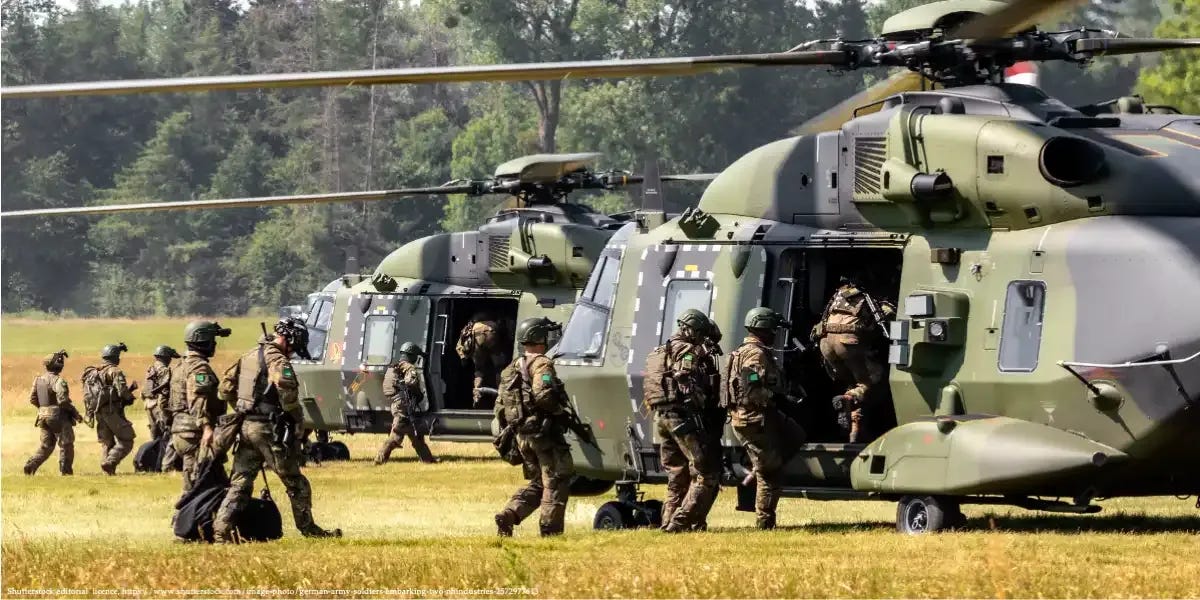
The response must connect police, military support where legally authorised, civil protection, medical services, fire and rescue, infrastructure operators and specialist teams.
And all of them need a common operating picture.
That is how you build resilience.
Not with another fucking PowerPoint presentation.
Not with another European declaration saying that “resilience remains a priority.”
With capability.
With trained people.
With equipment.
With interoperability.
With exercises.
With contingency plans.
With rapid response.
With redundancy.
With accountability.
There is another uncomfortable gap.
Humanitarian organisations and civilian responders increasingly operate in environments where security threats are becoming more sophisticated.
Yet humanitarian organisations are not military forces.
They should not be turned into military organisations.
Their mission is to save lives, provide assistance and protect human dignity.
But telling humanitarian personnel to enter dangerous environments without adequate defensive protection is equally fucking irresponsible.
There is a space between a traditional NGO and a military formation.
That space needs to be addressed.
This is where concepts such as the AEGIS Guardian Initiative deserve serious consideration.
Not as a private army.
Not as a replacement for NATO.
Not as a replacement for national armed forces.
Not as some cowboy organisation operating outside democratic control.
Quite the opposite.
The concept should be built around a legally compliant, strictly defensive structure capable of connecting humanitarian protection, civil protection, medical response, logistics, infrastructure security and specialist emergency capabilities.
The objective is brutally simple:
Protect people so legitimate humanitarian and civilian missions can continue.
That is not militarisation.
That is responsibility.

Europe has NATO.
Europe has national militaries.
Europe has police.
Europe has intelligence agencies.
Europe has civil-protection authorities.
Europe has emergency medical services.
Europe has humanitarian organisations.
Europe has private infrastructure operators.
So why are there still gaps?
Because everyone has a mandate.
Everyone has jurisdiction.
Everyone has procedures.
And when a crisis crosses the boundaries between those organisations, someone can end up assuming that somebody else is dealing with it.
That is fucking dangerous.
The enemy does not care about our organisational charts.
A drone does not stop in midair because NATO responsibility ends at a particular line.
A sabotage team does not care whether an installation is technically civilian or military.
A cyberattack does not ask which ministry owns the server.
A humanitarian crisis does not wait for procurement procedures.
Reality moves faster than bureaucracy.
Our security architecture needs to move faster than reality.
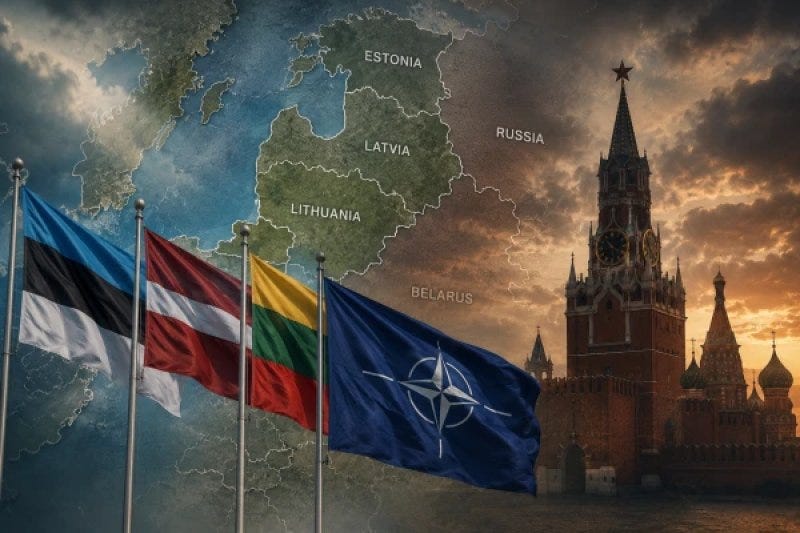
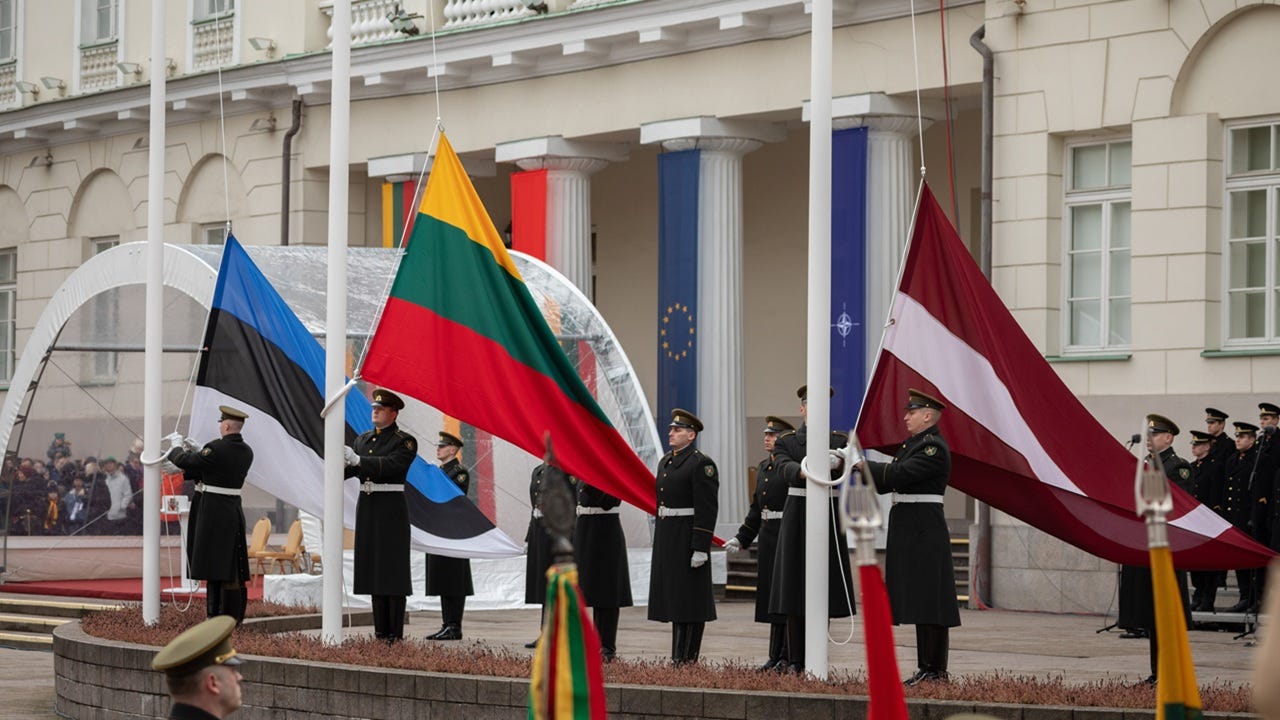
The Baltic states are on the frontline.
Everyone knows it.
Estonia.
Latvia.
Lithuania.
They understand the danger because geography has made the threat impossible to ignore.
They are strengthening their defences.
They are watching Russia.
They are preparing for provocations.
Lithuania has warned that Russia could potentially consider provocative or false-flag operations involving Ukrainian drones.
That warning deserves attention.
But Europe must understand something fundamental:
The Baltic states are not a buffer zone between Russia and the rest of Europe.
They are Europe.
An attack on Lithuania is an attack on European security.
A disruption in Latvia affects European logistics.
A crisis in Estonia affects NATO.
And the infrastructure supporting the Baltic region runs through the rest of Europe.
The answer therefore cannot simply be:
“Protect the Baltics.”
No.
Protect Europe.
This is the reality politicians need to accept.
There is no completely safe rear.
A port in Belgium can support operations thousands of kilometres away.
A railway in Germany can transport military equipment.
A logistics hub in the Netherlands can support NATO.
An airport in Spain can support strategic transport.
A telecommunications facility in France can carry critical information.
An energy facility anywhere in Europe can support millions of people.
Everything is connected.
That means everything can potentially become strategically relevant.
The idea that only Eastern Europe needs serious resilience while Western Europe can continue operating as though nothing has changed is fucking outdated.
The threat does not stop at the Polish border.
Neither should European preparedness.
Europe has enough committees.
Enough summits.
Enough declarations.
Enough working groups.
Enough strategic documents.
Enough officials saying they are “deeply concerned.”
Concern does not stop drones.
Statements do not intercept threats.
Meetings do not repair damaged infrastructure.
Press conferences do not save civilians.
Capability does.
Europe needs a continental resilience architecture capable of connecting:
Counter-drone detection and response
Critical-infrastructure security
Cyber defence
Intelligence sharing
Civil protection
Emergency medical response
Fire and rescue
Explosive-ordnance capability
Military support where legally authorised
Humanitarian protection
Emergency logistics
Secure communications
Infrastructure redundancy
Rapid cross-border deployment
And it needs these capabilities exercised together.
Not separately.
Together.
Because a real attack will not arrive neatly labelled:
“This is a police problem.”
Or:
“This is a military problem.”
Or:
“This is a humanitarian problem.”
It will simply be a fucking crisis.
And Europe will have to respond.
Every European security professional understands this.
Time matters.
Minutes matter.
Sometimes seconds matter.
The difference between detecting a drone at the perimeter and detecting it after it reaches a protected area can be enormous.
The difference between a medical team being five minutes away and forty-five minutes away can be the difference between life and death.
The difference between having redundant communications and losing communications can determine whether an emergency response succeeds or collapses.
That is why preparedness must exist before the crisis.
Not during it.
You cannot build a response capability after the explosion.
You cannot order equipment after the attack.
You cannot train personnel after the casualties.
You cannot establish command relationships once everything is already going to hell.
You prepare beforehand.
That is the entire fucking point of preparedness.
A serious system assumes that something will fail.
A radar can fail.
Communications can fail.
Electricity can fail.
A road can be blocked.
A bridge can be damaged.
A command centre can be compromised.
A network can be attacked.
Personnel can become casualties.
Therefore, every critical system requires redundancy.
If one sensor fails, another must see.
If one communications network fails, another must carry the message.
If one hospital becomes overwhelmed, another must receive patients.
If one railway is disabled, another route must exist.
If one response team is unavailable, another must deploy.
If one government agency becomes overwhelmed, another capability must be available.
That is resilience.
Not perfection.
Resilience means the system keeps functioning after something goes wrong.
This is perhaps the most dangerous mistake of all.
Peace does not mean safety.
The absence of open war between NATO and Russia does not mean the absence of confrontation.
Europe can experience sabotage without war.
Cyberattacks without war.
Drone incursions without war.
Infrastructure disruption without war.
Disinformation without war.
Economic coercion without war.
Political interference without war.
And that is precisely why traditional definitions of war are becoming increasingly inadequate for national-security planning.
Europe must prepare for the grey zone.
Because the grey zone is where many attacks can occur while politicians argue over whether they technically constitute acts of war.
That ambiguity is useful to hostile actors.
We should not allow it to become an excuse for inaction.
This needs to be said plainly.
Europe has a terrible habit of learning only after tragedy.
After an attack, everyone asks why warnings were missed.
After infrastructure is destroyed, everyone asks why it was not protected.
After casualties occur, everyone asks why response times were inadequate.
After a cyberattack, everyone asks why systems were vulnerable.
After sabotage, everyone asks why intelligence was not shared.
Afterward, everybody becomes an expert.
Afterward, everybody promises change.
Afterward, everybody says:
“Never again.”
Then the urgency disappears.
Fuck that.
We need to act while there is still time.
This is exactly why Europe should be willing to examine new defensive models.
AEGIS Guardian should be one of those models.
A properly regulated defensive humanitarian-security capability could provide specialised personnel capable of operating where conventional humanitarian structures cannot safely function alone.
Medical teams.
Former military personnel.
Law-enforcement professionals.
Investigators.
Logistics specialists.
Emergency-response personnel.
Infrastructure-security specialists.
Legal oversight.
Humanitarian professionals.
All operating under strict rules, clear accountability and a genuinely defensive mandate.
The point is not to create another armed organisation competing with existing institutions.
The point is to close the fucking gaps.
If an NGO needs protected access to a dangerous area, there should be a mechanism.
If critical humanitarian infrastructure is threatened, there should be a mechanism.
If civilian infrastructure is damaged and requires rapid specialist assistance, there should be a mechanism.
If a crisis crosses borders, there should be a mechanism.
If governments need additional specialist defensive capacity without converting humanitarian organisations into military formations, there should be a mechanism.
That is the gap initiatives like AEGIS can explore.
We do not need politicians screaming that war is inevitable.
We do not need propaganda.
We do not need hysteria.
We need professionals.
We need planners.
We need engineers.
We need medics.
We need intelligence analysts.
We need police.
We need soldiers.
We need humanitarian workers.
We need civil-protection experts.
We need infrastructure operators.
And we need them working together.
Because the next crisis will not care about political ideology.
It will not care whether the government is left, right or centre.
It will not care which party controls Berlin, Brussels, Warsaw or Vilnius.
It will not care about election cycles.
It will not care about diplomatic language.
It will simply exploit whatever weakness exists.
Europe has two choices.
Prepare before the crisis.
Or prepare because of the crisis.
The first costs money.
The second costs lives.
The first requires political courage.
The second requires funerals.
The first requires investment.
The second requires emergency spending after the damage has already been done.
The first requires planning.
The second requires panic.
There is absolutely no fucking reason to choose the second.
So here is the message Europe needs to hear.
Stop waiting.
Stop pretending the old security architecture is enough.
Stop treating every warning as political hysteria.
Stop assuming that because attribution has not yet been established, the vulnerability does not matter.
Stop treating the Baltic states as somebody else’s problem.
Stop believing Western Europe is safely behind the frontline.
Stop building security in isolated silos.
Stop confusing announcements with capability.
Stop congratulating ourselves for surviving incidents that should have been prevented.
And stop waiting for dead civilians before demanding action.
Build layered protection.
Protect airports.
Protect ports.
Protect railways.
Protect energy.
Protect communications.
Protect hospitals.
Protect military logistics.
Protect humanitarian operations.
Protect the people who respond when everything goes wrong.
Build redundancy.
Build rapid-response capability.
Build cross-border interoperability.
Build counter-drone capacity.
Build civil defence.
Build resilient communications.
Build intelligence-sharing mechanisms.
And build new defensive organisations capable of operating in the gaps between traditional military, police, civil-protection and humanitarian structures.
AEGIS Guardian is one concept worth putting on the table.
Not because it is the only answer.
Because Europe needs to stop pretending there is only one answer.
The most dangerous words in European security are:
“We still have time.”
Maybe we do.
Maybe we don’t.
That is precisely why we prepare.
The purpose of preparedness is not to predict the exact day an attack will occur.
It is to make sure that when something happens, the system does not collapse.
Leipzig/Halle may ultimately be remembered as an isolated incident.
Or it may become one of the moments historians identify as an early warning of a much larger transformation in European security.
We do not know yet.
But we know enough.
We know drones are proliferating.
We know critical infrastructure is interconnected.
We know hybrid threats exist as a category even when individual incidents remain difficult to attribute.
We know adversaries study vulnerabilities.
We know Europe depends upon infrastructure that was never designed for today’s threat environment.
And we know that the cost of prevention is almost always lower than the cost of catastrophic failure.
So why the hell are we still waiting?
Europe must prepare.
Not because war is inevitable.
Because responsibility demands preparation for what is possible.
The Baltic states must be protected.
Germany must be protected.
Poland must be protected.
Belgium must be protected.
The Netherlands must be protected.
France must be protected.
Every European country must be protected.
Because there is no longer a meaningful distinction between the “frontline” and the “rear.”
There is only Europe.
And if Europe does not redesign its protection and defence architecture now, then one day we may discover the truth at precisely the worst possible moment:
We had been warned.
We had the technology.
We had the people.
We had the resources.
We had the fucking opportunity.
And we still failed to prepare.
That cannot be allowed to happen.
Build the layers.
Close the gaps.
Protect the people.
Protect the infrastructure.
Protect the responders.
Protect Europe.
Because the next warning may not come with an opportunity to learn from it.
Comments
Nothing yet. Say the first thing.
Sign in to join the conversation.