
Hello Readers,
Welcome to the first issue of The Docket, a Wednesday feature covering federal court decisions you may have missed.
What do we have for you today?
The International Court of Trade
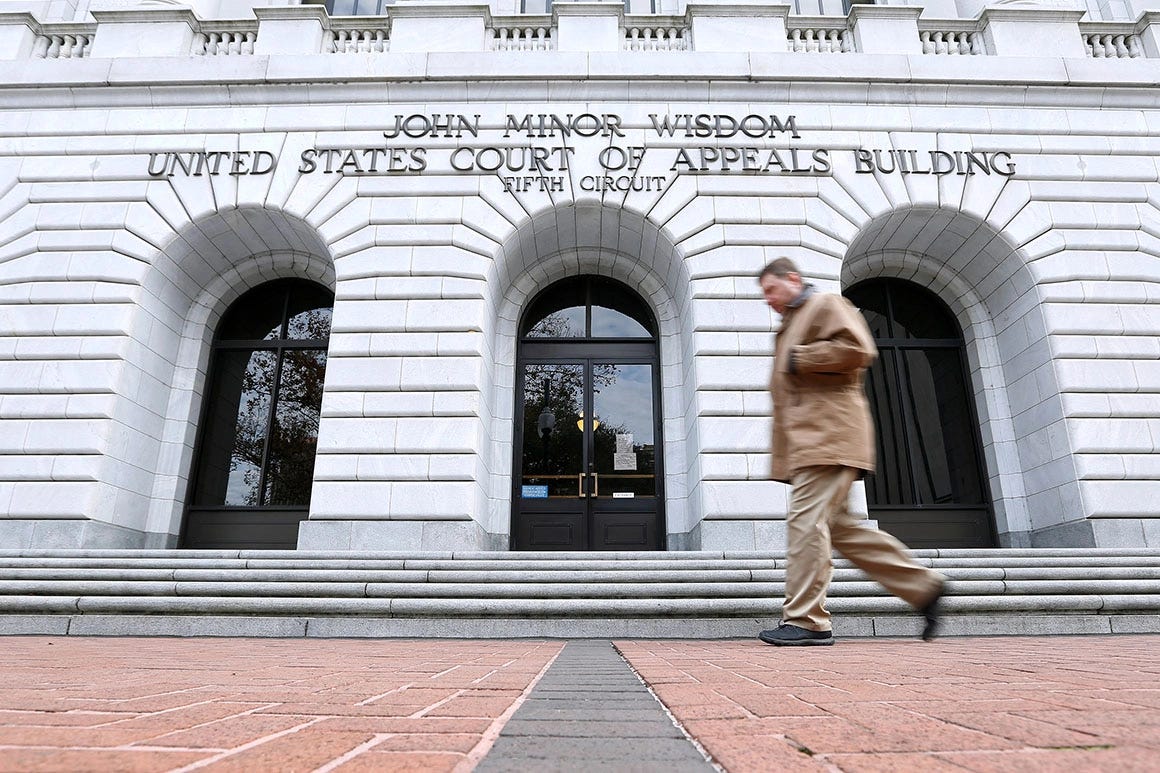
The Fifth Circuit Court of Appeals
The U.S. District Court for the District of Columbia
The Third Circuit Court of Appeals
The International Court of Trade
Atmus Filtration, Inc. v United States
Case Context and Previous Decisions
This case is a direct response to the major Supreme Court ruling earlier this year (Learning Resources, Inc. v. Trump) that upended Trump’s recent tariffs set through various executive orders and other actions; a split Court ultimately declared that these duties were unlawfully imposed under the International Emergency Economic Powers Act (IEEPA). This effectively wiped out the legal basis for tariffs that had been applied to millions of imported goods under various “emergencies” created by the Trump administration.
Following the SCOTUS decision, Atmus Filtration, a company that describes itself as “a global leader in the design, manufacture, and distribution of advanced filtration and media solutions,” filed suit in the International Court of Trade to regain funds paid towards these unlawful duties.
What this Current Order Does
Through an order released on March 4, 2026, the Court of International Trade directed U.S. Customs and Border Protection to effectively erase the unlawful tariffs from the books for affected entries. Specifically, the court ordered Customs to liquidate any unliquidated imports without applying the IEEPA duties, and to re-liquidate entries that were previously processed but not yet final.
In practical terms, this means the government must recalculate those imports as if the tariffs never existed. That could result in refunds for companies that paid the duties, along with statutory interest in some cases. The judge also stressed that assigning all related cases to a single judge will ensure consistent treatment across the large number of tariff refund disputes now emerging (which, at this time, numbers in the thousands).
What Happens Next?
Because millions of import entries were affected by the now-invalid tariffs, other companies will file suits in the Court of International Trade to secure refunds or confirm that their entries are properly recalculated.
A staggering $166 billion dollars has been collected by Customs and Border Protection since these tariffs were implemented, and this was almost entirely paid by American companies attempting to import foreign products.
One more thing to note: although the Supreme Court ruled in Learning Resources, Inc. v. Trump that the tariffs imposed under the International Emergency Economic Powers Act were unlawful, the practical question now is how the government unwinds them. The Justice Department may try to manage the scope and pace of refunds by contesting how broadly the ruling applies or by requiring claims to proceed through normal customs litigation procedures. Any disputes over the remedy could be appealed from the United States Court of International Trade to the United States Court of Appeals for the Federal Circuit, particularly on questions about whether all importers automatically benefit from the decision.
Still, absent intervention from an appellate court, the current trajectory points toward a systematic unwinding of the IEEPA duties and the eventual repayment of those tariffs through the specialized trade court system.
The Fifth Circuit Court of Appeals
Staci Barber v. Bryan Rounds, Principal of Cardiff Junior High
Background and Lower Court Decision
This dispute began at Cardiff Junior High School, where teacher Staci Barber had a long-standing practice of praying with other teachers before the school day began. In September 2023 she invited colleagues to pray near the school flagpole before a student religious event known as “See You at the Pole,” a nationwide gathering where students meet to pray before school. Barber said the teachers planned to pray before students arrived, just as they had in previous years.
Comments
Nothing yet. Say the first thing.
Sign in to join the conversation.