
Hello readers,
We have a busy digest for you this week. Congress itself was fairly quiet (the House is on in-district work and the Senate is stalled on DHS funding), but there’s still a slate of executive actions and three federal court cases worth digging into below.
Also for you paid subscribers, be sure to check out today’s Focus where we talk about the intersection of AI chat-bots and attorney client privilege. Or, more specifically, if you ask Chat GPT about your case-related information, is it still privileged information?
Obligatory section where we remind you that it is YOU, readers, who keep the Capitol Hill Reader going. We (unfortunately) don’t have a secret evil nerdlord funding our operation to indoctrinate the population at large, and as such, we need your love and support.

The more support we receive, the more time we can dedicate to finding things to tell you about without the influence of corporate cash and the aforementioned evil nerdlords.
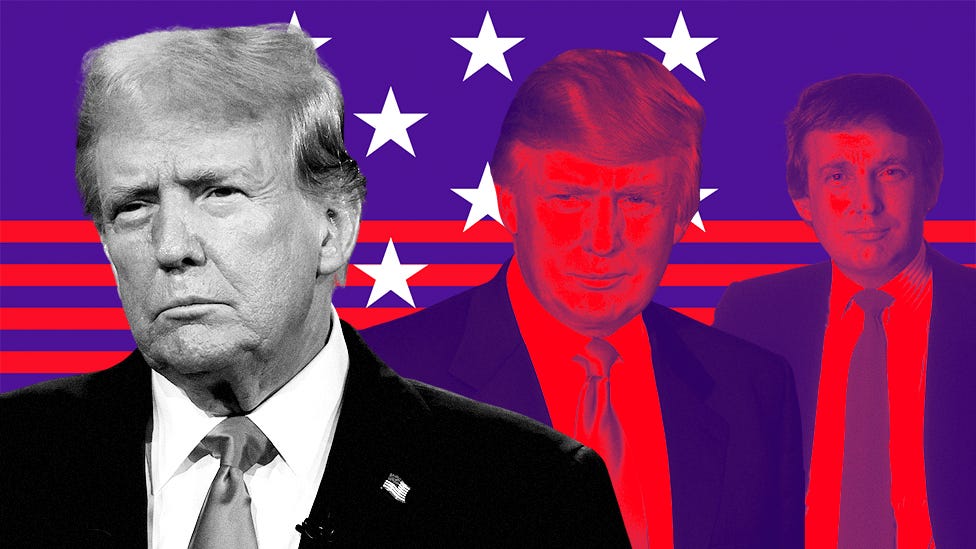
The titles below are the same as those used on the White House “Presidential Actions” page, which can be seen here.
This order significantly expands the machinery behind the administration’s “national energy emergency,” declared via Executive Order 14156. By amending Obama’s Executive Order 13603, the President allows the Secretary of Energy to independently exercise Defense Production Act authorities that had previously been delegated primarily through the Commerce Department, effectively widening the number of officials who can direct industrial production in the name of national defense or energy supply. It also clarifies that agencies with delegated authority under the order do not need to seek additional presidential approval before acting, streamlining the process. In practice, this could accelerate federal intervention in energy-related supply chains, but it also concentrates significant emergency-style economic powers inside the executive branch with fewer internal checkpoints.
This is an executive order making it illegal to label a product manufactured outside the United States as “Made in the U.S.A.” when said product is being purchased by a U.S. Government entity (or, specifically, “government-wide acquisition contracts”). Absolutely rock solid priorities right here, readers.
This order directs multiple federal agencies to strip back environmental, permitting, and energy-efficiency regulations tied to housing development, with the stated goal of lowering construction costs and increasing the supply of single-family homes. It specifically targets rules under the Clean Water Act, National Environmental Policy Act, and federal energy-efficiency standards, while pushing agencies to accelerate permitting and encourage state and local governments to adopt pro-development zoning and building practices.
If implemented aggressively, the order could speed up housing projects and reduce regulatory costs, though its real impact will depend on how far agencies can legally go in rewriting rules and how much state and local land-use policy actually changes.
This order directs federal banking and housing regulators to roll back a wide range of mortgage-market rules adopted after the 2008 financial crisis, particularly those tied to the Dodd‑Frank Wall Street Reform and Consumer Protection Act. Agencies are instructed to consider easing ability-to-repay and qualified-mortgage standards, scaling back Home Mortgage Disclosure Act reporting, loosening capital rules on bank-held mortgages, modernizing appraisals and digital closings, and limiting enforcement penalties for technical compliance errors - all with the stated goal of bringing community banks back into mortgage lending and expanding credit access for rural and lower-income borrowers.
This is a proclamation honoring Women’s History Month, 2026. Here is an excerpt:
For this reason, my Administration will always promote policies that embolden women, uplift our children, and fortify the American family. Since I returned to office last year, we have permanently expanded the child tax credit, invested in the next generation through our historic creation of Trump Accounts, and dramatically reduced prices on common medicines like insulin and fertility treatments through TrumpRx. We are keeping men out of women’s sports, enforcing Title IX as it was originally written, and ensuring colleges preserve — and, where possible, expand — scholarships and roster opportunities for female athletes. At the same time, we are restoring public safety and upholding the rule of law in every city so women, children, and families can feel safe and secure.
This memorandum pressures the board of the Tennessee Valley Authority to cap executive pay at $500,000 per year, arguing that multimillion-dollar compensation at the federally owned power utility is “inconsistent with public-sector norms.” The order instructs the board to “weigh government salary benchmarks” (rather than private-sector utility pay) when setting compensation and to consider adopting formal policies implementing the cap, then report back to the White House within 120 days.
This is a proclamation declaring March 9 as “U.S. Hostage and Wrongful Detainee Day.” Here is an excerpt:
This year especially, we also remember that, 47 years ago, the brutal Iranian regime seized power on the backs of American hostages. Over the course of the nearly five decades since, Iran has routinely and cruelly detained innocent Americans to use as leverage against weak Presidents of the past. Under my leadership, we are finally putting an end to this evil practice.
Since the Iranian Revolution overthrew the Shah in February of 1979 and the hostage crisis was not until November of 1979, not quite sure what he’s talking about here.
That said, Trump has secured the release of 101 detainees so far in his second term; to compare, Biden secured the released of around 70 detainees in his four years, and Obama secured the release of around 30 during his 8 years in office.
On March 12, 2026, this DHS funding bill was again rejected by the Senate via a cloture vote of 51 YEAS to 46 NAYS. For a more detailed description, see last week’s digest by clicking the link below…
This bipartisan bill expands federal housing programs by raising FHA multifamily loan limits and creating new planning grants to support housing development. It also streamlines some housing construction by exempting certain projects from environmental review, loosens rules for manufactured homes, makes smaller policy tweaks affecting veterans’ housing eligibility and public housing oversight, and a lot more. If implemented, the changes could increase financing and speed up affordable housing projects, though some have flagged the environmental-review exemptions and regulatory rollbacks as trade-offs.
This bill was PASSED on March 12, 2026, by a yea-and-nay vote of 89 YEAS to 10 NAYS, with 1 not voting (Blackburn, R-TN)
On the nomination confirmation of Lt. Gen. Joshua M. Rudd to be General in the United States Army
CONFIRMED on March 10, 2026, by a yea-and-nay vote of 71 YEAS to 29 NAYS
This week is a scheduled “in-district work period” for the House, so there was no floor action to report.
This dispute arose after the U.S. Attorney’s Office for the District of Columbia opened a criminal investigation involving the Board of Governors of the Federal Reserve System and its chair, Jerome Powell. Prosecutors focused on two areas: cost overruns tied to renovations of Federal Reserve office buildings and Powell’s testimony before the Senate Banking Committee about those renovations. The investigation began years after the renovation project had been approved and several years after construction had already started, raising questions about why the matter had suddenly drawn criminal scrutiny.
The Federal Reserve Board argued that the investigation was not genuinely about fraud but instead part of a broader political effort to pressure Powell over monetary policy. For years, President Donald Trump had publicly criticized Powell and demanded lower interest rates. According to the Board, the subpoenas followed a wave of public attacks and calls from political officials to investigate Powell, suggesting that the criminal inquiry was meant to coerce him into changing policy or stepping down.
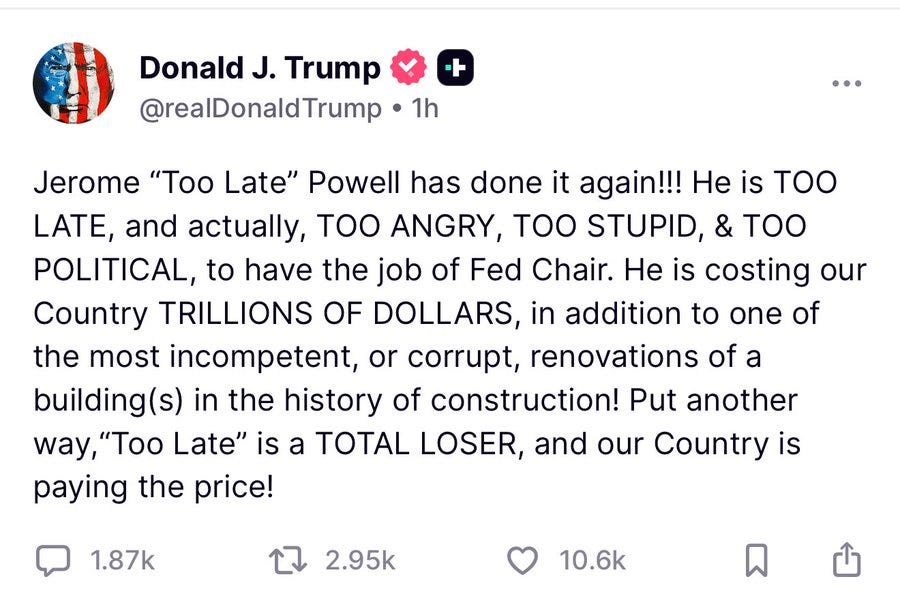
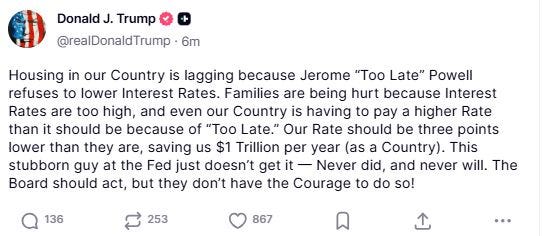
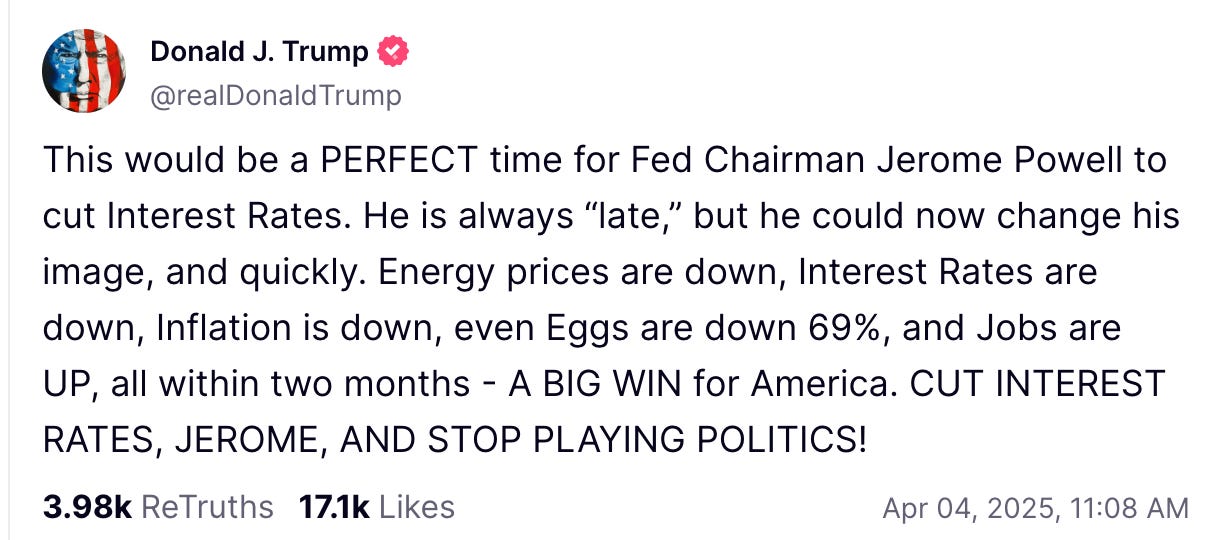
Some examples of the Peace President:
Because the dispute concerned grand-jury subpoenas rather than criminal charges, the case reached the United States District Court for the District of Columbia through a motion by the Board asking the court to quash the subpoenas before compliance was required.
In this March 2026 opinion, Chief Judge James E. Boasberg granted that request and quashed both subpoenas. Courts have authority to invalidate subpoenas if they are “unreasonable, oppressive, or issued for an improper purpose.” Applying a standard used in several federal circuits, the court examined whether the subpoenas’ “sole or dominant purpose” was improper.
After reviewing the evidence, the judge concluded that the investigation appeared aimed primarily at pressuring Powell rather than uncovering evidence of a crime.
The opinion pointed to extensive public criticism of Powell from the president (see examples above) and other officials and noted that prosecutors produced little evidence suggesting actual wrongdoing. The government argued that renovation costs had exceeded projections and that Powell’s congressional testimony might contain discrepancies, but it failed to identify specific criminal conduct or offer supporting evidence (even when given an opportunity to do so privately).
Given the strong indications of political pressure and the lack of substantiated allegations, the court concluded that the subpoenas were likely issued to harass Powell or influence Federal Reserve policy. It therefore granted the motion to quash and ordered portions of the dispute unsealed so the public could review the court’s reasoning.
In 2015, Mohamed Irshan Mohamed Sufiyan, a Sri Lankan national, sought asylum and other protection in the United States after claiming he had been detained and beaten by the Sri Lankan army because authorities suspected him of links to the Liberation Tigers of Tamil Eelam (LTTE), a designated terrorist organization. According to Sufiyan, LTTE fighters once kidnapped him and forced him at gunpoint to act as a translator during an interrogation. After Sri Lankan forces intercepted the group, they detained him for months and allegedly beat him repeatedly, believing he was associated with the militants. Sufiyan later entered the United States on a seaman visa and eventually applied for asylum, withholding of removal, and protection under the Convention Against Torture (CAT), arguing that he would likely be tortured or killed if returned to Sri Lanka.
Upon review of his claims, an immigration judge denied all relief and ordered Sufiyan removed to Sri Lanka (a specific date is not given for this ruling, but based on the other dates in this case it likely occurred around 2019-2020). The judge concluded that Sufiyan was barred from asylum and withholding of removal because he had provided “material support” to a terrorist organization by translating for the LTTE during the interrogation. Under federal immigration law, even minimal assistance to a designated terrorist group can trigger this bar, and courts have generally held that there is no automatic exception for assistance provided under duress (i.e. being forced to help terrorists). The judge also ruled that Sufiyan’s asylum application was untimely and found that his evidence did not establish a sufficient likelihood that he would be tortured if returned to Sri Lanka, undermining his claims for relief under the Convention Against Torture.
In 2022, The Board of Immigration Appeals (BIA) affirmed the immigration judge’s ruling. It held that the material-support bar alone made Sufiyan ineligible for asylum and withholding of removal, and therefore declined to address whether he might otherwise qualify for those forms of relief. The BIA did separately review his claim for protection under the Convention Against Torture and agreed with the immigration judge that the evidence did not show it was more likely than not that he would face torture if returned to Sri Lanka.
The Second Circuit Court of Appeals issued a mixed ruling. It agreed with immigration authorities that Sufiyan failed to meet the legal standard for protection under the Convention Against Torture and upheld that part of the decision, but the court also found that the immigration appeals board made a procedural mistake when it refused to determine whether Sufiyan would qualify for asylum or withholding of removal if the material-support bar did not apply.
The court explained that such a determination is important because immigration law allows the Department of Homeland Security to grant discretionary exemptions from the material-support bar in certain circumstances. Without a “but-for” determination from immigration courts, applicants like Sufiyan have no meaningful way to seek that exemption. As a result, the court granted the petition in part and sent the case back to the BIA to decide whether Sufiyan would otherwise qualify for protection.
An important caveat:
The Second Circuit did not rule that Sufiyan qualifies for asylum. Instead, it held that immigration authorities must first determine whether his persecution claim would succeed absent the terrorism-related “material support” bar, because that finding is necessary before DHS can consider granting a discretionary waiver.
In other words, would Sufiyan qualify for asylum if the material support bat did not exist? Well, the immigration judge pointed to Sufiyan’s years living safely in Sri Lanka for 3.5 years after the alleged incident, as well as his ability to travel using his own passport, as strong evidence undermining his claim that the government was actively pursuing him.
The case now returns to the immigration appeals board, which must determine whether Sufiyan would be eligible for asylum or withholding of removal absent the material-support bar. If the answer is yes, he may be able to request a discretionary exemption from the Department of Homeland Security that would allow his protection claims to proceed. Given the current DHS vibe, though, this seems…unlikely.
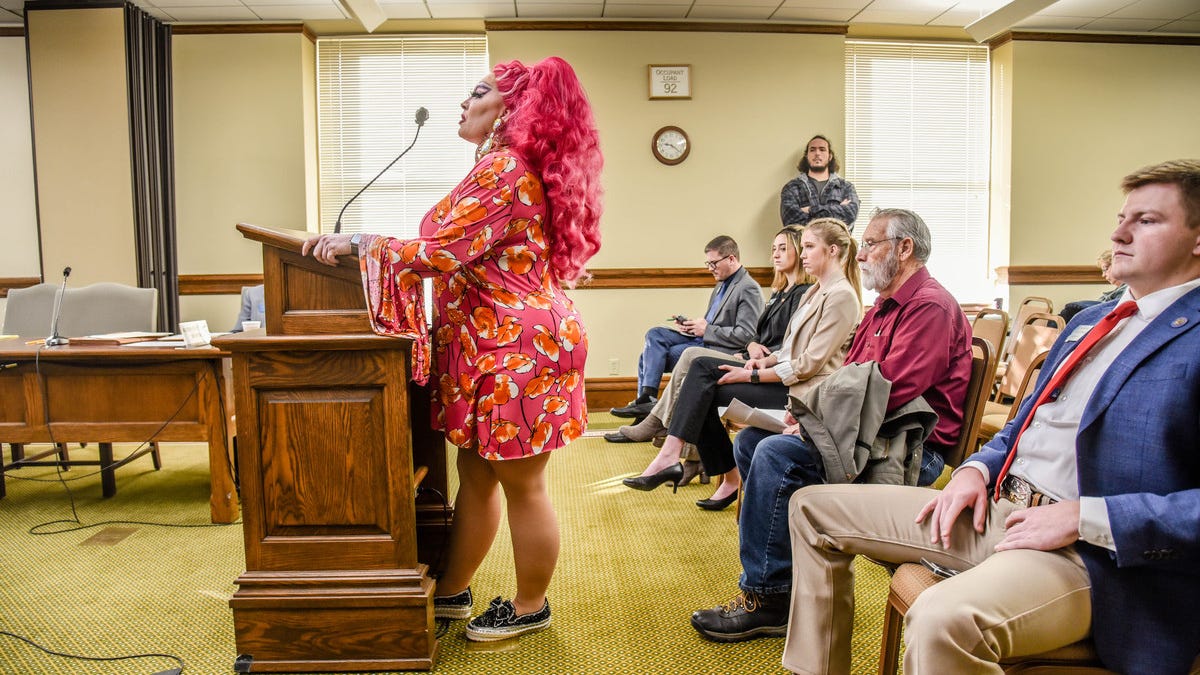
**note: the Imperial Sovereign Court of the State of Montana is not a state court, but part of a nationwide “court system” of non-profits that campaign for LGBTQ+ rights. There are between 70-80 courts in the United States and internationally, and this particular court is the local Montana chapter.
For more information, here is their website.
In 2023, Montana enacted House Bill 359, a law restricting “drag story hours” and certain “sexually oriented performances” in places that receive state funding, including libraries, schools, and some public spaces. The statute also barred minors from attending certain performances and created significant penalties: criminal fines, possible loss of business licenses, professional discipline for public employees, and even a private right of action allowing minors or their parents to sue performers for damages. A group of plaintiffs -including performers, theaters, businesses, and LGBTQ+ organizations - filed a pre-enforcement federal lawsuit, arguing the law violated the First Amendment and was so vaguely written that ordinary, non-drag artistic performances could fall within its scope.
The case was filed in federal district court in Montana, where in July of 2023 Chief Judge Brian Morris first issued a temporary restraining order, blocking the state from enforcing the law shortly after it took effect. Then, in October 2023, the court granted a preliminary injunction, concluding the plaintiffs were likely to succeed on their constitutional claims.
The court held that the statute appeared to impose content- and viewpoint-based restrictions on speech, triggering strict scrutiny under the First Amendment. Judge Morris also found the statute likely unconstitutionally vague, noting its definitions could sweep in ordinary artistic or theatrical performances and chill lawful speech. Because the plaintiffs demonstrated likely success on the merits and potential irreparable harm to First Amendment rights, the court halted enforcement while the litigation proceeds.
On March 13, 2026, the Ninth Circuit Court of Appeals affirmed the district court’s injunction. The panel held that the plaintiffs had standing because the law created a credible threat of enforcement and had already led to cancelled events and self-censorship. The court agreed that the statute likely regulates purely expressive activity (such as performances, storytelling, and theater) and does so based on content, meaning the restrictions must survive strict scrutiny.
The panel concluded the state had not shown that the law was narrowly tailored to a compelling interest, making it likely unconstitutional. As a result, the injunction preventing Montana officials from enforcing the law remains in place.
Because the ruling addressed only a preliminary injunction, the case is not fully resolved. It now returns to the district court for further proceedings and potentially a full merits decision. Montana could (and probably will) also seek rehearing by the full Ninth Circuit or petition the U.S. Supreme Court for review.
Given that multiple states have passed similar laws regulating drag performances and public events involving minors, the issue is likely to continue generating litigation and could eventually reach the Supreme Court (especially if federal courts remain divided over how these laws interact with the First Amendment).
As large language models like ChatGPT and Gemini move from novelty to workplace tool, courts are beginning to confront a new and surprisingly fundamental legal question: does attorney–client privilege survive when confidential information is run through an AI system?
Comments
Nothing yet. Say the first thing.
Sign in to join the conversation.