
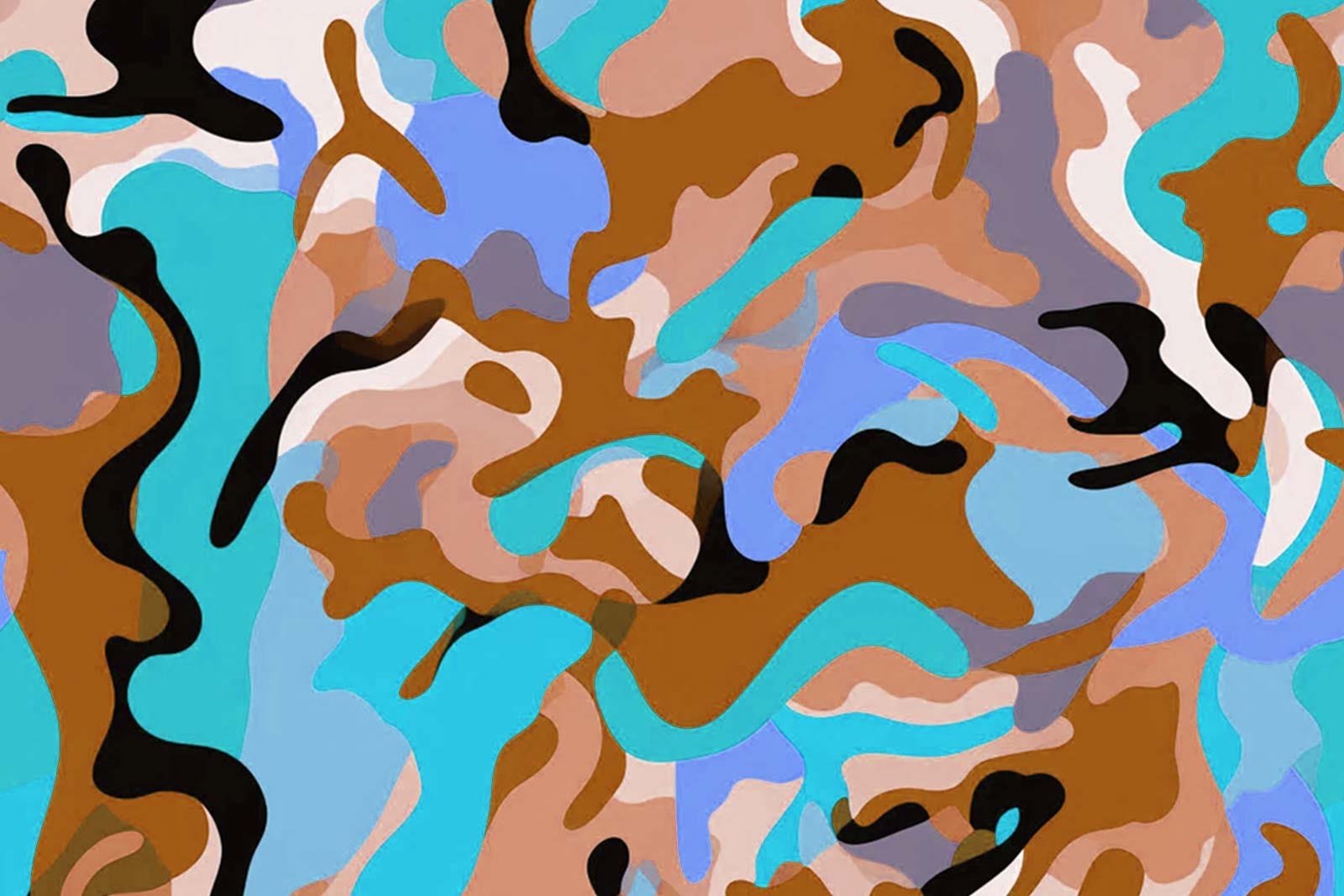
From the streets to high fashion runways, military camouflage has made an astonishing journey. It’s a pattern that has been widely adopted by brands across the spectrum, from streetwear staples like Carhartt and Supreme to premium houses such as Valentino and Dior.
Fashion’s embrace of camouflage is multifaceted, drawing on its history and versatile symbolism. It’s frequently used in fashion to make a bold statement, repeatedly cycling in and out of mainstream popularity. Yet, despite its fluctuating trend status, its enduring presence has firmly established it as a fashion classic. It retains an edgy overtone, largely due to its military origins and a historical association with anti-fashion sentiments.
What’s truly fascinating is how this pattern’s style is often enhanced by the vibrant use of colour in fashion. This approach renders the use of camouflage completely counter to its original purpose: to conceal and blend in.
In fashion, camouflage isn’t about disappearing; it’s about making an unmistakable visual impact. As French fashion designer Jean-Charles de Castelbajac once put it, “Camouflage is the only aesthetic solution that is radical.”
Read about Camouflage in fashion here
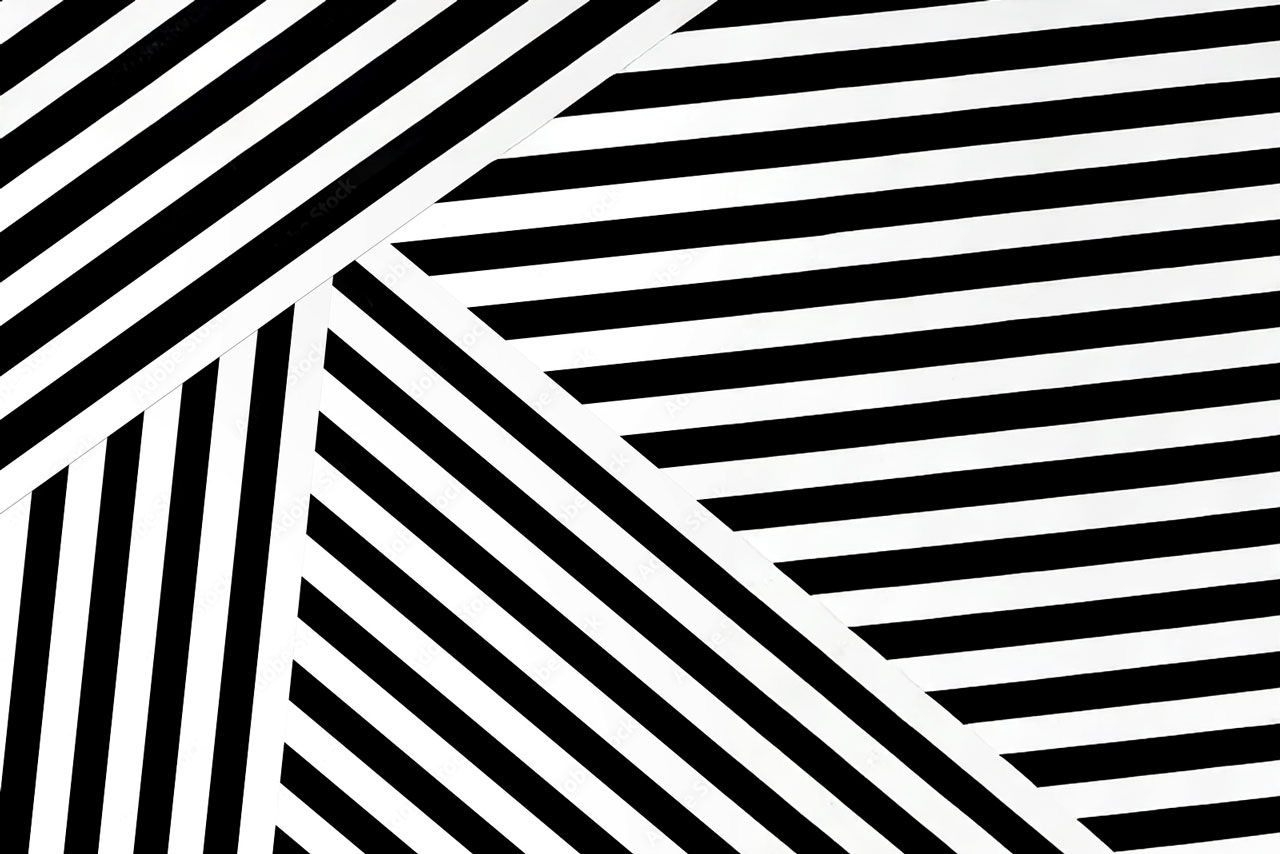
Imagine a type of camouflage designed not to hide, but to bewilder. A military strategy so visually striking, it inadvertently sparked an entire art movement. Meet Dazzle.
In 1917, while serving as a Royal Navy volunteer on a patrol ship navigating the perilous waters around Britain, the artist and illustrator Norman Wilkinson had a groundbreaking idea. Having become aware of the threat posed by Germany’s U-boats, Wilkinson decided to leverage his artistic skills to protect Allied ships. He realised that it was virtually impossible to paint a ship in camouflage that would truly hide it from the sights of an enemy submarine commanders.
Instead, he proposed that the opposite was the answer. He developed a radical camouflage scheme that used bold shapes and contrasts of colour. His ingenious purpose was to confuse rather than conceal – making it difficult for an enemy to accurately estimate a ship’s speed, range, and direction.
Dazzle painting heavily drew from, and in turn influenced, contemporary art movements like Cubism, Futurism, and Vorticism. The striking, high-contrast style of dazzle camouflage then became a precursor to the Optical Art (Op Art) movement, notably influencing artists like Victor Vasarely and Bridget Riley.
It just goes to show, sometimes the most disruptive tactics are also the most artistic. Or perhaps, in the art of war, confusion is king.
Learn more about Wilkinson’s idea
Everywhere we look, we’re surrounded by people wearing high-visibility clothing. They’re the ones who fix things, clean our spaces, secure areas, and generally support the progress of modern life. Yet, paradoxically, we often don’t notice them at all.
It seems that nowadays, if you want to be truly invisible, all you have to do is wear fluorescent clothing. This phenomenon might be due to the sheer ubiquity of these dazzling colours in our everyday landscape. We’ve become so accustomed to them, they simply fade into the background.
Photographer Stephen Gill offers insight into this in his Invisible series, inspired by his own unusual practice: he wears a fluorescent jacket when taking photographs precisely because he doesn’t want to draw attention to himself. As he puts it, when he wears his high-vis, “nobody gives him a second glance”. His series further explores the curious nature of how we react to (or rather, don’t react to) wearers of high-visibility clothing.
It’s a fascinating testament to what we choose to see, and perhaps, what we choose to ignore.
Image © Rosen Stoyanov
Subscribed
Share
No posts
Comments
Nothing yet. Say the first thing.
Sign in to join the conversation.