
Cantilever is a curated music streaming service, subscribe to get our updates directly into your inbox.
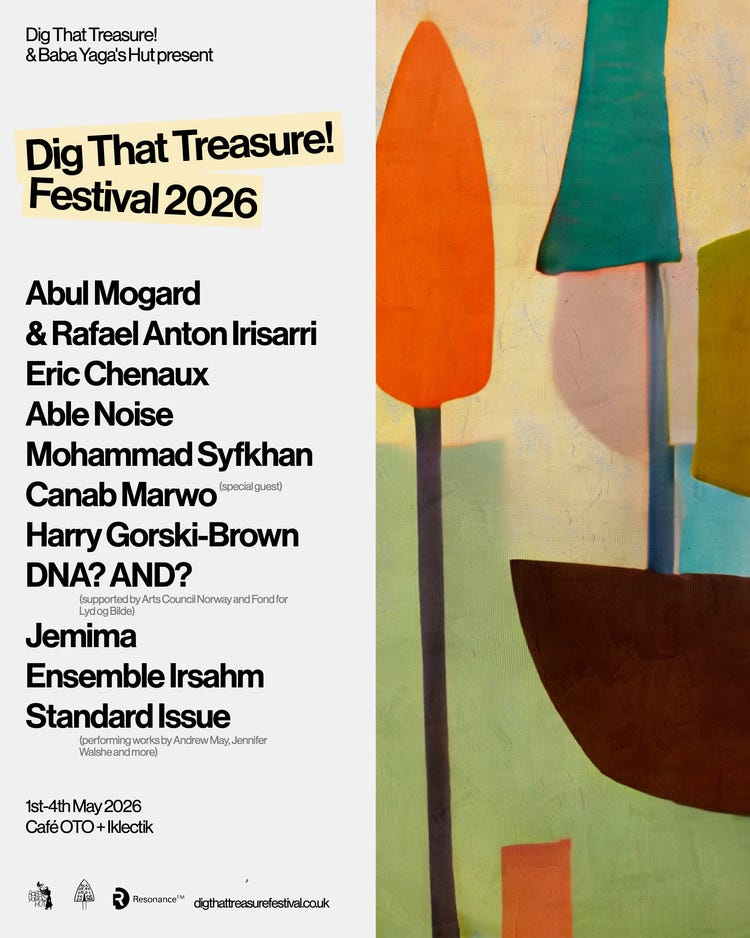
Dig That Treasure! festival is happening in London between the 1st and 4th of May 2026 between the venues Cafe Oto and IKLEKTIK. Back when Cantilever was a live music blog, we’d cover the programming at these venues frequently. The festival itself is also co-produced with Baba Yaga’s Hut, who I interviewed for this blog roughly a year ago. So it’s nice to feel this project — which has changed a lot since then — having a kind of circularity.
The festival, now in its third year, is a celebration of multiple different music cultures — different backgrounds, different nationalities, different genres. Recently, Cantilever has teamed up with Dig That Treasure! to provide some curation to our music streaming app — selecting one record a month in the lead up to this year’s festival. A couple of these are not on mainstream streaming services at all.
Cantilever is lucky enough to work with some established names in independent music — but it matters just as much to me that we're connected to the grassroots, to the real music culture that exists between people. Will M Hall, Dig That Treasure! festival organiser, interviewed below, is someone who believes 'there is good music in every nook and cranny of every culture.' So it made perfect sense to ask him where to look.
Will, how did Dig That Treasure! Festival get started, it was a radio show first is that correct?
12 and a half years ago I took a year off before going to university. I am a very restless person and I needed something to fill what I thought might be an empty year. I’d been planning to start a music blog for a while, because I thought there was a gap in the blogging scene for more obscure stuff. Within about two weeks I decided it should be a radio show. So I took a punt and emailed Resonance FM, because that was the most left-field radio station I was aware of. I didn’t and still don’t listen to much radio — besides Resonance sometimes! — so I’m not even sure what the options are or were. I’d listened to some stuff on Resonance and thought: I could do that. I’m not a great talker, I’m not particularly confident.
I got over-excited and decided to put on a gig a year in. I got in contact with Laetitia Sadier of Stereolab and I booked her for a gig at Cafe Oto. It’s funny because people talk about the idea that it’s hard to get a gig there. But I was 19 and just emailed them out of the blue… She wanted to have Jane Weaver supporting. Then I booked Let’s Eat Grandma who hadn’t released anything. And now all three of those artists have gone on to be even more well known in the intervening years.
I then did three compilation albums. I emailed various people: I got Woo who are one of my favourite ambient groups, The Go! Team who were my favourite band growing up, Laetitia Sadier again, lots of different people were happy to give songs for the sake of charity. We did a couple more gigs.
Fast forward to 2023 and the real truth is I got sober. My brain cleared up and I had a new lease of life. That, combined with my lack of impulse control, led me to decide to put on four gigs in a row and call it a festival, despite having only ever put on five gigs previously, ever. But I thought why not do four in a row!
I put it together on my own. It all sold out and was a really, really good event. Though it wasn’t quite as ambitious as I wanted it to be. The next year I applied for Arts Council funding and really pushed the boat out, booked a load of international acts. That one didn’t quite sell as well, but it was better in terms of my vision. This year is the true distillation.
Those compilation albums were all for charity is that correct? And they were all digital only?
They were. As much as I’m obsessed with physical ephemera, I wanted to maximise the money going to charity. One was for Refugee Council, one was for Campaign Against Living Miserably. One was for Resonance FM actually, which is a registered charity! All charities that in that moment felt important.
How does one apply for arts council funding?
It’s gruelling! It’s really gruelling! The first time I did it I took three days off work and worked at it in a cafe, hours and hours and hours. You have to be very accountable. You have to have the names of the artists, their email addresses, the names of the venues, the number of people who are going to come. All of it is speculative as well. I applied quite early and so the line up wasn’t actually what it turned out to be. I ended up booking quite different acts. I was completely surprised when I got it the first time.
This is where Baba Yaga’s enters the picture. I got it in 2024, then I applied again for this edition and was rejected, despite thinking I had a great pitch. I was ready to bin it, to be honest, I had all the plans, but I didn’t have the funds to be able to do it.
Last year, I went to see Eric Chenaux, which was a Baba Yaga’s gig. I’ve known Anthony for a couple of years, just through gigs, he was asking about how the festival was going. I explained about how the ambitions of the festival far outstripped the financial situation. He’s not investing any large chunk of cash or anything like that, but the infrastructure he has made it possible to do the festival. It’s almost the PR element of it.
If you were to describe what the curation at DTT is, what would you say?
I can’t really describe it in terms of genre. But everything is underpinned by the idea of rejecting monopolies in music — whether that be major labels, or even just the zeitgeist in independent music. Or the effects of major labels and Spotify and so on. My core belief is that there is good music in every nook and cranny of every culture. Music made by children, music made by the learning disabled, music made for video games, to pick just a few of the endless examples. I’ve always rejected PR lists.
Broadly though, Dig That Treasure! is melodic, avant-garde music, melodic experimental music. Not a whole lot of improvisation. I like a hook — even if it’s warped or very subtle.
Then there’s always an international element. The first year I had a Sudanese group, the next year I had a Cape Verdean group. This year I’ve got Kurdish, Somali, Belgian, Italian, various other nationalities. I don’t want it to just be the acts that you will find in London on a weekly basis. It’s not going to be anything that you could regularly see for the rest of the year. It’s a risky strategy! But more than a genre, it’s just things you might not expect to see.
One artist that caught my eye from the line up is a collaboration between “young people with Down’s Syndrome and professional musicians from Oslo’s improv scene”, could you tell me a little bit about DNA? AND?
I’ve taken quite a lot of inspiration from three things in terms of booking artists with disabilities, which is very important to me.
The first one is my day job — when I started this festival I was working in special needs schools. Now I’m a social worker. Secondly, I volunteered for a charity called Heart N Soul, which is an amazing charity, out of which came Dean Rodney Jr. It also has connections to Robyn Steward, who does Robyn’s Rocket. She is the third thing. She does nights at Cafe Oto, and now elsewhere.
Her thing is: you go to a gig and it’s the same people, almost like following a social code that just isn’t inclusive. It doesn’t necessarily make sense outside of the social contract that exists in that situation. Subtle things, for example she puts a timetable on the stage so you can see when the next act is going to come on — for some, it gives reassurance. She gives badges which you can turn a certain way to say if you’re happy to chat. Acts will spill into the audience. There’s all the accessories that people might need to make that show accessible to them. It’s not a monoculture. It’s a major inspiration.
With DNA? AND? I actually saw them play at Le Guess Who festival. They’d been booked by Jenny Hval, both are Norwegian. I went to see them because I thought — this can’t be bad! And it was really, really, really good. In the run up to that, part of the promise of my press access to Le Guess Who, I contacted DNA? AND? and they contributed a half an hour thing to my radio show at the time, then it was a no brainer to put them on one of my compilations.
It’s been difficult getting them over to play. There’s quite a lot of them, plus carers, assistants and so on. A party of 15 people at least. I thought I’d just take a punt! If you lose money on something that’s really special and very meaningful to a group of people then who cares. Most of these people won’t have been to London before, and they’re going to play and gig and it’s going to be great.
Have there been any particular shows from any of the festivals which have stood out as a highlight?
Two acts from 2024. Two acts that showcase people with special needs or disabilities. The Wild Classical Music Ensemble, a Belgian Group, supported or co-headlined with Dean Rodney Jr. & The Cowboys. It wasn’t the best sold gig, but it was the most life affirming best thing ever. Wild Classical Music Ensemble all live in institutions in Belgium for those with sight impairments or learning needs. It was their first time visiting the UK and they played the best gig ever. That’s what usually comes to mind.
Mohammad Syfkhan’s album I Am Kurdish is currently streaming on Cantilever. How did you first encounter his music?
I saw that Mohammad was playing a gig a couple of years ago at St. Pancras Old Church. He’s grown a little bit in repute since then. His record is out on Nyahh Records which is the same label that does some of the Lankum side projects such as One Leg One Eye. Apparently the live show is just killer! When I teamed up with Baba Yaga’s Hut, he’d also been looking to book Mohammad so it all made sense.
In terms of this year’s festival — and they’ve all loosely been like this — but this one is very intentionally divided into thematic strands. The first night is Migrant Communities, which is Mohammad and Canab Marwo. The second night is “deconstructing the rock band” which is Able Noise, DNA? AND? and Jemima. The third night is “traditional musics”, Eric Chenaux who is very much a play on the traditional folk singer, jazz singer and so on plus Harry Gorski-Brown who does Scottish traditional music, but gone awry, and Ensemble Irsahm, who play Hildegard Von Bingen and stuff. Then the final night is Standard Issue, Abul Mogard and Rafael Anton Irissari, grouped under “deep listening”.
So live shows, artist recommendations, are there any other methods by which you’re finding the music you feature?
Canab Marwo is someone I just found on YouTube. I messaged the YouTube account that uploaded the video and they gave me her Whatsapp. She’s a Londoner, but she doesn’t really play outside of the Somali community. Events that aren’t really publicised outside of the London Somali community. She’ll play parties, weddings, special occasions or cultural presentations. But they’re not “gigs” on the circuit as some might know them. You’re not going to see her play unless you’re really in the know.
Before the internet decided it was no longer fun, there was a blogspot boom where people would upload zip files and you could just take a punt on a recommendation. Half of the time it was terrible, half of the time it was amazing. Then there are YouTube accounts I follow, or certain rabbit holes I know how to get into. Then Wire magazine in terms of print media.
You’re not someone who is exclusively into the avant-garde though, from what I understand?
100%! Everything I listen to has a different purpose. I’ll typically have three or four pop bangers on heavy rotation, while I spend most of my listening time with ambient or drone-y music, and I’m the most excited by the avant-garde or experimental stuff. That’s my rotation. I don’t know why anyone would want to listen to one thing only!
I think that literally anyone could come to any of these four gigs and really enjoy themselves. It’s not actually about accessibility or inaccessibility, it’s about: the experience is going to be really good and the music is going to be really good. I want people to see Able Noise — who are Wire magazine darlings — play with DNA? AND?, who are of very low profile, but engage the disabled community, and then Jemima who are a duo I just happened to stumble upon.
You’re working full-time as a social worker right now. Is there a sense to which the idea of being a regular promoter just doesn’t really appeal?
Creatively, if I were to try and do something like this full time I’d end up having to book things I don’t want to book, in order to make a living. I’m picky! More broadly, there’s very little money in this. Some people have smashed it, but it’s a small space. I spent years trying to work in music, but I found it depressing. Having this project that’s sometimes active, sometimes not, it’s a great way to be working in it. I need to work with human beings though. I’ve worked with children forever. I need to work with children to keep my soul good!
Dig That Treasure! Festival Tickets
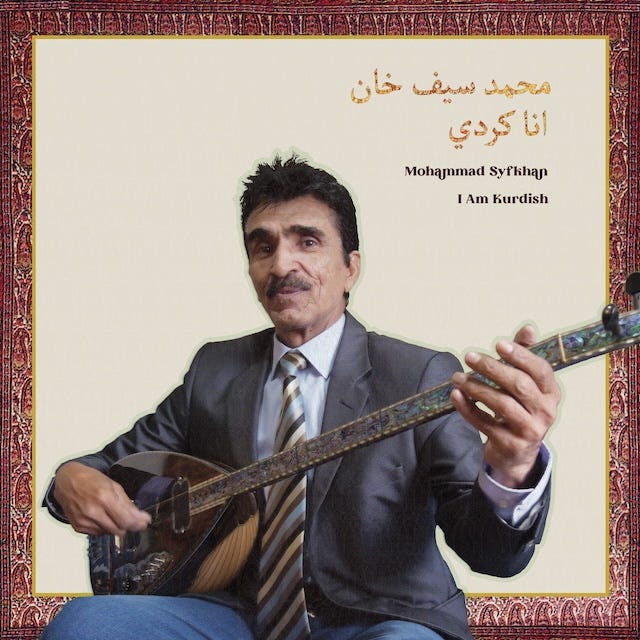
“Mohammad Syfkhan is a Kurdish/Syrian Singer and Bouzouki player who began playing music in 1980 while he was in college studying nursing. When he got his degree in 1983, Mohammad moved to the city of Raqqa, Syria where he started his own band, The Al-Rabie Band, which played concerts, parties, weddings and festivals. Their live sets included Kurdish, Arabic, Turkish and some Western songs as well as Mohammad’s own original material.
When the war broke out in Syria, one of Syfkhan’s sons was tragically killed by Isis and the family were forced to leave their home and seek refuge in Europe, some emigrating to Germany while Syfkhan, his wife and young daughter settled in Ireland, splitting the family apart. Quoting Nyahh Records:
“Mohammad has spoken at length of his confusion and despair with fundamentalists and how their message is a far cry from the teachings of love and understanding that he considers the true message of Islam.”
A recently arrived refugee in County Leitrim, Ireland, Syfkhan connected with Nyahh Records label manager Willie Stewart, asking him if he could plug his bouzouki into Stewart’s mixing desk while the latter was DJ-ing a local event, celebrating the culture of new international communities in County Leitrim. Soon enough, Syfkhan was being booked for shows and connected with musicians in the Irish traditional and experimental scene, including landing a support slot with Lankum in County Cork.
This story of collaboration — how one culture can support the traditional music of another and assimilate it into its own — is a great example of how folk music is always on the move, how it is never fixed nor finished.”
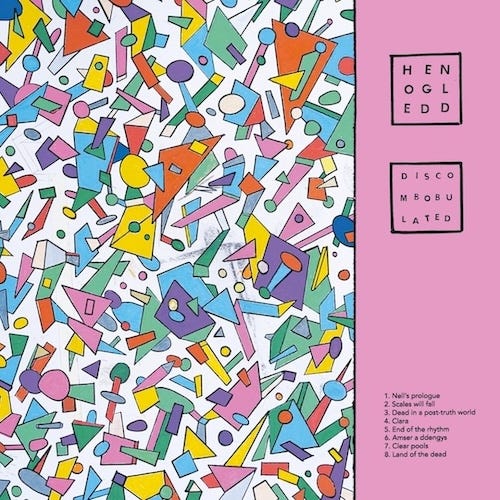
An interview with Dawn Rothwell from the "Scottish-Welsh-Geordie-Lancashire-Australian supergroup".
“There’s a combination of things — there was a particular ballad I’d been listening to that talks about a horse. The story is basically a mother questioning her son who has blood on his sword, he deceives her and says it’s the blood of his horse, but it turns out to be the blood of his brother. So there was this folk ballad element to it, and I felt like I could really imagine somebody naively riding a horse through a landscape.
Then, similarly, we started to talk about the horses out at Clara Vale, where Richard and Sally live. Clara Vale used to be a mining village, and there’s a fire burning underground. Sometimes in old mines you get these spontaneous fires that happen through gases.
So, in that landscape, there’s always this idea of danger lurking underneath the ground. The place itself – Clara – was the name of the main mine owner’s wife.
So we kind of had this idea of a girl called Clara riding her horse, naively through the countryside, having a nice time — meanwhile you’ve got the pit ponies and the miners underground dragging out all the coal, and then she falls into a massive hole in the ground.”
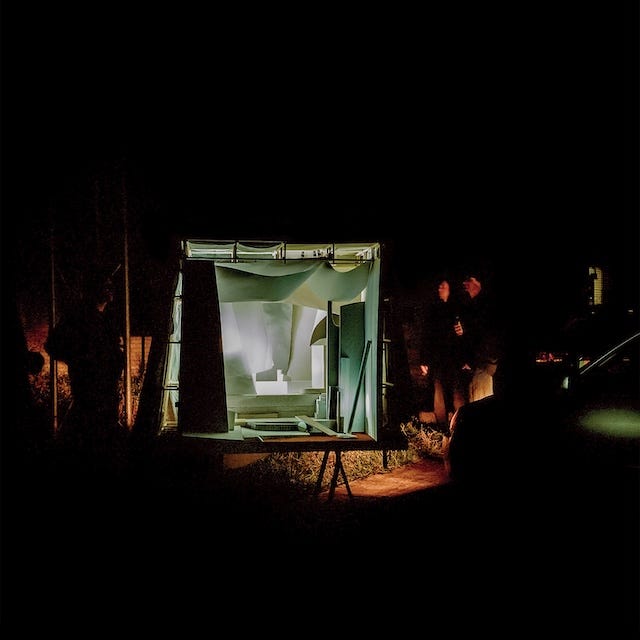
An essay by Kaye Song (partner at Turner Prize-winning collective Assemble), the artist behind the record’s cover. Somersaults is streaming exclusively on Cantilever until this Friday the 27th.
“The artwork for Somersaults is a reconfigurable stage set, designed to move through multiple iterations. Assembled from scrap paper, cloth, and wood, only a thin coat of white paint veils how crude it really is. It’s a fragile construction clamped with clips or suspended from string, lasting only long enough to photograph. Like the album itself, it hovers between lightness and weight. Dismantled within minutes, it’s the images of these ephemeral spaces that endure. What it is exactly is a quiet mystery.”
Cantilever feature in der Freitag alongside other streaming platforms offering an alternative model — “Genug vom Musik-Fastfood? Es geht auch ohne Spotify!” by Kristoffer Cornils — full piece here.
More incredible independent record labels have joined Cantilever over the past month, but I’m saving that for the next issue. Until then!
No posts
Comments
Nothing yet. Say the first thing.
Sign in to join the conversation.