
What does trying to become an astronaut teach you about building a startup?
More than you might expect.
Gianluca Memoli has experienced the kind of tests most of us only see in documentaries.
He has sat in a gyroscopic chair designed to spin him in multiple directions. He has entered a hypobaric chamber and attempted to continue performing a task while the oxygen was gradually reduced. And twice, he has flown on the European Space Agency’s zero-gravity aircraft.
Today, however, Gianluca is navigating a different kind of rollercoaster.
He is the Co-Founder and CEO of Metasonixx, a deep tech startup developing technology for acoustic privacy.
For the final Founder Friday conversation of this series, I sat down with Gianluca to talk about the journey from physics and academic research to customers, cash flow, investment and entrepreneurship.
His story offers some important lessons for first-time founders.
It also offers early-stage investors a useful reminder of just how much can happen between university research and a commercially viable startup.
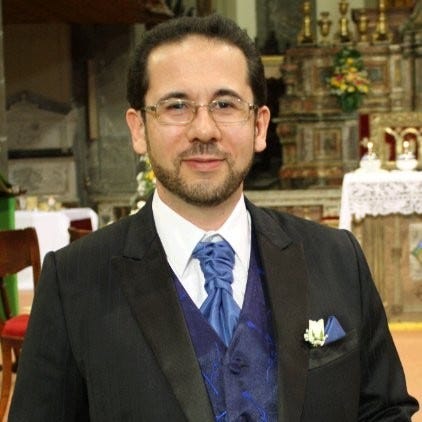
Gianluca didn’t grow up in an entrepreneurial family.
His father was a clerk and encouraged him to study economics.
Gianluca chose physics instead.
His journey eventually took him into a PhD and towards his ambition of becoming an astronaut. At the time, astronaut selection was weighted towards pilots. Gianluca realised his route towards space might instead be through becoming a scientist.
That scientific career eventually brought him to the UK.
He worked on sound and noise and spent time at the UK’s meteorological institute. There, he started to recognise something important: research and innovation don’t only happen inside universities.
Companies can turn research into change.
When Gianluca later had an idea that needed further development, he returned to a university environment.
Eventually, that work became the foundation for Metasonixx.
Metasonixx develops acoustic privacy technology.
Imagine sitting in an open office or co-working space and having a private conversation without needing to disappear into a meeting room.
Or opening a window on a hot day without having to choose between fresh air and outside noise.
The potential applications extend from offices and homes to restaurants and, eventually, hospitals.
But turning the underlying research into products has taken time.
The university research was available in 2018.
Metasonixx was formed in 2019.
Then COVID arrived.
For a hardware startup creating products designed to interact with people and physical spaces, a global lockdown wasn’t exactly ideal timing.
Yet it also created an unexpected opportunity.
Gianluca began testing the technology in hospitals.
The company continued developing its technology and intellectual property, cracked manufacturing in 2023 and began selling into offices in 2024.
That timeline is worth considering if you’re an early-stage investor looking at deep tech.
We often simplify the startup journey into something like:
Idea.
MVP.
Customers.
Investment.
Growth.
Real startups — particularly deep tech startups — rarely behave that neatly.
Research has to become intellectual property.
IP has to become a product.
A product has to be manufactured.
And eventually somebody has to pay for it.
Each stage creates another opportunity to discover that something you previously believed was wrong.
One of Gianluca’s most important lessons came from those early hospital visits.
He arrived as an acoustician.
He understood the technology and wanted to talk about what it could do.
The people in the hospital had another question.
“How can I clean it?”
Think about that for a moment.
Years of scientific expertise.
University research.
Intellectual property.
A potentially significant acoustic innovation.
And the customer wants to know whether she can clean it.
That’s customer validation.
The most important feature of your product isn’t necessarily the thing you’re most excited about.
It is the thing that matters to the person who has to use it, approve it or buy it.
In a hospital, if a product cannot satisfy hygiene requirements, acoustic performance becomes irrelevant.
As Gianluca put it during our conversation, when you become a founder you suddenly acquire lots of bosses.
They’re called customers.
For first-time founders developing an MVP, this distinction is critical.
Customer validation isn’t about finding people who agree with you.
It is about finding evidence that changes what you do next.
Sometimes that means changing a feature.
Sometimes it means changing the product.
Sometimes it means changing the market.
Metasonixx originally wanted to move further into hospitals. Gianluca eventually recognised that the market wasn’t ready — or perhaps the company wasn’t ready.
So they moved towards offices.
That’s not failure. That’s learning.
Technical founders can face another uncomfortable transition.
You can spend years becoming an expert in your field and then start a company and immediately discover an entirely new language you don’t understand.
Gianluca remembers talking to an investor in the early days.
She asked him about the cost of acquiring a customer.
He had no idea what she was talking about.
Many first-time founders will recognise the feeling.
You might understand physics, biotechnology, engineering, AI or another specialist discipline at an extraordinary level.
Then someone asks about CAC.
Or runway.
Or gross margin.
Or your cap table.
Or valuation.
Or your investment strategy.
Suddenly, you’re the beginner again.
That requires humility.
It also helps explain why complementary founding teams can be so powerful.
One person doesn’t need to know everything.
What matters is building a team capable of connecting technology, customers, operations and investment.
Then our conversation went somewhere I particularly enjoyed.
Theatre.
Gianluca is an amateur thespian and believes theatre has helped him enormously as a Founder.
I agree.
Entrepreneurship isn’t simply an intellectual exercise.
Founders have to communicate.
Your body communicates.
Your voice communicates.
The way you stand communicates.
The way you pause communicates.
And the stories you choose to tell communicate.
Gianluca put these skills to good use at a Canopy Community Demo Night, where he became a People’s Choice winner.
There was even some singing involved.
People still remembered the performance afterwards.
That matters.
Especially at the earliest stages of a startup.
When you’re starting out, you often don’t have much.
Perhaps you have an MVP.
Perhaps you have a handful of customers.
Perhaps you’ve run some validation experiments.
Perhaps you’re preparing for your first investment round.
You don’t have ten years of audited accounts and thousands of customers.
What you do have is a story about what the future might look like.
The best founders learn to tell that story without pretending the evidence is stronger than it really is.
Storytelling isn’t a substitute for substance.
It helps people understand the substance.
Every founder story eventually gets to money.
Gianluca was refreshingly open about this.
Metasonixx has come frighteningly close to the edge.
At one point, things went very badly and the company was close to closing.
This is the reality behind a lot of startup stories.
You can have brilliant technology.
You can have customers who love what you’re doing.
You can have a huge potential market.
And you can still run out of cash.
For founders preparing for investment, this is why investment readiness needs to go much deeper than learning how to pitch.
Your pitch is the communication layer.
Underneath it needs to be an understanding of the business.
How much capital do you need?
What will you do with it?
Which milestone does that investment allow you to reach?
How long will the money last?
What happens if sales take three months longer than expected?
What happens if your investment round takes six months rather than three?
What can you cut?
What can’t you cut?
What evidence will make the next investor more confident than the previous one?
These are uncomfortable questions.
They are also founder questions.
One comment from Gianluca stayed with me.
As a founder, you are the person who has to grow before your company.
I think there’s a lot in that.
We spend enormous amounts of time talking about startup growth.
Revenue growth.
Customer growth.
Team growth.
Investment.
Valuation.
Market share.
But the business can only develop as quickly as its people are capable of developing.
Being a Founder means constantly encountering situations you’ve never experienced before.
Your first employee.
Your first difficult customer.
Your first investor rejection.
Your first term sheet.
Your first cash crisis.
Your first pivot.
Your first big sale.
Your first moment when you genuinely wonder whether continuing is sensible.
You learn.
You adapt.
Then another unfamiliar problem appears.
That’s the job.
Gianluca spoke generously about what he has gained from being part of Canopy Community.
But his point wasn’t simply about receiving expert advice.
It was about learning from everyone around him.
Young founders.
Experienced founders.
Mentors.
Investors.
People from completely different industries and backgrounds.
Everyone has something to learn.
Everyone has something to teach.
That idea sits at the heart of Canopy.
Peer support doesn’t mean somebody else makes the difficult founder decisions for you.
They can’t.
But the right community can help you ask better questions, see problems differently and recognise that the rollercoaster you’re experiencing isn’t uniquely yours.
We finish every Founder Friday conversation by asking the same question.
What advice would you give a first-time founder beginning today?
Gianluca’s answer was simple.
A lot of people will tell you how you could do things better.
Listen to them.
Learn from them.
Some of their advice will be valuable.
Some won’t apply to you.
Because ultimately, being a Founder is empowering.
The decisions are yours.
And the people who tell you from the very beginning that you simply cannot do it?
As Gianluca says, perhaps they’re simply not for you.
Watch or listen to the full Founder Friday conversation with Gianluca Memoli to hear more about Metasonixx, customer validation, deep tech, storytelling, investment, cash flow — and what zero-gravity training can teach you about surviving the startup rollercoaster.
If this story made you curious, share it with another Founder or early-stage investor. And tell us in the comments: what lesson from Gianluca’s journey stayed with you?
Thanks for reading Canopy Community ! This post is public so feel free to share it.
#FounderFriday #FirstTimeFounder #StartupFounder #EarlyStageInvestor #EarlyStageInvesting #DeepTech #TechnicalFounder #CustomerValidation #MVP #StartupInvestment #InvestmentReadiness #FounderResilience #Storytelling #Entrepreneurship #StartupCommunity #CanopyCommunity #Metasonixx #followYourDreams #IfNotNowThenWhen #tribe
No posts
Comments
Nothing yet. Say the first thing.
Sign in to join the conversation.