
There was a moment in the fourth century when the Christianity of North Africa nearly split in half over a seemingly technical question. The Donatists maintained that the sacraments administered by an unworthy priest, one of those who had handed over the scriptures to the Roman persecutors, were null. The dirty hand would invalidate the rite. Augustine replied, with that exasperated patience of someone who has already realized he is arguing with the century itself, that the efficacy of the sacrament does not depend on the virtue of the one who administers it, since grace is not the property of the official. The thesis prevailed, and for good reasons, given that the alternative would require a permanent moral audit of every baptism already performed in the history of humanity.
Well then, dear reader. Sixteen hundred years later, a considerable part of the crypto world rediscovered Donatism, only upside down. Where the Africans of the fourth century feared that the impure minister would contaminate the rite, our contemporaries believe that the rite purifies the minister. One uses the protocol, therefore one is on the right side of history. One holds the private key, therefore one possesses some kind of monetary virtue that the rest of mortals, trapped in fiat money, will never attain. It is a sacrament without a church, with the additional advantage of dispensing with confession.
DOJ realese with Coinbase emails
I spent the weekend reading the documents that resurfaced about Jeffrey Epstein and the digital assets sector, and the conclusion that imposes itself is far less cinematic than the conspiracy hunters would like, though it is considerably more uncomfortable for the devotees.
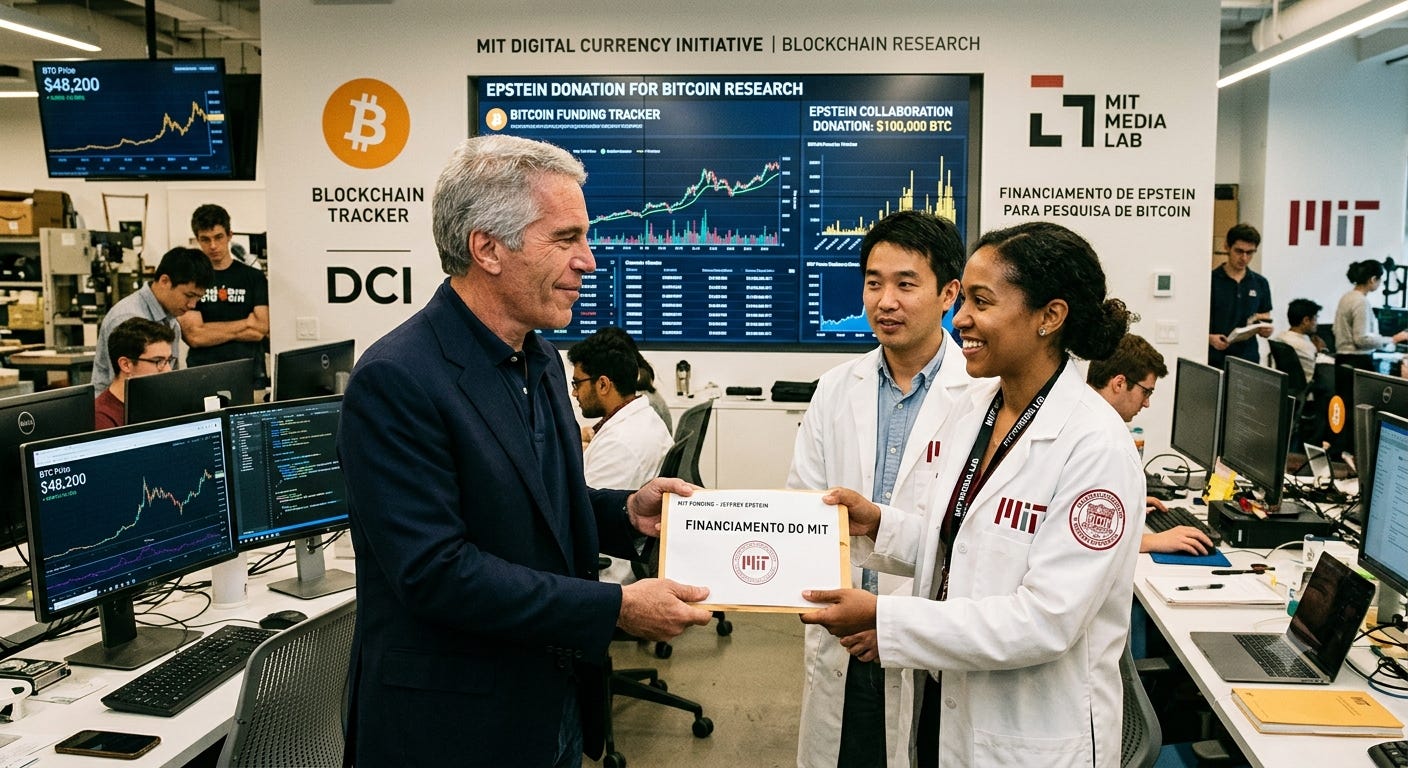
Let us begin with the genealogy, as the method demands. Between 2002 and 2017, Epstein sent approximately eight hundred and fifty thousand dollars to MIT, according to the internal report that the institution itself commissioned and released in January 2020. The relevant detail is not in the figure, which by the standards of American university philanthropy is modest, almost embarrassing. It is in the treatment. The donations were not recorded as conventional contributions, the donor’s name was deliberately concealed in the internal systems, and staff began referring to him, in correspondence, as Voldemort, he who must not be named. Epstein visited the campus at least nine times, with private meetings and direct access to academic leadership, and those visits did not enter the formal records.
Note what is being described here, because the point usually escapes. This is not a man buying a building to see his own surname carved in marble, which is the usual philanthropic vanity and harms no one. It is the exact opposite. It is a man convicted of a sexual crime buying invisibility inside the principal laboratory of technical imagination in the West, and obtaining from that institution the active courtesy of erasure. MIT was not deceived. MIT knew, created an internal nickname for what it knew, and continued receiving the checks. That, dear reader, is information about MIT before it is information about Epstein.
The channel of influence, therefore, was open and well-oiled long before Bitcoin became dinner-table conversation. And it is precisely there that the chronology begins to grow interesting.
Amazon purchase records attached to the case files show that, throughout 2017, Epstein acquired literature on Bitcoin, Ethereum, blockchain and, alongside it, manuals on negotiation strategy and influence. The year was not chosen at random, since it coincides with the first major bull cycle that transformed the sector from an engineer’s curiosity into a macroeconomic phenomenon, and it also coincides with the methodical effort of the subject to rebuild the network of relationships that the 2008 process had scratched. He was studying. Studying poorly, probably, the way men who read in order to converse rather than to understand study, but studying.
In 2018, he monetized. His exposure had been built via Blockchain Capital, a fund that held a stake in Coinbase, with an initial contribution on the order of three million dollars. The sale of half the position back to the fund that year fetched something close to fifteen million, the other half retained. It is the banal arithmetic of any well-positioned investor in a euphoria cycle, and it would be absolutely uninteresting if the investor were someone else.
Now, what elevates the episode from the category of financial gossip to that of symptom is the correspondence with Steve Bannon, also from 2018. In it, Epstein asks in a direct manner about taxation of crypto assets, about the mechanisms for receiving, paying and distributing coins, and about how to circumvent campaign-finance rules. Bannon replies with a laconic On it and connects him to experts in electoral legislation and veterans of the sector. There is, as far as is known, no documented operational follow-through of that conversation, and intellectual honesty requires recording that in full.
But what the conversation reveals about the subject’s mind needs no follow-through. He was not looking at it the way one looks at an asset class. He was looking at it the way one looks at a pipeline, capable of moving political value without the inconveniences of American electoral traceability. The question he put to Bannon is the question he always put, his whole life, about everything, from philanthropic foundations to university laboratories. Where does this enter, and who finds out.

Having established the facts, let us establish with equal rigor what they are not. There is no document, indication or testimony linking Epstein to the creation of Bitcoin, to the development of the protocol or to any form of control over the code. Whoever is selling that merchandise is selling entertainment, and poorly. What the documents show is the far more prosaic and far more universal thing, a man with money and without scruple trying to buy a position of advantage in a rising technology, exactly as he bought a position of advantage in cognitive science, in genetics, in foreign policy and in everything else that seemed promising to him. It was what he did his whole life, with the method of an investment agent and the ethics of a predator.
And it is precisely here, dear reader, that the thing hurts, because the lesson does not fall on the protocol. It falls on the improvised theology that has been constructed around it.
In recent years we have witnessed the emergence of a frankly religious vocabulary applied to a data structure. One speaks of moral imperative, of honest money, of salvation through digital scarcity. Michael Saylor routinely describes the asset in terms that any scholastic would recognize as transcendent, and a legion of maximalists replicates the register with that specific fervor of recent converts, which is always louder than that of those born in the faith. The implicit promise is that adherence to the instrument produces righteousness in the one who adheres. It is the inverted Donatism of which we spoke, and it is such great nonsense that it almost moves one.
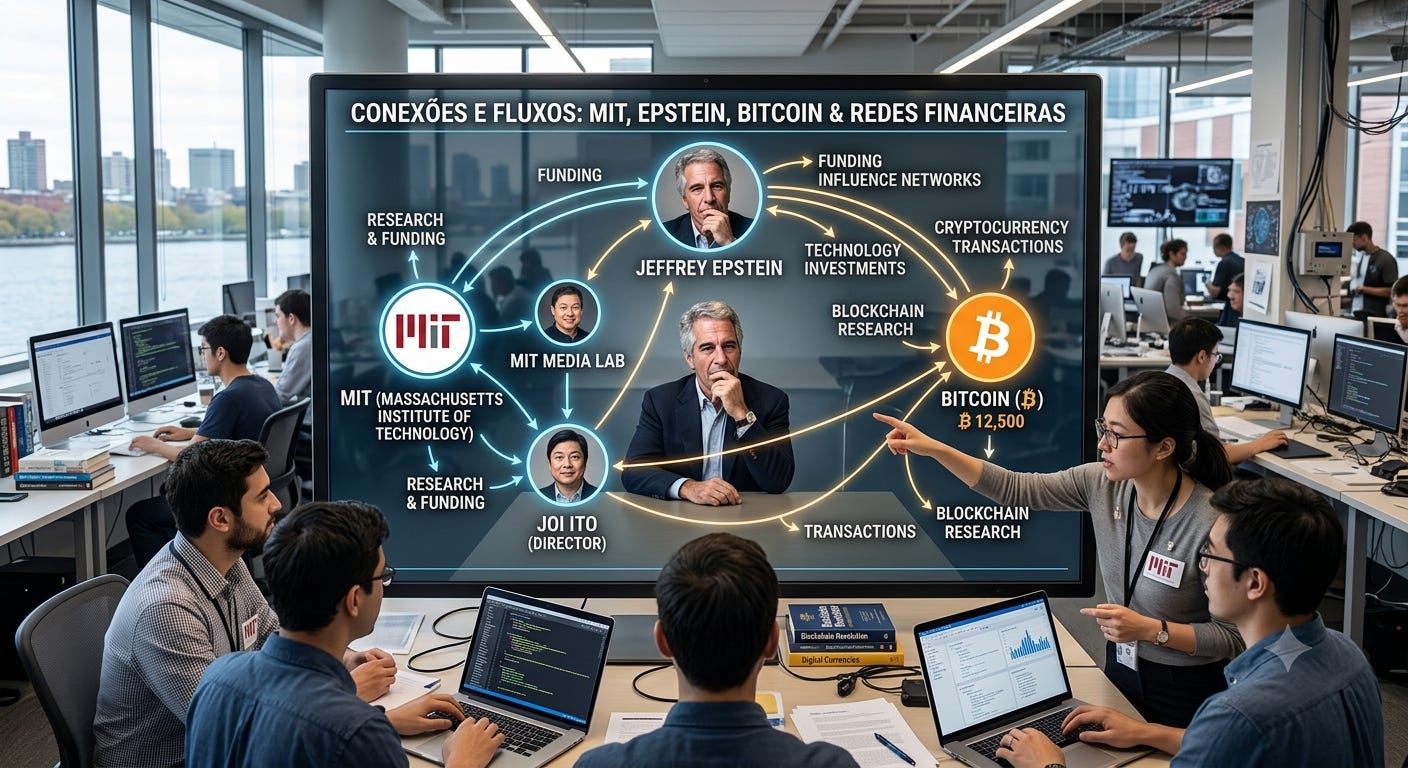
Bitcoin works. It resists censorship, dispenses with authorization, knows neither bank holiday nor ministerial stroke of the pen, and those are admirable technical properties that stand on their own. Yet none of them produces virtue in the holder. A well-forged hammer does not sanctify the carpenter, and the carpenter who judges himself holy because of the hammer tends to be, broadly speaking, a terrible carpenter and a worse Christian. The real strength of the protocol lies precisely in what the messianic discourse cannot digest, namely that it does not distribute absolution, does not issue a certificate of character and does not ask who is on the other side of the transaction. It is morally mute by design, and that muteness is the characteristic, not the defect.
I have survived long enough in Brazilian public life to develop a stable allergy to those who speak loudly about their own purity. The subject who needs to announce every two hours that he operates on the correct side of history is usually, in the best of cases, selling something. I know of no relevant exception to the rule, and the record of the twentieth century, with its new men and its morally superior vanguards, suggests that the exception did not exist there either.
The merit of Bitcoin, therefore, was never to remain untouched by the dirt of the world, a condition that no relevant technology has ever enjoyed since the wheel. It was to keep functioning while Epstein bought books about it, while MIT filed the donor’s name in a drawer with the nickname of a children’s villain, and while Bannon replied On it to a convicted pedophile who wanted to know how to dodge American electoral legislation. The system did not notice. It continued mining blocks every ten minutes, with the admirable indifference of a clock.
Augustine was right, in the end. The efficacy of the rite does not depend on the virtue of the one who administers it. What he did not foresee, and perhaps it would never have crossed his mind to foresee, is that one day there would be a congregation willing to invert the theorem and conclude, from the fact that the rite works, that the minister is holy.
Comments
Nothing yet. Say the first thing.
Sign in to join the conversation.