
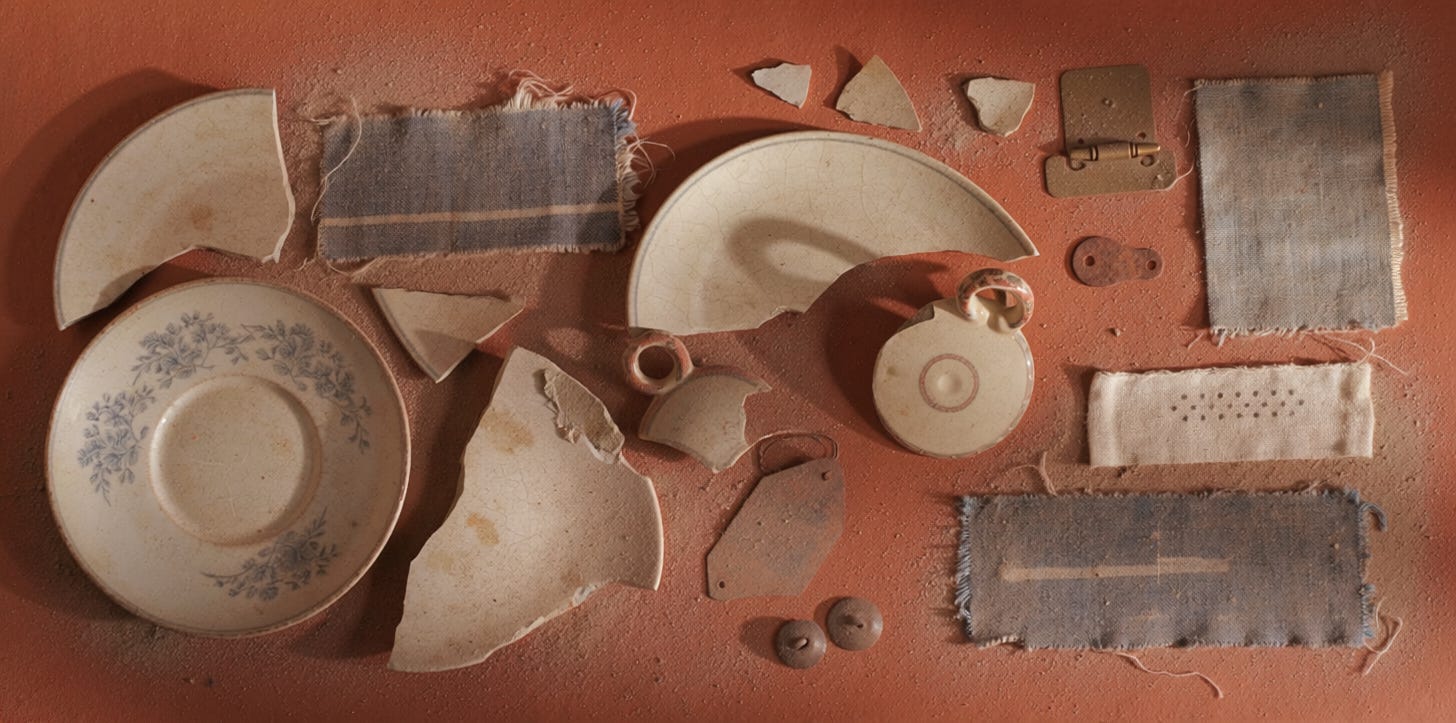
Sir Alan Gardiner, Oxford Egyptologist, wrote: “What is proudly advertised as Egyptian history is merely a collection of rags and tatters.” He continued: “It must never be forgotten that we are dealing with civilization thousands of years old and one of which only tiny remnants have survived.”
The Canal Zone’s history is similar — but with a difference. It spans only 96 years, not millennia. The people who lived it are still alive. But the material is still rags and tatters. Scattered across personal archives, institutional collections, and individual memories. No single entity has it all. No one ever will.
And yet people speak about Canal Zone history as though they do.
We gather rags and tatters. We report what we find. We do not pretend to have the whole story.
We distinguish fact from opinion. When we report something, it is sourced and traceable. When we offer interpretation or perspective, we say so plainly. Too many people who claim to report slip opinion in without making that distinction. We refuse to do that.
We share our sources. We are not an educational institution. We are developing a film documentary and working to preserve Canal Zone history through publications such as the CZD Review. Some of us do have degrees and years of knowledge about Canal Zone history. But having credentials does not make CZD the authority, just as a publication speaking about a country’s history is not the authority, and a PhD in history is not the authority. We all share our findings and interpretations. What separates honest work from dishonest work is transparency about method. There are plenty of credentialed institutions and published scholars who have gotten it wrong — because they are human. Credentials do not prevent bias. What prevents error is the willingness to show your work, acknowledge what you do not know, and correct yourself when evidence demands it.
We also acknowledge that transparency has its limits. Some information comes from a person who wishes to remain anonymous. Some documents are incomplete — a final page lost to time, an author’s name never recorded. Some pieces of information align with multiple sources but cannot be fully confirmed on their own. In these cases, we share what we have and note exactly what is missing or unconfirmed. A document missing its last page is still a document worth sharing — with the honest note that the last page is gone. We do not discard what is imperfect. We present it honestly.
The intention of Canal Zone Documentary is to document the Zonian community as a whole — the shared experience of the people who lived there. That is our scope. That is our focus.
We are not here to address every grievance. We are not here to follow every conversation simply because it is happening. We are not here to cover every topic because someone else covered it first. “You have to talk about X” — no, we do not. Someone else can make that documentary. Someone else can write that article. Just because every publication, every historian, every social media page is discussing something does not mean we are obligated to also. Our direction is ours. It was chosen deliberately.
If you disagree with our direction, you do not have to follow. That is a completely reasonable choice and we respect it. We too encounter publications and perspectives we disagree with and choose not to follow. That is how it works.
What we will not do is curate history to make it comfortable. The Canal Zone had complexity — racial segregation, class divisions, labor disputes, political tensions. So did Panama. So did every country, including the United States. Saying so does not dilute the wrongs of any of it. It places those wrongs in their full human context. Contextualizing is not excusing. They are two different things entirely.
When we share opinion — and we will, because we are Zonians who loved our experience there — we will name it as opinion. Our love for the Zone is real. It shaped us. It does not blind us.
We will follow the facts wherever they lead. We will name gaps honestly. We will credit those who came before us and question them when evidence warrants it. We will say “we do not know” when we do not. We will say “we were wrong” when we are.
We will call out bad reporting. When someone claims to present fact and presents opinion instead, we will name it. When our evidence supports their position, we will say so. When the evidence points elsewhere, we will say that too.
And we will name bad faith when we see it. There are people who come to our pages, our groups, our comment sections not to understand but to judge wrongly. They arrive with conclusions already formed. They read a piece about Carter and the treaties and assume we are taking a side. They name-call. They dismiss without curiosity. They show their hand — and we will name what we see. That is not disagreement. Disagreement is welcome. That is closed-minded disruption, and it does not belong here.
We welcome engagement — genuine engagement. Bring your material. Bring your memory. Bring your perspective. Bring your challenge. We will listen, and where a challenge is founded in fact and honest inquiry, we will take it seriously.
But a response founded not in fact but in someone else’s interpretation, or in incomplete reporting, or in assumption — that is a different matter. We will treat it accordingly.
The Canal Zone is gone. The people who lived it are not. Neither is the truth of what happened there — incomplete, complex, and worth preserving as honestly as we can.
We are gathering rags and tatters. We are being honest about it.
Canal Zone Documentary is developing a film about the shared experience of Zonians. We share our findings, our sources, and our interpretations on Substack, across our social media platforms, and through CZD Review.
Follow us. Share with us. Challenge us — in good faith.
👉 canalzonedocumentary.substack.com 👉 facebook.com/canalzonedocumentary 📁 archive@canalzonedocumentary.com
No posts
Comments
Nothing yet. Say the first thing.
Sign in to join the conversation.