
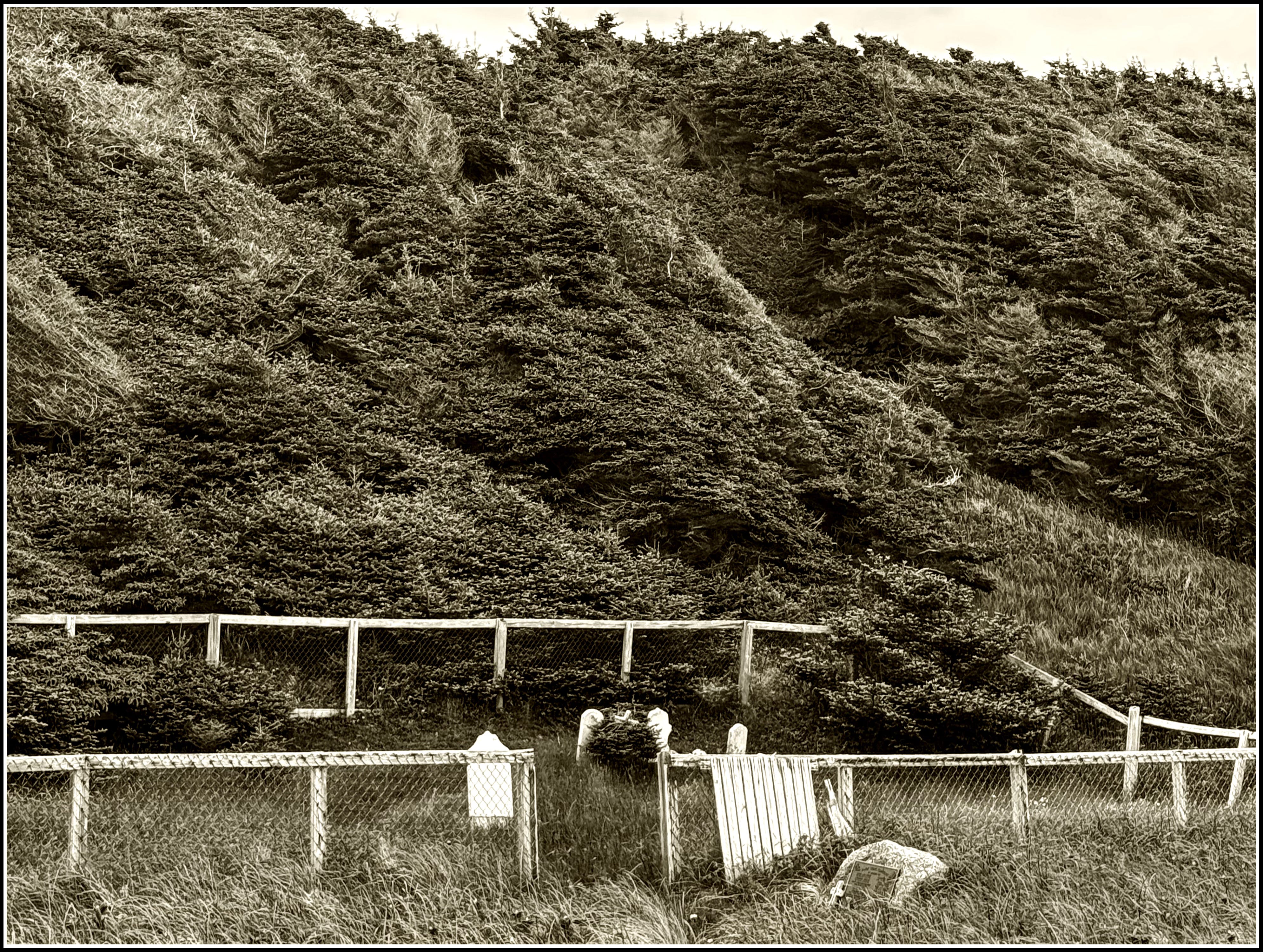
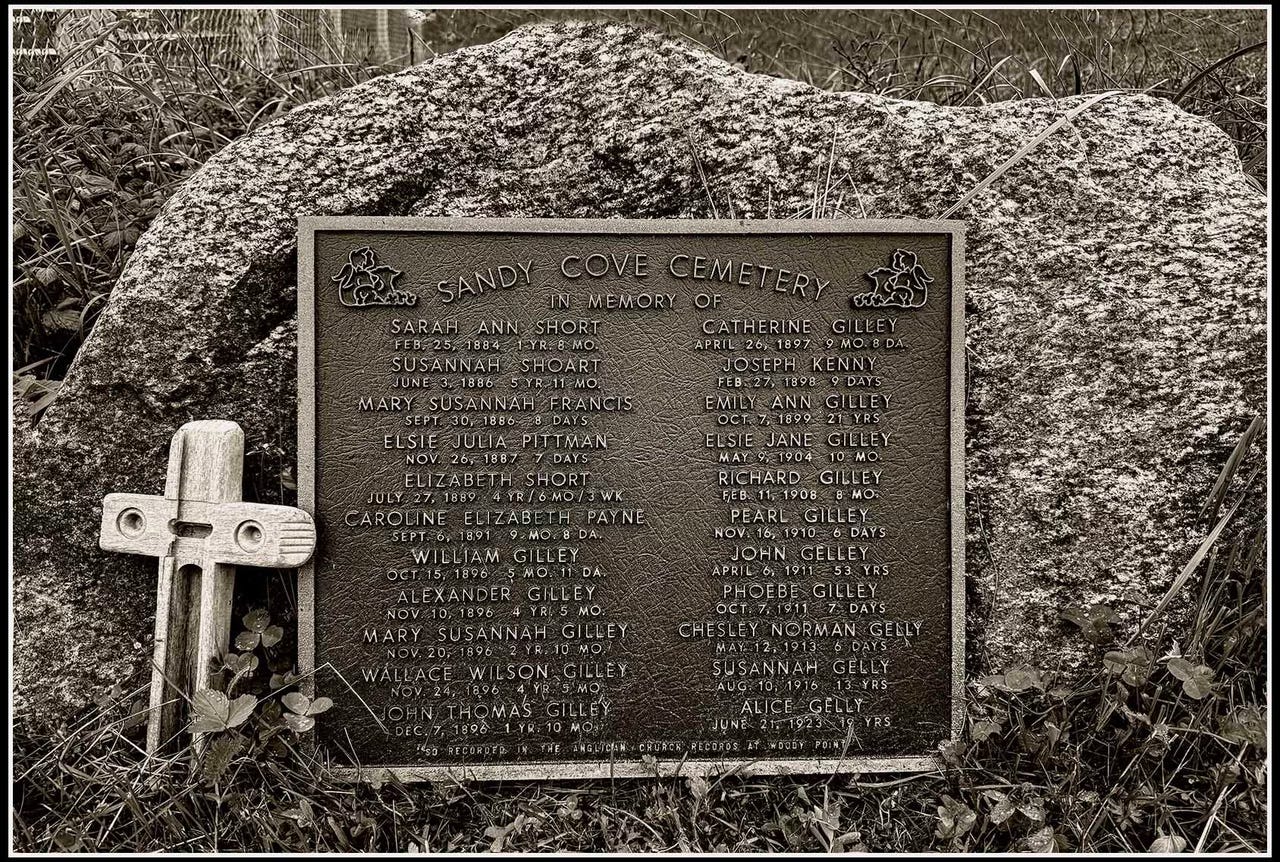
The bronze plaque is set into a boulder just outside the weathered wooden fence enclosing a tiny cemetery. The small burial ground lies nestled against the hillside, cradled within a shallow natural amphitheatre of rock, grass, and tuckamore. Only the gentle wash of waves on the beach a few dozen metres away breaks the silence. Even the wind—almost a constant presence on Newfoundland’s Great Northern Peninsula—seems to lose its voice in this sheltered cove.
At first glance, the plaque appears to contain little more than a list of names and dates. Yet two details soon stand out.
There is a Short. And a Shoart. Farther down are Gilley. And Gelley. Or Gelly. The differences are slight enough to suggest that these may once have been the same surnames, altered over time by imperfect record-keeping—or simply by the shifting ways in which names were heard and written.
But it is the ages recorded beside the names that draw the eye: one year; five years and eleven months; four years and six months; a few days; a few months.
The plaque offers no explanation, no account of who these people were or how they lived. The heading simply reads: Sandy Cove Cemetery. A note at the bottom explains that the information was compiled from Anglican church records preserved in Woody Point, a community located 100 kilometres away.
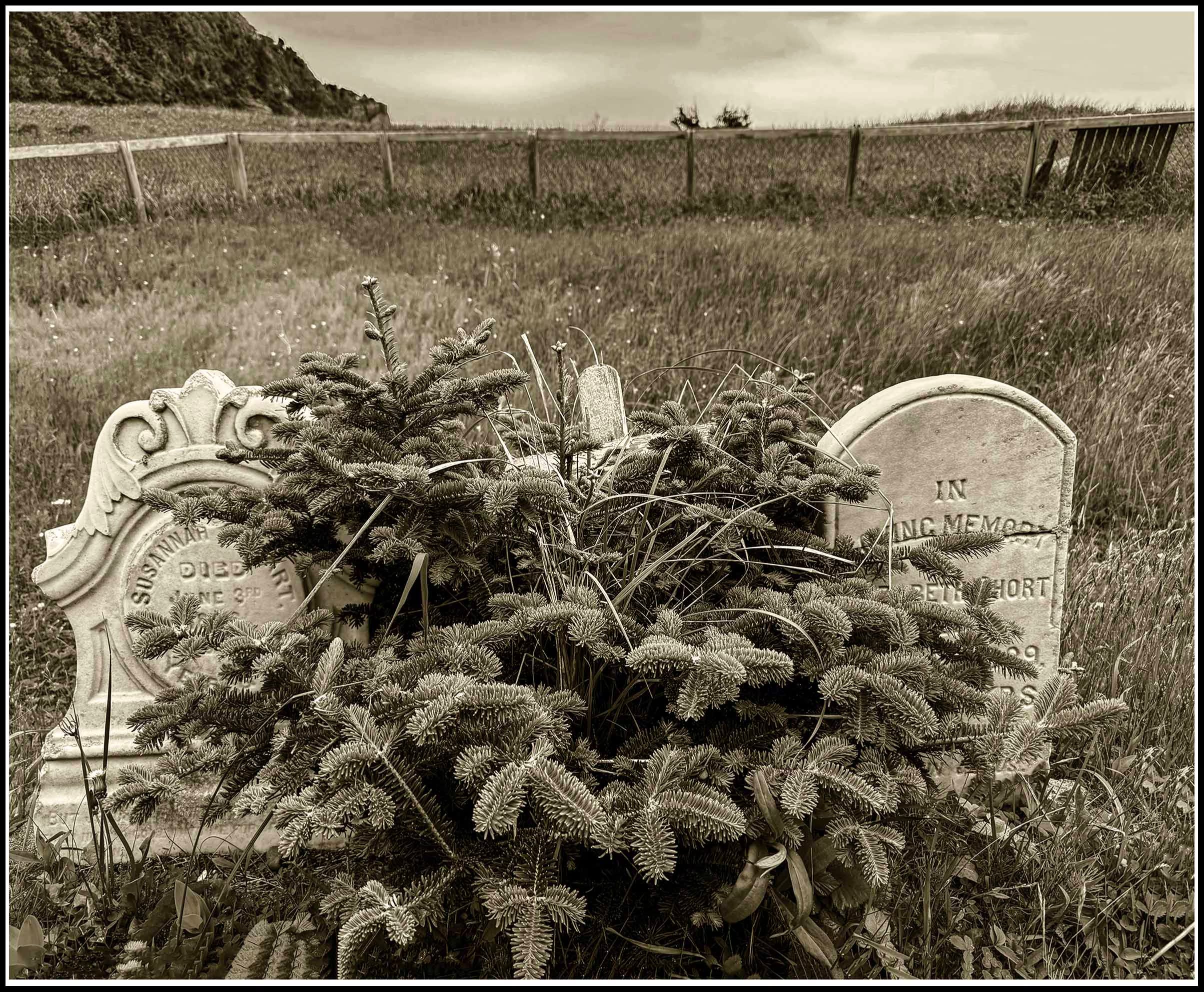
Inside the enclosure, only four headstones remain. Two lean towards one another, separated by a small shrub. Both bear the surname Short. There is Sarah Ann, aged one year and eight months. And there is Susannah, five years and eleven months. Both names appear on the plaque.
The repeated surnames—and their slight variations—hint at a small community held together as much by family ties as by the necessity of survival. Today, the cemetery is surrounded by wild grasses. A narrow footpath leads to the beach, where driftwood lies scattered above the tide line. Without the cemetery, it would be difficult to imagine that families once made their lives here.
And yet this cove was once much like dozens of other Newfoundland outports. Houses stood near the beach. Fishing stages and flakes lined the shore. Small boats rested above the tide, ready for the next day’s work. Daily life depended on the labour of everyone. Men fished the inshore waters, while women salted cod, tended gardens, preserved food for the winter, and raised children.
Still, much of that existence remained at the mercy of forces beyond human control: the weather, the fortunes of the fishery, the harvest, disease, and the long isolation imposed by winter. Medical care was often distant, if available at all, and a childhood illness or sudden accident could quickly become a tragedy—a reality reflected all too clearly in the ages recorded on the plaque.
Not all of Newfoundland’s outports met the same fate. Some remain thriving communities. Others have found new life as destinations for visitors seeking a glimpse of an older Newfoundland. Many, however, disappeared altogether.
At Sandy Cove, all that remains is a small cemetery overlooking the sea.
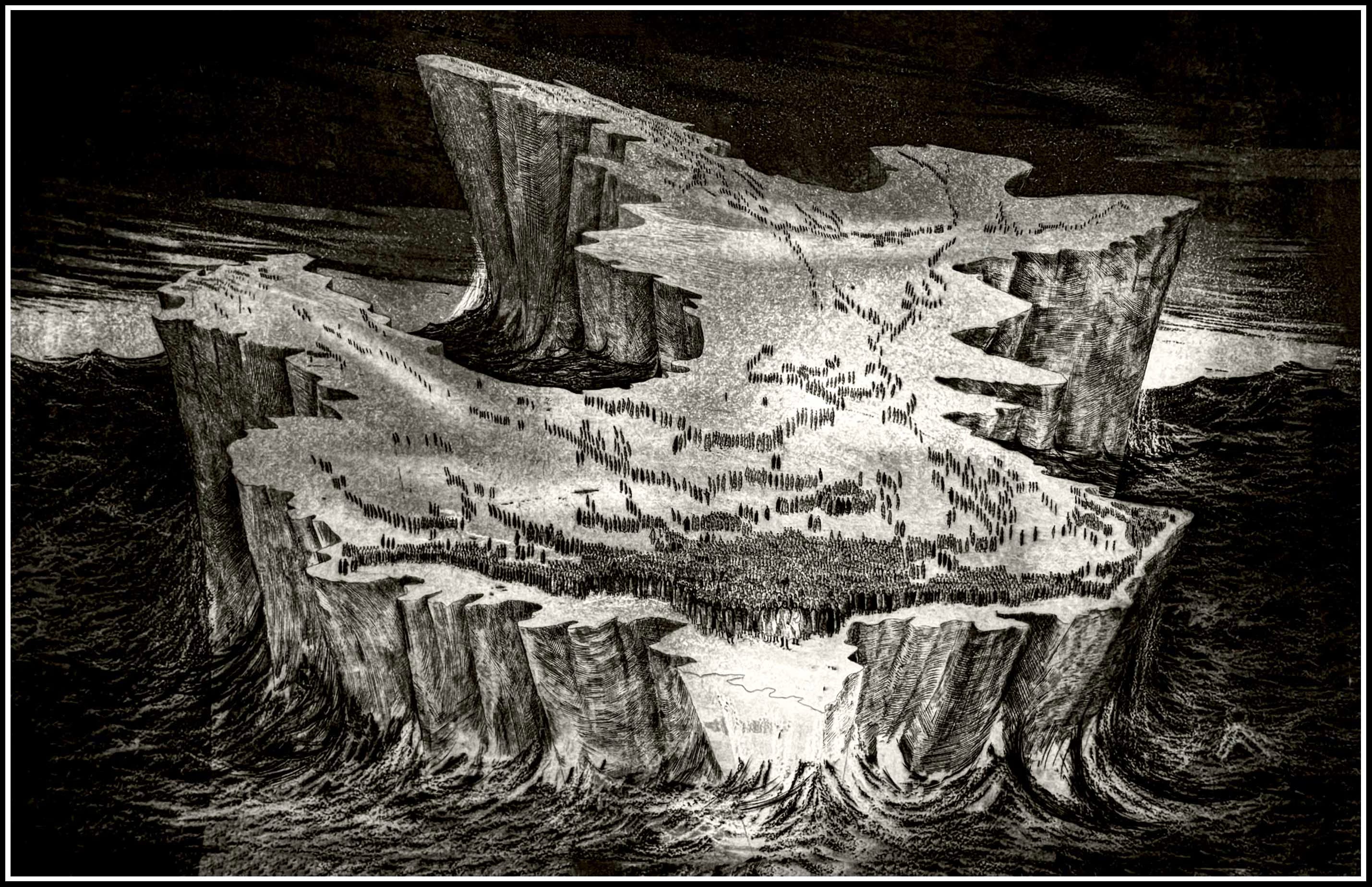
David Blackwood (1941–2022), The Great Lost Party Adrift, 1986 Etching and aquatint on paper
Born in the outport of Wesleyville, Newfoundland, David Blackwood (1941–2022) was one of Canada’s foremost printmakers. His work transformed the memory of Newfoundland’s coastal communities into a powerful and enduring visual language—one shaped by the sea, the ice, isolation, labour, and loss.
Rather than simply depicting the past, Blackwood sought to give visual form to a vanished world and to its enduring place in Newfoundland’s collective memory.
La targa di bronzo è incastonata in un masso appena fuori dalla staccionata di legno ormai segnata dal tempo che racchiude un piccolo cimitero. Il minuscolo camposanto è adagiato sul fianco della collina, raccolto in un piccolo anfiteatro naturale di roccia, erba e bassi cespugli di tuckamore. Solo il leggero sciabordio delle onde sulla spiaggia, a poche decine di metri di distanza, interrompe il silenzio. Persino il vento—una presenza quasi costante sulla Great Northern Peninsula del Newfoundland (Terranova) —sembra perdere la sua voce in questa baia riparata.
A prima vista, la targa sembra contenere poco più di un elenco di nomi e date. Eppure, ben presto, due dettagli attirano l’attenzione. C’è un Short. E uno Shoart. Più in basso compaiono Gilley. E Gelley. Oppure Gelly. Le differenze sono così lievi da suggerire che un tempo questi fossero in realtà lo stesso cognome, modificato nel corso degli anni da una registrazione imprecisa o semplicemente dal modo mutevole in cui i nomi venivano uditi e trascritti.
Ma sono soprattutto le età riportate accanto ai nomi a colpire lo sguardo: un anno, cinque anni e undici mesi quattro anni e sei mesi; pochi giorni; pochi mesi.
La targa non offre alcuna spiegazione, nessun racconto di chi fossero queste persone o di come avessero vissuto. L’intestazione recita semplicemente: Sandy Cove Cemetery. Una nota in basso chiarisce che le informazioni sono state ricavate dai registri della Chiesa anglicana conservati a Woody Point, una comunità distante cento chilometri.
All’interno della recinzione rimangono soltanto quattro lapidi. Due sono inclinate l’una verso l’altra, separate da un piccolo arbusto. Entrambe riportano il cognome Short. Appartengono a Sarah Ann, morta all’età di un anno e otto mesi. E a Susannah, che visse solo cinque anni e undici mesi. Entrambi i nomi compaiono sulla targa.
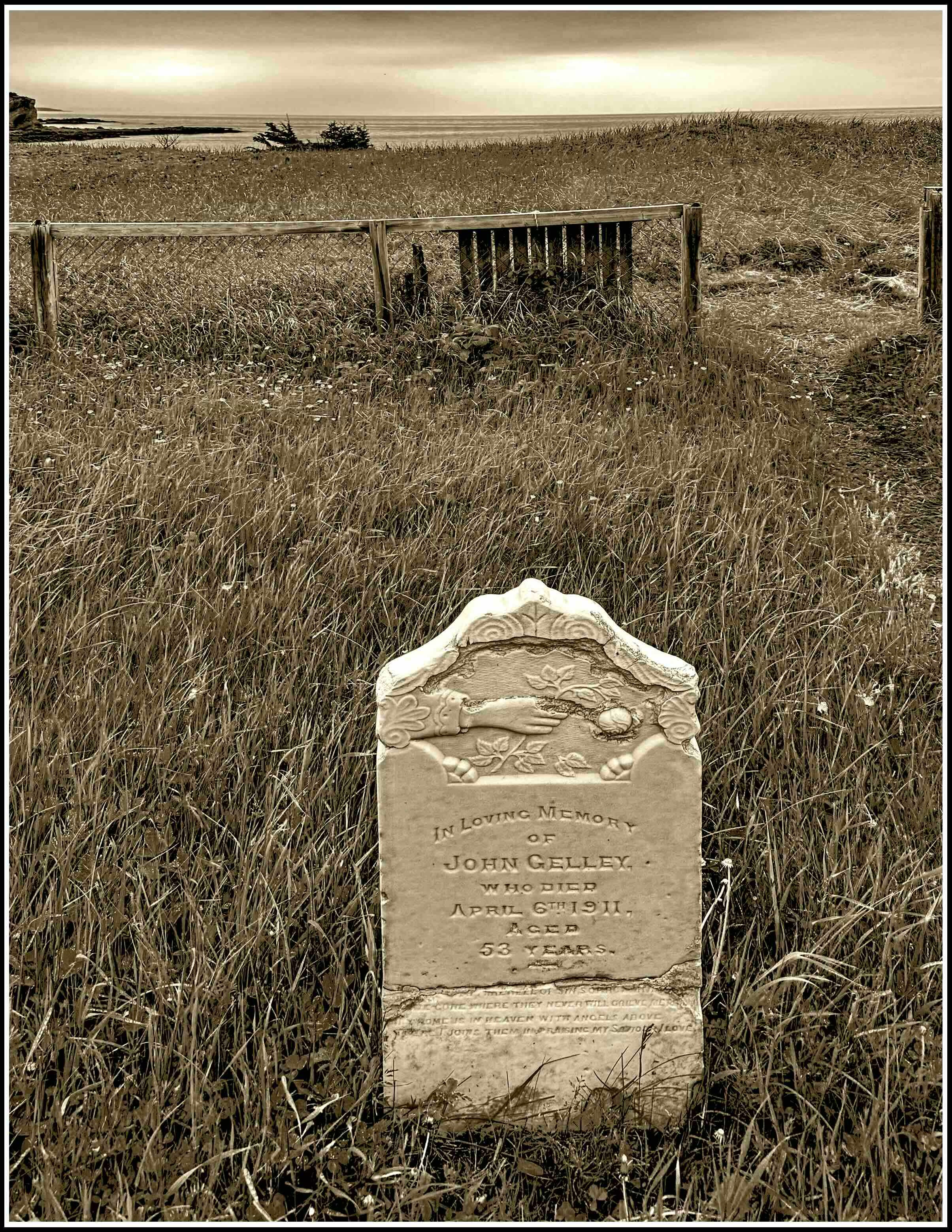
La ripetizione dei cognomi—e le loro lievi variazioni—lascia presagire una piccola comunità tenuta insieme tanto dai legami familiari quanto dalla necessità di sopravvivere. Oggi il cimitero è circondato da erbe selvatiche. Uno stretto sentiero conduce alla spiaggia, dove pezzi di legno portati dal mare giacciono sparsi sopra la linea dell’alta marea. Senza quel cimitero, sarebbe difficile immaginare che un tempo delle famiglie abbiano vissuto qui.
Eppure questa baia un tempo era simile a decine di altri outport di Terranova. Le case sorgevano vicino alla spiaggia. I piccoli approdi per la pesca (fishing stages) e gli essiccatoi per il merluzzo (flakes) costeggiavano la riva. Le barche venivano issate sopra il livello della marea, pronte per il lavoro del giorno successivo. La vita quotidiana dipendeva dal contributo di tutti. Gli uomini pescavano nelle acque costiere, mentre le donne salavano il merluzzo, coltivavano orti, conservavano provviste per l’inverno e allevavano i figli.
Tuttavia, gran parte di quell’esistenza rimaneva in balìa di forze al di fuori del controllo umano: il clima, le sorti della pesca, i raccolti, le malattie e il lungo isolamento imposto dai lunghi inverni. Le cure mediche erano spesso lontane, quando erano disponibili, e una malattia infantile o un improvviso incidente potevano trasformarsi rapidamente in una tragedia—una realtà riflessa con dolorosa evidenza nelle età riportate sulla targa.
Non tutti gli outport di Terranova hanno avuto lo stesso destino. Alcuni sono ancora oggi comunità vive e fiorenti. Altri sono rinati come mete per visitatori desiderosi di scoprire le tracce di un Newfoundland del passato. Molti, tuttavia, sono scomparsi del tutto.
A Sandy Cove non rimane altro che un piccolo cimitero affacciato sul mare.
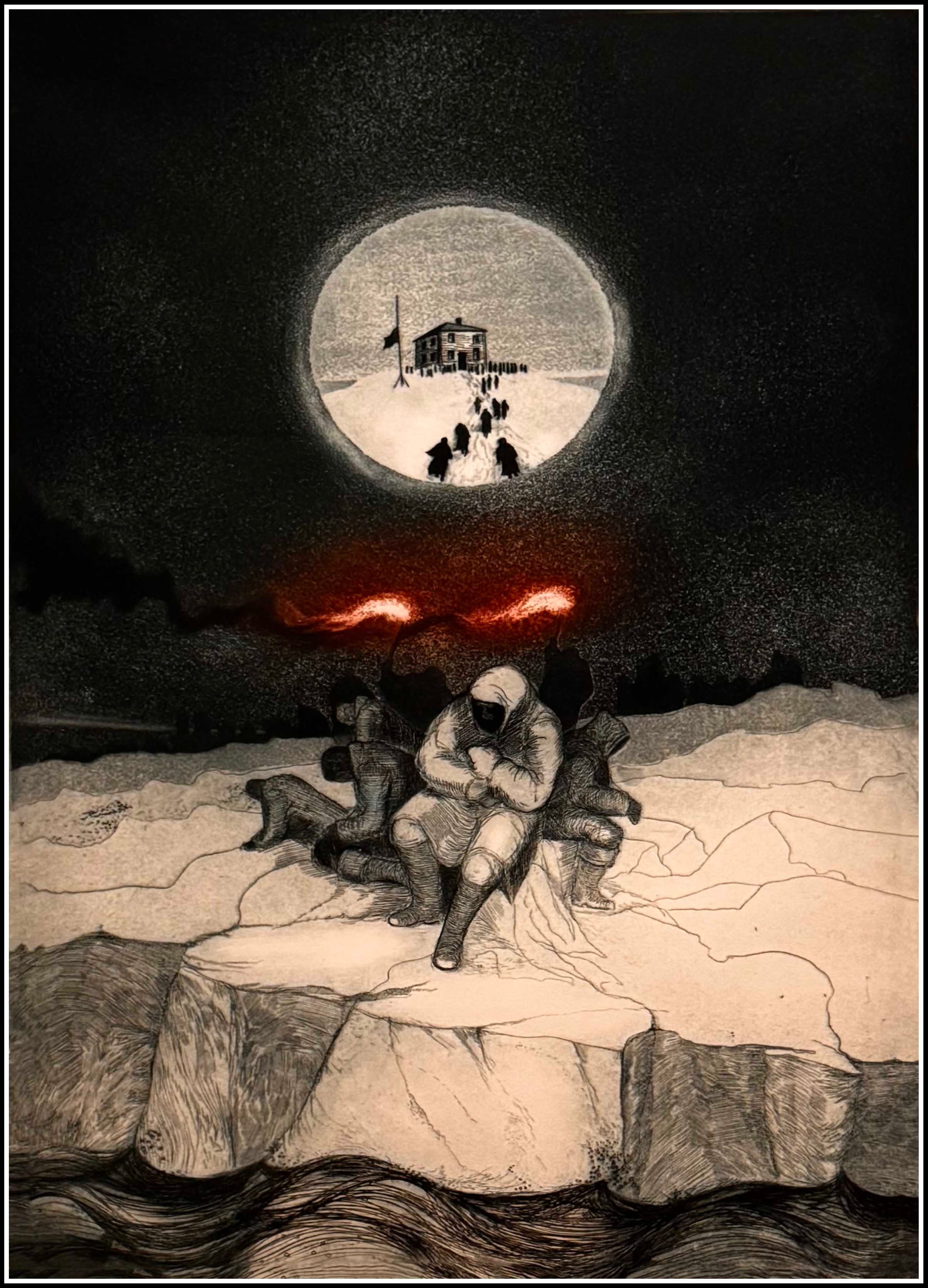
David Blackwood (1941–2022), Vision of the Lost Party, 1987, acquaforte e acquatinta con colorazione a mano su carta
Nato nell’outport di Wesleyville, in Newfoundland (Isola di Terranova), David Blackwood (1941–2022) è stato uno dei più importanti incisori canadesi. La sua opera ha dato forma a un linguaggio visivo inconfondibile, modellato dal mare, dai ghiacci, dall’isolamento, dal lavoro e dal drammatico senso di perdita. Non una semplice rappresentazione del passato, ma il tentativo di dare forma visiva a un mondo scomparso e alla memoria collettiva che ancora lo custodisce.
Comments
Nothing yet. Say the first thing.
Sign in to join the conversation.