
I’m a big fan of found footage horror. I think it’s a super unique genre that doesn’t get a ton of mainstream love. Whenever I watch a found footage movie, I end up thinking a lot about Movies. Just the other day, I watched V/H/S/Halloween and, as I often do with the V/H/S series, enjoyed a couple segments (“Kidprint” and “Home Haunt”) but was left cold on the whole. This watch made me realize a very specific aspect of the V/H/S series that hinders my enjoyment, so I thought I’d write about it. Before I get into that, though, I want to talk a little bit about found footage as a ‘genre’. We’ll get to V/H/S but it’s going to take a minute.
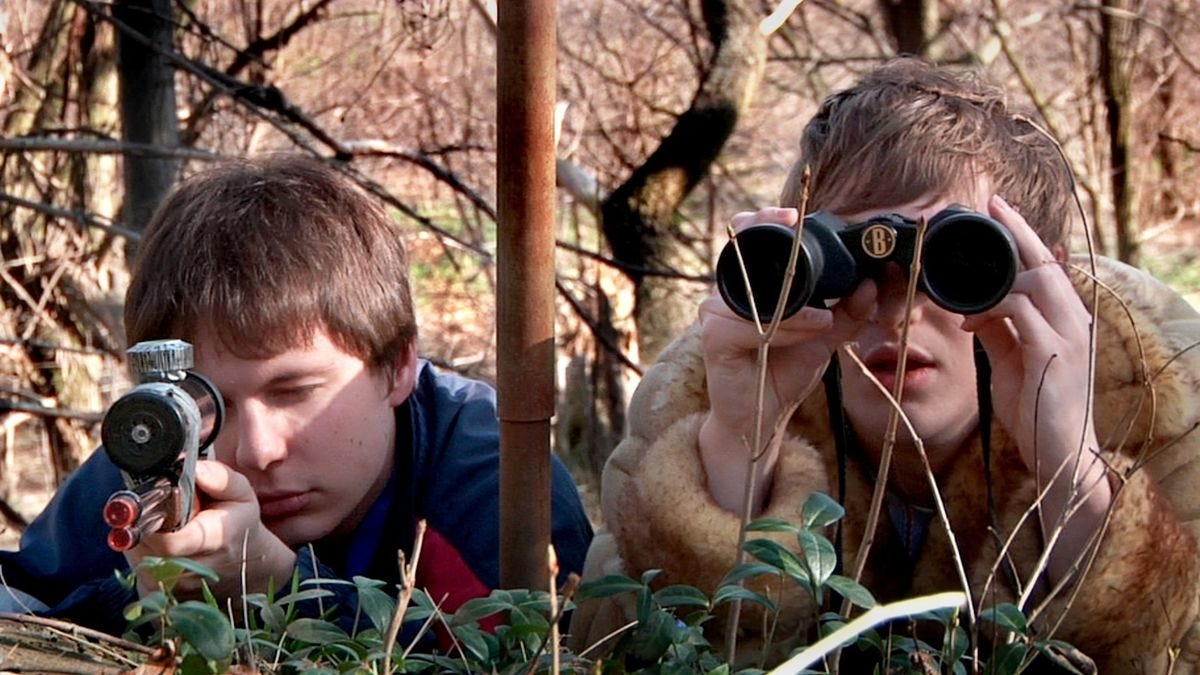
A movie is a lie, fundamentally. A found footage horror movie may be a harder lie to swallow than most, but the act of watching a movie should be deciding to accept the untruth. Found footage movies inevitably stimulate many of their watchers to loudly question their narrative coherency, their character motivations, or what sound cues can be considered diegetic. I don’t think these are worthwhile complaints.
It would be an exercise in futility to try and determine what criteria are ‘okay’ to ‘objectively criticize’ a movie– of course there is no true ‘wrong’ when it comes to art. Plot holes or tonal shifts may jolt audiences out of their immersion, laying bare the lie, leading to a knee-jerk rejection of what they’re seeing, but I don’t think that makes those things ‘mistakes’. I won’t spend any time defining what are legitimate grievances because I don’t think it’s possible. But if I had to pinpoint one of the most ridiculous complaints it would be those on the grounds of genre.
I don’t think found footage is quite a ‘genre’, but it’s an easy way to describe it. I think it’s more like a set of constraints, or a format. It’s a way you choose to make your movie. Something in between a medium and a challenge. So a complaint about a found footage movie like “Who’s filming?” or “Who edited this footage together?” doesn’t ring true to me. It’s like complaining that Across the Spider-Verse contains live-action footage even though it’s supposed to be an animated movie. A lot of people think that the quality a found footage movie is asking of them is gullibility. That’s not the right way to look at it; consider indulging their deception to be an act of open-mindedness.
If the found footage filmmaker has put spooky music over a scene of a group of friends filming their journey through a haunted asylum, I don’t think it’s a betrayal of the viewer. It’s a betrayal of the film’s own constraints, if it is a betrayal at all, which it isn’t, in my opinion. It’s just the use of a tool in a toolbox you weren’t supposed to have. At the end of the day, you’re watching a movie. You believe that Superman can fly, you believe that Anthony Hopkins is a serial killer, you believe that E.T. likes Reese’s Pieces. These are all lies that you’re happy to believe because they’re not asking you to buy into their ‘reality’. They only ask you to tolerate their falsity. But when the nature of the lie shifts, when you think you’re expected to believe that the events of this movie ‘really’ happened, you might decide you’re not willing to believe it. Why? These are all untruths; it makes no sense to turn up your nose.
Of course, again, I’m not saying anybody has to like anything. That would be ridiculous. Many found footage horror movies can certainly be grating, and on occasions intolerable. But my complaint will never be “Where is that music coming from?”, “How are they still filming?”, “Who’s holding the camera?” You have to be careful asking questions like this, because the answer might be T.J. Miller.
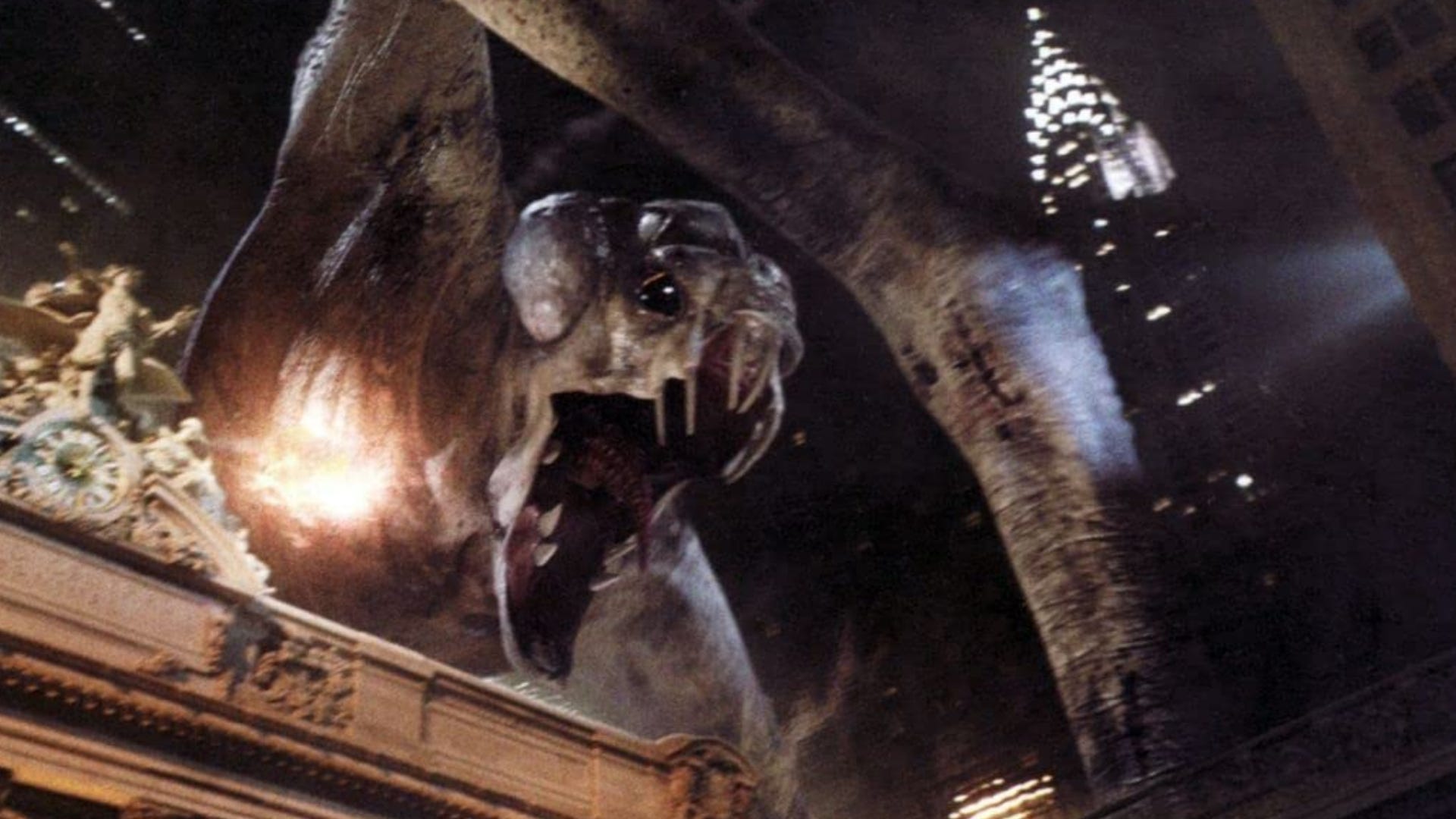
Most found footage horror movies tend to follow a unique structure. Their plots are usually fairly ancillary. Instead, they often spend most of the runtime gradually peddling their lie, building up verisimilitude, until dropping one horrifying moment/visual toward the end that defines the movie. I think this is partially because found footage tends to be pretty low budget, so the filmmakers can’t always afford to pack the movie chock-full of convincing scares. Another reason they tend to be put together this way is because found footage is about Witnessing. The characters need to see something so horrible it ends the movie. A normal movie can just end, but a found footage movie needs to explain why the characters filming are not around to tell their own story. And the movie-ending horror needs to be see-able so the characters can capture it on camera.
A poster example of this structure would be the horror darling Lake Mungo, a mockumentary centering on a grieving family. Throughout the movie we explore different aspects of these characters, spending ample time building atmosphere, mood, and above all else, realism. Great effort is put in to make the lie of this movie convincing. Then, once we’ve bought in, we’re treated to (no spoilers) a truly disquieting piece of footage that lingers long after Lake Mungo has ended. This is how found footage operates– lying through its teeth for an hour-plus until it drops the Moment on you.
As a person who watches a good amount of terrible movies, I spend a lot of time thinking about whether a mind-blowing finale can redeem a mind-numbing first two acts. I believe it often can. But a finale that falls flat has you leaving the movie cold. It’s the last thing you remember, so it needs to be good. Herbert L. Strock’s 1958 (not found footage) horror flick How to Make a Monster is in black-and-white, except for the climax which briefly switches to color, leaving you misremembering the whole movie as being in color. The found footage Moment, I think, follows the same principle.
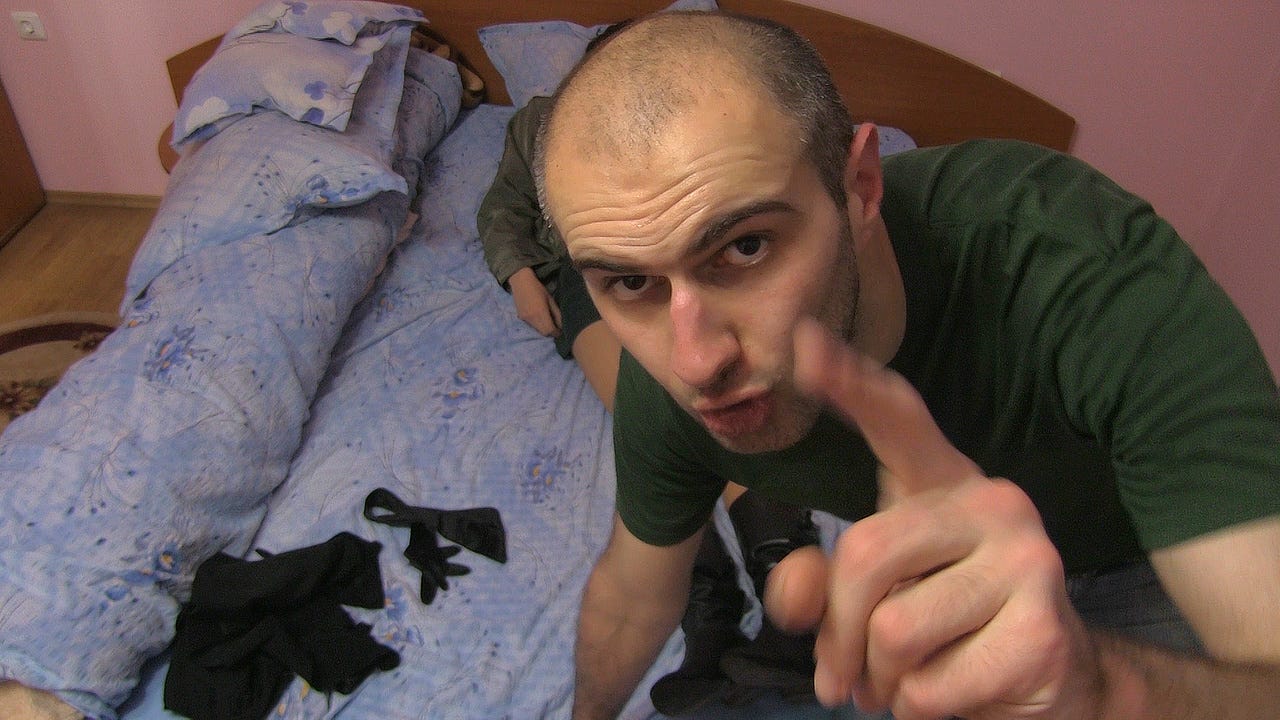
One found footage movie that does a great job lying to you is Adrian Țofei’s Be My Cat: A Film for Anne. The bulk of Be My Cat paints an extremely credible picture of Adrian Țofei as a psychotic, Anne Hathaway-obsessed deviant who abuses his power as a director to terrorize women. But when the ending rolls around, the movie trots out a generic, uninspiring torture scene that is nowhere near as genuinely upsetting as what preceded it. So much effort has been put into the first two-thirds to ensure the verisimilitude is there. The lie has been told, and we’re ready to believe. But what we’re served up at the end isn’t worthy of believing in.
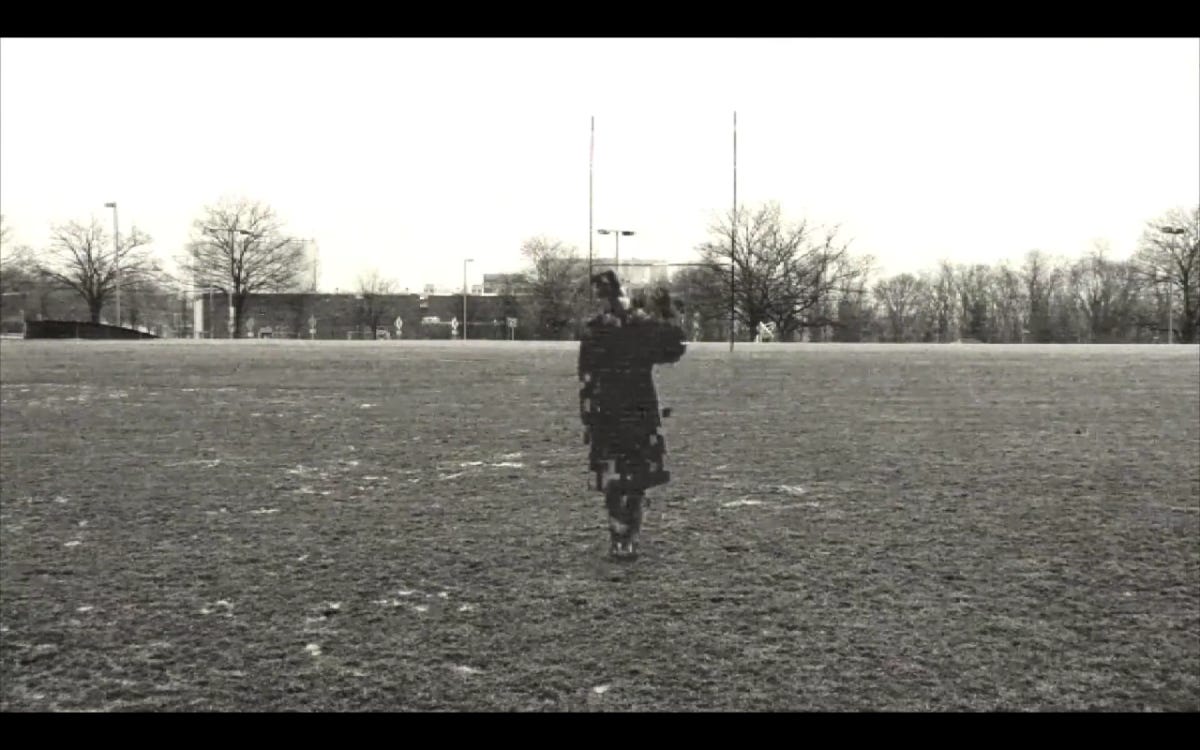
Of course, this structure could be applied to any movie, not just found footage. The plot of most movies, when abstracted, boils down to setting up a sequence of dominoes and then knocking them all down in a pleasurable finale. What makes the single-Moment structure unique to found footage horror, though, is that the linkage between these dominoes is not founded on consequence. Rather than a collection of metaphorical Chekhov’s Guns that tie the narrative together through cause and effect, a found footage horror movie consists of a string of video clips whose true relation to each other is that they were all ‘found’ and thus are ‘real’. Of course there might be a plot, but to be honest it’s incidental. All that matters is that it was filmed, it seems real, and that the Moment is approaching. We will behold something horrible in all its authentic detail, and it will be so nightmarish that the movie has to end. Everybody remembers the end of The Blair Witch Project. People probably remember less of the scene-to-scene events that led there, besides how real they felt.
This structure is literalized very capably in another found footage movie called Butterfly Kisses, from 2018. The movie centers around an urban legend where if you stare down a certain tunnel for an hour without blinking, an entity named Peeping Tom will appear to you at the far end of the tunnel. From then on, every time you blink, Peeping Tom will get slightly closer, until he is finally face-to-face with you, his eyelashes brushing yours. You witness his face at point-blank range, and then he kills you. In Butterfly Kisses, they theorize that a camera functions as an eye, and use it to summon Peeping Tom. In every clip the camera captures afterward, he gets slightly closer, until the camera captures a close-up of his face. This is what a found footage movie truly is. One video after another that, when taken together, pose the thesis that the movie’s lie is worth believing, so that when we are asked to swallow a reality-shattering implausible Moment of horror, we react with fear instead of skepticism.
Now, another thing common to most found footage is that there’s a person holding the camera (this isn’t always true, but it usually is). In order for us to witness the Moment, the person filming must usually also witness it. To maintain the lie of the movie, the character seeing this unimaginable horror must in some way react. If they didn’t, we’d ask ourselves, if even the person ‘actually’ witnessing this isn’t reacting, how can I expect to be scared? For most of the movie the characters have already been narrating with phrases like “Jesus Christ, what the fuck?” or “Holy shit guys, we have to get out of here”. So how do the filmmakers ramp it up? Well, the camera holder has to scream. That’s of course the easiest way to get across that no words can even capture how terrifying this situation is. It makes sense to scream when you are scared. I have no gripe with that.
But here’s where I finally mention the V/H/S series. Found footage horror movies follow the single-Moment structure; an hour and ten minutes of treading water into, generously, twenty minutes of terror. But the V/H/S series are anthologies: each movie comprises about five to six found footage horror movies. So it’s more like, ten minutes of treading water into ten minutes of terror into ten minutes of treading water into ten minutes of terror… and so on. So, where a typical found footage movie is about 20% terror, a V/H/S movie is about 50% terror! Sounds great, right? More bang for your buck? WRONG!
Each sequence of terror is accompanied by SCREAMING. So every 10 minutes in a V/H/S movie you have to listen to a new set of actors scream their lungs out in distorted low-bitrate audio. This is my central and petty complaint about the V/H/S series: The screams-per-minute is much too high. Look, I get it. Horror movies need screams. But I can’t deal with it throughout the entire runtime. Screaming belongs in the last twenty minutes of a horror movie, whether it’s found footage or not. I love found footage. I love how slow and methodical it feels, at odds with its low-budget tacky production value. But that ponderousness flies out the window when multiple shorts are jammed together.
 "Kidprint"")
There are many V/H/S shorts I like. And I respect the project as a whole. But please, I don’t want to keep turning the volume on my TV up and down. I’m not sure how much the various filmmakers coordinate with each other, but I’d like to request that they reach an agreement where only the last short is allowed to contain screaming. I’d also like to request that the next V/H/S movie is themed after the mid-2000s and is called D/V/D. Is that not a million dollar idea?
I recommend every found footage movie mentioned in this piece. You should watch them all. If found footage is your jam, or even if it isn’t, I also recommend these that I didn’t have room to dissect. Add them to your watchlist. Halloween is over, but scary movies are a year-round affair.
Suggested Viewing:
Occult (2009), dir. Koji Shiraishi
Shiraishi is best known for Noroi, but I think Occult is even better. A prime example of an implausible Moment smuggled into credibility by a great lead-up.
The Fourth Kind (2009), dir. Olatunde Osunsanmi
One of the most interesting constructions for a found footage movie I’ve seen. And plenty of annunaki stuff for fans of that.
The Collingswood Story (2002), dir. Michael Costanza
Early (earliest?) screenlife horror movie. Tons of delicious outdated graphic design. A little boring, but a fun artifact.
One Cut of the Dead (2017), dir. Shinichiro Ueda
Spends thirty minutes doing one thing before it flips it on its head and becomes ingenious. Pure joy of filmmaking. Give it a chance, even if the beginning seems terrible.
The Alien Report (2025), dir. Patrick Donnelly
Bizarre outsider art, often unintentionally funny. Great CGI effects and a laudably ambitious climax.
Murder Death Koreatown (2020), dir. Anonymous
One of my favorite found footage movies. Questionably based on a real-life murder. Feels dangerous and unsettling.
The Dirties (2013), dir. Matt Johnson
The GOAT. Probably Matt Johnson’s masterpiece. I really can’t recommend it enough.
No posts
Comments
Nothing yet. Say the first thing.
Sign in to join the conversation.