
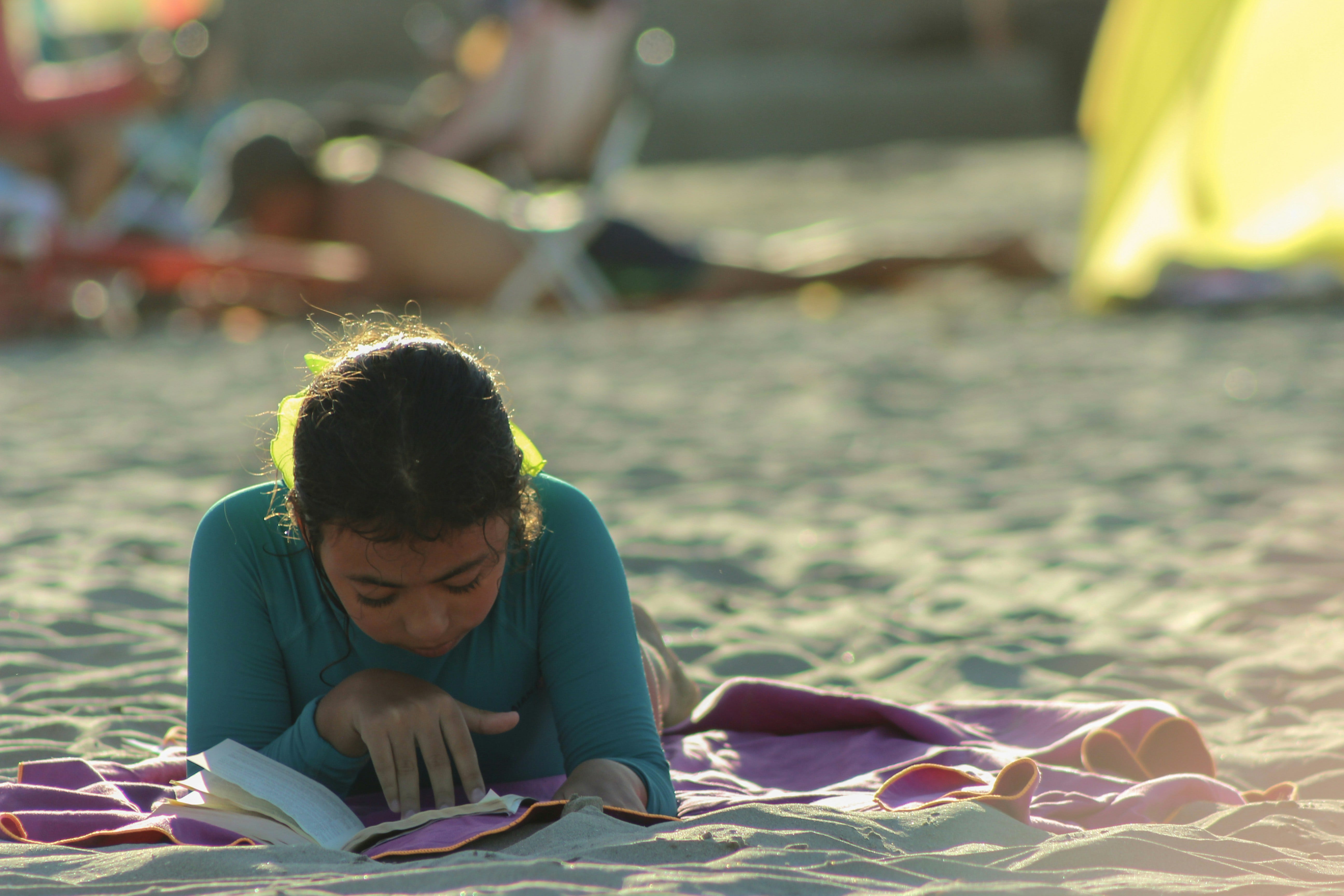
We’ve never heard anyone say, “I wish I’d spent more time scrolling social media.” But we’ve heard countless people say, “I wish I read more,” especially recently.
Maybe it’s the wave of new adaptations like The Odyssey and Little House on the Prairie. Maybe it’s viral trends like sports romance. Or maybe it’s the desire to curl up in a hammock with something more thoughtful than TikTok. Whatever the reason, this summer feels like an invitation to return to books.
Nowadays so much of media is designed to capture our attention in seconds. Books, on the other hand, ask us to slow down, pay attention, imagine, and reflect.
In a digital age, reading is an antidote to time online, which makes today’s reading trends all the more concerning.
Reading for pleasure has been steadily declining, especially among children. In 2023, just 14% of 13-year-olds said they read for fun almost every day—the lowest level ever recorded by the National Assessment of Educational Progress and down from 27% in 2012. And 2019 Common Sense Media study found that American tweens spend nearly five hours each day with entertainment screen media—compared with an average of just 29 minutes reading for pleasure.
Many parents can feel this shift at home. As one parent told us:
“[My eldest son] gets desperate if he doesn’t have his phone with him . . . Sometimes, to get him to read, I have to take it away and set rules; otherwise, he doesn’t want to do anything. It’s very difficult.”
If you’re struggling with this at home, you’re not alone. Over the past two decades, technology has become a much larger part of children’s daily lives, and many parents worry it’s leaving less room for enriching activities like reading.
The encouraging news is that this trend isn’t inevitable. Families can make reading part of everyday life again.
Since 2021, the First Partner’s Book Club, in partnership with the California State Library, has helped children and families across California spend less time on screens and more time reading. Through the program, more than 102,000 books have been distributed to 1,126 libraries across the state.
Here are a few simple ways to make reading part of everyday life this summer—and beyond:
Whether you’re reading aloud to a young child or starting a family book club with older kids, reading together creates opportunities for connection and conversation. Just as importantly, it shows children that reading is something your family values.
Children are more likely to pick up a book when it connects to something they’re already curious about. Ask your local librarian about graphic novels like Gamerville for youth interested in gaming or biographies about favorite soccer players for FIFA fanatics.
A trip to your local library (Find Your Local Library) gives children the freedom to discover books that match their interests, making reading feel like an adventure rather than an assignment (and it’s free!).
Children pay attention to what you do even more than what you say. If you usually reach for your phone before bed or during quiet moments, try reaching for a book instead. Talk with your children about why you’re making the change and what you’re reading. Modeling the habit of reading is one of the most powerful ways to encourage it.
Reading isn’t valuable simply because it keeps children off screens. It’s valuable because it exercises the very capacities that help children thrive in a digital world. Books ask readers to remember information, imagine scenes, sustain attention, have empathy, and sit with uncertainty—all essential 21st century skills.
In a world full of distractions, reading remains one of the simplest and most powerful ways we can help children build the habits of mind they’ll carry with them for life. For more information about the First Partner’s Book Club and the 2026 “Greatest Hits” collection, click here.
For more ideas about balancing technology with real-world activities including reading, movement, and in-person connection, start here:
Katia Martha on screen time, boredom, and why Gen Z is getting crafty:
“It’s a lot easier to add in good things than take out ‘bad’ ones.”
Samin Bhan on device-free dinners:
“You’re at the same table—buyt everyone’s somewhere else.”
Advice from families on technology at playdates, parties, and sleepovers:
Making Space for Screen-Free Hangouts
No posts
Comments
Nothing yet. Say the first thing.
Sign in to join the conversation.