
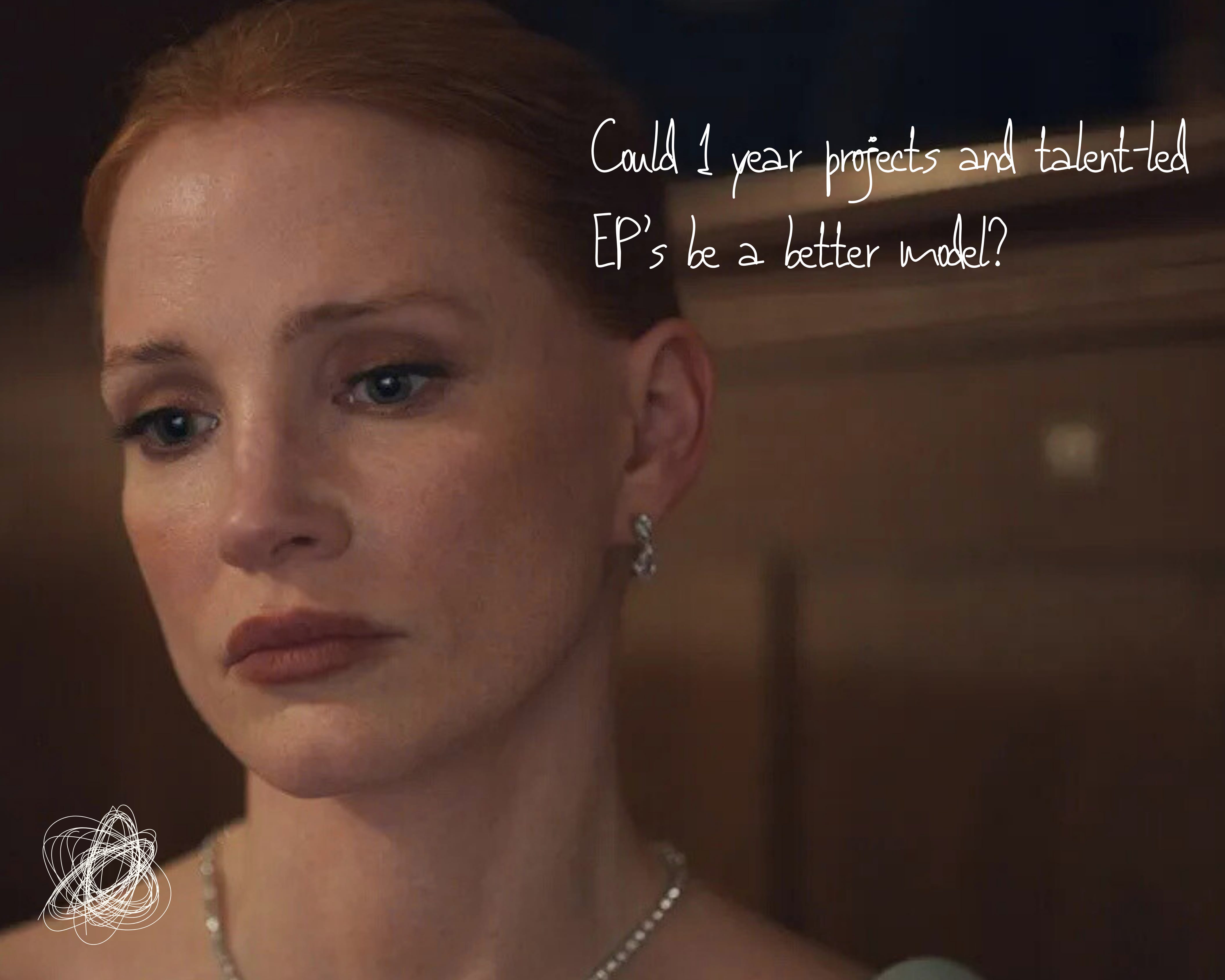
No one could have predicted we'd be here when Jessica Chastain was pitched Dreams. A Michel Franco film about racism.
In this $3 million indie project Dreams—releasing in U.S. theaters this week (February 27, 2026)—Jessica Chastain leads both in front of and behind the camera, overseeing screenplay development and shaping her own on-screen character in a story about the power dynamics of intimate violence, social inequalities, age, economic gaps, deportation fears, erotica—themes Chastain hasn’t been known for, but Franco does well.
Critics are buzzing about the thriller pivot since Berlin, but the backend story is really about Jennifer McCarthy's co-conspirator arc that Chastain as EP shaped herself. Here's what's quietly flying under the radar: is this the new model for independent projects?
Dreams depicts Jennifer McCarthy, played by Chastain, as a prominent American daring to question the ethics and motives behind liberal activism: a San Francisco philanthropist whose family arts foundation sponsors Mexican dancers in their home country. In contrast, her character was born and raised in a family where the father and brother make all the decisions, treating Jennifer like a child who can’t take care of herself. Chastain’s portrait is raw and undiluted.
Fernando, played by Isaac Hernández (the real-life Guadalajara-born Mexican principal dancer at the American Ballet Theatre), is the young ballet dancer with dreams of international stardom who risks everything by crossing the U.S. border illegally. His arrival disrupts the delicate life Jennifer has curated, turning their relationship into a battleground.
Chastain’s freedom to develop the character against Franco’s vision of a sometimes downright ugly, violent presence and messy presence as a metaphor for the U.S. immigration policy and power dynamics.
Franco locked the cast—Chastain, Isaac Hernández, and Rupert Friend—plus financing in summer 2023, securing a SAG-AFTRA waiver to film in San Francisco and Mexico City. This streamlined the project’s timeline to 18–24 months, keeping the story timely and relevant.
Dreams was shot in just 17 days in San Francisco (with one night at the border) and 8 days in Mexico City.
Longtime collaborator Yves Cape, AFC—his seventh film with Franco—notes, “Michel got it into his head that he could make one film a year” and “often told me he’s not looking for perfection. What he’s looking for is to make films and progress from film to film.”
Chastain later signed on as producer, refining her role during post-production ahead of the Berlin premiere.
“Michel got it into his head that he could make one film a year. Between "Memory" and "Dreams" there were 14 months. He has often told me that he's not looking for perfection. What he's looking for is to make films and progress from film to film”
Yves Cape, AFC
Chastain’s characters have not always been good people, but there’s always a good reason for the kind of role models she put’s out creatively. This one she shapes the female character lead as an incorrigible hypocrite, dangerously self-delusional femme fatale—who sees herself also as chic, elegant and impressive.
Character arc: The Jennifer character begins as alluring and seemingly benevolent—a rich patron funding her lover Fernando’s dance career—drawing viewers into an erotic romance. Over time, subtle betrayals (like using her influence to control) and micro-gestures (cold glances, withheld support) reveal lack of true empathy, hardening into dominance. As a actress & producer, Chastain amplified her character's unapologetic kink and control games to match Franco's vision.
Tone shift: Franco’s spare, unflashy directing builds tension gradually, pivoting the film from steamy intimacy to thriller-like unease as class/race/immigration imbalances intensify. Jennifer frames the relationship as a hot, mutual "kink term sheet" (think: sexy contract where both sign off on the dominance games).
Fernando’s role: The young dancer’s hopeful drive clashes with her power, creating imbalance without easy fixes—no heroic redemption, just messy moral grayness.
Greenlit unfiltered edge: Chastain as producer, OK’d graphic sex, uncomfortable micro-moments, and zero softening—rejecting safer “erotic thriller” beats for brutal honesty. Note: Variety notes explicit desire articulation during intimacy, yet it’s “complex and sometimes violent connotation.” Some question Franco’s taste (Nestor’s Notes).
Chastain’s real input: As producer/talent, Chastain refined this unflinching portrait of “Jennifer” during script workshops, amplifying its raw edge and moral discomfort—Franco credits her for pushing Jennifer's "predatory generosity" into sharper focus.
Part of the style and process that Franco films reveal is the type of cold observational style of European auteurs like Robert Bresson and Michael Haneke, resisting techniques like dramatic scores or manipulative camerawork to trigger an emotional response.
The graphic sex scenes are subtext which are focused on the moral delimma we see playing out in today’s IRL political climate in 2026. There’s the age difference, wealth gap, opportunity in the U.S., the constant threat of arrest and the way some Americans sexually exoticize foreign born.
There is no ambiguity. This is perhaps the main difference and aspect to the adventure of these two characters, how each embodies their countries, their histories and their destinies.
The costumes are like the apartment and the car, they tell the story of the character, and here Jessica has pushed to the maximum what this kind of person wears, often a mixture of bad taste, flashiness and brand names. Michel and I had doubts about certain outfits, but we trusted Jessica.
—Yves Cape, AFC
The collaboration between the actor/producer, writer/director and cinematographer work seamlessly to make it hard to know what to make of this undocumented immigrant story.
Dream is described as “an addictive and destructive love story about how the falsity of the American dream that propels Mexican people to make the 2,000 mile illegal and dangerous crossing about how the U.S. and Mexico need each other in all ways.”
Closing deals across 15+ territories, including most of Europe and LATAM.
Go behind the scenes: See how Michel Franco's pushing toward one film a year with cinematographer Yves Cape (their 7th together) and ZEISS—keeping Dreams raw and real, with total creative freedom.
Learn how they prioritized speed and transparency to match Franco's rapid shooting schedule, on-set editing, and script tweaks—all done in days.
(Not a paid placement)
Thanks for reading Move by Callo! This post is public so feel free to share it.
Comments
Nothing yet. Say the first thing.
Sign in to join the conversation.