
I just spent a week in Oaxaca, Mexico. It was the first time my wife and I had been away from the kids in eight years, so it felt like a gift. I was drawn to Oaxaca for the food and history; my wife, the landscape and art. Where all these things collided, though, was a little bit surprising: the concept of death.
Of course, I knew Oaxaca was famed for its Dia De Los Muertos celebration. What I didn’t expect was how much death (and, by turn, life) permeated the entire culture. Walk down any street, step into any shop, and there seemed to be a reminder: we’re all going to die. And, interestingly enough, this focus on death was shot through with celebration: we’re alive!
Let’s start with the street art.
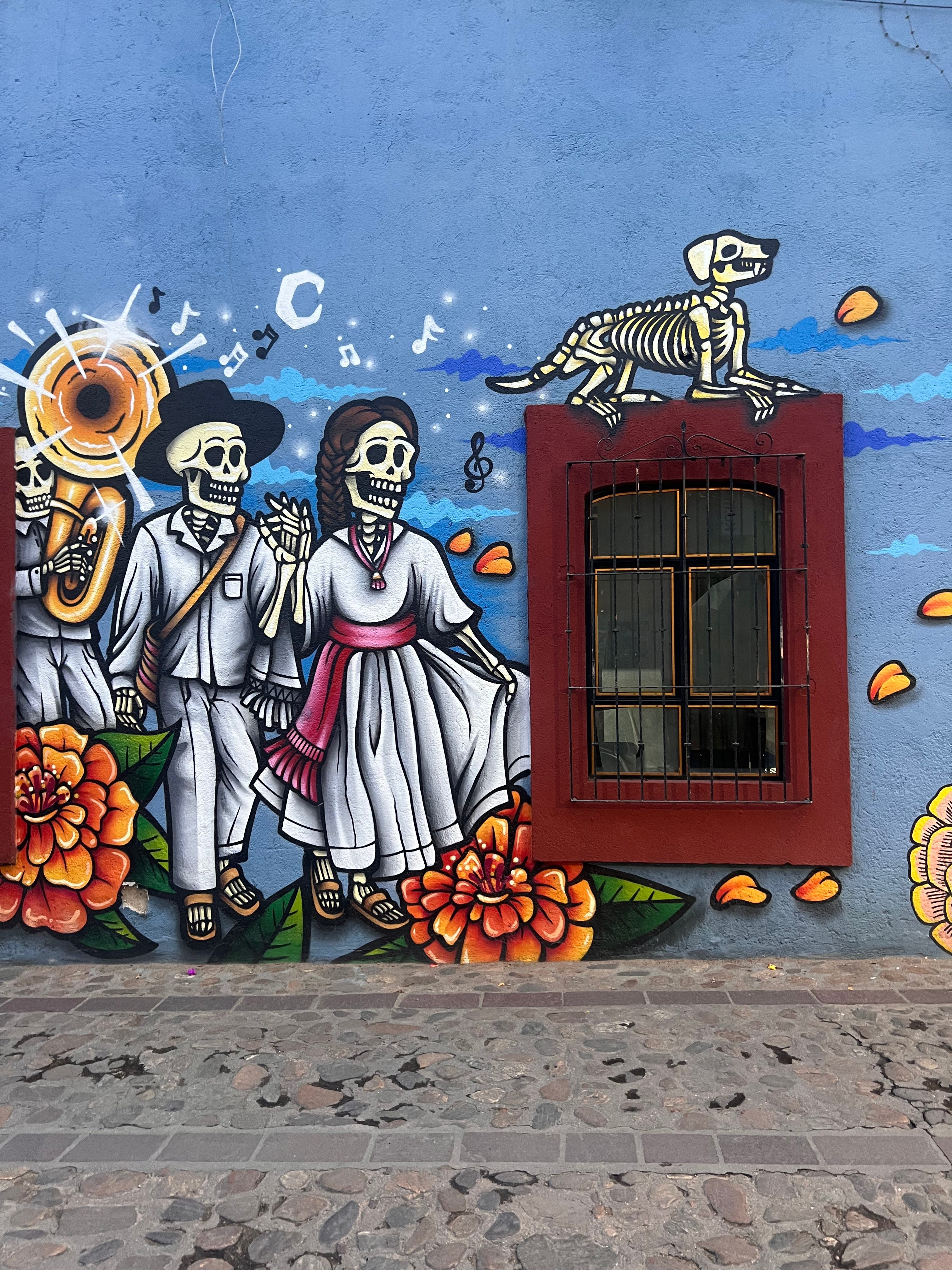
Tons of skeletons, usually in some facsimile of life. The dead, living.
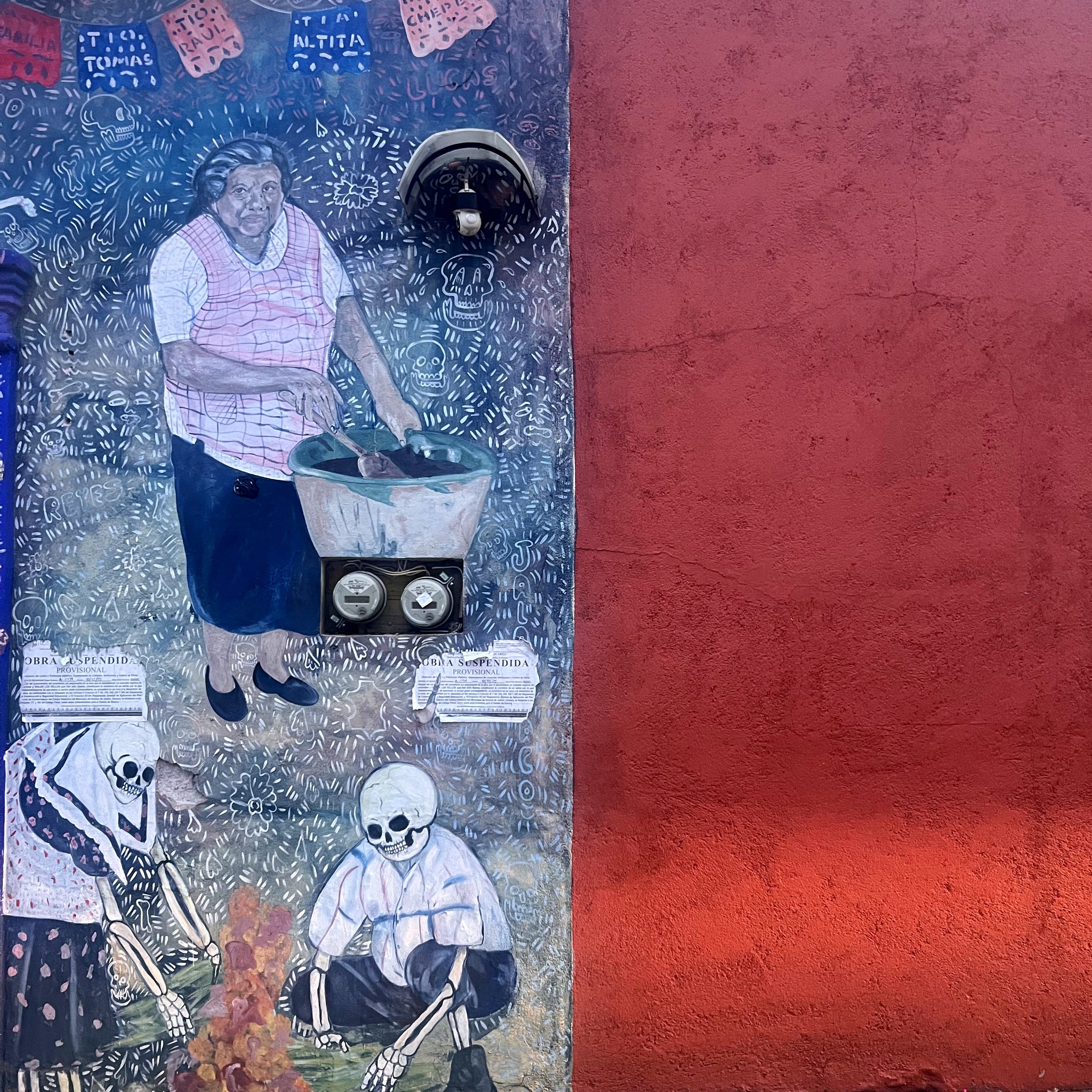
In the context of Dia De Los Muertos, the idea is that the dead are never truly gone. They are here, with us, in our memories, in our living. For me, the experience was less about loved ones lost. It had a more memento mori vibe. You’re a dead man walking. So, what are you going to do?
It wasn’t just the murals. Death moved off the walls: bones in the pottery, skulls shaped from clay and wood, made into decor and coffee mugs. Death made mundane by art. Hang it in your house, wear it as jewelry, drink from it.
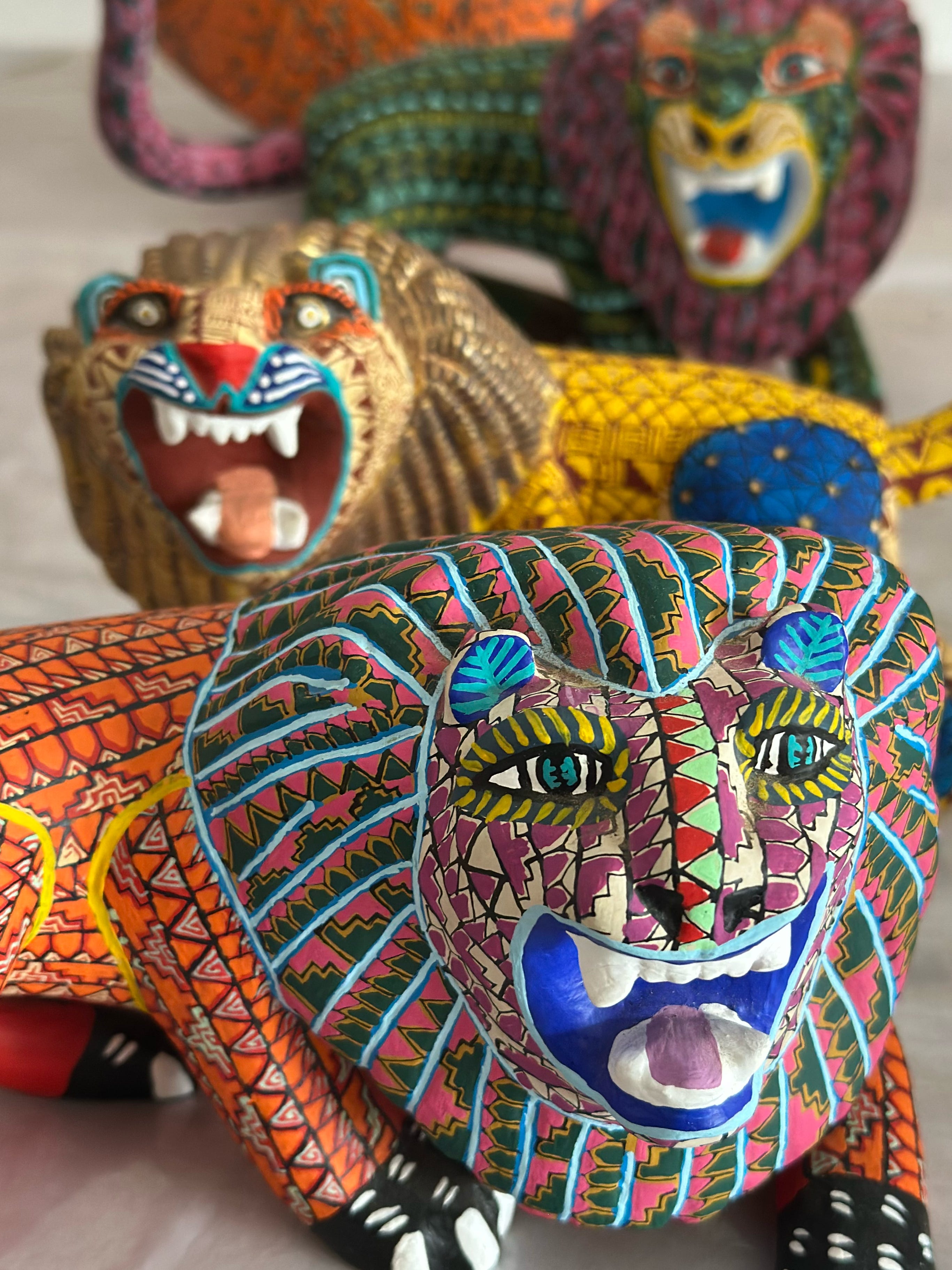
And then, there are the alebrijes. These fantastic, exaggerated animals are a recent wrinkle in Mexican tradition. The earliest iterations were paper mache. In the 1980s, artisans in the pueblos of Oaxaca started carving them from copal wood and painting them with elaborate detail. They can be seen as a type of folk art, but lore also positions them as a sort of spirit guide, a companion to help you cross the gap from this world into the next one.
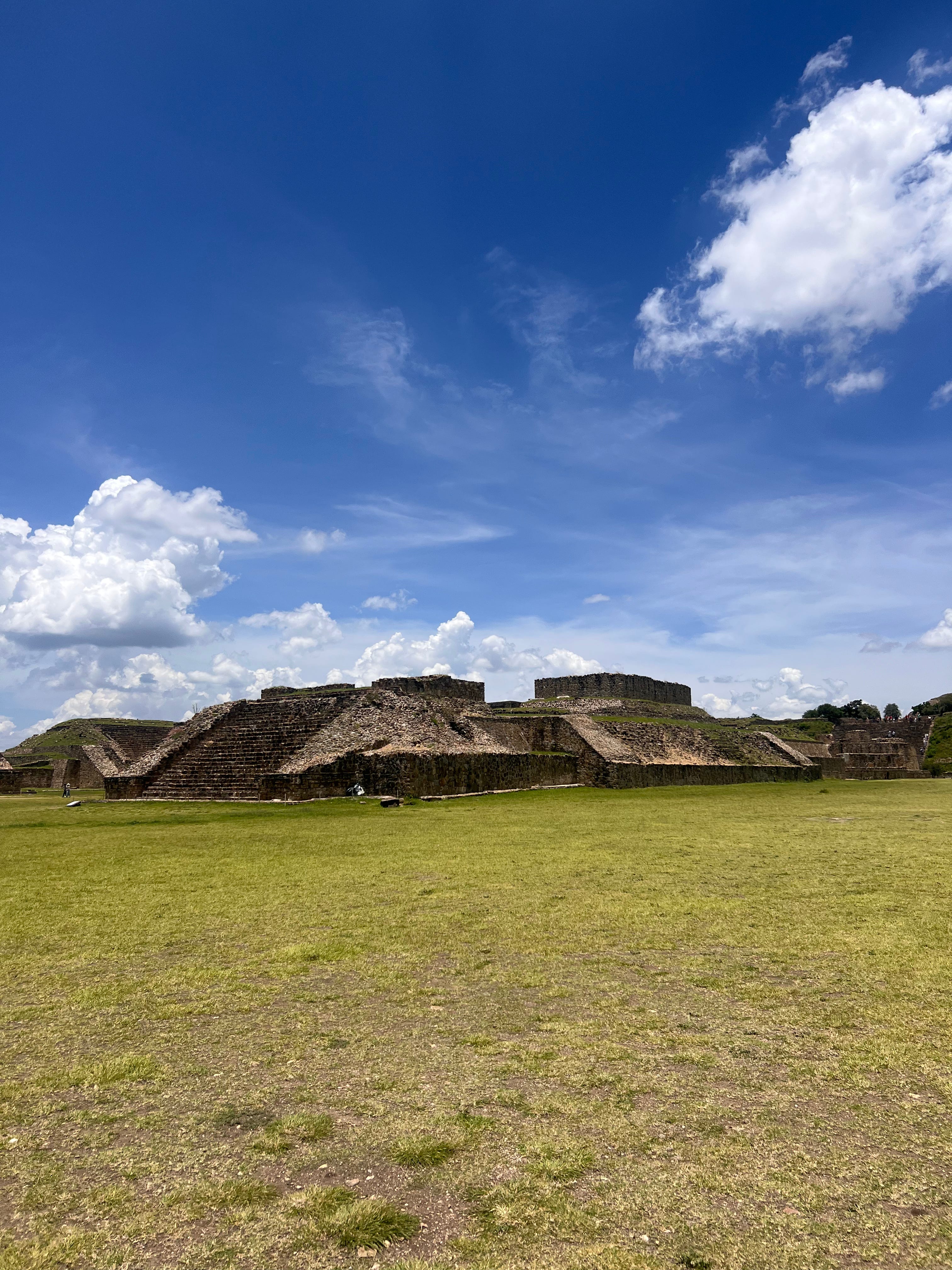
This honoring of death stretches back millennia. Take the ruins of Monte Alban. Founded in 100(ish) BC, but reaching its zenith centuries later as the center of the Zapotec civilization, most of what remains speaks to how these early inhabitants of the Oaxaca valley viewed death. Little remains of the houses, but the temples and the tombs were well maintained, even after the Zapotecs waned from power and Monte Alban was largely abandoned. People still traveled to the area to bury their dead. To honor and remember. We know more about how they celebrated death than how they lived.
You see this as well in the post-colonial architecture. Vast churches dot Oaxaca and dominate the skyline. The city itself sits in a valley, with mountains rising all around, their peaks crowned with grand crosses. The Christians from Spain brought their own imagery of death/life to add to the mix.
So, that was what left an impression on me after a week in Oaxaca: people who, at once, made death a real presence, but also a type of festive reminder. The food. The music. The craftsmanship. These are all seen as ancestral, as handed through the generations. They span the gap, so to speak, between those of us that are here and those that have passed on. And they call each of us forward, in our own ways, to that which is to come. Death behind us, death before us. We live in the mystery of the in-between.
No posts
Comments
Nothing yet. Say the first thing.
Sign in to join the conversation.