
From the NMHC: NMHC Survey Shows Tighter Apartment Market Conditions Amid Pullback in Capital Availability
Apartment market conditions tightened over the past three months and conditions for debt and equity financing worsened while deal flow decreased according to results from NMHC’s July Quarterly Survey of Apartment Market Conditions.
The Market Tightness Index (57) came in above the breakeven level of 50, indicating higher rent growth and lower vacancies. The Sales Volume Index (46) signaled a pullback in deal flow, while the Equity Financing Index (44) and the Debt Financing Index (46) reflected less availability of capital.
“Job growth picked up somewhat during the first half of the year after a lackluster 2025,” noted NMHC Senior Director of Research and Chief Economist Chris Bruen.
“This, combined with declining apartment deliveries, helped translate to modestly tighter conditions—higher rent growth and lower vacancy rates—over the past three months.”
“Even so, rents continued to decrease in many high-supply sunbelt markets. At the same time, higher inflation has led to higher interest rates, worsening borrowing conditions, and a corresponding pullback in equity capital.”
The Market Tightness Index rose to 57 this quarter, above the breakeven level of 50, signaling tighter market conditions. Twenty-nine percent of respondents said that conditions were tighter than three months ago. Comparatively, 15% of respondents thought that conditions were looser, while more than half of the respondents (55%) said that conditions were unchanged compared to three months ago.
The Sales Volume Index came in at 46 this round, down from 52 in April, reflecting a decrease in deal flow. Twenty-seven percent of respondents reported experiencing lower sales volume than three months ago compared to 19% who reported an increase in sales volume. Nearly half of the respondents (46%) reported unchanged sales volume compared to three months ago.
The Equity Financing Index dropped to 44 this round, below the breakeven level of 50, indicating less availability of equity financing. While just 19% of respondents said equity financing had become less available over the past three months, even fewer (7%) said they saw more availability. A majority of respondents (65%), meanwhile, reported unchanged equity financing availability.
The Debt Financing Index dropped below the breakeven level of 50 this quarter by coming in at 46, signaling more respondents saw worsening borrowing conditions than improving conditions. Twenty-six percent of respondents indicated it was a worse time to borrow compared to three months ago, 17% said it was a better time to borrow, while exactly half of respondents (50%) reported unchanged borrowing conditions.
Emphasis added
This graph shows the quarterly Apartment Tightness Index.
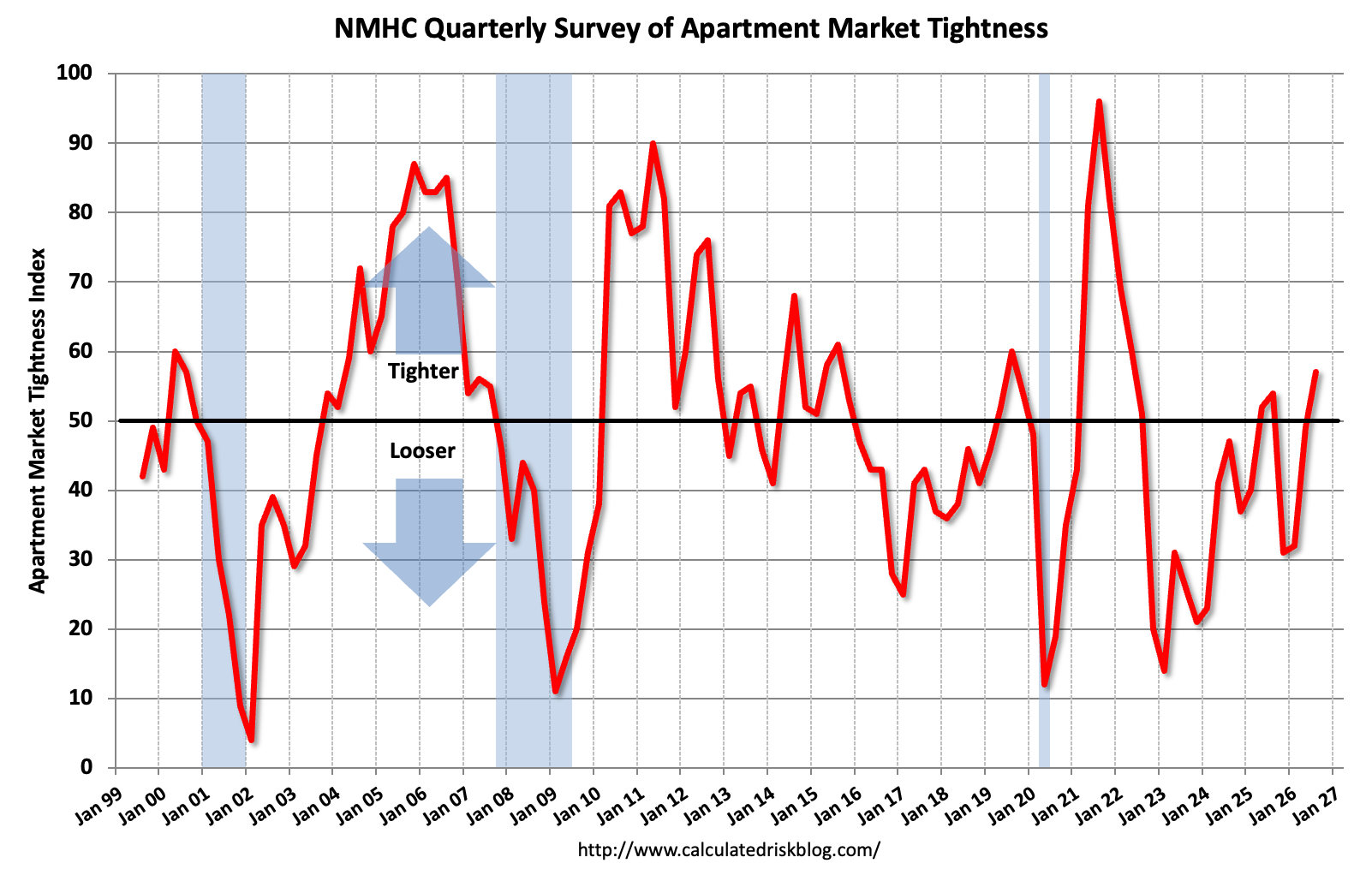
The quarterly index increased to 57 in July from 49 in April. Any reading above 50 indicates tighter conditions from the previous quarter.
This index has been an excellent leading indicator for rents and vacancy rates, and this suggests vacancy rates and asking rents are under less pressure.
This NMHC quarterly survey and the monthly Architectural Billings Index should be watched for any signs of a future pickup in multi-family starts. They are send somewhat different signals.
Thanks for reading CalculatedRisk Newsletter! This post is public so feel free to share it.
Comments
Nothing yet. Say the first thing.
Sign in to join the conversation.