
Have you ever read someone’s “I turned on paid subscriptions!” post and feel two things at once? A little inspired, and also like something is missing, like they left out the part that would have actually helped you?
I’ve felt that a lot. The version of this story that circulates is usually the highlight reel one: a subscriber count screenshot, a “here’s what worked for me” list, that seems too easy to be real, and a little triumphant. And I get why. It’s the easy version to write. But it wasn’t the version I needed when I was standing at that decision myself, and I don’t think it’s the one you need either.
And before I really get started, I want to give a shoutout to Alyssa Fu Ward, PhD for the idea for the collaborative article. I think this is something many on Substack have thought about (turning on paid subscriptions) and even once they have, perhaps wondered if they’ve done the right thing, so I hope that this article will help people who’ve been circling this for a while give them real insight into the reality behind ‘going paid’.
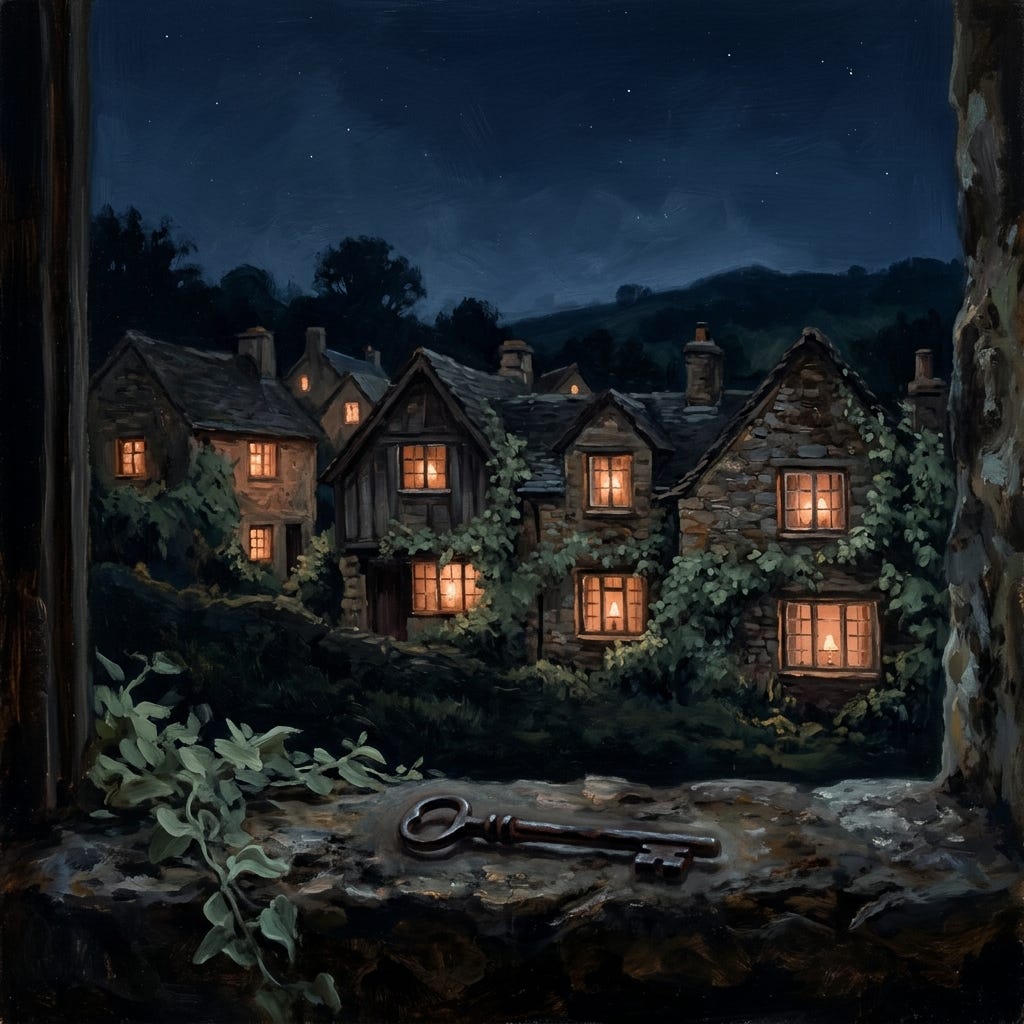
Dose of Wonder runs on one belief, over and over: the village doesn’t need more experts, it needs more witnesses. So instead of writing another “here’s how I did it” post, I wanted to try something different.
So, before I hand things over to the people who actually said yes to this, I wanted to share a bit of my own turning-on-subs story, because it felt weird to just ask nine other writers without also sharing my story.
I turned on paid subscriptions here at Dose of Wonder back in September 2025, after my one year anniversary of being on Substack (and after initially saying I’d never turn on paid subscriptions! But, things can change, can’t they? Never say never, is the lesson there, I guess!).
And here’s the part that might surprise you: for the better part of a year, paying a subscription didn’t get you anything extra. Not one extra word, not one locked post, nothing behind a velvet rope. It was closer to a donation box at the edge of the village — $5US a month, purely optional, purely “help keep the lanterns lit.” I wrote about the whole decision at the time, if you want the longer version of that night: Keeping the Village Lanterns Lit.
I want to be honest about why I built it that way. Some of it was values (this is a village, not a storefront, and I meant that). But if I’m being totally real with you, a lot of it was fear too. Fear that if I put something behind a paywall, I’d be admitting this was more like a business and not just a home. Easier to call it a donation box than to say the true part: I want to be paid for this, and I don’t fully know how to want/ask for that yet in a way that is comfortable.
That changed a few months ago. It just felt like the right time to offer paid subscribers a little something more for their hard-earned money, in the article domain, that is (paid subscribers do get other non-article perks). In May 2026, I made Emberlight (the monthly community gathering here) paid-only, and I started doing one post a month with something extra in it (a deeper dive) just for hearth-tenders (that’s what I call the paid subscribers to Dose of Wonder). The first one was called The Tyranny of Healing. And that kind of felt like a bigger change than the original toggle of turning on paid subscriptions, because this time I was saying: some of what I make is worth asking for something in return. Which is a different kind of scary than the first one.
All of which is to say, I’ve kind of done paid subscriptions twice (once, not giving anything in return, and you could say the second time when I began to offer extras to my paid subscribers). So it’s two very different ways, with two very different fears attached to each.
And I’m guessing I’m not the only one.
So instead of writing the “how I did it” post (again), I asked some other writers I admire to tell me about the night before they did it. What they were scared of. What actually happened. Whether that feeling faded or has just changed shape as time’s gone on.
Here’s what I asked them:
What was the specific fear the night before you turned on paid subscriptions — what actually happened versus what you braced for, and has that feeling changed since (a month in, six months in, now)?
and
Why did you decide to do it — and what would you want someone standing where you stood, scared, to know?
And this is what they told me.
What was the specific fear the night before you turned on paid subscriptions — what actually happened versus what you braced for, and has that feeling changed since (a month in, six months in, now)?
Why did you decide to do it — and what would you want someone standing where you stood, scared, to know?
My fear was that no one would sign up, that my offer wasn’t good enough, that I would have publicly announced something to crickets. Ultimately the fear came down to – I was trying something new that felt significant, where I was asking people to trust me to provide them value, and I was afraid of letting them down. I was even afraid that if they signed up, I wouldn’t be able to live up to what I was promising them. And I really, really wanted to provide value.
What actually happened was the launch was a success! A good number of people signed up for paid subscriptions immediately. All of them I had interacted with in some form on Substack through comments or they had been following my work and liking what I shared. Several of them messaged me directly to ask for more information, so I was able to learn about what they were looking for and share what the HART Studio could do for them. Several of them signed up immediately after we talked.
Now that it’s been a few months, I feel settled in. I’ve gotten feedback that what I’m providing is what the HART Builders were looking for. I’ve also been intentional about taking it slow, so I’m not actively trying to get new subscribers. My paid tier is based on bringing people together live on Zoom and I wanted to keep the room small so I could make sure to support everyone who joins. That has definitely taken the pressure off.
I definitely feel more confident now. People are still joining, usually after I’ve interacted with them on Substack in some form. My favorite part of this is I feel like I’m gathering all these people together that I love spending time with, learning with, and helping to build with AI together.
And don’t forget to check out Alyssa’s amazing Step Up Step Together Substack on how to be human and use AI in community:
Alyssa's Substack Step Up Step Together
And her newest venture: The HART Studio about building with AI in community - LIVE!
Alyssa's Substack The HART Studio
What was the specific fear the night before you turned on paid subscriptions — what actually happened versus what you braced for, and has that feeling changed since (a month in, six months in, now)?
Why did you decide to do it — and what would you want someone standing where you stood, scared, to know?
I turned on paid subscriptions less than two months into being on Substack, before I had a program, a pricing page, or anything that looked like a real offer. I was encouraged by Dr Sam Illingworth , Daria Cupareanu and Elena of Prompt-Led Product | For PMs Building in the AI Era to take the plunge.
My fear was I didn’t feel “ready”. I turned it on anyway.
The first person who subscribed, I actually thought it was a glitch. I checked twice. I still remember exactly what I was doing when I saw the notification, because I did not expect it to be real. I actually DM-ed them to ask what they were “expecting”. Turns out they liked what I was doing and wanted to support me.
Now my paid tier means a full 12-month program called The Branding Flock, and I am so grateful for the encouragement I got when I was scared to turn on paid. So this is your moment: if you’re circling that button, you don’t need the finished version of your offer to deserve a first yes. You need one person willing to bet on the direction you’re headed. Everything else, you build after they’ve already said yes.
And here’s Pinkie’s fantastic AI Meets Girlboss Substack on branding:
Pinkie's Substack AI Meets Girlboss
What was the specific fear the night before you turned on paid subscriptions — what actually happened versus what you braced for, and has that feeling changed since (a month in, six months in, now)?
Why did you decide to do it — and what would you want someone standing where you stood, scared, to know?
I actually turned on paid subscriptions before I had anything gated. I did it before I was super clear on what I wanted to do with Substack. I originally moved over to Substack simply for a traffic source, but fell in love with the people and the community.
People started paying to support my work (and maybe to say Thank You). It took me a while to get clear on what I would want to offer. I’ve been publishing content online for a long time and gating content never quite felt like the right model for me. As I refined my own work (what I was building and who I was building it for), I knew it was time to at least make a more formal offer. It’s only been a few months, and I’ve made one adjustment to the UI and am going to shift what’s behind the paywall (offering more). Not because it wasn’t enough, but because I see a way to add more value to members.
Just like anytime I’ve ever sold anything online, there’s always a fear that no one will buy. Fortunately, I know that even if no one buys, I’ll be back at it the next day.
My advice to someone standing where I stood is to pull the trigger sooner rather than later. There’s never a perfect time, and you’ll probably never feel “ready.” You don’t need to do a big launch (I didn’t). Do what works for you.
Check out Kim’s awesome Substack Kim Doyal for great articles on using AI to build stuff using her 18 years of experience with online marketing and business:
What was the specific fear the night before you turned on paid subscriptions — what actually happened versus what you braced for, and has that feeling changed since (a month in, six months in, now)?
Why did you decide to do it — and what would you want someone standing where you stood, scared, to know?
I had two specific fears. one of them was that no one would turn up. At this point, I had a subscriber base of about 6,000 people, so I thought a few people would turn to paid, but I was still not entirely confident that I’d get more than a dozen or so. I’d spent a long time arguing that my Substack should always be free because of open access, and I was worried that I was going back on that discussion point over the past eight months or so.
Both fears have thankfully been alleviated. I ended up getting the bestseller badge a few days after turning on my paid subscription, and it’s been growing healthily ever since. With regards to charging for my work, I’ve definitely come to realise that my work has value, and that, more than that, by not charging for my work, I’m actually devaluing the work of other people who turn on paid subscriptions. I still face imposter syndrome on a daily basis and worry that people won’t choose to subscribe to my work, but over time and with the support of many of the Substackers in this article, this has also been alleviated.
Check out Dr Sam’s popular Slow AI Substack about critical AI literacy:
What was the specific fear the night before you turned on paid subscriptions — what actually happened versus what you braced for, and has that feeling changed since (a month in, six months in, now)?
Why did you decide to do it — and what would you want someone standing where you stood, scared, to know?
I joined Substack having zero clue what I was doing here. So naturally, I had zero anxiety about turning on paid subscriptions. I kept seeing “buy me a coffee” style buttons everywhere and didn’t realize there was usually a whole strategy behind paid tiers. My thinking was basically ‘good idea, I also love coffee!’
The hesitation came after my first paid subscriber. I felt guilty that someone was paying me when I hadn’t fully figured out my offer. Then I read the note she left. She told me creativity “oozes from your bones,” that she learned something from every post and that I inspired her. It became one of the most encouraging things anyone had said to me, and gave me a huge push to keep going.
Now I’m shaping the paid side with a lot more knowledge than I had then. But I’m glad I turned it on early. I don’t think turning paid on requires you to immediately become a subscription business. Sometimes letting people support what already exists gives you the confidence and the ideas to figure out what it could become.
Check out Natalie’s The Off Hours Substack where she writes about AI, Creativity and the mind:
What was the specific fear the night before you turned on paid subscriptions — what actually happened versus what you braced for, and has that feeling changed since (a month in, six months in, now)?
Why did you decide to do it — and what would you want someone standing where you stood, scared, to know?
I turned on paid subscriptions way too late.
For a long time, I stayed in my head, waiting for clarity before making the decision. I thought I needed a much bigger audience, but I was mostly stuck on the offer. I wanted to know exactly what I would give paid subscribers, how my offer would stand out from all the others, and where to draw the line between free and paid. I worried that I wouldn’t make it good enough to feel hard to refuse, and I kept thinking I needed to have everything figured out before I could begin.
Substack was the first audience I was building from scratch and my main source of traffic, so I couldn’t put everything behind a paywall. The free articles still needed to give readers plenty, while the paid posts had to feel worth paying for. It also meant writing much more every week, which I had to accept and plan for.
I was far more afraid during the months I spent postponing the decision than I was the night before. Once I had thought through the offer, I was excited to see what would happen. Of course, I was still a little nervous about the response, but I already had pledges that would automatically convert into paid subscriptions, so I knew I wouldn’t be starting from zero.
Now, many of my paid subscribers tell me that the offer is insanely valuable and that what they get for the money is hard to match. I believe that too. But it became this good because I started and kept improving it over time.
I know now that I couldn’t have figured everything out before beginning. You have to start anyway, like with most things in life.
Check out Daria’s mindblowing AI Blew My Mind Substack to learn how to use AI to make it think, work and evolve with you:
Daria's Substack AI Blew My Mind
What was the specific fear the night before you turned on paid subscriptions — what actually happened versus what you braced for, and has that feeling changed since (a month in, six months in, now)?
Why did you decide to do it — and what would you want someone standing where you stood, scared, to know?
What I braced for, and what actually happened
The fear had two parts. First, that nobody would pay, and silence would answer a question I’d been avoiding for years: are you actually good at this, or have you just been writing into a very void? Second, that even if people did pay, I’d feel like I was running a con. Taking money for words I’d have written anyway.
The night before I flipped the switch, I sat at the kitchen table rereading the pricing page for the tenth time, like it might say something different if I checked again. Kim was out in the cottage, halfway through some soap batch, the smell of lye and lavender drifting through the back yard into the main house where I was sitting. Gus was asleep on the tile. I’d already written the announcement post. I told myself the outcome didn’t matter, that turning it on was the point. I didn’t believe that. I believed it mattered a great deal.
What happened was almost anticlimactic. A handful of people signed up within the first day. Amazingly nobody I actually knew in real life. Not a flood. Just enough real, specific people deciding a monthly or annual charge was worth it for something they’d been getting for free. You brace for rejection and instead you get a quiet vote of confidence, which is somehow harder to sit with, because now you have to believe it.
Six months in, the fear hasn’t gone anywhere. It’s still very much there. I don’t wonder anymore if anyone will pay. People have. Now I think about whether I’m giving the ones who did pay enough to make their confidence in me worth it. That’s a better problem than the first one, but it’s still a problem. The fraud feeling shows up less, but it still knocks, usually right before I hit publish on something I’m not sure is good. I’ve decided that might just be part of doing the work.
Why I did it, and what I’d tell someone standing where I stood
I turned on paid subscriptions because I was tired of treating my own work like it wasn’t worth anything unless it was free. I gave everything away for years and called it generosity, when some of it, most of it, was fear. Free is safe. Nobody has to judge whether it’s worth paying for if it doesn’t cost anything.
I’m 62. I spent ten years in the Navy in my twenties, where orders came with a clear line of accountability. You did the job because it was the job. Somewhere between then and now I started treating my writing like a hobby I owed everyone an apology for. Turning on paid subscriptions was me deciding to stop apologizing.
If I could talk to the guy at that kitchen table, I’d tell him the fear isn’t information. It feels like information. It feels like your gut is warning you about something real. Most of the time it’s the oldest story you carry about yourself, running on the same loop it’s had memorized for decades. The fear doesn’t leave when you succeed. It just loosens its grip a little.
I’d also tell him this. Somebody paying you doesn’t make the work more true than it was the day before. It’s not a verdict. It’s a handful of people asking you to keep doing what you’re already doing. That beats the deal you had with free, where nobody owed you anything and you owed nobody anything back. This one has weight. Good weight. The kind you can carry.
I’m still scared about it. I don’t think that part goes away. But the fear was never what was stopping me. It was standing in for a decision I hadn’t made yet.
Check out John’s Substack Proud Boomer Wellness where he writes about health and aging without the BS:
John's Substack Proud Boomer Wellness
What was the specific fear the night before you turned on paid subscriptions — what actually happened versus what you braced for, and has that feeling changed since (a month in, six months in, now)?
Why did you decide to do it — and what would you want someone standing where you stood, scared, to know?
I didn’t feel ready. I’m a planner, and I knew I didn’t have a compelling offer. Honestly, I wasn’t sure what I was writing about was worth paying for.
But I also knew I might never feel ready. So I forced myself to jump in anyway.
I’m glad I did. Going paid is a process, not an event. My first paid tier didn’t really convert, but I learned a lot from trying — and eventually rebuilt it into something that worked. I only got there by experimenting and I wish I’d started much earlier.
My advice: turn it on while your following is small. The stakes are lower, and you’ll learn more than you expect.
Check out Shannon’s bestseller Substack The Flow to read about stuff that’s half psychology, half spirituality:
What was the specific fear the night before you turned on paid subscriptions — what actually happened versus what you braced for, and has that feeling changed since (a month in, six months in, now)?
Why did you decide to do it — and what would you want someone standing where you stood, scared, to know?
I’m not sure I’d call what I felt fear, but more like a very “crowded” hesitation!
I love asking a lot of questions and I tend to inspect something from every possible direction before I let myself act. It’s exhausting at times, but it also means that by the time I finally do something, I’ve already imagined every possible scenario.
So, going paid went almost exactly as I imagined. I (fortunately) didn’t come across any dramatic disaster or trapdoor opening beneath the publication. Mostly there was just one looooong, internal: Phew. Okay, nothing terrible happened. Yay!
I think the scary feeling has become a normal part of the work. You create something, you adjust, then do it again.
The one thing I’d tell someone just starting out and planning their paid tier, is: don’t take anybody’s advice at face value, not even mine. You don’t need 2378 notes a day, launch in a particular way, or follow a predefined system. Try things, absolutely, but pay attention to what’s feasible for you and what feels good to you.
You don’t need to know exactly how this whole thing will work before you begin. A surprising amount of the answer will become visible once you’re doing it.
Check out Mia’s bestseller Robots Ate My Homework Substack where she explores where AI meets culture, curiosity, judgment, and the act of making:
Mia's Substack Robots Ate My Homework
So there you have it. Nine different fears (or hesitations). Nine different nights before. And reading them together I don’t feel like I’m looking at nine separate stories, but like I’m looking at one story, told from nine different rooms in the same house.
That’s the thing about witnessing instead of advising. Nobody here told you what to do. Nobody handed you a five-step plan or a growth strategy. What they gave you instead was proof: that the fear is real, that it doesn’t fully go away, and that people did the scary thing anyway and are still standing here to tell you about it.
If you’re the person this was for, the one still hovering over that toggle button, I hope something in here helps you feel a little less scared or doubting yourself. Not a formula. Just company.
And if you’ve already turned yours on, and you’ve got your own night-before story, I’d love to hear it in the comments. This village has room for more than nine.
And again, a huge thank you to Alyssa Fu Ward, PhD , AI Meets Girlboss, Kim Doyal , Dr Sam Illingworth , Natalie Nicholson , Daria Cupareanu , JC Harris | Proud Boomer Press , Shannon Bindler , and Mia Kiraki 🎭 for trusting me with their authentic, real, human thoughts and experiences of this. Go give them a subscribe, they earned it.
Stay soft. Stay curious. Stay human. Caitlin
Comments
Nothing yet. Say the first thing.
Sign in to join the conversation.