
0:00
-7:10
Indie or Trad? It’s so hard to determine which avenue you want to pursue. Prior to the 2010’s, traditional publishing was the only real answer. Now, however, there are different options depending on how you want to proceed with your manuscript. Here is a rundown on why I decided to go with indie publishing and how these questions can help you make the choice that is right for you.
Like many authors, I’ve written for years. As a teen, I penned short stories, and as a university student, I wrote a YA novel that will never see the light of day. As a sleep-deprived young mother, I tinkered with a contemporary romance. All the while, I planned to finish my project, get an agent, and get a publisher. Boom. Done.
Silly me.
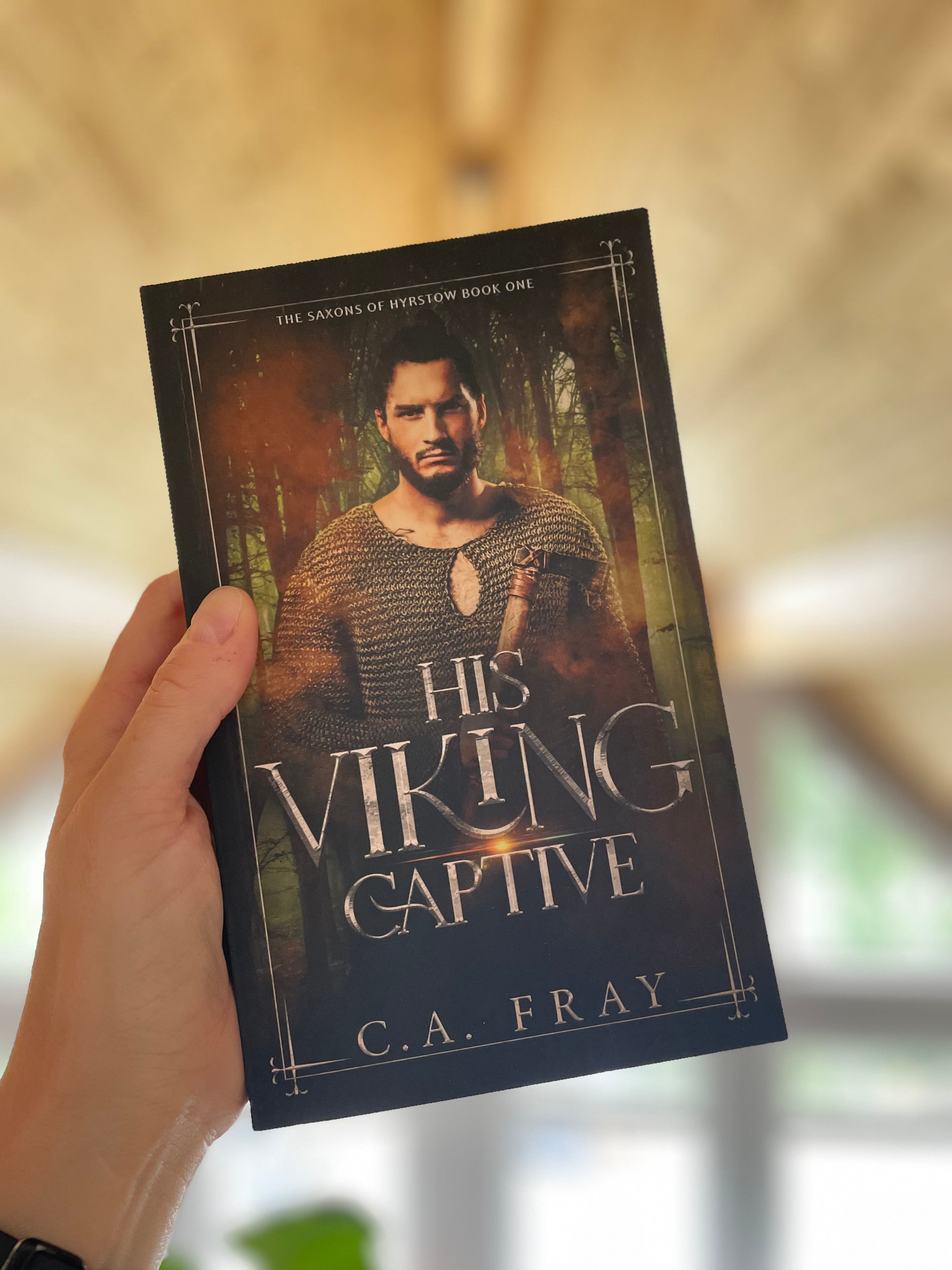
Here’s the thing: I had a dream. I kept working on that dream without clearly defining the steps or end goal. I mean, of course, the end goal was to get a publishing deal, but I had no idea how to actually get there. It wasn’t until I finished that contemporary romance and started writing my first (now published) novel, His Viking Captive, that I really considered my options.
I learned about querying agents and how tough it actually is. That authors can query for years and still not find representation. I also learned that the agency’s job is to sell your manuscript to a publisher for the best deal. The market and/or what the publisher has lined up to publish that year will affect what manuscripts they accept. The variety of publishing was also a surprise. Not only are there the Big 5 publishers and their imprints, there are also many small but mighty publishers.
From what I gathered, the pros of traditional publishing include:
Support. Professional staff to help make your manuscript shine. This includes agents, developmental editors, copy editors, proofreaders, cover designers, and marketing experts. This is a huge reason why folks opt for trad: the support.
Money. Usually, the publisher gives you an advance. Depending on the pay structure, 1/3 of the advance is paid to you upon signing, 1/3 is paid on manuscript acceptance, and the last 1/3 is paid on publication. Royalties can play a part in this as well, depending on your contract and if your book has outearned your advance.
Distribution into stores. Publishers have a huge reach. The more copies of your book placed in book stores, the more sales you will make.
Recognition, respect, and making a name for yourself. I believe this is a HUGE one in the author community. You’ve put your heart and soul into this manuscript, and you want to be recognized for it! The bestseller lists play into this. If your book sells thousands of copies, it is a win for you and your publisher. It also means you are classified as a “New York Times Bestseller” or a “USA Today Bestseller.” These achievements can help market your future work.
Cons can include:
Pressure to sell. If your book does not sell as well as expected, any future books you write may not be considered by your publisher, and you’ll be back in the querying trenches.
Little marketing assistance. This one is a surprise to many. Just because you have a publisher does not mean you can sit back and let them handle everything. Unless you have a giant audience like Rebecca Yarros or Any Weir, the publisher helps market, but you are the main advocate for your work.
It takes time. Traditional publishing is like a huge machine. There are many moving pieces and approval processes. Books are published at certain times of the year to ensure the best success, and each publisher is putting out multiple books at once. This lends to a slower publishing mechanism, which can take over a year, sometimes two.
Advances are not as large as expected. Especially for debut authors, it can be a surprise to learn that a few thousand dollars is a common advance. In the best circumstances, you have a great agent and publishers get into a bidding war for your work, ending up with a high advance, though this is not the case for most.
Amid my research, I slowly discovered self-publishing. I’m ashamed to admit that I was dismissive of it at first. I thought that only those without talent were self-publishing their books. Still, I read a few indie books to familiarize myself with the products. I was impressed. Through the writer community, I realized there was a whole side of the industry out there that I wasn’t aware of.
Pros of Indie Publishing:
You are in control. It is your responsibility to obtain beta readers, an editor, a proofreader, and a cover designer, to complete the setup costs with your printer of choice, and make distribution decisions. It is a lot of responsibility, but if you’ve done your due diligence, you can end up with a phenomenal final product. You get to choose your team and your book’s release date.
You meet a ton of wonderful people. Indie publishing is its own ecosystem. There are editors, artists, cover designers, formatters, personal assistants, podcasts, and other resources that are available to connect with.
Speed. If you’re a fast writer, you can release your books at a speed you’re comfortable with. This means you’re not waiting on your publishing house’s release a year and a half in the future.
Money. You make royalties from your distributors of choice or through direct sales/in-person events. Depending on the amount of social media following you have or the size of your backlist, many indie authors make more than traditionally published authors.
Ease of access. This is a contentious one, but it’s true. There are no gatekeepers to self-publishing. Anyone can upload a manuscript to Ingram-Spark, Amazon, Bookvault, etc. Some think that there should be industry gatekeepers like agents and publishers to ensure quality work. Some believe that everyone should have a shot at what they want to produce. Regardless of your opinion, the self-publishing world is available to anyone who wants to feed into it.
Niche genres. There are so many diverse opportunities in the indie publishing space. From mind-bending sci-fi to dark romance, there is something for every author and reader.
Cons of Indie Publishing:
You have to learn A LOT. It is a learn-as-you-go process. There is tons of information available online, but there is a lot to keep track of.
The indie space moves quickly. If you write a book a year, you are considered a slow writer. If you can put out multiple books per year, all the better. This is because there are SO MANY books in the indie publishing space vying for readers’ attention. In order to keep your readers interested, you need to hook them and keep feeding them books!
You have to market, market, market. Social media, email marketing, in-person events, asking bookstores to stock your work, trying new platforms, and staying on top of marketing strategies all take work. You cannot simply publish your book and hope readers find it. You must continue to push your work into the world while completing the aforementioned learning AND writing more.
Money. This was previously a pro, but it can also be a con. The majority of self-published authors do not make much. They write and publish their work for the love of it, all the while hoping to see a spike in sales. They toil to build a backlist and an audience. Indeed, there are tons of authors who work full-time as an indie. But, as said before, they are not just writing and sending their work off to a publisher. Indie publishing is a small business. You take financial risks that do or don’t pan out, you have to have your pulse on the industry, and you have to produce good work to build your audience.
How did I decide to indie publish? I was a small business owner, so was not scared of taking a risk. Granted, my day job had nothing to do with writing, but I knew I could apply many of the same strategies I’d learned running that business to self-publishing. I also relished the idea of putting my book into the world and not having to wait. I was impatient. IF I was able to secure an agent or publisher, I did not want to wait the 2+ years or longer of querying and publishing. I knew myself: if I queried, I would tinker on that same manuscript for months and months, doubting myself and hoping. I felt ready to publish. I’m glad I did.
No posts
Comments
Nothing yet. Say the first thing.
Sign in to join the conversation.