
I remember an old Star Trek episode where these non-physical beings asked to borrow human bodies so they could experience physical intimacy. Captain Kirk and a female crew member agreed. The beings entered their bodies, curious about what it would feel like to be human and connected in a physical way.
But the first thing they noticed wasn’t pleasure.
It was how alone they felt.
That deep and terrifying aloneness is one elephant we really don’t want to see.
We tend to believe that intimacy solves the problem of loneliness. If we could just find the right person, be fully known, close the gap—then that underlying sense of complete separation would go away.
But it doesn’t. We take it to our grave.
Even in our closest relationships, it remains. There is a boundary that cannot be crossed. No one can fully step inside your experience. No one can carry your memories from the inside or see the world exactly as you do.
Not because they don’t love you.
Because it simply can’t be done.
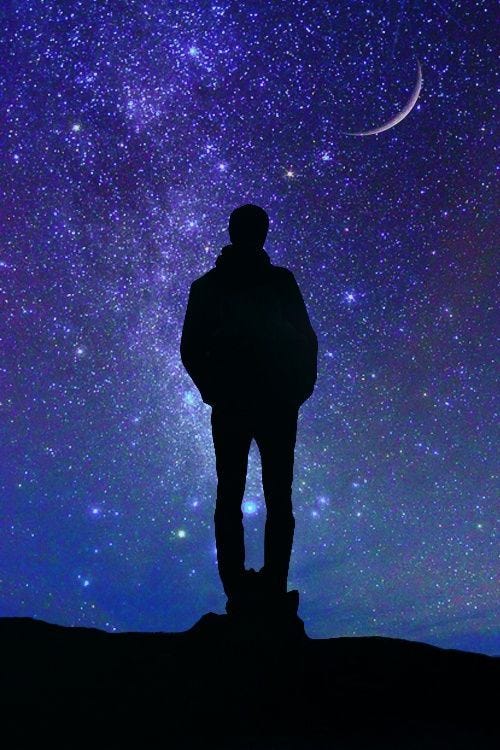
That kind of aloneness feels almost unbearable and we spend a surprising amount of energy trying not to face it directly.
We stay busy.
We distract ourselves.
We overinvest in relationships.
We numb out in various ways.
Even our spiritual practices can become a way of avoiding the silence where that reality—our aloneness and our mortality—confronts us.
At the same time, we live inside a strange tension.
It’s not just that no one will ever fully know us. It’s that we’re caught between two opposing fears: we are afraid that someone might see too much of us, and we are afraid that no one ever will.
We want to be understood—but not completely exposed.
We want to be known—but not all the way down.
So we manage it.
We reveal certain parts of ourselves and keep others hidden and we call that intimacy.
Underneath all of this is an even quieter fear we rarely name out loud.
It’s the sense that our lives will pass, that we will never be fully known, and that eventually our stories will completely disappear. No matter what we build or accomplish, it won’t matter much in the long run.
Ecclesiastes puts it bluntly: “Meaningless, meaningless… everything is meaningless.”
From one perspective, that’s hard to argue with. In a hundred years, most of us will be forgotten. In a thousand, almost all of us will be. Even the people we consider great fade over time.
If meaning depends on permanence, the outlook is bleak.
It’s all passing.
I once had a conversation with an atheist who was convinced that when we die, that’s it. Nothing carries on except, for a while, our memory in others. Then that fades too and before too long we are done and gone.
And he was completely at peace with that. Complete nothingness.
I couldn’t be. Not even if I tried.
But that may be the wrong way to think about meaning.
We tend to assume that something only matters if it lasts indefinitely or registers on some cosmic scale. When our lives don’t meet that standard, we conclude that they are insignificant.
But what if meaning was never about permanence?
What if it’s about what happens in time rather than what escapes it?
A conversation that shifts someone for a few minutes still matters.
A moment of kindness still affects something real.
A life that helps even a handful of people breathe a little easier is not nothing.
Even if there’s no lasting record of it.
It may be that the problem isn’t that our lives are too small…
but that we keep asking them to be infinite.
Seen this way, the “colossal aloneness” we try so hard to avoid may not be just emptiness.
It may be the place where we are forced to let go of some of our illusions—about being completed by another person, about securing our significance in the universe, about controlling how our lives ultimately turn out.
If you stop running from that space and turn to face it, even briefly, something subtle can begin to shift.
What initially feels like desperate aloneness and meaninglessness doesn’t necessarily disappear, but it can become quieter, more stable, less threatening.
It can start to feel less like a black void to escape…
and more like a reality to live within.
Maybe even something we can learn to befriend.
This is where Jesus’ words take on a different kind of weight:
“Whoever wants to save their life will lose it, but whoever loses their life will find it.”
We often hear that as a call to sacrifice, but it may also describe this exact dynamic.
The life we are trying to “save” is the one that needs to be fully known, fully secure, and ultimately significant. It’s the life that tries to outrun aloneness, insignificance, and impermanence.
And the more tightly we hold onto that version of life, the more fragile it becomes.
“Losing” our life, in this sense, may not mean giving it up, but loosening our grip—letting go of the expectation that we will be completely understood, that our lives will last in some permanent way, or that everything will ultimately add up.
Because what if it doesn’t?
Can you live with that?
We still come into the world alone.
We still reach for each other.
We are still never fully known.
And then one day, our lives will end.
But that doesn’t necessarily make our lives meaningless.
It may simply mean they are human—limited, temporary, and, in the end, dust.
Learning to embrace that has always been our greatest challenge.
And if I’m honest…
I still find myself resisting it.
Letting go is hard.
“Very truly I tell you, unless a grain of wheat falls into the earth and dies, it remains just a single grain; but if it dies, it bears much fruit.”
— John 12:24
Where do you notice yourself resisting the truth that you cannot be fully known—and what might change if you stopped trying to fix that?
God of mystery and presence,
You know us more deeply than we know ourselves.
In the places where we feel most alone,
teach us not to run.
Give us the courage to live honestly within our limits—
to love without needing to be fully understood,
to be seen without needing to be complete.
And in that quiet space we cannot share with anyone else,
meet us there.
Amen.
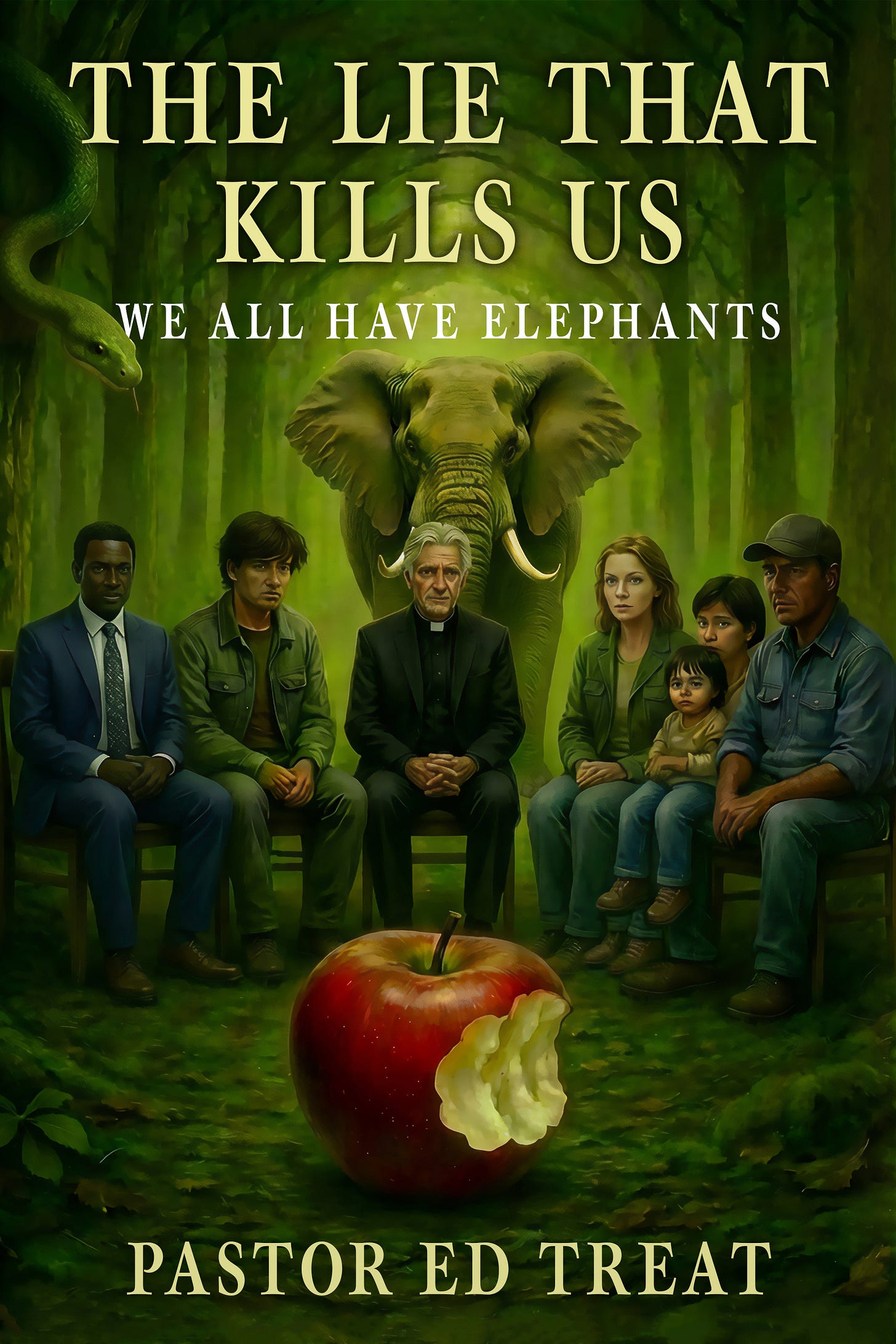
The Elephant Chronicles are meditations based on my upcoming book “The Lie that Kills Us: We All Have Elephants.” It explores the elephants we avoid: denial, addiction, trauma, death, and grace.
If you’d like me to let you know when it’s released later this spring, send a note to: Pastored@addictionandfaith.com
I’d be honored to keep you in the loop.
The book is now available here: Amazon
No posts
Comments
Nothing yet. Say the first thing.
Sign in to join the conversation.