
Okay. I’ll admit it. I use AI.
I am powerless over AI and my life has become more manageable.
Which worries me.
AI helps me a great deal. It helps me write, think, edit, organize, clarify. Some days it feels like a godsend—especially when my brain is tired and the work is still important. I’m grateful for it. Truly.
But still… I notice something in myself. A red-light indicator. A warning signal.
Not fear. Not panic.
Just a quiet unease.
The kind of unease that usually shows up right before I realize I’m being offered relief that doesn’t seem like it will cost me anything. The kind of unease that suspects another shoe could be falling.
That feeling is familiar.
I started using drugs at age 12 because they did something for me…they made my life better, easier, made me feel more capable. They fixed me, it seemed.
Through my recovery process and the life of hard knocks, I’ve learned now to be suspicious of those things that give so much while asking little in return.
I’ve spent most of my life around addiction—not just substances, but the human longing underneath them. That ache for ease. The hunger for certainty. The hope that maybe this time, the struggle can be avoided.
AI doesn’t cause that longing.
But it sure does meet it—quickly and efficiently.
That’s the part I want to pay attention to.
Not whether we should use these tools.
But what happens inside us when we do. And what will be the trade-off?
Using AI I’ve noticed how quickly friction disappears. How fast rough ideas become smooth. How tempting it is to accept clarity without wrestling, coherence without waiting, language without silence. (AI helped me say that more better).
None of that is wrong.
But it raises questions I don’t hear us asking very often.
What happens when thinking becomes easier than feeling?
When articulation outruns integration?
When the words are ready before the soul is? You know, when there is a gap between our public performance and our internal reality.
As an example, when I started using drugs regularly at such a young age, I stopped developing social skills, I stopped learning how to regulate my emotions appropriately, I stopped learning how to feel my emotions and understand them, I stopped learning how to be present.
I wasn’t very fine on the inside, but that’s not what I tried to convey on the outside. I’m not sure I was very convincing.
My trade-off for taking the easier softer way stunted my growth. Consequently, when I began recovery at 27 I had the emotional capacity of a 12-year-old. I had a lot of growing up still to do, you know, the hard way. It was the trade-off, the price I paid.
In recovery work, we know this pattern well. Relief isn’t necessarily the enemy. But relief that replaces the honest struggles of life is. Denial isn’t just about what we hide from others; sometimes it’s about what we hide from ourselves
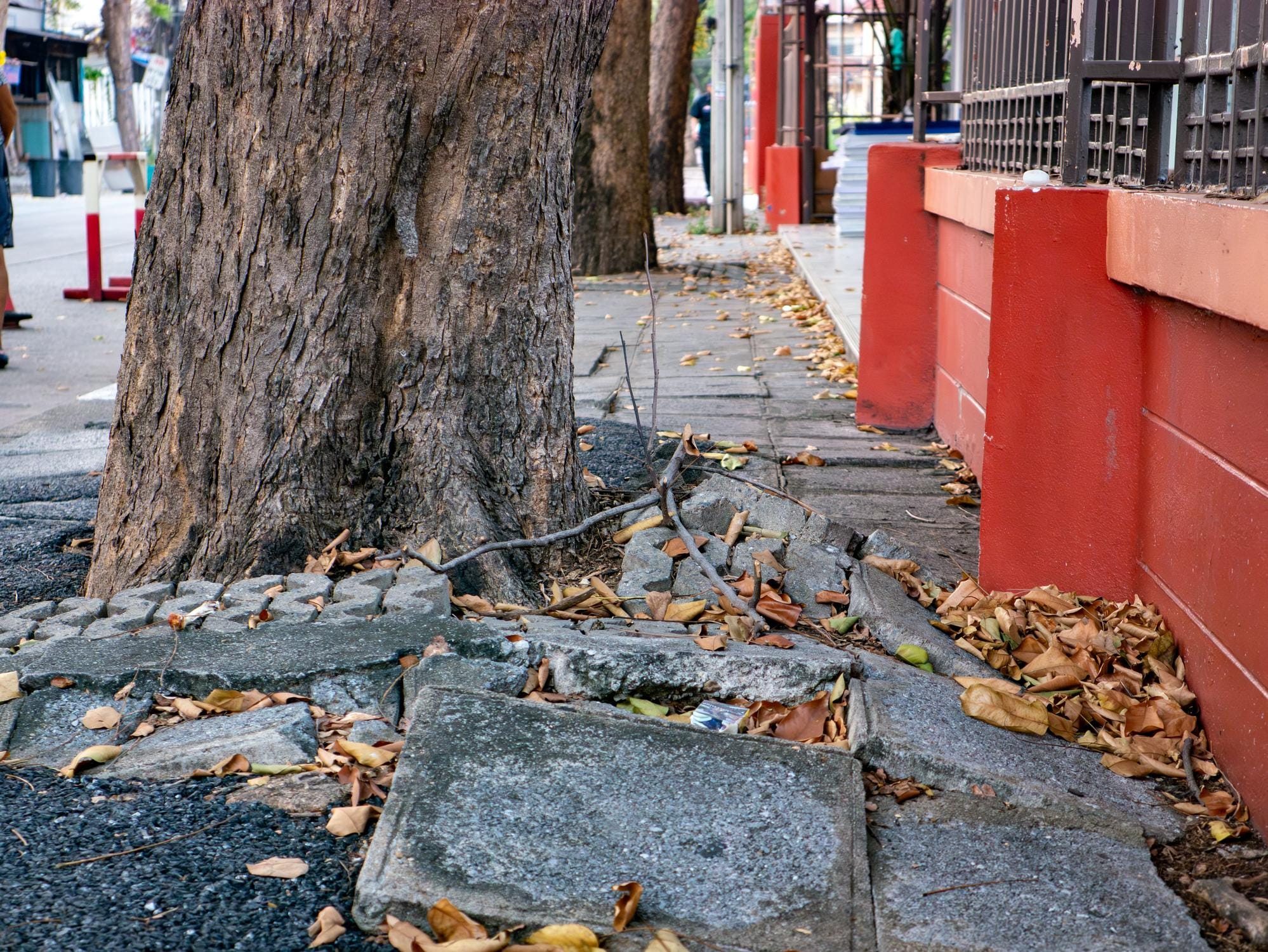
Tools become dangerous not because they’re powerful, but because they can quietly invite us to bypass the essentials of life, like:
Struggle. Presence. Ownership. Voice.
I’m not worried about machines replacing humans.
I’m more curious about what humans are eager to give up.
Especially those of us who traffic in words for a living—pastors, teachers, writers, leaders. People whose work depends not just on clarity, but on conveying wisdom that only comes from hard won, natural struggle. On words that come from somewhere real.
I don’t have answers here and I don’t trust answers that arrive too fast.
What I have are questions I’m learning to sit with:
When does help start doing the talking for me?
What parts of the process am I relieved to avoid?
Am I using this tool to support my voice—or to escape the cost of it?
What kind of formation happens when speed is always rewarded?
These aren’t questions about technology, they’re questions about us.
About what we love.
About what we avoid.
About what we’re willing to avoid when relief is readily available.
I’ll keep using AI. I’m not giving it up. I appreciate having a writing partner immediately available to help process thoughts and ideas, to clarify exactly what I’m trying to say.
But I need to use it the same way I approach everything else that promises to make life easier—with caution, with curiosity, humility, and a willingness to notice when ease starts costing me more than I initially bargained for.
Because the real ethical questions rarely announce themselves as ethical. The most critical moral decisions don’t arrive with a warning label; they arrive as messy, everyday human interactions.
And they usually show up with an option for an easier, softer way. But then there’s always the reckoning.
"There is a way that seems right to a person, but its end is the way to death." Proverbs 14:12 (NRSV)
What parts of your work or life have become easier recently—and where might you be cutting corners? Where do you notice the gap between your public performance and your internal reality?
God of struggle and rest, of wilderness and promise,
We come to you with tools in our hands and questions in our hearts. We are grateful for the gifts of human ingenuity, for minds that create and hands that build. Yet we know our hunger for ease can lead us away from the very struggles that form us.
Help us discern the difference between relief that restores and relief that replaces. Teach us to notice when speed comes at the cost of presence, when clarity arrives before wisdom, when efficiency tempts us to bypass the honest work of becoming.
Give us courage to sit with friction when friction is formative. Grant us humility to ask hard questions of ourselves. And when we reach for tools that promise to make life easier, may we do so with eyes open.
Keep us honest. Keep us whole. Keep us human.
Amen.
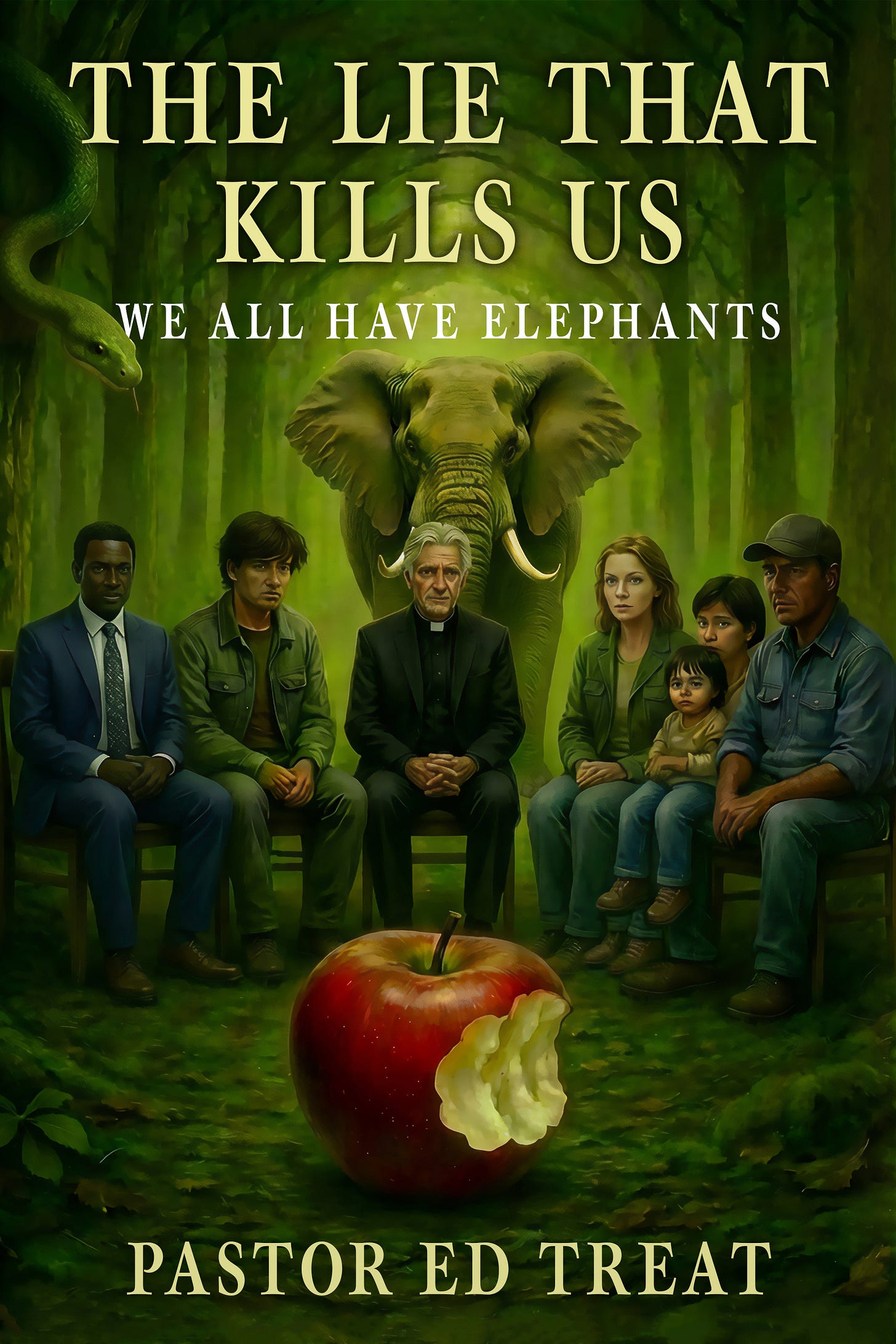
The Elephant Chronicles are meditations based on my upcoming book “The Lie that Kills Us: We All Have Elephants.” It explores the elephants we avoid: denial, addiction, trauma, death, and grace.
If you’d like me to let you know when it’s released, send a note to: Pastored@addictionandfaith.com
I’d be honored to keep you in the loop.l
The book is available now: Amazon
No posts
Comments
Nothing yet. Say the first thing.
Sign in to join the conversation.