
On March 18, 2026, something unusual happened.
In the middle of global instability, the U.S. government did what many claimed was impossible: it temporarily lifted one of the most rigid shipping laws in the country—the Jones Act.
A 60-day waiver.
A crack in a 100-year-old wall.
A glimpse into a different future.
The countdown ends May 17.
The question is no longer can we change the system?
The question is: why would we go back?
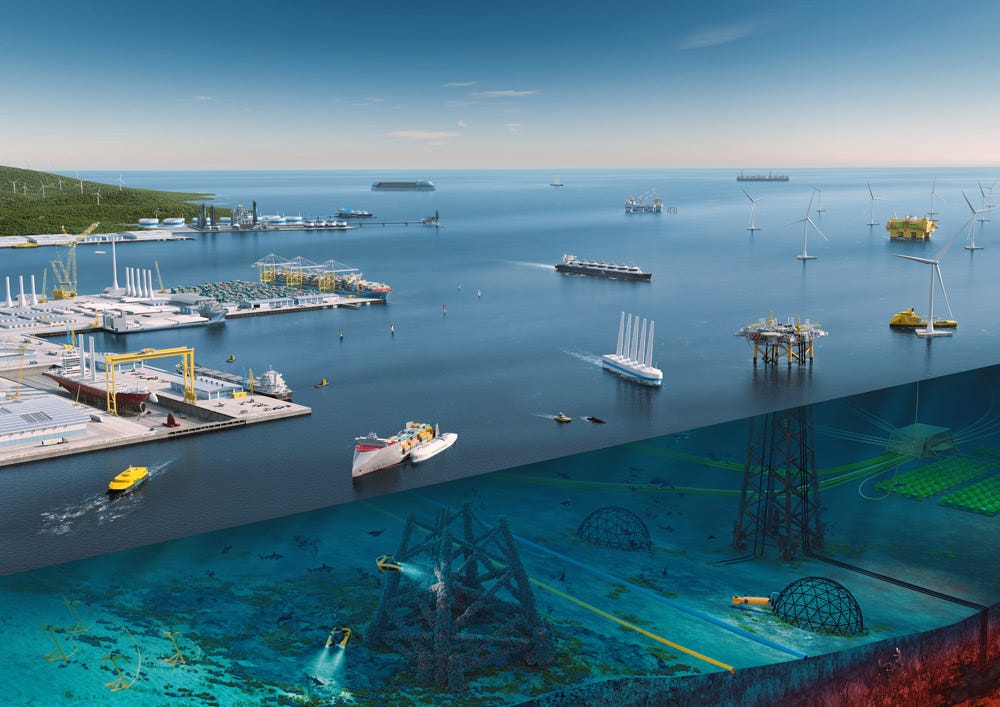
Imagine a world where ships move like information—frictionless, responsive, global.
A tanker leaving the Gulf Coast doesn’t need to stop because of outdated restrictions. It can move freely—Texas to Puerto Rico, Puerto Rico to New York, New York to Europe—on a single optimized route.
No artificial barriers.
No empty return trips.
No forced inefficiencies.
Ports become interconnected nodes in a living network and growing 500b+ Market Cap.
Shipping becomes dynamic, not restricted.
And geography stops being a punishment.
This is the futuristic international shipping economy—and for 60 days, we are partially living in it.
The Merchant Marine Act of 1920—better known as the Jones Act—requires that goods transported between U.S. ports must be carried on vessels that are:
U.S.-built
U.S.-owned
U.S.-flagged
U.S.-crewed
A system designed for a different century.
On the mainland, alternatives exist—trucks, rail, pipelines.
But for non-contiguous regions like Puerto Rico, Guam, Hawaii, and Alaska, the ocean is not optional.
It is everything.
And when that ocean is restricted, it becomes a tax on survival.
This is often framed as an “island issue.”
It’s not. Every American is affected by this “hidden tax”.
A 2024 NBER study found that without these restrictions, fuel prices on the East Coast would be significantly lower. Instead, it is often cheaper to import fuel from Europe than to ship it domestically from Texas.
Let that sink in.
American energy—blocked from American ports—forcing Americans to buy foreign.
That inefficiency costs U.S. consumers hundreds of millions annually.
It distorts markets.
And it weakens national competitiveness, as well as representing a National Security Fracture.
In 1960, the United States had nearly 3,000 large commercial ships.
By 2025?
Just 188.
A 94% collapse.
Meanwhile, the global fleet more than doubled.
And during this 60-day waiver, something else became clear:
The number of available tankers didn’t increase slightly—it exploded.
From 54 compliant vessels…
to access to nearly 7,500 ships worldwide.
The capacity was always there.
The law was the bottleneck.
Immediate and irrevocable exemptions—including relief from U.S.-built, U.S.-crewed, and U.S.-owned requirements—while maintaining U.S.-flag participation as a voluntary option, so long as vessels meet the safety and operational standards of the United States Coast Guard.
This allows:
Direct international shipping to U.S. regions
Multi-port domestic routes within a single voyage
Dramatic cost reductions through efficiency
In Puerto Rico: Lower energy costs, faster recovery after storms
In Guam: Improved economic stability and strategic readiness
In Hawaii: Relief from inflated prices on everyday goods
In Alaska: Access to broader markets for its own resources
Millions of Americans—currently paying more because of geography—would finally compete on equal footing.
The Jones Act was meant to protect American shipping.
Instead, it isolated it.
What was once a shield became a cage—shrinking the industry it was meant to defend.
But here’s the twist:
Removing the constraint doesn’t weaken America—it expands it.
An OECD study suggests that eliminating the U.S.-build requirement alone could grow industry output by over 70%.
Lower barriers = more entrepreneurs
More ships = more routes
More routes = lower costs
Lower costs = stronger economy
We are in a rare moment.
The system has already been tested under pressure—and it worked.
The waiver proved flexibility.
The market proved capacity.
The moment proved urgency.
Now comes the decision:
Return to limitation…
or step into expansion.
Sign this petition today:
SIGN PETITION HERE
Because the future of shipping isn’t just about ships.
It’s about whether we choose to move forward—or stay anchored in 1920.
¡Justicia para todos los ciudadanos americanos!
Justice for all Americans.
Thanks for reading Caesar’s Substack! This post is public so feel free to share it.
No posts
Comments
Nothing yet. Say the first thing.
Sign in to join the conversation.