
“At the Table” is a series of interviews and spotlight conversations with people I admire from within and outside of the wedding industry. These conversations focus on topics related to building an intentional, relationship-first business alongside a present, connected, values-driven personal life.
I met Kevin through Freeda, a private, members-only networking and education group. We were both members for a couple of years, but then last fall our advisory group members shifted around a bit, and we found ourselves in the same group. Within minutes of meeting him, I knew he was, as Jacin Fitzgerald would say, a “PLU” (people like us). I can’t wait for you to hear from him!
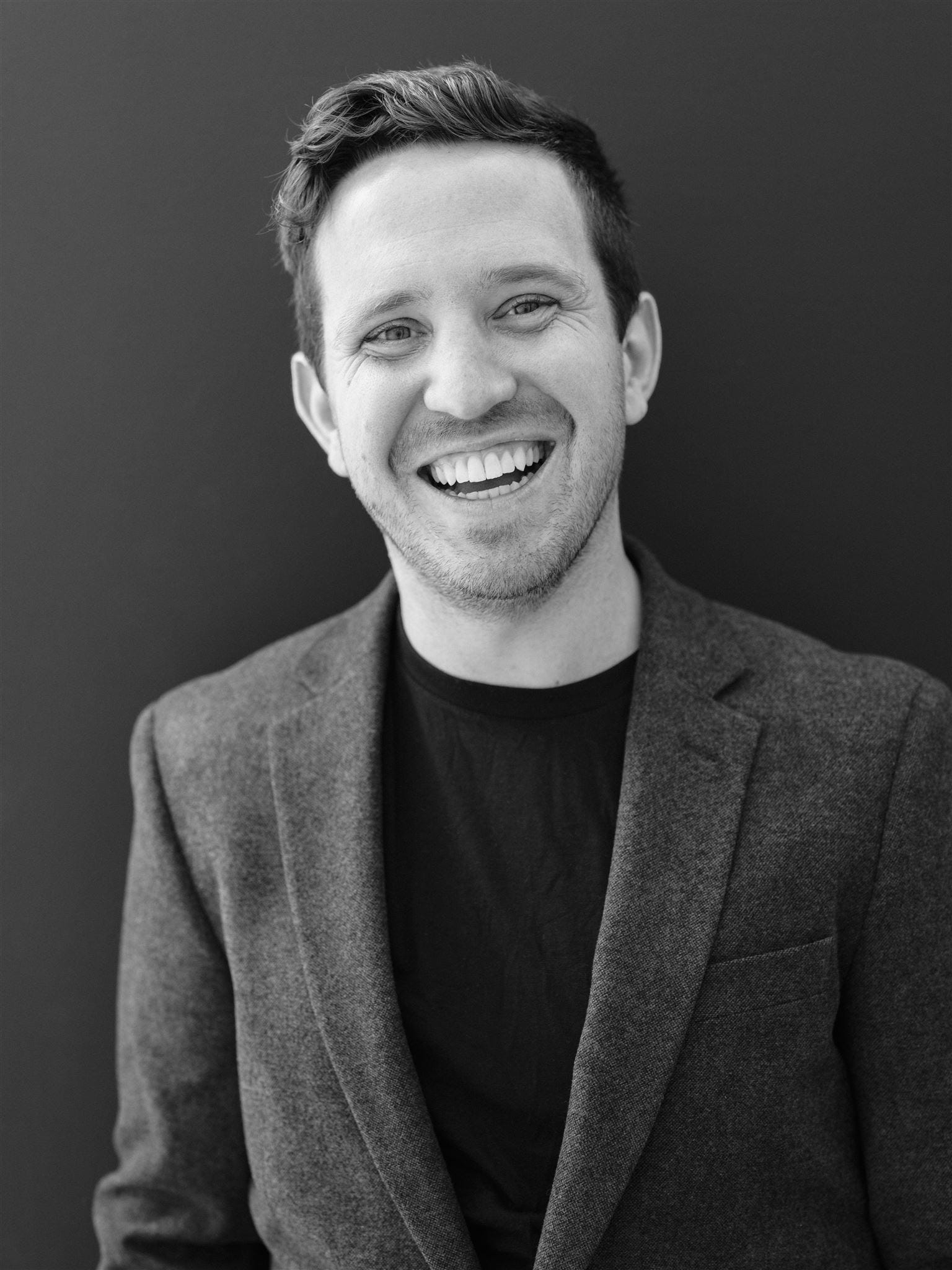
Follow Kevin’s work via his website (718 Creative) and IG, and listen to his Texas Weddings Podcast here!
→ First of all, tell me in your own words what you do for work, and why you do it?
I am a wedding videographer, and I love it. I’ve dabbled across other kinds of videography just for the creativity, but I really fell in love with live event, and specifically wedding, videography. I think fell in love with the emotion of it, the risk of it. I fell in love with the practical creativity of it, of the balance of art and it’s creativity. But it’s not just making art for art’s sake. That’s fine, but it’s just not the way I’m wired. Wedding videography is so practical, because I am serving my clients by delivering to them something they need so much of. This well-captured experience of their wedding day frees them up to live their wedding day better.
→ What does a typical day look like for you?
I actually have a typical day right now and it’s very optimistic, but I’m loving it. My kids just recently started sleeping through the night, so for the first time I’m able to set an alarm and consistently wake up at the same time. After eight or nine years of the “little kid stage,” this is a whole new season of life. So right now my days start at 5:30am, and I do some workout stretches, some prayer, & meditation until 6:15. Then I click into family mode. Hanging out with the boys and packing lunches and getting myself dressed, all the morning stuff. And then at 8am I grab my satchel and I walk down to my local coffee shop. It’s a half-mile walk, and I do it every day unless it’s raining. But even through the freezing cold, the hot summers, that little half-mile walk is such a good part of my day. I work there for the morning, and the only things I let myself work are time-sensitive emails and editing.
I’ll mention it later, but the book Deep Work by Cal Newport has been pivotal for me the past couple of years. My coffee shop time is my deep work time. I’m really, really digging into the hardest part of editing and am strict with that focus. Then I wrap it up at noon and enjoy the little leisurely walk home. I’ll do lunch with the family, and then my afternoons are usually scattered with to-do list things. I’ll answer my other emails, I’ll do finance or bookkeeping work. My wife and I do some real estate investing, and a lot of that gets pushed to the afternoon, whether it’s dealing with tenants or managing logistics relating to our properties. And if I’m lucky, I can knock out all the “have to’s” and squeeze in another 60-90 minutes of editing or some other deep work. But that’s all at the home office in the afternoon.
A newer habit that I’ve implemented is that anytime I sit down to work, for either one of my focus sessions, I start with my laptop closed, my journal open, and prioritize my to-do list. And then I do thankfulness journaling. I write down two things I’m thankful for in the back of my journal in the morning before I start work, and I’ll do it again after lunch, starting with thankfulness before I open my computer and dive into the wild world of the Internet.
→ In her book Dare to Lead, Brené Brown says that every person has just two core values that shape everything else that they do or believe. Do you agree with that idea? If you could boil your values down to just two, what would they be? How do those influence how you do your work & live your life?
Gut reaction, this idea feels oversimplified to me. I love the complexity of people—everyone’s so different, how they see the world, how they take in inputs from the world, and how they relate to other people. It’s hard for me to say that value systems can be boiled down to just two things. It just feels like it’s minimizing the beauty and complexity of people.
But if I had to, the two that come to mind are fun and stability. Fun such a simple word. But I’m very passionate about not just living life, but living an abundant life. And for me, so much of that is fun and enjoyment and making the most of our time. And then stability. Yes, I seek stability in my own life, but I want to be stability for other people. If there is just fun, there would be a shallowness to it. But I feel like stability can create such depth in relationships, being there for other people and really being someone that other people can rely on.
→ The British author Alain de Botton has this famous quote: “There is no such thing as work-life balance. Everything worth fighting for unbalances your life.” I tend to agree with this idea, that work-life balance is an unhelpful goal, and we should instead think about aligned values and healthy rhythms in all spheres of life. What do you think about the phrase “work-life balance?” How do keep healthy rhythms & momentum going in both work and personal spheres?
Yeah, I disagree with him. And I not only like the phrase “work-life balance” and the value of work-life balance, but it’s been really significant for me to prioritize having it. But I think it comes down to this, because a lot of people push back on that phrase—work life balance isn’t a goal to achieve. I would describe it more like a fight to fight. It’s not something I have achieved, but it is something I’m fighting for. That that has been huge for me. I mean, I think I am by nature very much a workaholic. And if I were left to my own devices, I would just work and work and work. My wife (thankfully) pushes assertively against my workaholic tendencies. And as an entrepreneur and as a person, I’m so much better for it. I don’t know if my business ever would have grown past the baby phase of working 40 to 45 weddings a year for like, $2,000 per wedding, if it hadn’t been for the pressure to fight for work life balance. I love the idea of fighting for balance, and I think it’s been pivotal for me.
→ Some people argue that a focus on people and a focus on profit are competing priorities, but I love talking about the ways that running a relationship-first business aids in building more profitable, sustainable businesses. What do you think about this idea? Are they competing ideas? Why or why not?
I mean, I loved reading People Over Profit by Dale Partridge. I don’t even remember specifics from it, but it’s one of those books that changes your perception on the inside. I used to be an accountant. I went to school for that and worked as an accountant straight out of college, so I feel like I have been brainwashed to have more of a thumb on my finances than I think a lot of creatives do. And when I look back at the way my finances (and especially my profit margins) have changed, I can’t say “Oh, it was from this price increase, or that was from when I started doing that upsell.” Yeah, there are some bumps that do that. But when I see the big swings in the business, it’s all from relationships, it’s all from connections. Yes, there’s a need for business smarts and making sure you’re making a profit. But what has actually swung things for my business as it’s grown has been the relationships I’ve built.
→ What are some ways that running a people-first business has benefited you? How has it benefited others?
At this point in my business, with life and kids and etc, I think running a people-first business has really benefited me in life satisfaction. I’m not really that motivated by chasing another dollar. The bills are getting paid and food’s on the table and I have enough of that. But the life satisfaction I’ve gotten from focusing on people, on helping them and being available and just being trustworthy, being consistent and stable for people. That life satisfaction has been huge.
→ Our culture and our industry is fast—trends come and go in the blink of an eye, and there’s just so much noise, especially on social media. It can be tempting to believe that the only way to stand out is to add to the noise, to follow trends, to make a bigger flash than our competitors. But what if you’re a quiet brand? I have written about the difference between Fireworks and Fireplace brands here. Would you say that your business is more of a fireworks display or a fireplace? How does that influence how you market?
So when I think of my brand, it’s long-lasting, it’s intentional, but it is fun. And so in some ways I relate to the flash of fireworks, the excitement of jumping into what’s happening in the moment. But on a deeper level, what the brand actually is, it’s not chasing likes. In the short term, the fireworks are fun, but they’re over way too fast every time. Yes, I love putting together a really fun next day edit or an exciting moment or a funny thing for social media. But that’s not the heartbeat of my business. What gives it life is capturing this incredibly fun, exciting day and being able to preserve that for you for the next 50 years, for generations to take in what matters. At the heart of the brand is the experience of it. When I do my job well, it frees the bride the groom and the family and their friends and everyone to put their phones away and to just enjoy the moment, the experience. And then I deliver the film that really captures the fun and the experience of it. So I not only capture it better, but they enjoy themselves more in the moment. And when I think about it in those ways, it feels like the heart of the brand would be a fireplace.
→ How do you stay authentic when it often feels that “fake it ‘til you make it” energy is rewarded?
I don’t know if it’s the right answer or not, but when I heard that question, my gut reaction was that I just unplug. When I stay plugged into everything going on and what everyone else is putting out there and let the algorithm brainwash me, I don’t have the mental fortitude to stay who I am, to stay authentically me. And honestly, if I’m unplugged from it, then I can land in a spot where that person who is “fake it till they make it,” who’s putting a false self out there, who’s lying about themselves or whatever, I can honestly say “I hope things work out really well for you, and I hope you land where you want to be and that things can be great.” But I can’t stay plugged in and land in that spot. It’s honestly to much easier for me to do that living in a small town to unplug and take a breath and, you know, see friends, just soak time with family and connect with people outside the industry. If I were living downtown in a big city, it would feel harder to step out of it. But when I unplug, it’s easy for me to love where I’m at in life, to love who I am and be proud of it, and show up authentically without a second thought, and not hold it against the people who are doing something else.
→ What is bringing you joy in your work right now?
Two things. One is that I’m more than a year into implementing my morning routine of walking to the coffee shop and pursuing the deep work strategy, and it feels really good to have a consistent habit that I’ve maintained for this long. I feel like I’m doing better work than I ever have before. I’m doing it in less time because I don’t have distractions and multitasking pulling at me. I feel like my anxiety’s gone down, and I enjoy my personal life more when I do those four hours of really good deep work. It’s like exercise, but for my brain.
The second one is that I started a podcast and that’s been fun. I was hesitant to do it for a long time, but I thought about it for so long and it just felt right to take the plunge and go for it. And that’s been fun! I think one of the most exciting parts about this for me has been the chance to be a beginner at it. I don’t come from broadcast journalism or anything like that, so for me, it’s all new and fresh. And it’s been so creatively freeing to be able to be a beginner.
→ If we were to meet here a year from now, what do you hope we would be celebrating?
Just being kind to the people around us and enjoying life. I hope to have been doing thankful journaling for 365 days at that point, so having really trained my mind to appreciate what’s around me better. And hopefully all those things culminate in one or two exciting, unforeseen, business wins and surprises.
→ Final question: what is the number one book you recommend to every creative entrepreneur?
Neither of these are going to surprise anybody: Deep Work by Cal Newport and Atomic Habits by James Clear. I decided to read these two books every single year. This is my third year doing that, and I’ve come so far in building habits, in practicing deep work and intentionally building the kind of work life that I want to be living. It feels like a celebration of how far I’ve come in the past year to reread them, and I pick up new ideas and new things.
Thanks for reading! This post is public so feel free to share it.
Comments
Nothing yet. Say the first thing.
Sign in to join the conversation.