
“At the Table” is a series of interviews and spotlight conversations with people I admire from within and outside of the wedding industry. These conversations focus on topics related to building an intentional, relationship-first business alongside a present, connected, values-driven personal life.
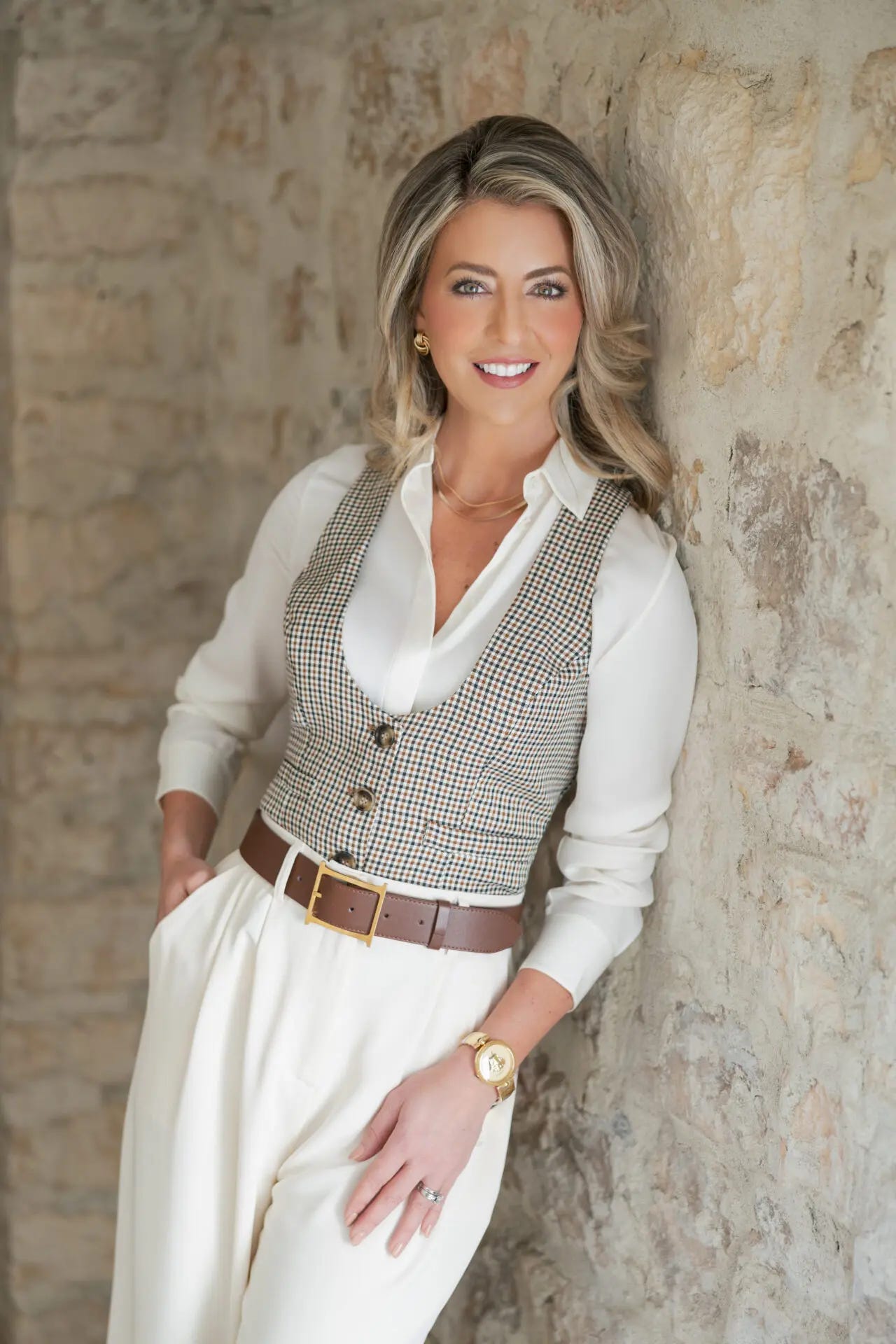
I met Emily at the opening session of Engage Tuscany when we happened to sit next to each other. After just a few minutes of conversation, I was struck by her poise, professionalism, and her drive, all traits that exploded into focus during this interview. There are many talented, creative wedding planners in the world, but I have only met a few that are as process-driven and entrepreneurially-minded as Emily. I’m so grateful for the chance to interview her!
Follow Emily via her website and IG.
→ First of all, tell me in your own words what you do for work, and why you do it?
We are a luxury destination wedding and event planning company, predominantly focused on weddings, along with select social events, typically for our legacy clients. I love when we’re able to build relationships and stay involved with a family beyond the wedding, planning holiday parties, birthdays, and even company galas.
We do a bit of corporate work as well, although it is more focused on social or incentive-type events. Before starting my business, I came from the world of hospitality, and that has been a huge influence on what drives me. Everything I learned in luxury resorts and restaurants, from creating experiences to anticipating guest needs and approaching every detail from a hospitality standpoint, really forms the core of our business.
As for why I do it, this is my life. I don’t have kids, and I have very little outside of what I do because I am so passionate about it. I love creating experiences, building out designs, developing relationships, and then getting to do it all over again with a new set of people.
→ What does a typical day look like for you?
I have a fairly large team, so most of my office hours are spent supporting them, brainstorming, training, problem solving, and handling a lot of calls and meetings. I am definitely more of a phone or Zoom person than an email person. I prefer talking things through in real time.
The bulk of my day is really about being available for whatever comes across my desk from the team. Then in the evenings, or sometimes on the weekends when things are quieter, I shift into more focused work. That is when I will do design work or dive into specific projects.
I really enjoy creating systems and tend to be very operationally focused, so I love when I can carve out a few uninterrupted hours to sit down and build something out or refine a process.
→ In her book Dare to Lead, Brené Brown says that every person has just two core values that shape everything else that they do or believe. Do you agree with that idea? If you could boil your values down to just two, what would they be? How do those influence how you do your work & live your life?
I am a very driven person, in every area of my life, so one of my values is achievement or accomplishment. That can be a small thing, like having my closet organized in a specific, color-coded way, or a much bigger thing like building a business, leading a team, and creating events that exceed expectations. I have always been motivated by going beyond what is required. Even when I was a competitive swimmer, it was not enough to just win. I wanted to set a new record.
Another word I connect with is relentlessness. I don’t give up easily. We have a saying in our company that we don’t believe in roadblocks—a roadblock is an opportunity to figure it out. If something doesn’t work one way, we try another. We go around it, over it, under it, whatever it takes. A lot of the time, success comes down to simply pushing a little further, making one more call, or putting in a few extra hours.
The other value for me is being principled. Everything I do is grounded in a very clear sense of why. Why I choose to do something, why I push in one direction, and why I will not in another. It comes down to integrity. I want to feel proud not just of what I accomplish, but how I accomplish it.
I am never willing to sacrifice the client experience, and the time I spend creating an exceptional event, communicating with clients and vendors, and making sure every detail is handled always came first. I have always been very clear that this is the goal, it’s what matters most.
→ The British author Alain de Botton has this famous quote: “There is no such thing as work-life balance. Everything worth fighting for unbalances your life.” I tend to agree with this idea, that work-life balance is an unhelpful goal, and we should instead think about aligned values and healthy rhythms in all spheres of life. What do you think about the phrase “work-life balance?” How do keep healthy rhythms & momentum going in both work and personal spheres?
Last summer, we were actually interviewed by a casting director for Netflix. Netflix was exploring the idea of a show about wedding planning companies, and we made it through several rounds of casting. Ultimately, it did not pan out and we parted ways, which is all fine because things are meant to happen the way they are meant to happen.
The producers commented that they loved my unapologetic lack of work-life balance, which I found interesting. Years ago, in my late 20s (I have always been very driven from a career perspective), I was working for a very high-end luxury resort, one of the top in the world. I was climbing the corporate ladder and trying to make a name for myself in the industry, while many of my colleagues were there for a job and would go home at six, meet friends for happy hour, and live a very different rhythm of life.
I never really did that because I was often working until 10 at night. And although I felt I needed to work toward this idea of work-life balance and achieve a sense of normalcy like everyone else, I also told myself I would get there later, once I reached a certain level in my career. I carried that internal tension for a few years until sometime in my 30s when it finally clicked for me.
I realized that I was actually very happy and fulfilled with my life. Why I was judging myself against what other people needed in their lives? I also realized that I would not enjoy happy hour three times a week because that would be far too much social energy for me. I feel most fulfilled when my time and energy are going toward things that genuinely energize me.
I love coming into the office and having social interaction with my team, I love the way that feels. I enjoy small moments throughout the day, like having 20 minutes between meetings to sit outside, soak in the sun, have a cup of tea, or dip my feet in the pool. Those little pauses fill me in the way I need.
And so for me, work-life balance looks different. I actually enjoy getting on a plane, going to meetings, problem solving, and having answers ready because that gives me energy. While someone else might see my schedule and think I am a workaholic, for my body and my brain, I actually do have balance, just not in the traditional sense.
→ Some people argue that a focus on people and a focus on profit are competing priorities, but I love talking about the ways that running a relationship-first business aids in building more profitable, sustainable businesses. What do you think about this idea? Are they competing ideas? Why or why not?
I think that if you are focused on acting with integrity, overdelivering, going beyond what is expected— all of the values that I learned from working in hospitality—you want to exceed expectations. You want to anticipate the questions before they’re asked, anticipate the need before it arises. If you put that at the forefront and you invest time, money, and resources into all of that, maybe you won’t gain the profit as quickly, but in the long run, I think that the reputation that’s built is what is going to create a truly successful business. And in order to have a successful business, that business has to be profitable too. You can’t have a successful business that’s not profitable, but I think you invest in that and the profit will follow.
→ What are some ways that running a people-first business has benefited you? How has it benefited others?
I think the biggest thing is probably our reputation and referrals. We spent the first five years of the business putting zero dollars into any kind of marketing, and we were booked fully every season. We’re still booked fully every season. We are now investing money into marketing because I think that is a more well-rounded approach as we’ve scaled into a bigger company. But one of the first big ways that I reinvested was in hiring the team and growing the team, sacrificing my own salary in order to bring people on or pay them more, and for many years I paid my team more than I was making. I knew that in the long run that was going to help us achieve more because we were going to be able to deliver at a higher level. I couldn’t be a one-man show and exceed expectations the way I wanted to.
I didn’t view starting my own business as, “Oh, I’m passionate about the wedding industry, I’m going to make a job for myself, and I’ve left my corporate America job and I need to make sure that I’m still making the same salary as I start this.” No, I invested in a startup business, and it takes a few years of investing in order to achieve the profit.
I realized that not everyone is in a situation where they can afford to do this. But most poeple can always afford something if they choose to sacrifice something else. Whatever it is—don’t get the Starbucks every morning, brew your own coffee at home—there are always ways that you can sacrifice a little bit of your lifestyle in order to invest more back into your business. I was fortunate that I was married when I started my business, and there was support there, and over the years we’ve both invested in each other’s seasons of growth. That still meant we made sacrifices to our lifestyle, but it was worth it.
→ Our culture and our industry is fast—trends come and go in the blink of an eye, and there’s just so much noise, especially on social media. It can be tempting to believe that the only way to stand out is to add to the noise, to follow trends, to make a bigger flash than our competitors. But what if you’re a quiet brand? I have written about the difference between Fireworks and Fireplace brands here. Would you say that your business is more of a fireworks display or a fireplace? How does that influence how you market?
We are definitely the fireplace company, not fireworks. When I gauge our success on a wedding, it’s based on how much we hit the mark for that couple, what brought tears to their eyes, what made their hearts beat faster. I’m not trying to go out and set trends that the rest of the industry will follow.
At the core, we are a planning and production company. We are operations. We are your insurance plan. Our focus is always the client, our couples, and what is going to make them tick. I may never be the most original creative, the one setting the newest trend, but that is not the goal.
The goal is to understand who people are and how we make the wedding authentic to them. How do we make it feel like an extension of how they entertain in their own home? To me, that is what success looks like— how fully we have been able to serve the client and bring their vision to life in a way that feels deeply personal.
It is certainly great if something goes viral, and I don’t want to dismiss that. But that is never the intention behind the work. When we approach marketing, the goal is to showcase the weddings in a way that could potentially resonate widely, but we do not design or build weddings with that outcome in mind.
The difference is that we create something authentic to the couple first, and then we think about how to share it well afterward. The marketing piece is about taking something real and presenting it thoughtfully.
→ How do you stay authentic when it often feels that “fake it ‘til you make it” energy is rewarded?
At times, it can be challenging when it feels like “fake it ‘til you make it” is what gets rewarded in marketing. It can make you question whether you are keeping up or why certain accolades or recognition haven’t come your way. That can sting, and I think that is a natural human reaction.
But I always come back to the fact that we have nothing to hide. You can talk to any of our former clients and they would say the same things— reliability, consistency, trust. That body of work keeps you grounded. It reminds you why you are doing this.
At the end of the day, it is not viral Instagram posts bringing in our clients, it is years of referrals and relationships. When I look at our upcoming seasons, the couples we are working with are incredible, and not a single one of them came from something that went viral. They came from trust that was built over time.
→ What is bringing you joy in your work right now?
My team. A huge part of that is the energy—everyone genuinely wants to be in the office, we are collaborating, and someone’s weaknesses are another person’s strengths. It is one of the things I never set out to create when I built the business and never necessarily expected would come, so it feels like a bit of a surprise and discovery. When you have the right company culture, the way everything gels is really magnetic. It is so much fun, and that is giving me a lot of joy right now.
Our couples also bring me a lot of joy. We work very intentionally to attract a clientele that we are going to enjoy working with and who values the things that we value. I will tell people, if you are just looking for a planner who is all about the visual, where people walk in and say, “They must have spent $100,000 on their florals,” but it comes at the expense of the guest experience, we are not your planner. I love florals, but there has to be a balance.
We want people to leave the wedding saying, “that was so much fun, that was the best wedding I have ever been to because I felt so taken care of.” We work really hard to attract that kind of client, and 95% of the time we do. Every once in a while you get it wrong, but right now, for this year and next year, we have 100% of clients that we are really enjoying working with. We look forward to the meetings with them, and that in turn inspires us to do even better work for them.
→ If we were to meet here a year from now, what do you hope we would be celebrating?
A big thing we are celebrating right now is that we are now bi-coastal, based in Napa, California and Charleston, South Carolina. We have our newly hired planner, Neely Craig, who is holding down our East Coast office for us.
Now that we are fully destination-based, with one Napa wedding this year, it really allows us to serve all of our clients at a much higher level. We also have a lot of clients who are East Coast based, so time zones and logistics make much more sense in this structure. I would love to continue leaning into that, and maybe a year from now we are celebrating a third location.
→ Final question: what is the number one book you recommend to every creative entrepreneur?
There are two that I love. They are very similar, so you could read one or the other: Setting the Table by Danny Meyer, and Unreasonable Hospitality by Will Guidara. They share a lot of the same core principles.
Thanks for reading! This post is public so feel free to share it.
Comments
Nothing yet. Say the first thing.
Sign in to join the conversation.