

Earth Day, held every year on April 22, is a way to support environmental protection and enjoy the many incredible benefits that nature provides. I’ve spent much of my life trying to save the planet, which is a heavy load to carry around.
As I celebrate one of my favorite holidays this year, I want to take a look at how to be an environmentalist from a Stoic perspective because how we think about such immense challenges like climate change and plastic pollution can have a real impact on our emotional well-being.
Thanks for reading It's the Thought That Counts! This post is public so please share it.
Founded in 1970 by U.S. Senator Gaylord Nelson when 20 million Americans took to the streets and parks to demonstrate their support for our planet and demand environmental protection, this special holiday was created to inspire awareness and appreciation for environmental protection.
Today, participants all around the world come together in their campaigns for plastic waste elimination, sustainable fashion, climate change, and other green initiatives to help make a difference and protect our environment. Learn more about the history of Earth Day.
While I’ve been an avid environmentalist since high school, I only discovered and started studying and applying Stoicism in the last couple of years. By bringing Stoic teachings into my life, it has helped me understand how to be a calmer, more effective environmentalist and appreciate the incredible beauty and miracles of nature and why we need to protect it.
The ancient philosophy of Stoicism provides a practical ethical framework for addressing modern environmental crises. The texts emphasize the concept of living in harmony with nature, suggesting that human flourishing is deeply connected to the health of the global ecosystem.
Stoic philosophers argue that recognizing our role as citizens of the world includes protecting the collective good through both personal lifestyle changes and political engagement. We can do this by applying the Stoic cardinal virtues of wisdom, justice, courage, and temperance, with keeping the dichotomy of control in mind.
Stoic philosophers argue that recognizing our role as citizens of the world includes protecting the collective good through both personal lifestyle changes and political engagement.
A main component of Stoicism is to try and live our lives based on the four cardinal virtues: wisdom, justice, courage, and temperance. They serve as a moral compass to help us live in harmony with reason and nature. These virtues aren’t just abstract ideals; they are practical tools designed to help us navigate life’s challenges with excellence and integrity, regardless of external circumstances.
Wisdom: This is the ability to navigate complex situations logically and calmly. In the context of the planet, it’s having the curiosity to learn more about environmental issues and the capacity to discern between what is truly beneficial for the environment versus what is merely convenient or greenwashed.
Justice: To the Stoics, justice means acting for the common welfare. It’s the understanding that we are part of a larger whole, and caring for the Earth is an act of fairness toward our fellow humans and future generations, in addition to the plants, animals, and other natural resources we share the planet with.
Courage: This is the strength to do the right thing even when it’s difficult or unpopular. It’s the resilience required to stand by sustainable convictions or advocate for the planet even when it feels like an uphill battle.
Temperance: Often called balance or moderation, this is the exercise of self-control. It’s the practice of choosing enough over excess, directly challenging the consumerism that often drives environmental strain. This is also important when it comes to media consumption, as Stoicism encourages mental discipline to avoid environmental doomscrolling that only heightens anxiety without offering solutions.
The Stoics believed that practicing these virtues leads to Eudaimonia, or a flourishing life. They help shift our focus from what we want to who we are. By applying these virtues to Earth Day, we can transform environmentalism from a stressful chore into an expression of our character—a way to live a centered life while honoring the world that sustains us.

But what happens when this all feels so overwhelming? We can easily get caught in an overthinking tailspin about the pending doom and then feel as if we can’t change any of it. This is when turning to the teachings of Stoicism helps us get back to a calmer, more grounded state so we can figure out what we can do to help—within our control.
The Stoic principle of dichotomy of control is something that I find myself turning to every single day to keep my overthinking and anxiety in check. It’s been tremendously helpful, both as an environmentalist and in general as a human living in a crazy world.
The dichotomy of control encourages us to distinguish between what is within our power (internals) and what is not (externals). Applying this framework to environmental issues can significantly reduce anxiety by refocusing mental energy away from overwhelming global outcomes and toward manageable personal actions. It truly takes the pressure off so we can feel good about what we CAN change.
Stoicism helps us get back to a calmer, more grounded state so we can figure out what we can do to help—within our control.
Here are some concrete examples of how to tap into the dichotomy of control to be a happier, calmer, and more effective environmentalist:
Anxiety about environmental crises like climate change often stems from a sense of powerlessness in the face of a monumental global threat. Stoicism suggests that while we cannot single-handedly dictate the Earth’s temperature or the path of a hurricane, we have full command over our own choices and attitudes.
Instead of fixating on the enormity of the crisis, focus on the specific actions you can take on a daily basis, such as reducing plastic use, changing dietary habits, or commuting via public transportation.
Individual action is guided by fulfilling our role as good citizens of the earth, which involves caring for the natural web of relationships we depend upon to survive. Choose one activity that you love doing, based on your skills, talents, and interests, and use that to serve your community. As Marcus Aurelius noted, we should focus on the “hive” by doing our part as the “bee,” accepting that the final fate of the hive is not ours to control. In other words, focus on your contribution to the greater whole, and release the pressure to change everything.
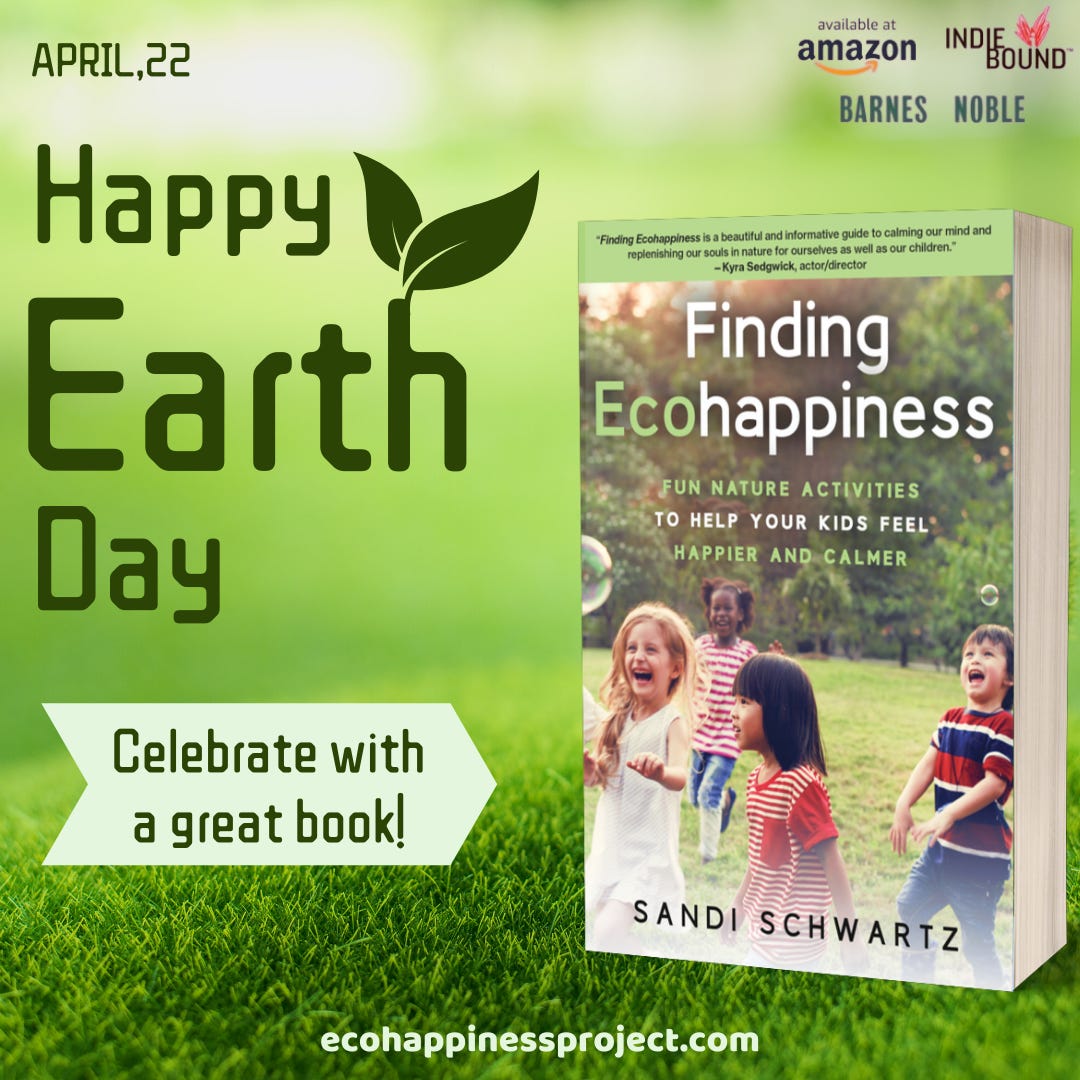
Wondering what you can do? Here are some ideas to inspire you to get out there and do your part this Earth Day—and every day.
Look out for environmental-related events organized by local nature centers, science museums, libraries, schools, environmental groups, or local governments. Check earthday.org for event listings.
This is the perfect time to explore environmental issues more deeply. Read books like Finding Ecohappiness; recite and write nature poetry; watch environmental shows and documentaries; take trips to nature centers, gardens, and scenic destinations; and participate in science education programs like citizen science.
Get involved in your local community by participating in a park or beach cleanup; planting trees through organizations like Tree City USA; or volunteering at a community garden, farm, animal shelter, or nature center.
There are many nature-related random acts of kindness, such as raking or weeding a neighbor’s yard, walking a neighbor’s dog, growing your own flowers and giving them out at a nursing home, or growing your own vegetables in your garden and donating them to a local food bank or soup kitchen.
This is an excellent time to support both local and national sustainable businesses, whether it be your neighborhood organic grocery store or large corporations with a history of doing incredible environmental work like Patagonia and Rothy’s. Not sure where to shop? Check out the B Corporation directory to identify green businesses.
Consider choosing one or more environmental organizations (local, national, or international) to either join or send a donation to. Some favorites include Sierra Club, World Wildlife Fund, Ocean Conservancy, and Earthjustice. Consider supporting an animal shelter, botanical garden, or nature center in your area.
Thanks for reading It’s the Thought That Counts! This post is public so please share it.
Comments
Nothing yet. Say the first thing.
Sign in to join the conversation.