
Welcome to your Monday edition of the Best of Bylines newsletter, bringing you a standout article from one of our 10 UK national and regional publications. This time, we hand over to West England Bylines and new contributor Rob Jones.
On 19 June, a white man attacked five Muslim men outside a mosque in Edinburgh. When arrested, he claimed that he “was protecting the country”. No one was killed, but the incident involved serious injury. Neither the police nor much of the media have mentioned terrorism.
Yet, similar incidents involving non-white knife attackers have been labelled terrorism almost immediately – for example, the recent attack in Golders Green, where two Jewish people and a Muslim man were killed by the same attacker within hours.
I’m an engineer and I value facts and analysis, but comparative data are notoriously difficult to find in the UK. You can’t simply type your question into a reliable AI-enabled search engine and get a trustworthy result, as you can in so many other areas of modern life. This is a subject people don’t like to talk about, and that institutions are reluctant to delve into, at least not in straightforward terms.
While the current government has required police forces to reveal the ethnicity of those involved in serious violent crime on request, the recording of ethnicity has been inconsistent, and it is still not mandatory to collect religious details from offenders, who, conceivably, could lie anyway. Regarding terrorist incidents, of the 47% of those charged who disclosed their religious convictions, 67% of convicted terrorists in the UK have claimed to be Muslim.
Of course, Islamic terrorism has dominated the news since the ‘war on terror’, initiated by George W Bush in response to the 11 September 2001 attacks on the World Trade Centre in the US. The British Government under Tony Blair followed the US into its wars in both Iraq and Afghanistan. As a result, in 2005, London suffered a series of terror incidents in the name of Al-Qaeda and other Islamic terror groups.
I still remember Prime Minister Tony Blair claiming that the UK government’s enthusiastic support for Bush’s ‘war on terror’ had nothing to do with the 7 July attack on London’s public transport system. However, recently, the volume of home-grown white nationalist terrorism has increased significantly, and attacks on Muslim targets in particular have risen sharply. In the year ending March 2025, there were 4,478 hate crimes directed at Muslim targets, compared with 3,700 against Jewish targets.
It is the role of the judiciary to make the legal distinction between terrorist attack and hate crime, however, the police play a major part by indicating their suspicions, often early in the evidence collection process. The legal definition of terrorism leans heavily on connecting the offender to a known terrorist organisation. Given a reluctance of successive governments to label far right groups as terrorist organisations, and the prevalence in the media of a lone-wolf framing of attacks on Muslims, perhaps a systemic bias begins to reveal itself?
In 2011, David Anderson QC investigated the question and he “found no evidence indicating discrimination along those lines”. In my opinion, this is both an interesting finding and an interesting choice of words. Firstly, the evidence is scarcely available, as it’s almost never collected. Regarding the wording: is this not simply another way of saying that we haven’t gathered or recorded the evidence needed to assess this question? I believe it is.
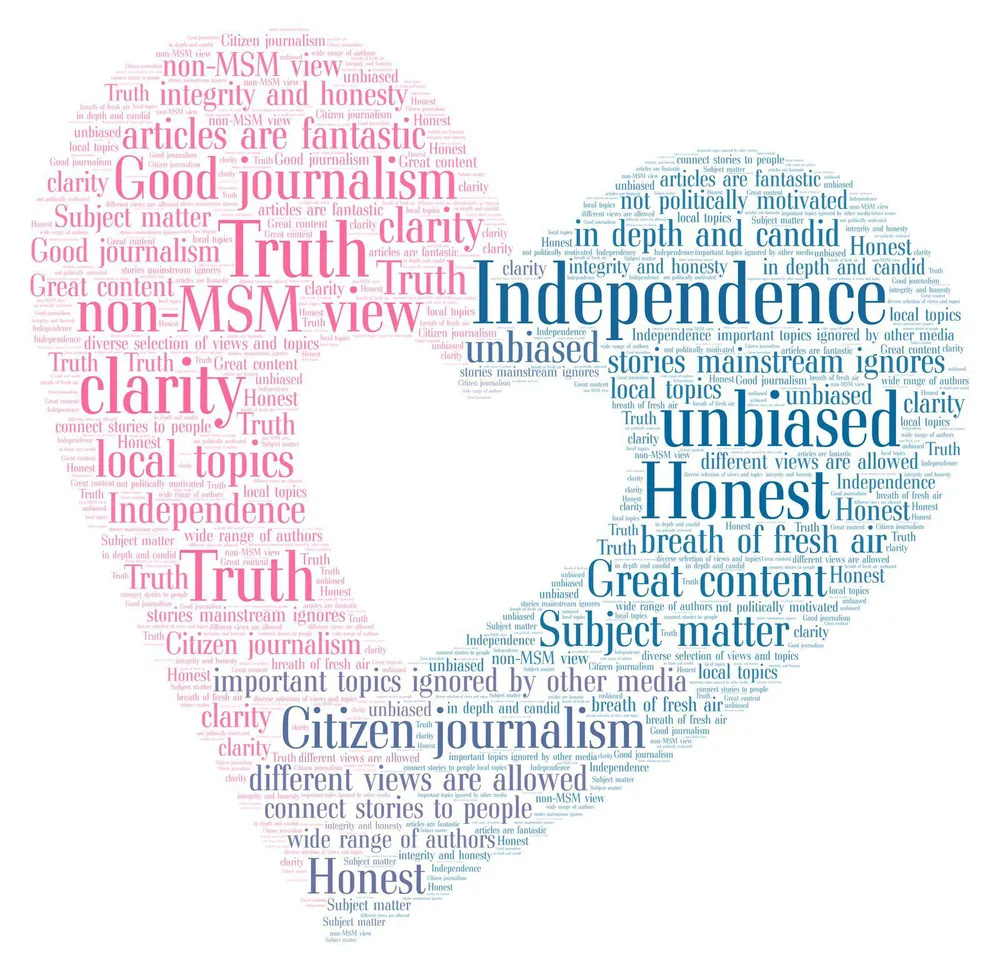
Unbiased. Independent. Honest. This is what Bylines Network is, in the words of the 1000s of supporters who took part in our 2025 survey. We don’t have oligarch owners, corporate controllers or political paymasters – we have a community of 2,500 volunteer writers and editors, and over 350,000 readers. Help power Britain’s biggest citizen journalism movement. Become a member of our Friends of Bylines Network scheme today.
Become a Friend of Bylines Network
Rewind to 1999 and the results of the Stephen Lawrence inquiry in which the Metropolitan Police were found to be institutionally racist. Forward to 2023, when the Met Police were found to be institutionally racist, sexist and homophobic, according to Baroness Casey. What does the phrase “institutionally racist” mean? Don’t ask the current Commissioner of the Met Police, as he won’t use it, suggesting that most of his officers don’t understand what it means. So how can we be sure that the criminal justice system is unbiased? If bias is present, then won’t that bias also show itself in the labelling of terrorist attacks against Muslims?
I am white, male, straight, and solvent. I have it all. But I learnt about my own racial biases back in 1998, when I was filming Black and White for the BBC, undercover in Leeds capturing instances of racial discrimination. So, I no longer question what I once would have tried to equivocate over. I can see the prejudice that runs through UK culture like the word ‘Blackpool’ through a stick of rock.
At the same time, I also understand, and sympathise with, those of us who, as white British people, don’t easily accept the notion that our institutions are not honest with us, that our press is biased, our police are susceptible to ethnic profiling, and our politicians understand that there are very few national votes available for those who challenge our self-image of ‘playing by the rules’. But for me, when I see almost daily, the evidence of bias, I can no longer ignore it. It’s like a sixth sense, and I can’t look away.
When David Anderson QC made his statement finding no evidence of bias in the application of UK Terrorism Acts, he provided sufficient reassurance to the majority white readership to trigger their confirmation bias and thus dismiss the very idea that our criminal justice system might be biased or, indeed, weighted against the entire non-white community – specifically Muslims.
Whilst not proving anything, and barely saying anything, David Anderson gave us licence to turn away – to park the idea of bias, and move on without making any changes. No need for introspection and no need to muster the energy required for serious reform. And that, sadly, is what most of us are content with – the continuation of a biased system, so long as it doesn’t affect us.
But there is a cost to racism. McKinsey & Co have forecast a loss of between $1tn and $1.5tn for the US economy over the period 2019 – 2028 due to the wealth gap between white and black US citizens. That’s a 4% – 6% penalty on US GDP – about the same impact that Brexit is currently having in the UK. And that’s without accounting for other costs, such as those relating to criminal justice, mental health, antisocial behaviour, and riots. Isn’t it time for a change?
Comments
Nothing yet. Say the first thing.
Sign in to join the conversation.