

Welcome to the seventh installment in the series exploring essential leadership soft skills, drawn from my book, "The Illustrated Guide to Leadership Soft Skills". Today, we delve into the multifaceted world of motivation.
Motivation is the engine that drives us, and the key that unlocks our potential. As leaders, helping to provide meaning and cultivate motivation is one of our most important roles.
Thanks for reading Lee Sampson! Subscribe for free to receive new posts and support my work.
The Complexity of Motivation

What motivates us is as unique as each of our biology, psychology, and environment. What works for one person can have the opposite effect on another. Some thrive on public recognition, while others recoil from the spotlight. This highlights the futility of a one-size-fits-all approach to motivation. Expecting a single reward or motivator to lead a team through a challenge is a recipe for frustration and disappointment.
Finding Your Motivation

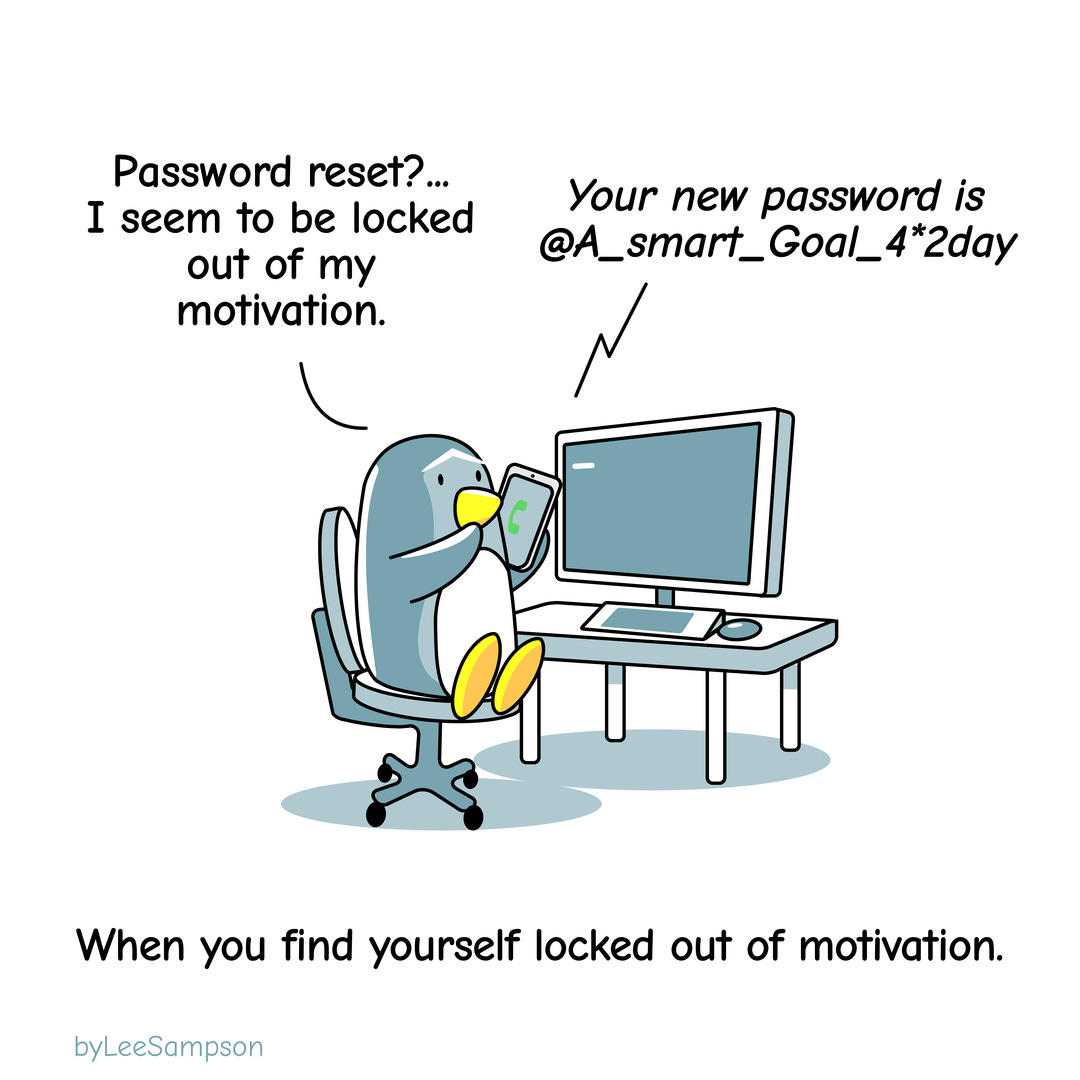
Finding your motivation, or helping others find theirs, is a valid measure of success. When you struggle to find the keys to your motivation, purpose and meaning become elusive. Creating routines makes it easier. Like leaving your motivation "on the yoga mat" or "in your walking shoes," it's about making it readily accessible.

Sometimes, motivation doesn't come to you; you must go to it. Like on Monday mornings and the well-beaten path to the coffee machine.
Setting a goal is a tangible way to start. Sometimes, simply writing down the starting point is enough to jump-start that action motor. Sharing these goals with your people lead provides a way to measure success and identify the support required.
The Dark Side: Fear-Based Motivation

Motivating with fear switches the focus from the customer to the leader. When the team becomes fearful, the customer's needs take a back seat, leading to harmful outcomes. Heavy-handed motivation, while offering short-term results, erodes respect.
Fear is a powerful motivator, but it doesn't earn respect or promote healthy interactions. If you're unsure about your motivational style, seek anonymous feedback. It's crucial to address any issues before they escalate.
Fear's natural evolution was to keep us safe, but when it becomes an attack dog, it triggers flight, fright, or freeze emotions, which aren't conducive to long-term success.
Leader-Led Motivation

Making work meaningful for the 70% of people who aren't in their dream job is crucial. At a leadership level, taking time to learn and include the subtle nuances of individual motivators can create an environment of meaning and purpose.
Practical Strategies for Positive Motivation
Individual Understanding: Spend time with individuals to understand their motivators.
Team Choice: Give the team a choice for rewards and recognition.
Regular Reviews: Review motivators regularly.
Adaptability: Be open to adapting rewards for different people.
Achievable Goals: Set achievable goals and celebrate successes.
The Power of a Smile

Most workers aren't in their dream jobs, but they make the unselfish choice to provide for themselves and their loved ones. As leaders, we can create routines that celebrate this and validate their why.
In Conclusion
Motivation is an interactive process, requiring us to delve deeper into our personal motivators and understand what truly matters to others.
By taking the time to do this, we can move beyond mere discretionary effort and job descriptions, fostering genuine engagement with the 'why' behind the 'what' and 'how.'
This deeper connection creates a shared sense of purpose, driving us beyond basic tasks and towards a collective vision.
As I continue this 20-week series, exploring all aspects of the "Leadership Wheel", I hope you will join me on this journey. I encourage you to consider how you can implement these ideas into your leadership style, and take the time to create a sense of unity in your teams.
You can find my book, “The Illustrated Guide to Leadership Soft Skills” on Amazon, where you will find these ideas and more, and over 500 illustrations to help you navigate the often difficult world of leadership.
Author and Illustrator Lee Sampson uses a people-centric approach and creative vision to make leadership development accessible and enjoyable. Inspired to illustrate over 1,000 Penguin cartoons on LinkedIn, Lee believes that we all have the potential to change our world for the better, by starting from the inside out.
Disclaimer: This article has been created using insights from my book, “The Illustrated Guide to Leadership Soft Skills”. I have used my expertise combined with the capabilities of AI, which has helped me refine this version to improve readability.
Thanks for reading Lee Sampson! Subscribe for free to receive new posts and support my work.
Comments
Nothing yet. Say the first thing.
Sign in to join the conversation.