
Last Friday, I decided to venture deep into the city center of Rome, beyond the Regola area, to visit a few of my go-to artisanal shops. The previous few days had felt like pure bliss. The weather, the energy, the rhythm of the week all felt too good to miss out on by staying in my own quarters. I caught the bus after just two minutes of waiting at the stop, which in my books is a Roman miracle.
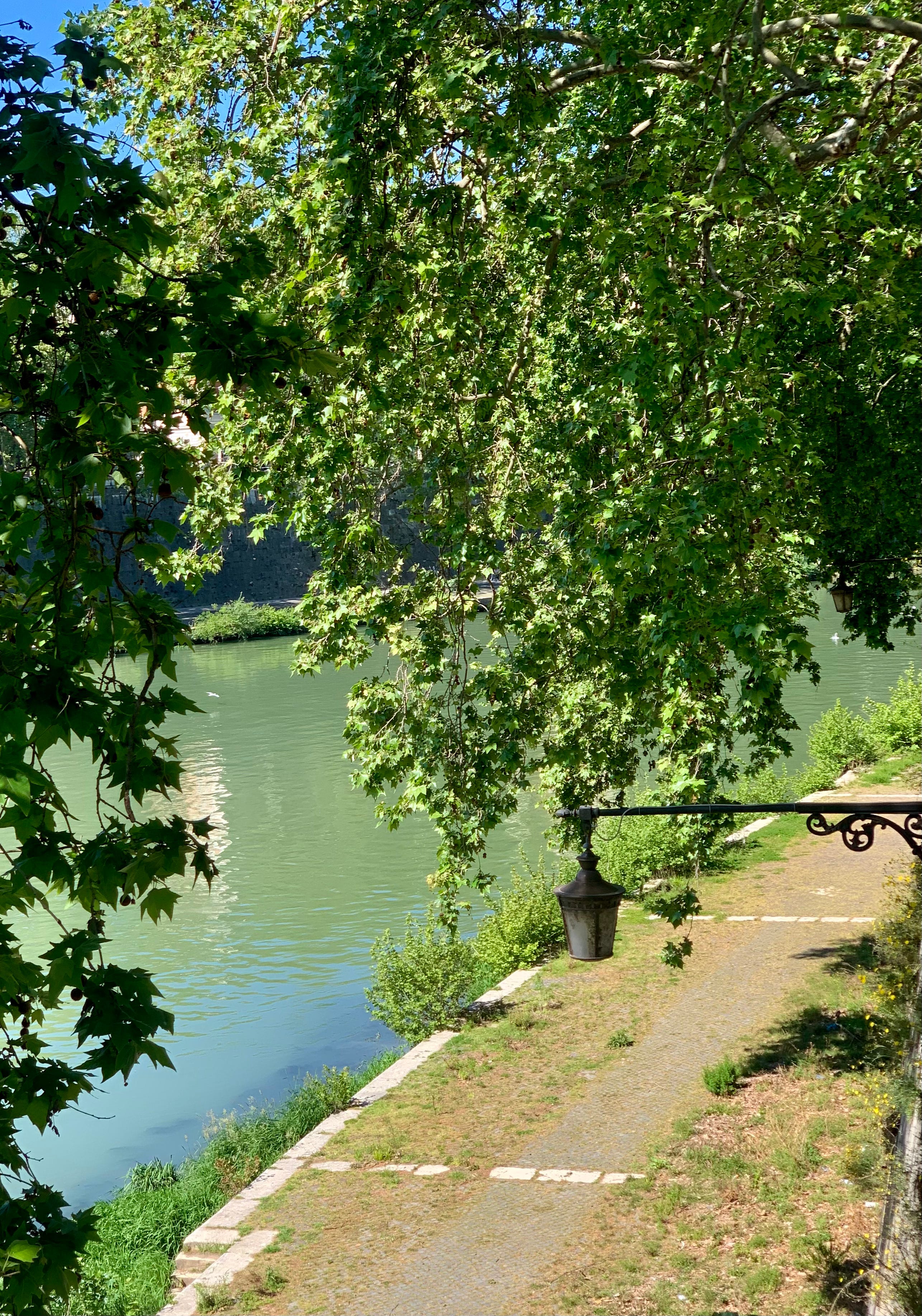
With my two-year-old son in tow and a cornetto in hand, we snaked along the Tevere River on bus 280. The river’s greenest leaves reflected in the windows as we drove past, while a slightly humid but refreshing spring breeze drifted through the cracked glass. There was that feeling of hope, that sense that good things were on the horizon, something only spring can promise.
We hopped off and headed to the Campo Marzio district, which, if you’ve followed Local Style for some time, I reference almost like clockwork and very much with intention. It sits in one of Rome’s oldest neighborhoods, packed with waves of tourists while still holding onto its original roots if you know where to look. I had a specific pair of shoes in mind, a pair I had photographed and thought about for over a year. It wasn’t until a French clothing designer I follow on Instagram, Tiphaine Guiran, posted that she had just bought the famous shoes, circulating in my product-obsessed brain, while visiting Rome, so I knew that this would be the day I finally pulled the trigger.
I know what you’re thinking. Am I really about to dedicate this entire letter to a pair of shoes? But stay with me, because these are not just any shoes.
At 10:00 a.m. on the dot, we were the first ones in the store. The manager greeted me with a somewhat-stale buongiorno after dumping buckets of water outside the shop to clean the entrance, most likely to wash away the less welcoming scents that come with city life. I spotted the shoes and asked to try them on in my size.
When she returned with the box, she said she had my size, but only in silver. I was a bit disappointed. I had my eyes fixed on the gold pair in the window that have been saved on my phone for sometime. Though I of course tried them on, walked around a few times, and asked if she knew when the other color would be back in stock.
“I don’t know. It could be days or it could be months.”
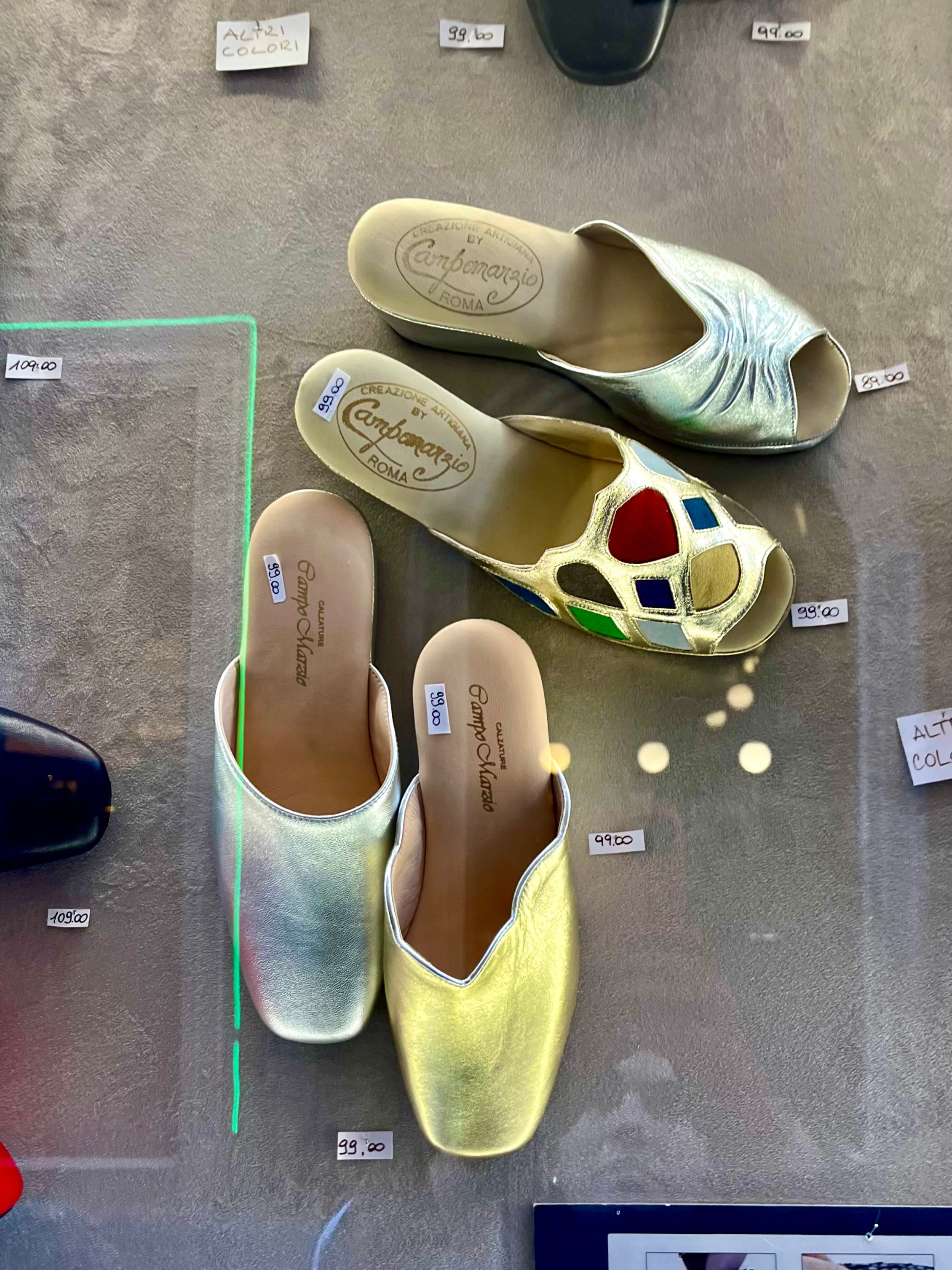
I’ve always felt that gold tones suit my skin and features more than silver, so was I really going to spend 99 euros on a color I wasn’t entirely fond of? I reached for the gold pair on display: a slight wedge, open toe, colorful suede fabrics, a shoe unlike anything I had come across before. It felt like an ode to women who once had little choice but to stay home and care for the house and children while their husbands worked as “providers,” yet still wanted to feel spunky, colorful, and ultimately free.
The shop manager could tell I was conflicted as I tried the silver pair on again. That’s when I noticed the colorful cutouts of pastel suede were different from the gold pair which leaned toward darker, more muted, almost autumnal tones.
“Although, these colors are so beautiful for spring and summer,” I told her.
“They are beautiful,” she said. “And each time we receive a shipment, they are never the same.”
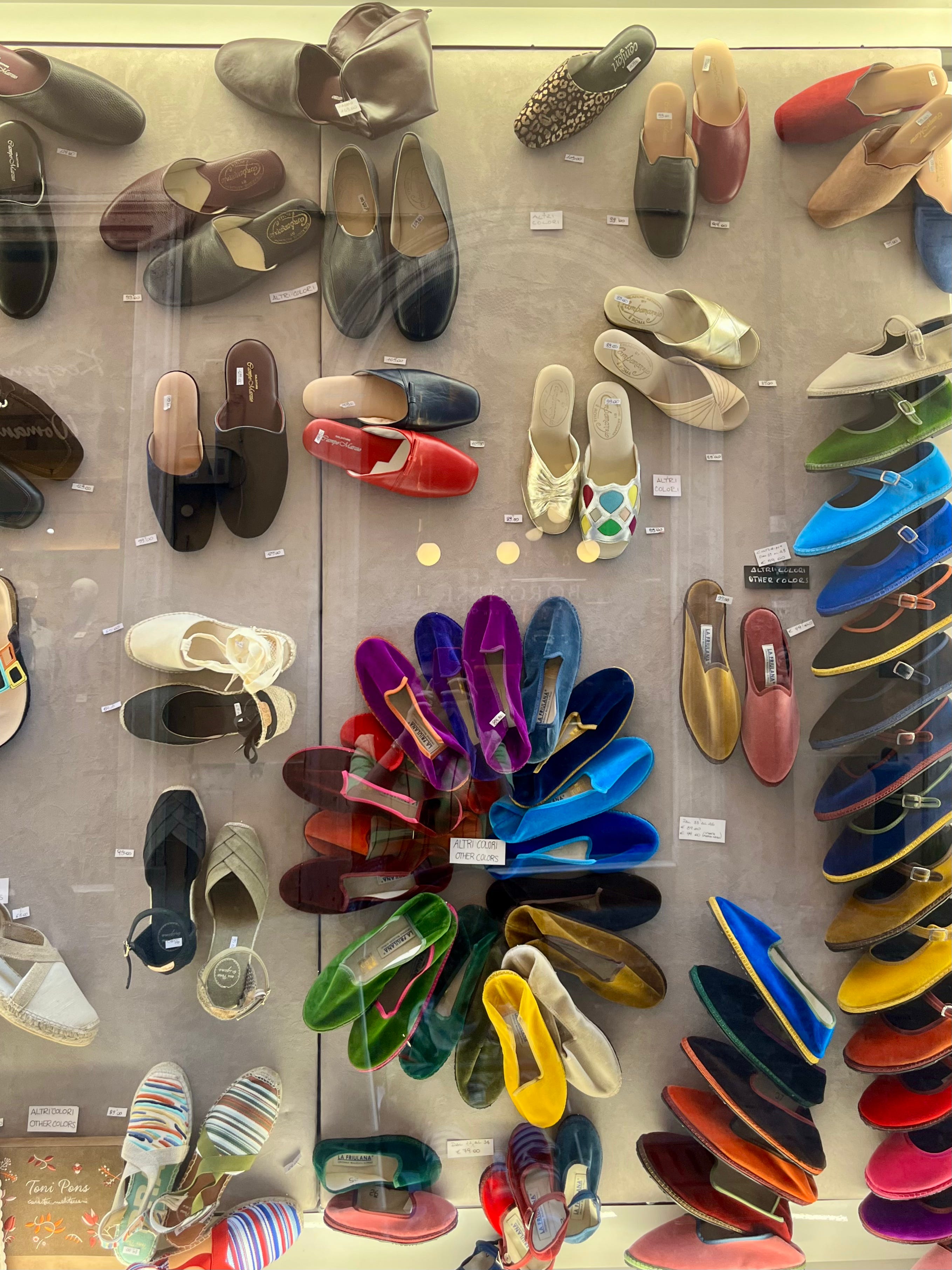
The shop also carries friulane made in small workshops by some of the last remaining artisans still hand-stitching each pair in Friuli Venezia Giulia, where the tradition quietly continues far from the noise of trend cycles.
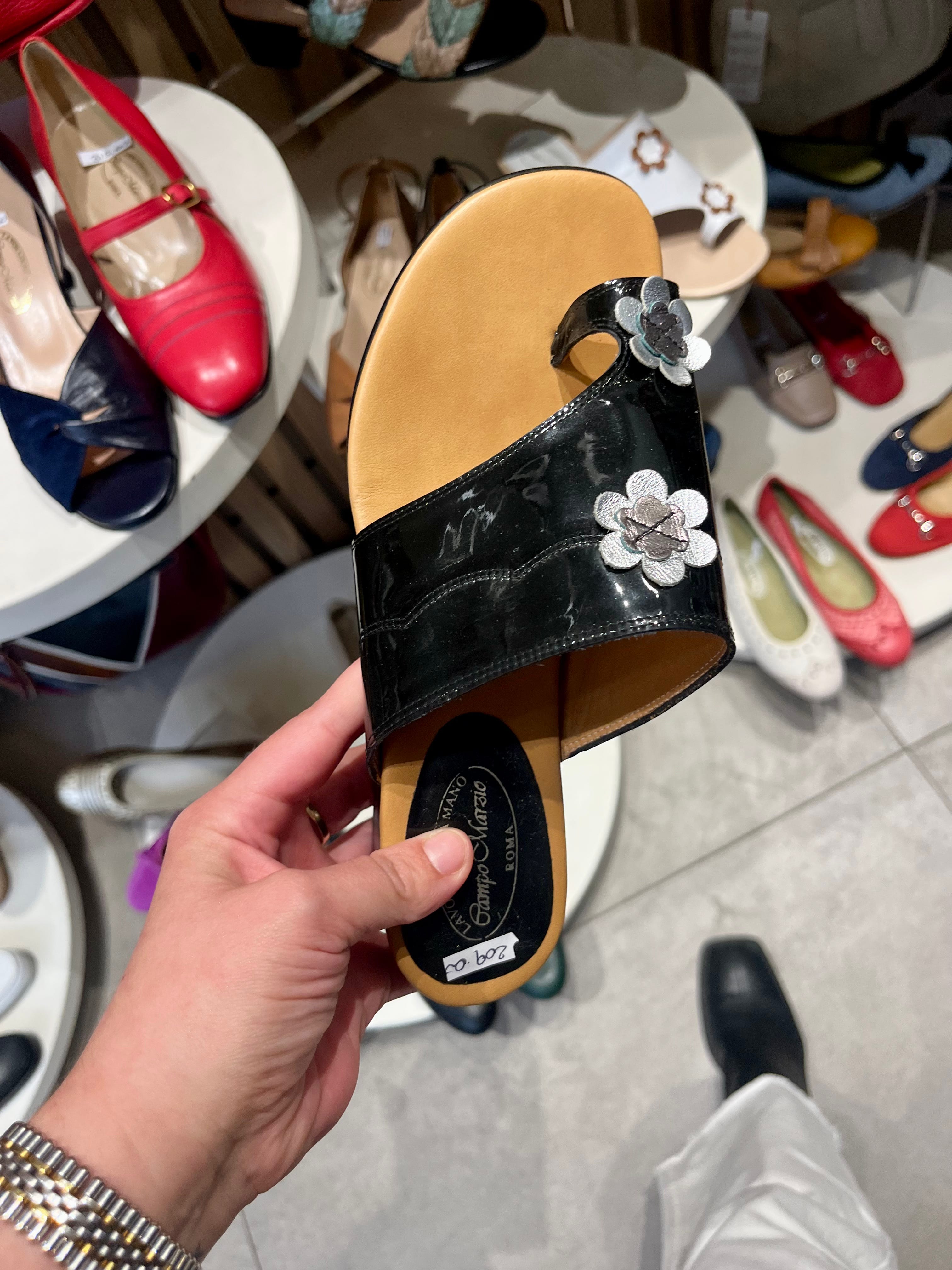
But these shoes in particular, known as le ciabatte da camera in Italian, are essentially house shoes that many women, especially the classic Italian “nonna” we’ve come to socially romanticize, wore and still wear at home. They are not just any rubber slides or janky flip-flips, though. They are typically handcrafted leather or suede, sometimes metallic, either closed-toe or peep-toe, with a padded insole and a slight wedge of three to four centimeters, and are a direct expression of Made in Italy craftsmanship that stretches back through generations.
As soon as we started talking about the shoes, I asked where they were made. I had seen many pairs like these before, but never ones that glittered and caught the light quite like these. From there, we moved into the history of what, to many passersby, might seem like just another pair of shoes, but to the curious is something worth walking a thousand miles for.
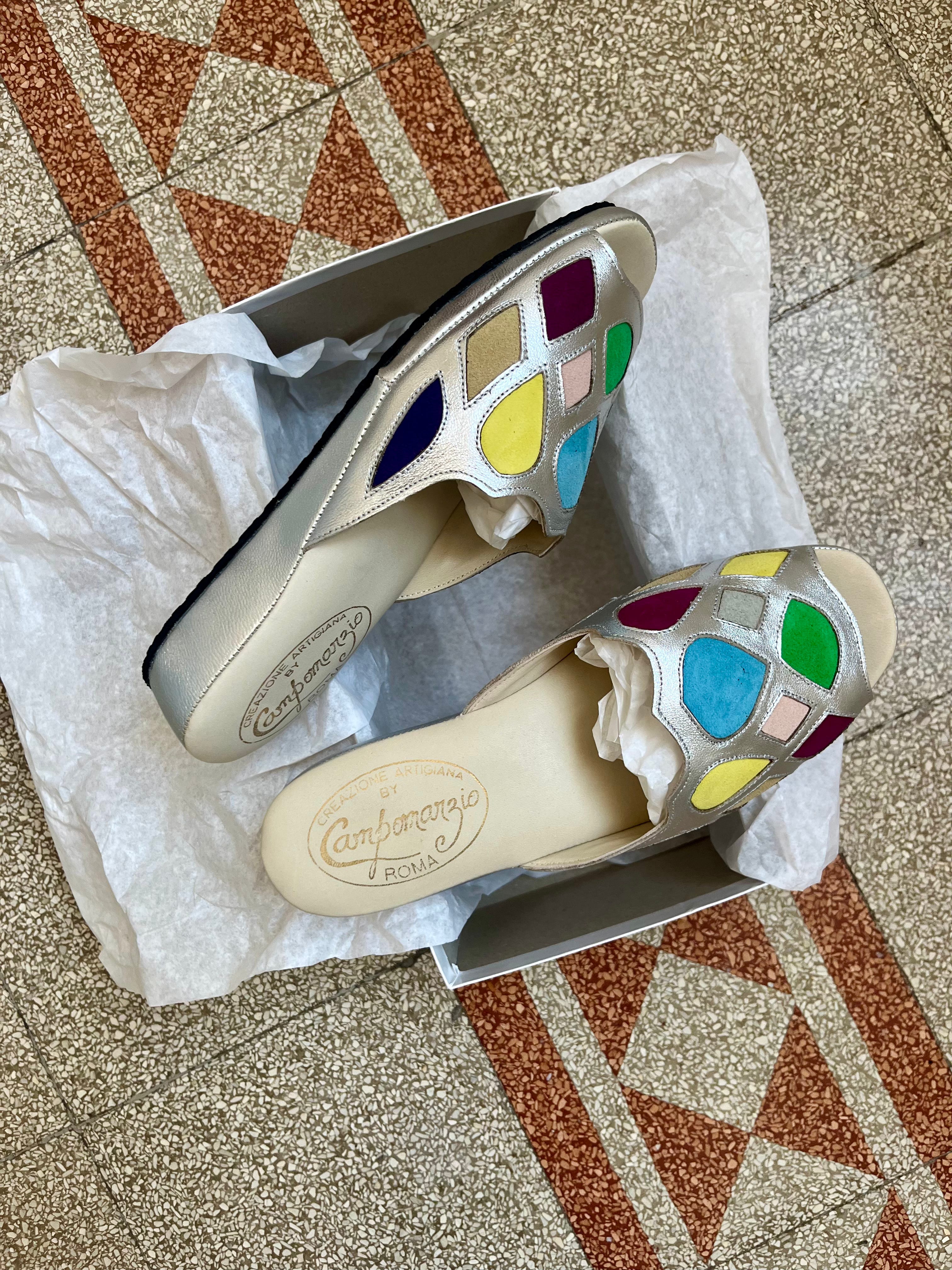
It turns out these specific slippers were designed by a historic Roman shoemaker who passed away a handful of years ago. In that sense, they don’t really exist anywhere else. They were originally created, designed, and produced in Rome, and production later moved to the outskirts of Milan, to one of the few remaining factories able to replicate the original design. As the shop manager explained, this isn’t a large operation with young artisans producing shoes at scale, but rather a small group from an older generation quietly keeping the craft alive, with no new protégés set to follow in their footsteps.
“You can’t simply continue a craft when the person behind it is gone. These older factories don’t always have the people, the means, or even the materials to carry things forward, so in many ways, we are lucky that this model still exists at all, because one day, inevitably, it won’t.” She says to me.
I tried them on again, and after that conversation, I knew I had to buy them. I wasn’t just buying another pair of shoes, but a piece of Roman design history, something shaped by hands and time and circumstance and sacrifices in a way that cannot be reproduced once it disappears ever again.
I see so much noise on social media when it comes to traveling in Italy. Where to shop, where to eat, where to stay, the “coolest” places to show off and post about, as if virality has quietly rewritten the rules of what it means to experience a place. It convinces us that we need to follow a certain path to feel like we’ve done that place right.
But instead of chasing virality, what if we chased the hands, the people, the craftsmanship, the journey behind it all? Not just the places that have already become coveted, but the ones that haven’t yet. The ones still existing in small pockets, waiting not to go viral, but simply to be noticed before they disappear.
If you visit: Campo Marzio Calzature; Via di Campo Marzio, 29-31, Rome 00186
, live from Salone, wearing the same gold slides. If there’s one woman in fashion who knows a thing or two about artisans, markets, and the power of storytelling, it’s Margherita.

Camp Marzio Calzature is included in my recent Rome shopping route guide. If you’re headed to the Eternal City, check out these artisanal shops still rooted in history.
Comments
Nothing yet. Say the first thing.
Sign in to join the conversation.