
If you ask someone who has never read a romance novel to describe one, there’s a good chance they’ll mention Fabio.
Not Kathleen E. Woodiwiss.
Not Johanna Lindsey.
Not Jude Deveraux.
Not Judith McNaught.
Fabio.
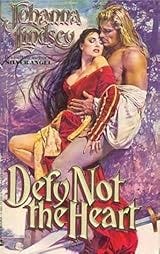
That’s remarkable. A cover model became more recognizable than many of the bestselling authors whose books he appeared on. But here’s the thing. Fabio didn’t create romance. He didn’t define romance. He became the face of a publishing movement that was already changing the industry. And I think that’s an important distinction.
Before Fabio appeared on bookstore shelves, romance publishing was already rewriting the rules of commercial fiction.
In 1972, Kathleen E. Woodiwiss’s The Flame and the Flower changed publishing forever.
Instead of being released as a hardcover first, Avon published it directly as a mass-market paperback. The gamble paid off. Women bought it in staggering numbers. Publishers noticed. Throughout the 1970s, authors like Rosemary Rogers, Johanna Lindsey, Bertrice Small, Shirlee Busbee, Jennifer Blake, and countless others transformed romance into one of the biggest genres in publishing.
The books were written primarily by women. Edited largely by women. Marketed to women. Purchased overwhelmingly by women. By the early 1980s, romance wasn’t a trend. It was an industry.
Fabio walked into an industry that was already thriving.
Fabio first appeared on romance covers in the mid-1980s after being discovered as a model.
One of the artists who recognized his potential was Elaine Duillo, who began using him as a reference model for her paintings long before he became a household name.
Readers responded immediately.
His look was distinctive. Long blond hair. Powerful physique. An expression that somehow managed to be both protective and slightly amused. Publishers realized something fascinating. Readers recognized him. For perhaps the first time, the model himself became part of the marketing.
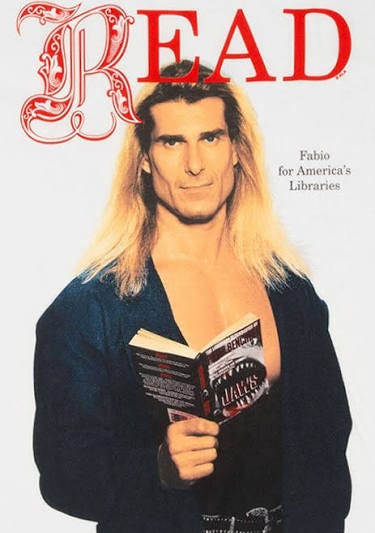
That’s different from saying he sold the books. The books sold because readers trusted the authors. Fabio simply became another recognizable part of the package.
Fabio wasn’t just appearing on romance covers. He was appearing everywhere.
Fitness ads.
Television.
Commercials.
Talk shows.
Calendars.
Eventually, his image became shorthand for romance itself. That’s why comedians referenced him. Sitcoms joked about him. Even people who never picked up a romance novel knew exactly who he was. That’s incredible branding. But it also had an unintended consequence.
The public started thinking romance was Fabio. Romance readers knew better. The stories were always the point.
One of the reasons I find romance publishing so fascinating is that it has never stayed still.
Every era has its own visual language, and every generation leaves its fingerprints on the books we remember.
The 1970s gave us the explosion of the modern historical romance. Books like The Flame and the Flower proved there was an enormous audience for sweeping, emotionally rich love stories. Publishers responded with lush painted clinch covers that promised adventure, danger, passion, and happily ever afters before a reader even turned the book over.
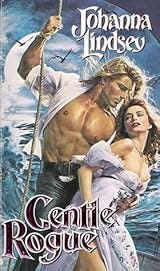
By the 1980s, romance wasn’t simply successful. It had become one of the biggest forces in commercial publishing. Artists like Elaine Duillo, Pino Daeni, Robert McGinnis, Roger Kastel, John Ennis, and Charles Geer were producing paintings that are still instantly recognizable decades later. Publishers also began experimenting with something entirely new: the stepback cover. Readers could enjoy a more understated front cover while hiding a lavish full-color painting just beneath it. Around this same time, a young Italian model named Fabio began appearing on romance covers, eventually becoming one of the most recognizable faces in publishing.
The 1990s ushered in another transformation. Photography and digital editing became faster, more flexible, and significantly less expensive than commissioning an original oil painting. Publishers leaned into photographic covers, recognizable cover models, and cinematic compositions. The goal hadn’t changed, but the tools had.
By the early 2000s, painted clinch covers had largely given way to photography. Contemporary romance embraced what readers affectionately dubbed the “man chest” era, while historical romance, paranormal romance, and romantic suspense each developed distinct visual identities. Readers could identify an entire subgenre with a single glance.
The 2010s brought another dramatic shift. Object covers, bold typography, and symbolic imagery became increasingly common, followed by the illustrated rom-com boom that dominated bookstore shelves for years. Today, romance exists in perhaps its most visually diverse era yet. Walk into any bookstore and you’ll find cinematic photography sitting beside minimalist typography, hand-painted fantasy covers, foil-stamped collector’s editions, and sprayed edges designed as much for display as for reading.
And that’s what I love most about romance.
It evolves. It always has.
None of these changes happened because readers suddenly stopped loving painted clinch covers.
Publishing evolved because the world around it evolved. Printing technology improved. Photography became more affordable. Digital design opened entirely new creative possibilities. Books moved from spinner racks in grocery stores to chain bookstores, online retailers, e-readers, Bookstagram, BookTok, and beautifully curated special editions.
Marketing changed. Reader expectations changed. Culture changed. Romance changed with it. Looking back at these covers isn’t just an exercise in nostalgia.
It’s a way to watch publishing history unfold, one decade at a time.
Every cover tells us something about the readers it was trying to reach, the technology available to create it, and the stories publishers believed readers were longing to discover.
Today, it’s easy to reduce an entire era of romance to “those Fabio books.” I think that does a disservice to everyone who built this genre. The women who wrote stories that sold millions of copies. The editors who championed them. The art directors who understood exactly how to catch a reader’s eye. The illustrators who spent days, sometimes weeks, creating paintings that are still breathtaking decades later. The cover designers who understood visual storytelling long before anyone was talking about branding.
And yes...
The model who became the most recognizable face in romance publishing. Fabio absolutely earned his place in romance history. He helped define the look of an era. He became a cultural icon. But he was never the story. He simply helped readers find it.
The stories belonged to Kathleen E. Woodiwiss.
Johanna Lindsey.
Jude Deveraux.
Judith McNaught.
Beverly Jenkins.
Julie Garwood.
And the hundreds of women whose imaginations transformed romance into the publishing powerhouse it remains today. That’s the legacy worth celebrating
.
Because covers may invite us into a story... But it’s always the story that makes us stay.
Next time, we’re opening one of my favorite innovations in romance publishing: the stepback cover. Part hidden artwork, part marketing genius, and entirely magical, stepbacks transformed the simple act of opening a paperback into an experience. I can’t wait to show you why I still stop everything when I find one in a used bookstore.
Comments
Nothing yet. Say the first thing.
Sign in to join the conversation.