
Last Thursday, November 6, I left home with mixed feelings. On the one hand, I was ecstatic about attending my first video game conference as Media, but on the other hand I was being consumed by my social anxiety.
What do you mean I’m meant to go alone into a place full of people I don’t know and just talk to them?
Thanks for reading Button Musher. Subscribe if you’d like to read more pieces like this one, it’s free!
Thankfully, I actually knew most of those people. They’re geeks and gamers like me. People who love to play and create video games, and who do it for passion first, money second. That might be the reason why a magical optimism seemed ever-present inside the Myriad Cristal Center.
DevGAMM was filled with business people— it is B2B focused, after all— but these weren’t the suits that you’re used to hearing about on gaming podcasts. They weren’t CEOs of megacompanies dealing in billions and trillions. They’re interacting with small teams who can make greatness out of a few thousand dollars, not 250 million bucks.
Here’s how DevGAMM Lisbon 2025 gave me hope about the future of the industry, and how it reminded me of why so many people keep making games.
Day One
My first hour inside the Myriad Cristal Center was a microcosm of what was happen to happen for two entire days. I got my Media badge, looked at the map, check the talks I wanted to attend later, and then ventured into the first showcase area, filled with computers and developers.
I was looking curiously at the monitors and bumped into a friendly guy who was showing a cool game. I looked down at his badge looking for his name, Rafael Mogas, an unmistakably Portuguese name.
We talked for an hour or so about Arctic Awakening, a first person narrative adventure game with minor survival mechanics made by GoldFire Studios. Despite living in Santarém, Portugal, Rafael is the 3D artist for the studio and did a lot of work on the game. The studio was founded in Oklahoma City, but it works fully remote now.
After speaking with Rafael I realized how easy my job at DevGAMM Lisbon would be. I love talking to people about video games, and I love playing video games. Doing both simultaneously was just the easiest work I’ve done in my life.
I spent the remainder of the first day bouncing from desk to desk and meeting wonderful people. Yelyzaveta Lemeshko talked me through her team’s ambitious plans for Delusion Out of Space (and beyond). She was paying close attention to how people were playing her demo and asking for feedback afterwards.
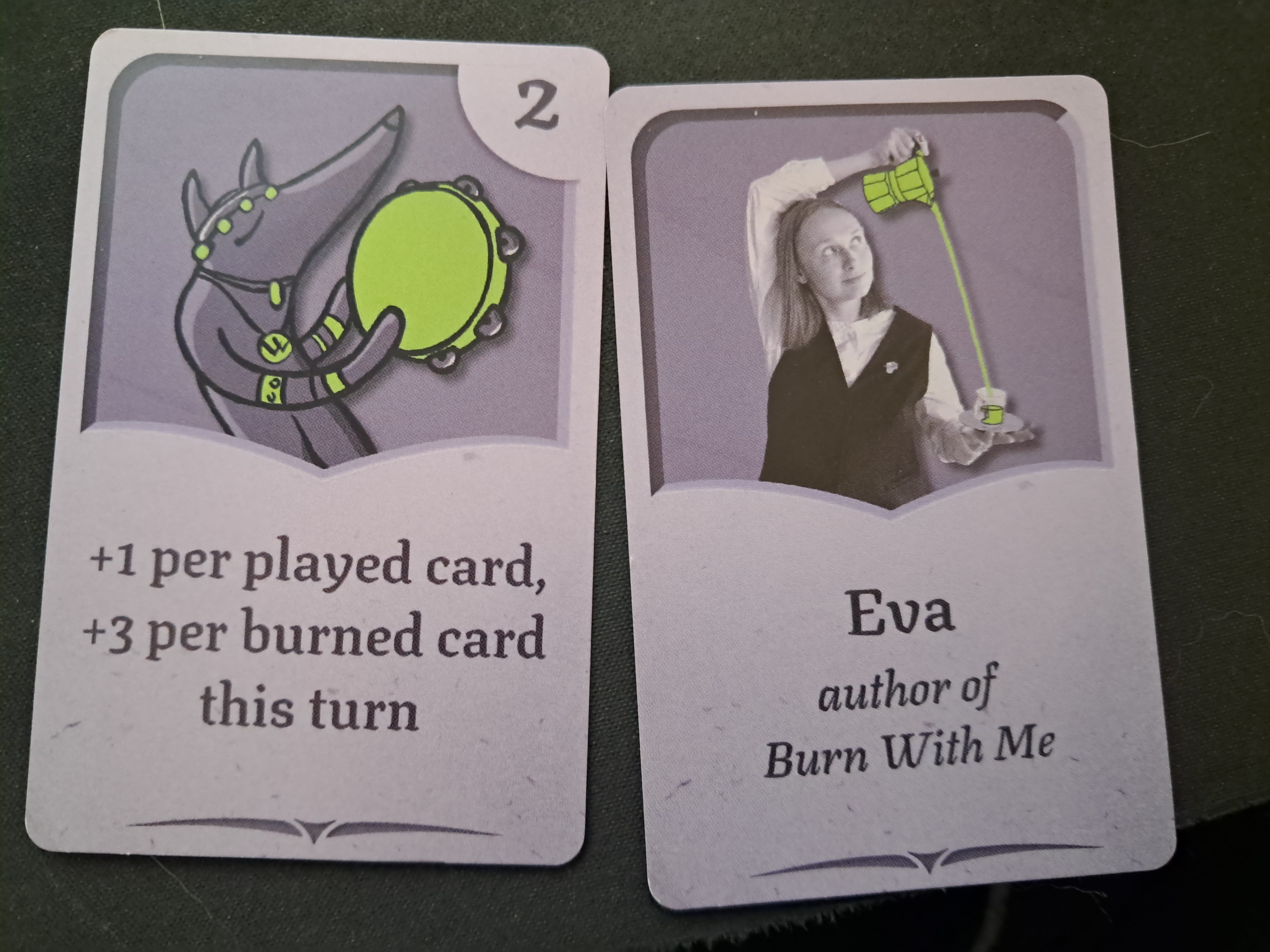
Eva Manuilovich, the co-founder and artist at Nozomu Games, was humble in describing Burn With Me, the Devil’s Deckburner she is creating with her husband, Ivan. Her incredible art was catching the eye of most people that looked towards her desk, and the fact that she turned some of the card designs into Nozomu’s business cards was a stroke of genius.
Emil Lager, Tech lead and Co-Founder of RibCage Games is one of those enthusiastic artists you could talk to for hours, his love for Alpha Nomos was contagious. He enjoyed seeing people figure out advanced mechanics on their own, or nudging them towards those exact tricks if they were having issues with the game.
Angela Wu, Game Artist, Designer, and Developer at Ada Eden games, was one of the two developers showing 1001 Nights, one of the most intriguing projects shown at DevGAMM. Since the game uses an LLM (large-language-model AI) as the core mechanic, the two developers were ready to answer all AI-related questions.
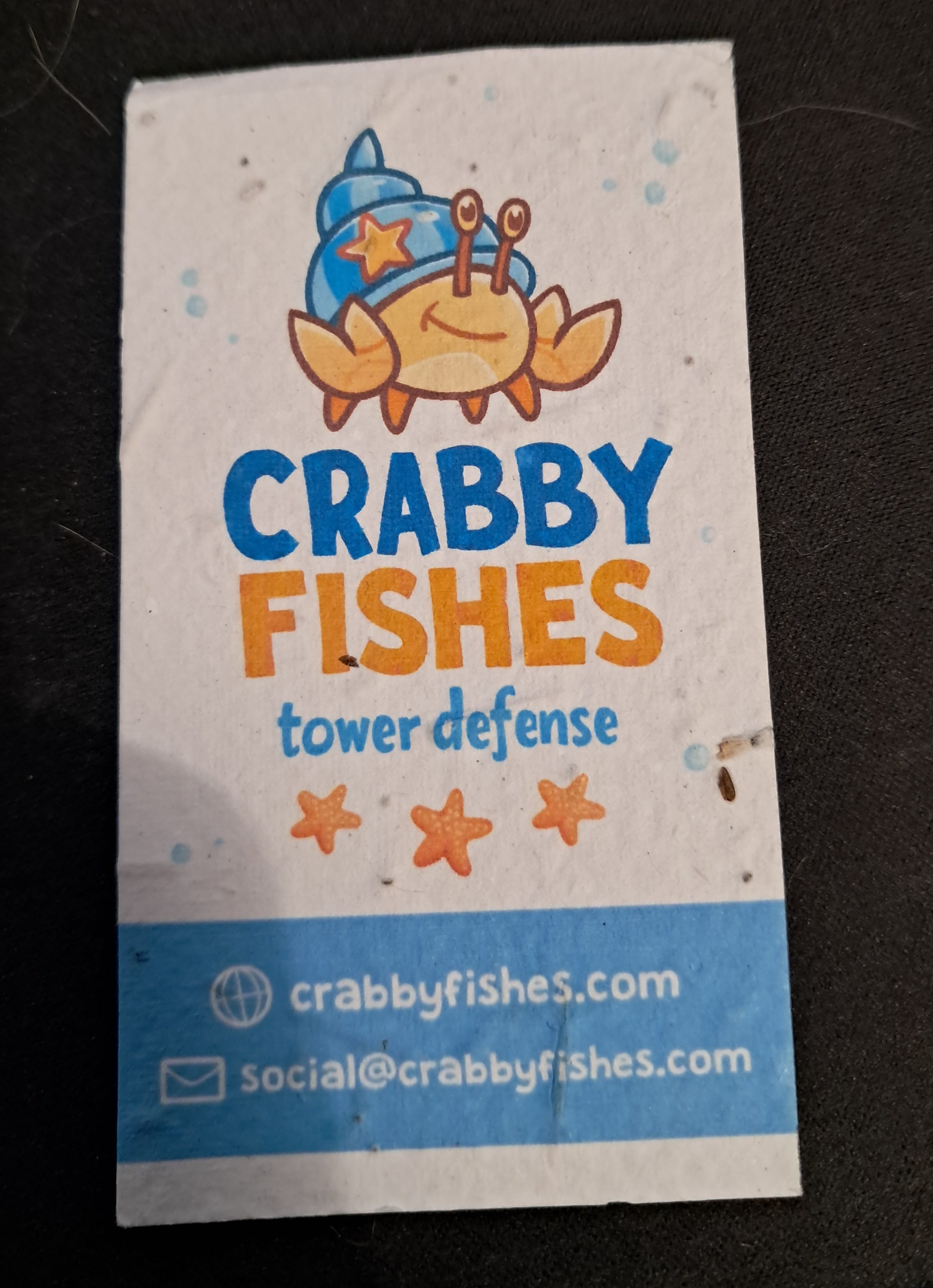
I finished the day playing Crabby Fishes, an adorable tower defense game where you play as crabs, fishes, and other aquatic beings protecting their land from pesky chemicals. Unfortunately, I did not note down the developer’s name, but she was incredibly kind and a true master of marketing: her business card is made out of biodegradable paper filled with seeds, so you can plant it in a vase to grow some flowers instead of throwing it in the trash— she also had shark gummies so I might’ve been bribed.
Day Two
I entered day two knowing that I would not be attending any talks. There were too many news games to try out on top of the list of games that I hadn’t been able to try the day prior. The DevGAMM awards were happening at 6PM though, so I arrived at the Myriad Cristal Center even earlier, around 9:30AM.
Given my day one experience, I decided to do a sort of two-part plan. I would make a full round of the two showcase areas and make a mental list of the games I’d like to try.
My morning started with me playing Hell Clock and speaking to the Brazilian developers about the real-life disaster which inspired the unexpectedly serious narrative at the core of their roguelite ARPG, the War of Canudos (Massacre de Canudos).
I then played Deka Duck, yet another game by a Brazilian studio, and had a blast. It is a colorful Megaman-like. The team is also working on another game Toada Brava, inspired by Chrono Trigger.
Before heading off to lunch, I bumped into what I will call the Portuguese wall. There were three desks side-by-side with three games made by Portuguese studios: Beyond The Board, Hell Maiden, and Mirai #167.
I managed to play Beyond The Board first and was entranced by it. You can read more about it on my previous DevGAMM piece.
The last game I played before lunch was Mirai #167, a runner game that tests your reactions and your ability to pay attention to two things at once. I somehow bumped into a constant bug that was new to Diogo Sousa, the main programmer, so I had the pleasure of watching him work around it live— he did manage to get me to the next stage so I played the entire demo.
Only after lunch did I get the chance to play Hell Maiden, the last member of the “Portuguese wall”. But first, I spent maybe half an hour speaking with João Caetano, AstralShift’s CEO and co-founder.
His love for the project is undeniable and he was thankful that I praised the fact that, despite featuring gender-bent anime-inspired takes on famous characters, they weren’t sexualized. Apparently, I was in the minority because most people were asking if there were any plans for alternate, more revealing outfits. He prefers to leave such options in the ever-imaginative hands of the internet.
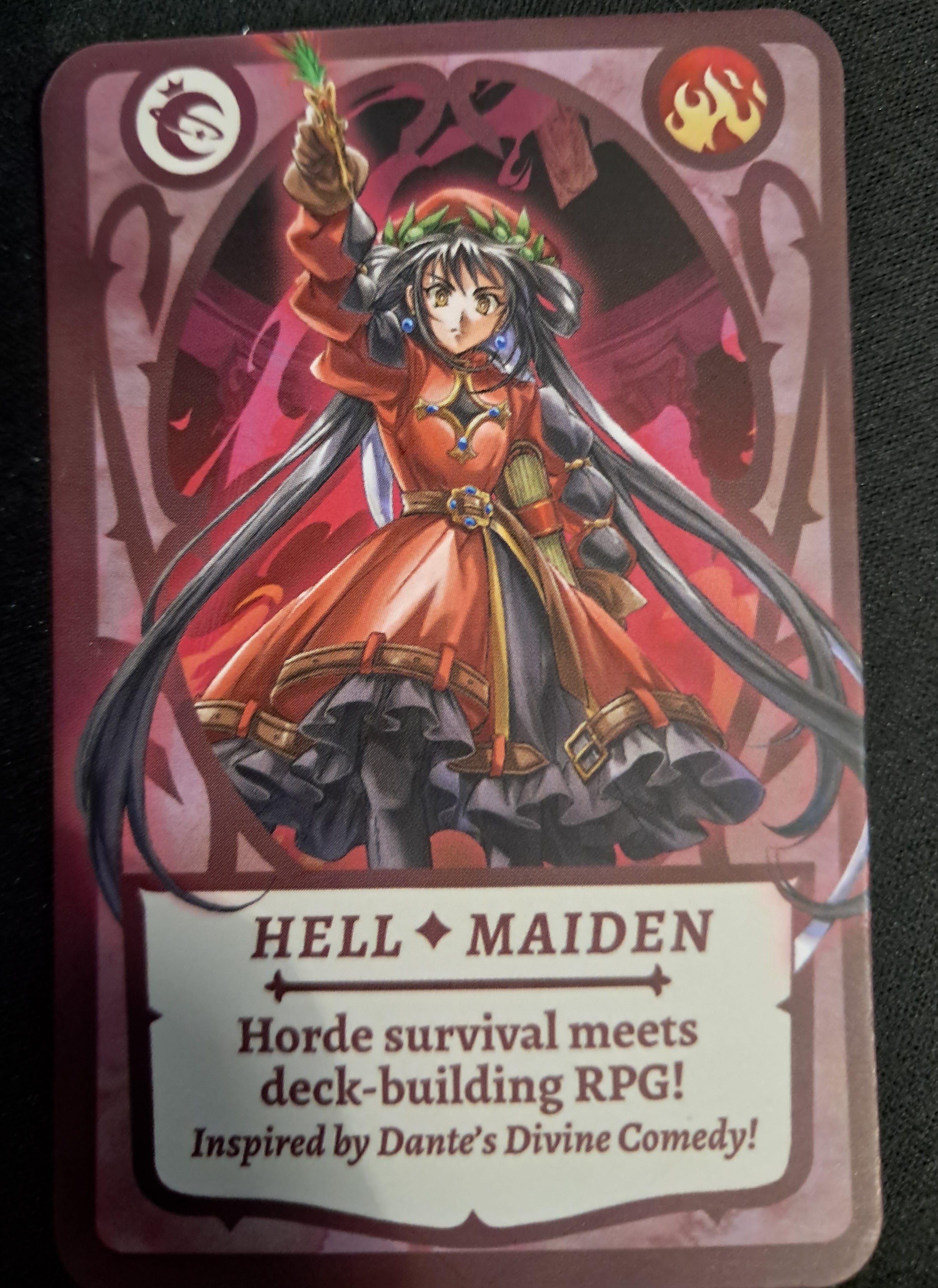
The fantastic artwork inspired by classic 90s anime is the studio’s defining trait and was displayed in their beautiful business cards.
After passing by their desk dozens of times— it was always packed— I got my hands on The Negative Edge, a Returnal-inspired third-person shooter made by a small studio out of Italy. Most of them were around the table watching people play their game and taking on feedback. It is a snappy shooter with great sound design which I can see myself playing for hours.
Although my second day came to an end with the Awards, I managed to steal another fantastic conversation from the ever-charismatic Emil Lager before playing two more games.
What drew me to Oniria wasn’t the game— which looks great, don’t get me wrong—, but the fantastic desk setup. I’m still regretting not taking a picture of it, but imagine a double-desk setup covered with a pitch-black tablecloth filled with creepy red eyes. How could you not get seduced by this setup? The entire dev team was there and they were as talkative as they are talented. Follow this project if you’re into horror games.

Lastly, but certainly no leastly, I had the pleasure of playing through Money Waste’s demo. Developed by a team of two Italian stallions, this project hides an incredibly ambitious videogame— part complex tycoon, part top-down GTA with functioning traffic and NPC interactions— behind a blocky aesthetic. If I hadn’t been sold on the game after the demo, I would’ve become a fan anyway when I asked for a business card and one of the devs discreetly placed a small plastic bag in my hand with a QR code while saying “Don’t snitch, alright?”.
The Humans Behind The Games
What made DevGAMM such a positive experience was the fact that it was focused on the humans behind the games and on the games themselves. It was not about advertisements or broadcasting deals or small updates to gigantic games.
A lot of the games I played haven’t gotten funding yet, some of them started as student projects, most of them were participating in the public pitches that happened on Day One. Some of them, inevitably, will never be completed. But you wouldn’t know that by interacting with the games and the developers.
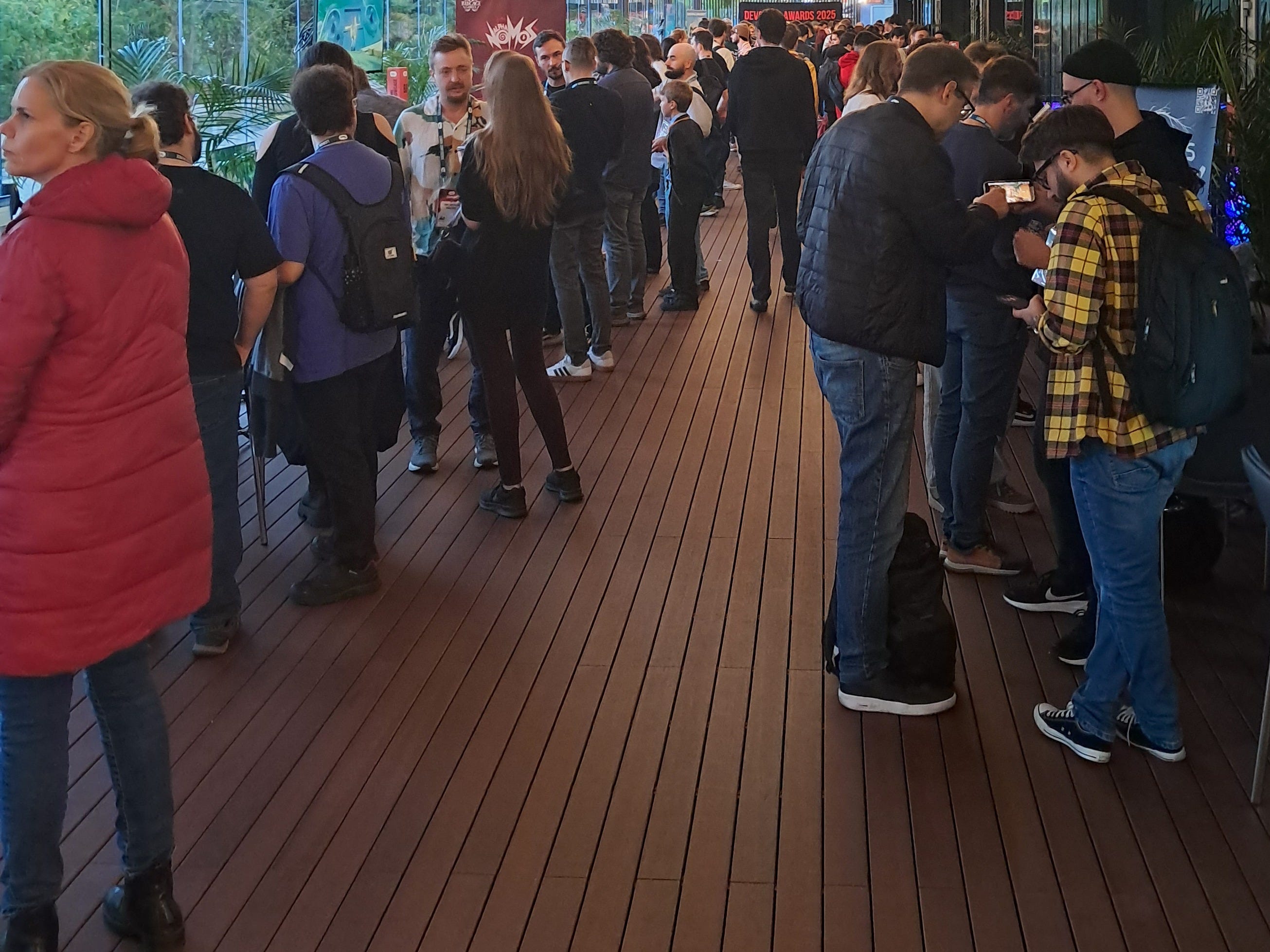
All of them are doing this work out of passion. Most of them have full-time jobs and are using what free time they have left to work on their creative baby. Yet all of them are talented people doing what they love best, and it shows.
If you ever get tired of the encroaching wave of pessimism spreading throughout the video game industry, the constant news of mass-layoffs, of bloated games made under bloated budgets, look to what started the entire industry: small teams making small games.
You’ll be amazed by the treasures you’ll find and by the magical optimism surrounding the people who make those gems.
Thanks for reading Button Musher. Press the button below to share this article, it helps a ton!
Comments
Nothing yet. Say the first thing.
Sign in to join the conversation.