
Every creator on TikTok and Reels knows the rule: you have three seconds to stop the scroll. If your hook doesn’t land immediately, nobody sees the rest. Entire courses and templates exist around crafting that opening line. It feels like a modern problem born from short attention spans and algorithm pressure.
It’s not. A man named Rosser Reeves solved this exact problem in the 1950s — with television commercials.
Reeves was an advertising executive at the Ted Bates agency in New York. He rose from copywriter to chairman on the back of one idea that he believed was the only thing that mattered in advertising: the Unique Selling Proposition.
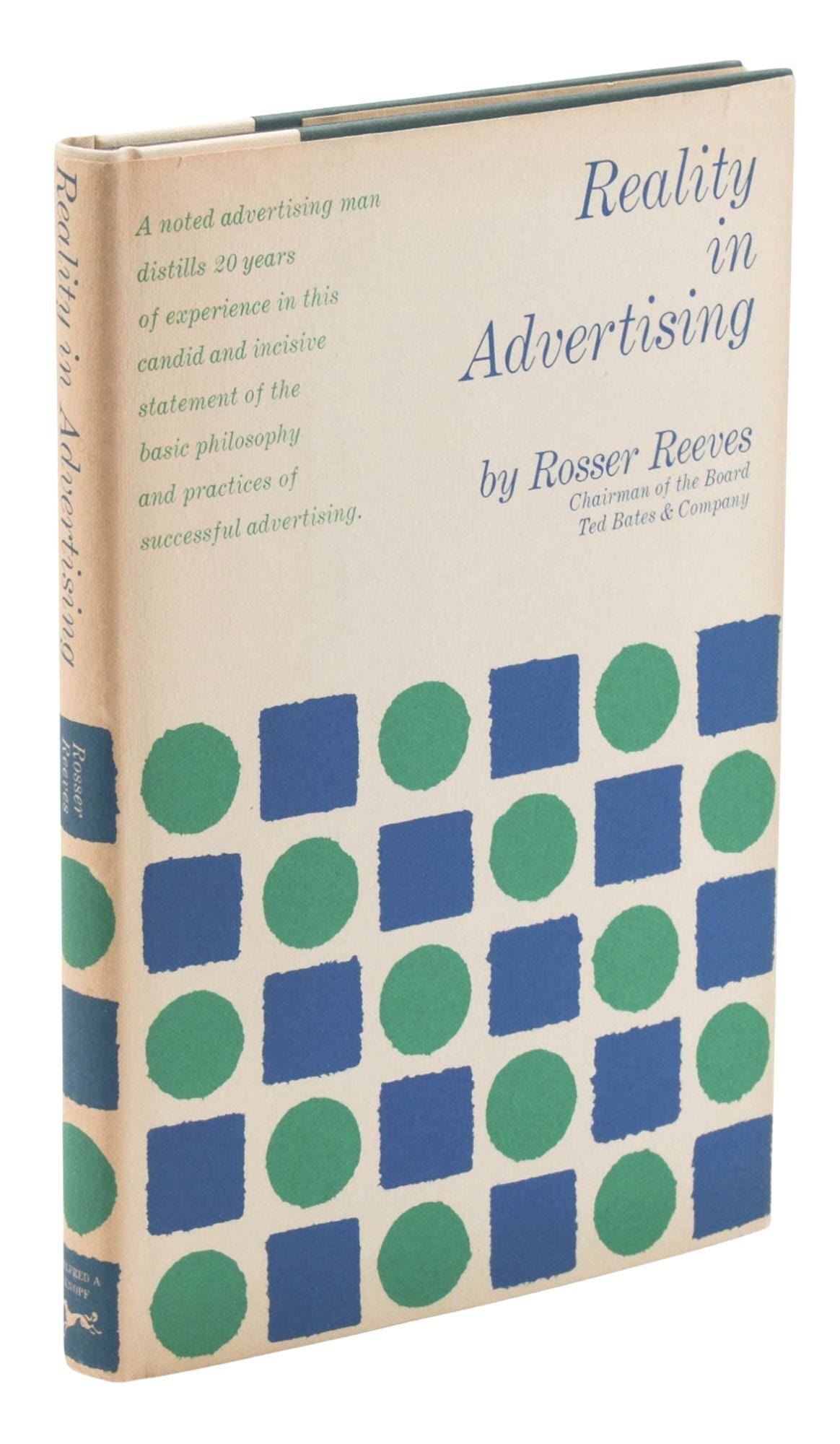
The USP, as Reeves defined it in his 1961 book Reality in Advertising, has three rules. First, every ad must make a specific proposition to the consumer — not vague puffery, but a concrete statement: buy this product and you get this benefit. Second, the proposition must be unique — something your competitors don’t, can’t, or won’t offer. Third, the proposition must be strong enough to move people to action.
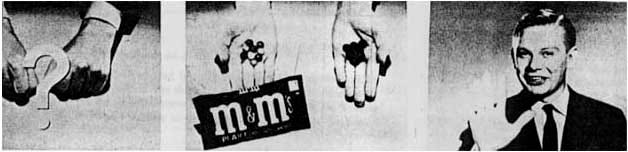
His most famous example: M&M’s — “Melts in your mouth, not in your hand.” That’s a USP. It’s specific (won’t melt), it’s unique (patented hard shell coating), and it’s compelling (nobody wants chocolate on their fingers). Reeves wrote that line and M&M’s has used it for over 70 years.
His most profitable example: Anacin, the headache medicine. Reeves created a 59-second TV commercial that was, by all accounts, annoying. Viewers hated it. Critics mocked it. But the ad tripled Anacin’s sales. Reeves later noted that in seven years, that single commercial generated more revenue than the film Gone with the Wind had in a quarter century. The ad worked because it hammered one claim — fast relief — three times in under a minute. It wasn’t clever. It was clear.
Reeves was openly hostile to the idea that advertising should be entertaining or artistic. He believed the purpose of an ad was to sell, period. He argued that creativity without a selling proposition was a waste of the client’s money, and that clever ads often won awards while failing to move product. The Bates agency, under his leadership, became the fifth-largest advertising agency in the world — not by winning creative competitions, but by generating measurable results.

“No, sir, I’m not saying that charming, witty and warm ad copy won’t sell. I’m just saying I’ve seen thousands of charming, witty campaigns that didn’t sell.” ~ Rosser Reeves (1910 – 1984)
He also believed something that most modern marketers have forgotten: if your product isn’t actually good, advertising will destroy it faster. Reeves argued that effective advertising for a flawed product simply accelerated the number of people who tried it and were disappointed. The more people your ad reaches, the faster word spreads that your product doesn’t deliver. In his view, the USP had to be true — not invented.
Today’s version of the USP is the hook. On TikTok, Reels, YouTube Shorts — every platform driven by algorithmic feed — creators live and die by their opening line. “Three things I wish I knew before starting a business.” “Stop doing this with your email list.” “Nobody talks about this part of freelancing.” These are propositions. They promise a specific benefit. They imply uniqueness. And the best ones are strong enough to stop a thumb mid-scroll.
The discipline is identical to what Reeves preached in 1961: say one thing, make it specific, make it matter. The only difference is that Reeves had 59 seconds to land his Anacin pitch. Creators have three.
Beyond the hook, the USP framework maps perfectly onto how modern businesses position themselves online. Every Shopify landing page headline is (or should be) a USP. Every Substack tagline. Every X bio. Every elevator pitch in a networking DM. If you can’t say what you do and why it matters in one line, you lose — whether you’re buying airtime in 1955 or buying attention in 2025.
Reeves would have been ruthless about most modern content marketing. He’d look at a brand’s Instagram grid full of aesthetic photos and ask: “Where’s the proposition?” He’d watch a beautifully shot brand video and ask: “What are you selling?” His standard was simple: if someone watched your ad and couldn’t tell you what the product does differently, the ad failed. Not the audience — the ad.
The irony is that in an era of infinite content and shrinking attention, Reeves’ framework is more relevant than it was in 1961. The noisier the market gets, the more valuable clarity becomes. The more options consumers have, the more they need one clear reason to choose you.
Reeves turned repetition and clarity into a science. Here's the playbook — and why it still works:
Defined the USP as a three-part test — (1) make a specific proposition, (2) make it unique, (3) make it strong enough to move people. If your claim fails any of the three, the ad fails.
Insisted the USP be true — Reeves argued that advertising a flawed product accelerates its failure. The claim had to be real, not invented.
Tested relentlessly — Reeves was one of the first ad executives to use consumer research and penetration data to measure which claims actually moved product. He tracked results obsessively.
Repeated the message without variation — one claim, across every channel, for years. No seasonal refreshes, no creative reinventions. The Anacin ad ran for seven years with the same script.
Stripped out creativity in favor of clarity — Reeves believed clever ads won awards but didn’t sell. His Anacin ad was widely hated by viewers and wildly profitable for the client.
Made Ted Bates the 5th-largest agency in the world — not through creative reputation, but through measurable client results.
The TikTok/Reels hook — creators test dozens of opening lines to find the one that stops the scroll. Same discipline, different platform. Three seconds instead of sixty.
Landing page headlines — every Shopify store, Substack tagline, and X bio is a USP. If you can’t say what you do in one line, you lose.
Positioning statements — frameworks like “I help [audience] do [outcome] without [pain point]” are direct descendants of Reeves’ three-part USP test.
One claim. Made specific. Repeated until it sticks.
Rosser Reeves figured that out before most of us were born. The platforms changed. The principle didn’t.

But How Did You Do It? is powered by Kajabi, the most robust all-in-one platform.
Claim your 30-day free trial and start creating, selling, and growing.
Thanks for reading But How Did You Do It?
This post is public so feel free to share it.
Sources
Branding Strategy Insider — “The Advertising Wisdom of Rosser Reeves”
Book: Rosser Reeves, Reality in Advertising (Alfred A. Knopf, 1961)
No posts
Comments
Nothing yet. Say the first thing.
Sign in to join the conversation.