
In the 1960s, a man named Ron Popeil changed how America bought kitchen gadgets. Not from a store. Not from a catalogue. From a TV set, at midnight, while you were half asleep.
Popeil didn't invent the infomercial, but he perfected the format that every direct-response advertiser has copied since. His company, Ronco, sold products like the Veg-O-Matic, the Pocket Fisherman, and later the Showtime Rotisserie with a technique so effective it became part of the language itself.
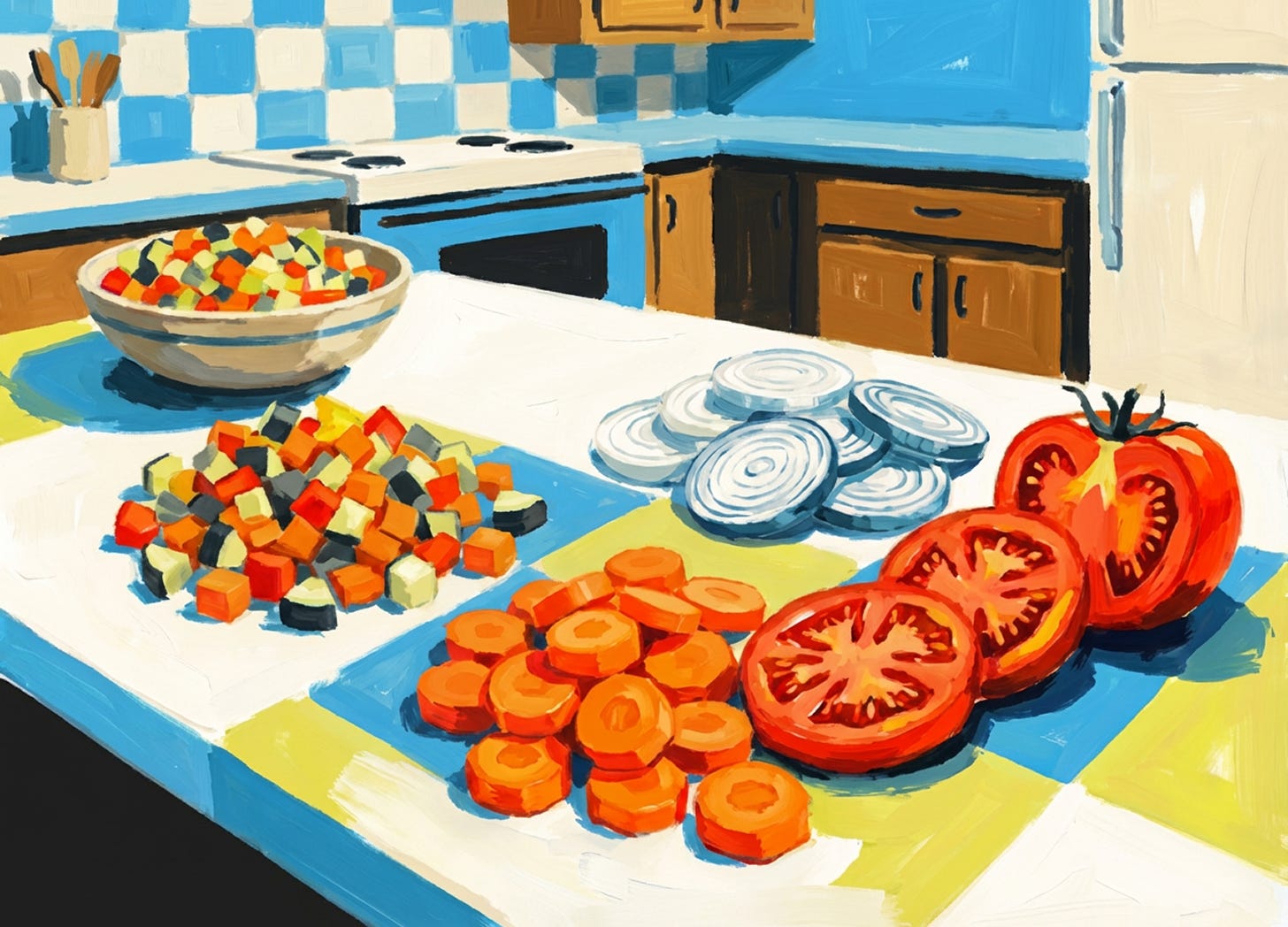
The Veg-O-Matic launched in the late 1960s with a simple premise: show the product working, in real time, solving a real problem. The commercials were shot cheaply and aired during low-cost late-night and daytime slots. Popeil (or a demonstrator) would stand at a counter and chop vegetables at escalating speed, narrating every step with infectious enthusiasm.
The genius was the escalating offer structure. Just when you thought the deal was done, the pitch added more. “It slices! It dices! It makes julienne fries!” Then: “But wait, there’s more!” Another accessory. Another bonus. Another reason to pick up the phone.
"But wait, there's more!"
This wasn’t random enthusiasm — it was a meticulously designed sales architecture. Every “but wait” extended the viewer’s engagement. Every additional item increased the perceived value. The call to action — always a phone number, always “operators are standing by” — created urgency.
Popeil learned the technique from his father, Samuel Popeil, who sold kitchen gadgets at state fairs and on Chicago’s Maxwell Street. The elder Popeil was a live demonstrator — he’d stand in front of a crowd, chop vegetables, and work the audience until they bought. Ron took that exact energy and transferred it to television.
Ronco’s products were inexpensive to manufacture and sold at margins that funded the airtime. The model was self-sustaining: product revenue paid for more commercials, which generated more sales. At its peak, Ronco was doing hundreds of millions in revenue.
The format Popeil pioneered — demonstration, escalation, urgency, direct response — became the template for the entire infomercial industry. Every late-night product pitch you’ve ever seen, from ShamWow to OxiClean to Slap Chop, is running a version of the Ronco playbook.
Popeil was inducted into the Direct Response Marketing Hall of Fame and was featured in Malcolm Gladwell’s essay “The Pitchman” in The New Yorker. He died in 2021 at 86, having sold over $2 billion in products.
But How Did They Do It?
Ron Popeil took a live demonstration sales technique from state fairs and systematised it for television. The format was simple, repeatable, and devastatingly effective.
Demonstration is the ultimate proof. Popeil didn’t describe what the Veg-O-Matic could do. He showed you, in real time, on camera. Seeing is believing. When your product works, the best ad is just letting people watch it work.
The escalating offer structure maximises perceived value. “But wait, there’s more” isn’t a throwaway line — it’s a sales architecture. Each addition raises the perceived value of the bundle while the price stays fixed. By the time the call to action hits, the deal feels irresistible.
Low-cost airtime was the arbitrage. Late-night and daytime TV slots were cheap. Popeil bought time nobody else wanted and turned it into a direct sales channel. He wasn’t competing for prime time. He owned the off-hours.
The format was inherited from live selling. Popeil’s father was a state fair demonstrator. The energy, the pacing, the escalation — it was all adapted from in-person selling. The best sales techniques don’t change; they just find new mediums.
Self-funding economics made it scalable. Product margins funded the ad buys. Revenue from one round of commercials funded the next. The whole machine was designed to sustain itself.
How You Can Do This
You’re probably not selling kitchen gadgets on late-night TV. But the principles behind Popeil’s success are directly applicable to online selling, content creation, and service-based businesses.
Show, don’t tell. The Veg-O-Matic sold itself by being demonstrated. If your product or service produces a visible result, film it. A before-and-after. A screen recording of the process. A time-lapse of the work. Let people watch the transformation happen in real time. A 30-second demo video is worth more than a thousand words of copy.
Stack the value before you reveal the price. Popeil built the perceived value to a peak before naming the price. You can do the same on your sales page, in your proposals, or in your pitch. List everything included, show the outcomes, stack the bonuses — then reveal the price when the value feels undeniable.
Create urgency without being sleazy. “Operators are standing by” created a sense of immediacy. Your version might be a limited enrollment window, a cohort start date, or a genuine capacity constraint. Real urgency converts. Fake urgency erodes trust.
Find the cheap attention nobody else wants. Popeil bought late-night TV slots because they were dirt cheap. What’s the equivalent in your market? Maybe it’s a social platform that’s growing but not yet crowded. An email newsletter with an engaged niche audience. A local event with low sponsorship costs. The best marketing opportunities are often the ones nobody’s competing for.
Borrow a format from another medium. Popeil took live state-fair demonstrations and moved them to TV. What format from another medium could you adapt for your business? A podcast-style approach applied to your Instagram Stories. A newsletter that reads like a personal letter. A sales page structured like a documentary. The best innovations often come from format migration.

But How Did You Do It? is powered by Kajabi, the most robust all-in-one platform.
Claim your 30-day free trial and start creating, selling, and growing.
Thanks for reading But How Did You Do It? This post is public so feel free to share it.
No posts
Comments
Nothing yet. Say the first thing.
Sign in to join the conversation.