
After nearly a decade as an aesthetics physician assistant, I've realized that most patients are definitely not lacking products, they are lacking information. The same questions come up over and over again when I meet new and existing patients - ranging from which moisturizer to buys, which filler to use, what’s the cost, is the latest viral trend worth it? These are six things I wish every patient knew.
This is definitely one of the biggest issues I see with patients. A patient buys a vitamin C (for a lot of money because they were influenced), use it for two weeks, don’t notice a difference, and move onto the next one. Then they try retinol, experience dryness, decide it’s too harsh, and stop.
Here’s the problem - most skincare products don’t work that quickly.
As a general rule:
Moisturizers: a few days to two weeks
Brightening products: six to eight weeks
Acne treatments: six to 12 weeks
Retinoids: eight to 12 weeks
Your skin cells need time to turn over and pigment doesn’t disappear overnight. I tell patients, when you constantly switch products, you don’t know what is helping or hurting or honestly doing absolutely nothing.
Remember, consistency almost always wins.
Retinol is one of the most studied and effective ingredients in skincare. It can improve acne, fine lines, uneven skin tone, pigmentation, and overall skin texture.
But most people either overuse it or avoid it completely because they’ve had a “bad experience.” And maybe that’s true, but I want you to know how to use your retinol effectively.
Here are some tangible tips -
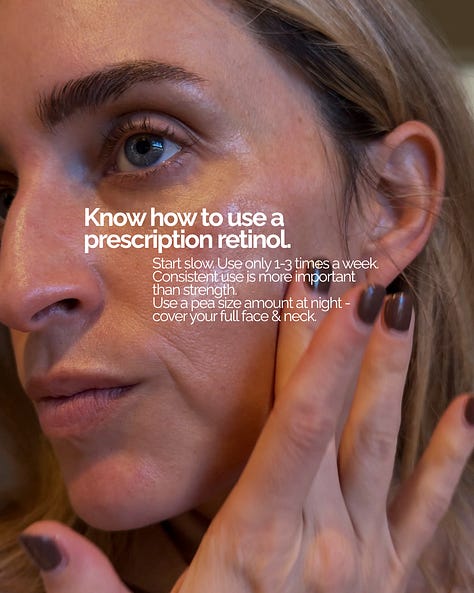
Start slowly. Two to three nights per week is plenty.
Use a pea-sized amount for your entire face and neck. More is NOT better. Truly a pea size amount is plenty.
Apply it to completely dry skin. If you find yourself getting irritated or dry, apply your retinol AFTER moisturizer.
If your skin is burning, peeling, or constantly irritated, that’s not a sign that it’s working better. Peeling is common 3-4 days after application. Sometimes you do have to work through that. It’s not the best, but your skin will adapt.
Retinol is a long game. You don’t get extra credit for using it every night during the first week, in fact, that’s exactly what’s going to make you hate it.
My goal isn’t for patients to have the strongest retinol routine possible. My goal is for them to still be using it six months from now.
I feel like a true consultation has lost it’s place in aesthetics. Some people say if the patient leaves, they may not come back. To me, I’m not a car salesman. I’m not about to push a patient to do something they are unsure of just so I can get a “sale.”
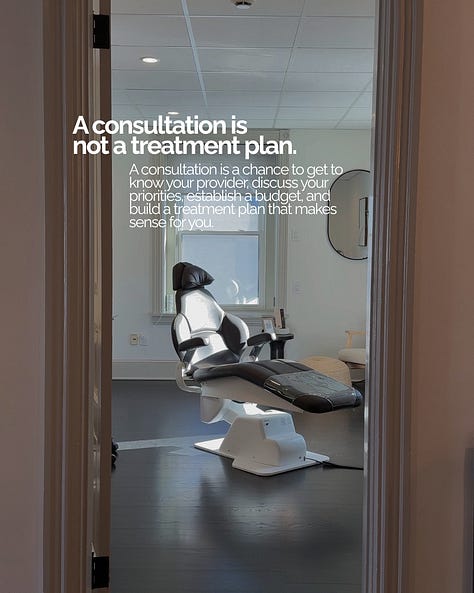
Consultations are perfect opportunities to build the plan. If time allows to start on said plan, that’s wonderful.
I think many people avoid aesthetic consultations because they assume they’re going to leave with poke marks, a laser package, and a significantl bill. That’s not how it should feel or work.
A consultation should be a conversation. A time to get to know your provider, discuss your concerns, prioritize goals, discuss budget, and understand what the heck you are paying for.
This is one of the most important concepts in aesthetics, because not every concern is addressed the same ways.
When patients say, “I look tired,” that could mean several different things… Volume loss? Fine lines? Skin laxity? Darkness?
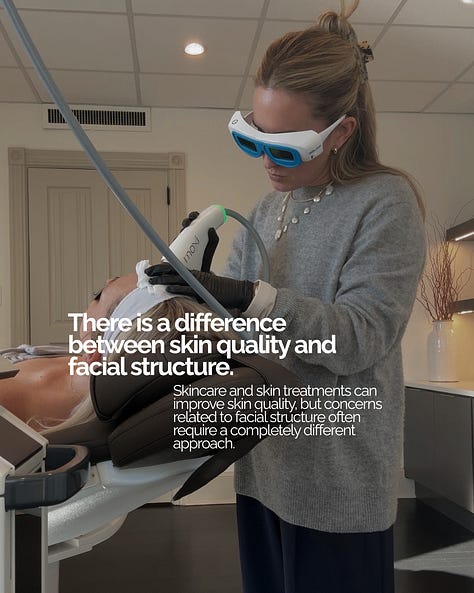
Skin quality refers to things like texture, pigment, redness, pore size, acne, and overall skin health. Facial structure refers to things like volume loss, bone structure, facial proportions, hollowing, and sagging.
Skincare can dramatically improve skin quality, but will not restore lost volume. While filler will help build structure and volume, but will not improve sun damage or reduce pigmentation.
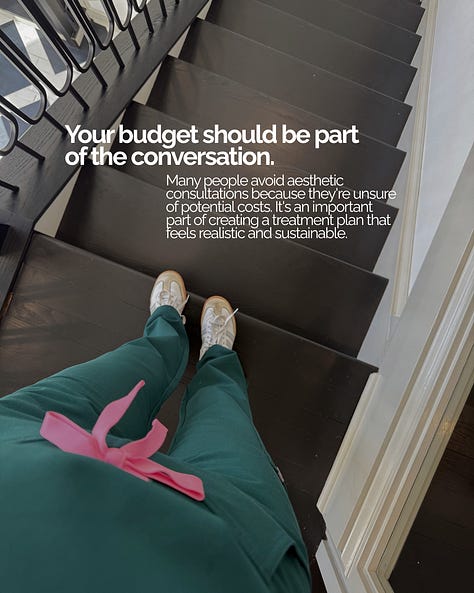
Nothing brings me more joy than when a patient says, “I can spend up to xx amount today.” I think it’s transparent and honest. I often find that people are intimidated by the cost of aesthetic treatments. Almost some sort of embarrassment on asking about price. I always tell patients, “You wouldn’t buy a sweater without looking at the price tag.”
Your budget is one of the most important pieces of information you can share with your provider.
A good provider isn’t building a treatment plan around an unlimited budget. They’re job is to build a treatment plan around you.
This kind of falls in product hopping, but I think it deserves it’s own section.
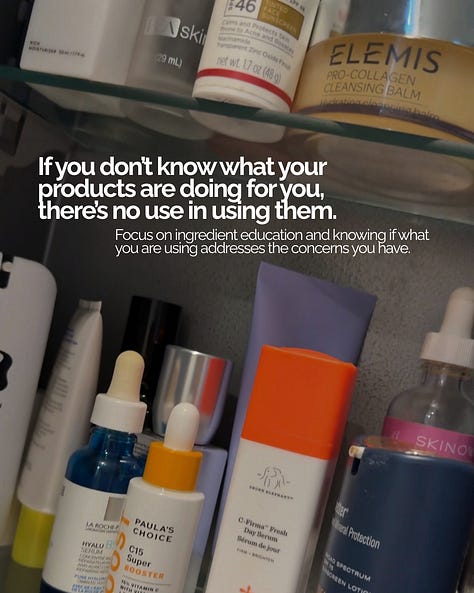
I’ll ask patients what products they’re using, and they’ll show me a photo with eight different bottles without a real grasp on what each product is doing/helping.
I don’t expect patients to know every ingredient. But I do think you should know why each product has earned a place in your routine. Every product should have a job.
If you can’t explain why you’re using a product, it’s worth asking whether you actually need it. Because skincare shouldn’t feel like following instructions without understanding them. It should feel intentional and worth while.
No posts
Comments
Nothing yet. Say the first thing.
Sign in to join the conversation.