
How to systematically read an AI system’s unresolved queries as market research instead of a model-training backlog, using the categorization approach Ingka’s data pointed to
The specific organizational mechanism that converted a customer-service cost center into an accountable, targeted revenue channel
Why reskilling programs succeed or fail based on whether they target an evidenced capability gap, rather than a generic “AI upskilling” mandate
How to report automation savings and new-revenue metrics separately, so a bigger opportunity doesn’t get buried inside a cost-savings press release
A specific 7-day pilot you can run using your own support system’s escalation logs, with no new AI tooling required
What this implies about where competitive advantage is shifting in an AI-saturated market, and why “best model” is the wrong thing to optimize for
Executive Summary
Case Study in One Sentence
The Organization
The Challenge
The AI Strategy
The Implementation
Results
Why It Worked
Lessons for Readers
Replication Framework
Mistakes to Avoid
Steal This Idea
The Strategic Insight
Key Takeaways
Closing Thought
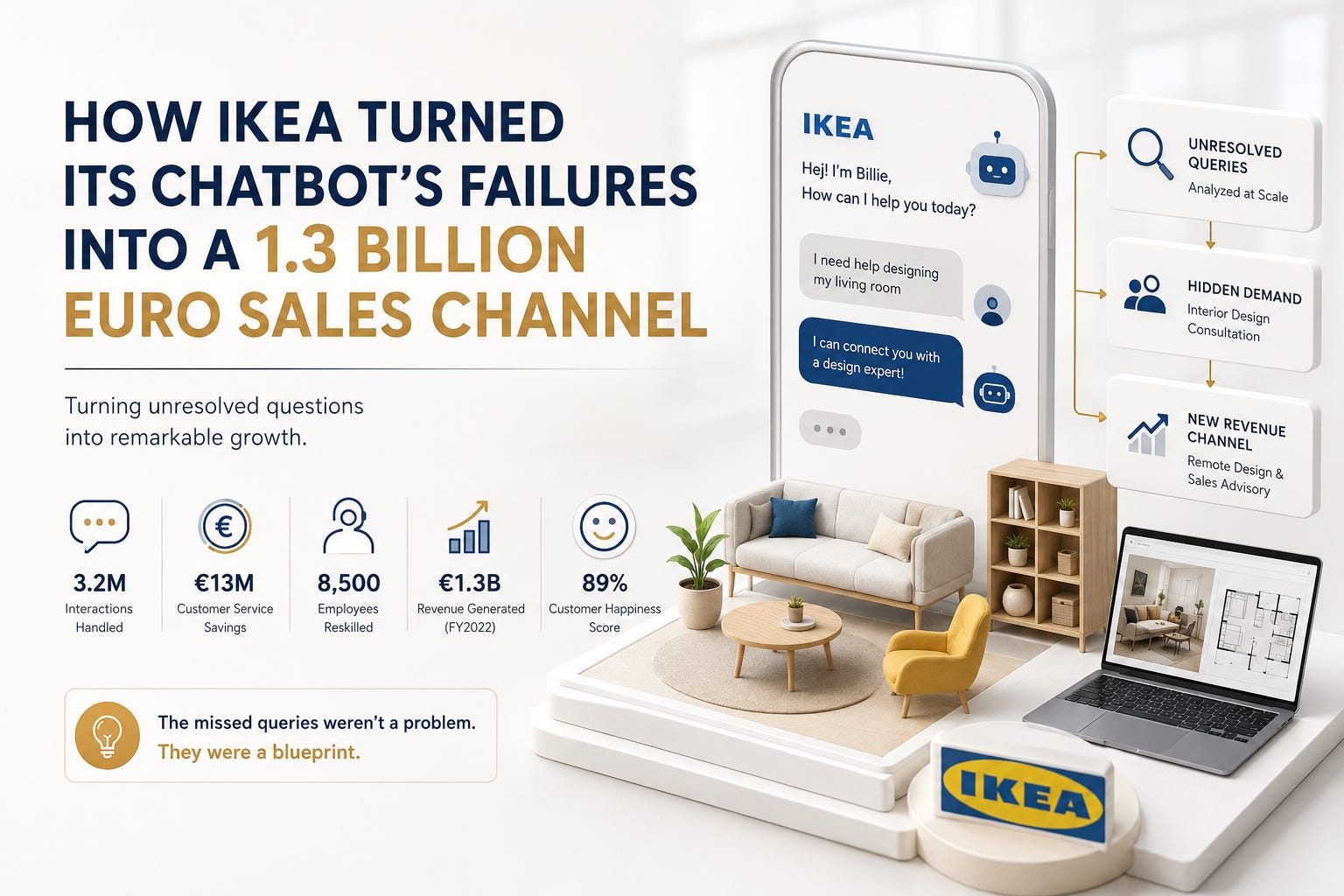
Ingka Group, the largest IKEA franchisee, deployed an AI chatbot called Billie for customer service starting in 2021and from 2021 to 2023 it resolved approximately 47% of customer enquiries, translating to 3.2 million interactions and nearly EUR 13 million in savings.
Rather than treating the unresolved majority of queries as a bot-training problem, Ingka analyzed them and found a concentrated, unmet demand for interior design consultation, a service its call center wasn’t built to sell.
Keep reading with a 7-day free trial
Subscribe to Business Analytics Review to keep reading this post and get 7 days of free access to the full post archives.
Comments
Nothing yet. Say the first thing.
Sign in to join the conversation.