
Why the standard “Jevons Paradox” explanation of AI economics, though correct, hides the more important half of the story
A simple way to sort any AI expense into “commodity tier” or “frontier tier,” and why that split matters more than the sticker price
Why labs give intelligence away for free and ration it at the same time, and why that isn’t a contradiction
Where competitive moats and investment returns will actually concentrate as the bottom of the market commoditizes
A durable mental model for correctly reading every future “AI costs are collapsing” headline
Executive Summary
Deep Dive in One Sentence
Why This Topic Matters Now
The Big Question
The Conventional Narrative
What’s Really Happening
The Economics Behind the Shift
Winners and Losers
Second-Order Effects
Strategic Implications
Mental Model of the Week
Key Takeaways
Closing Thought
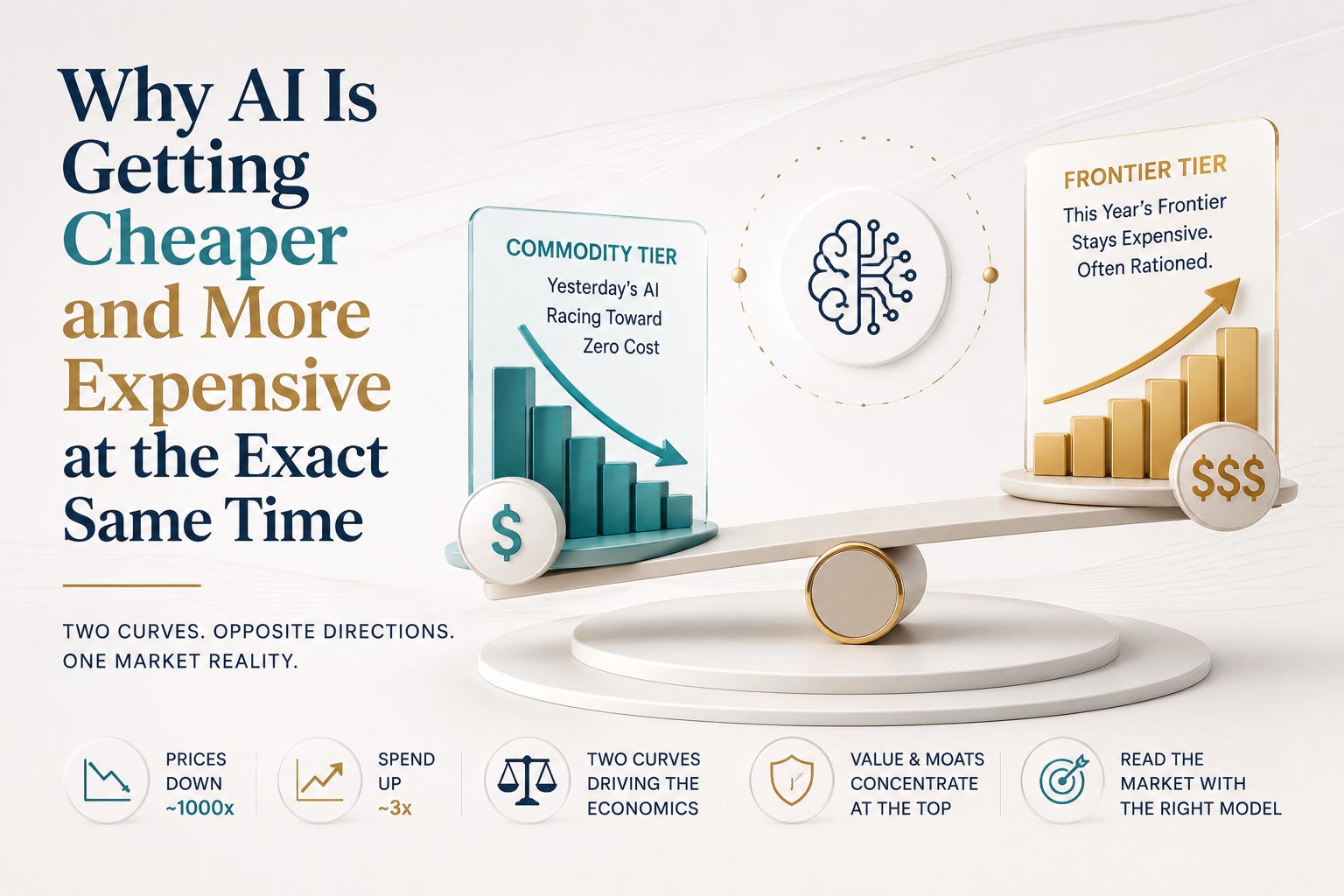
Per-token AI prices have fallen roughly 1,000x in three years, yet enterprise AI spending has roughly tripled over a similar window, the pattern most people now correctly label the Jevons Paradox.
That label is true but incomplete. It treats “AI” as one commodity on one price curve, when the market has split into two curves moving in opposite directions.
Yesterday’s frontier capability is racing toward zero cost. This year’s frontier barely deflates and is often rationed outright rather than discounted.
This bifurcation, not the aggregate price collapse, is what actually determines where value and advantage accumulate in AI markets.
Keep reading with a 7-day free trial
Subscribe to Business Analytics Review to keep reading this post and get 7 days of free access to the full post archives.
Comments
Nothing yet. Say the first thing.
Sign in to join the conversation.