
In this edition, I’m breaking down the basics of the Shared Risk team flow trigger, real world examples of it being applied, and how powerful “the potential for failure” is to a team.
Connect with me on LinkedIn so we can keep the conversation going.
Shared Risk is the team version of the High Consequences flow trigger.
Quick recap…
High consequences are about threats lurking in our environments. This could be a CEO stepping into the boardroom, a soldier sneaking behind enemy lines, or a coach going for it on 4th down. In whatever case, danger is a built-in feature of the experience.
Risk increases the amount of norepinephrine and dopamine in our system. In fact, the entire idea of an “adrenaline rush” is a misnomer. Very few people actually like the feeling of adrenaline. But damn near all of us will line up for dopamine and norepinephrine.
And all of this applies to teams as well with much more nuance.
When risk is shared, it means that everybody on the team has skin in the game. Psychologist Keith Sawyer describes this as “the potential for failure” and argues that without the danger of everyone falling, there’s no opportunity for anyone to soar.
This also means that you truly have each other’s back, both giving people the space to fail and helping them stand back up again once they do.
Summer 2013, I was a Assistant Manager for a sales organization in my hometown of Mobile, Al.
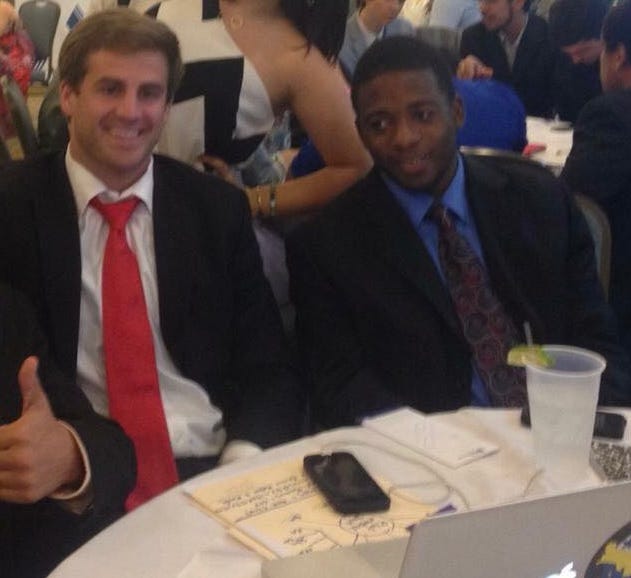
Now, when it came to the Mobile office, the stakes were high due to the ambition of my District Manager, Martin Zieman (pictured above). As an AM, my effort and value directly translated over to the sales report for the week.
I had a set weekly number of interviews I ran, and I had to recruit at local establishments by fliering/postering and help set up the weekly training seminar Zieman ran. The office’s goal that year was to have the best year ever and gross $750k in sales.
Zieman was a Vet DM, and Mobile was a $750k-a-year territory—everyone was locked in and had everyone’s back to hit this achievement.

In 2007, Steelers’ owner, Dan Rooney, hired Coach Tomlin as the storied franchise’s 16th head coach.
He was 34 then, but the media was more concerned with his race than his age. And in his 18 seasons as head coach, the Steelers have won a Super Bowl and have never had a losing season.
There is no risk in hiring a black coach regarding their competency. Yet, due to the lack of minority coaches being hired throughout the history of the NFL, there is great pressure to deliver—or, in terms of this team trigger, “the potential for failure.”
And the organization has been soaring for almost two decades straight.
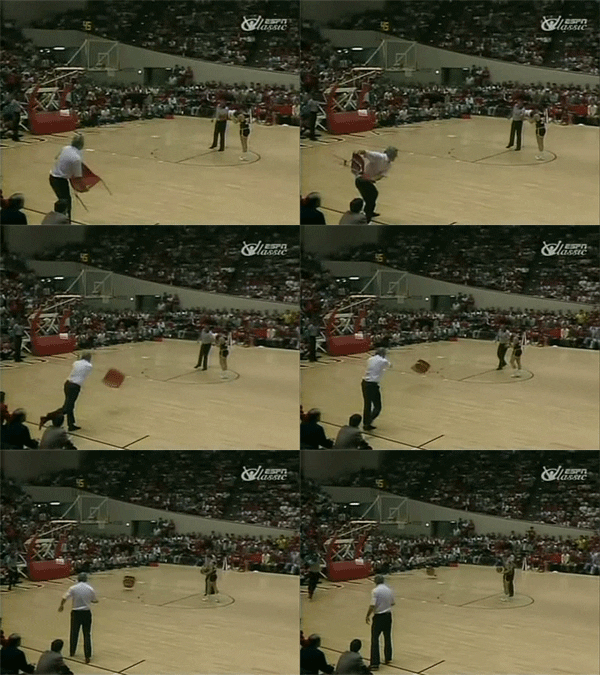
Say what you want about Bob Knight—and many of his tactics and ideas wouldn’t fly today—but how hard would you play for a coach that would send a chair flying across the floor to have your back?
It’s a terrible example to replicate, but it’s a perfect concept to duplicate.
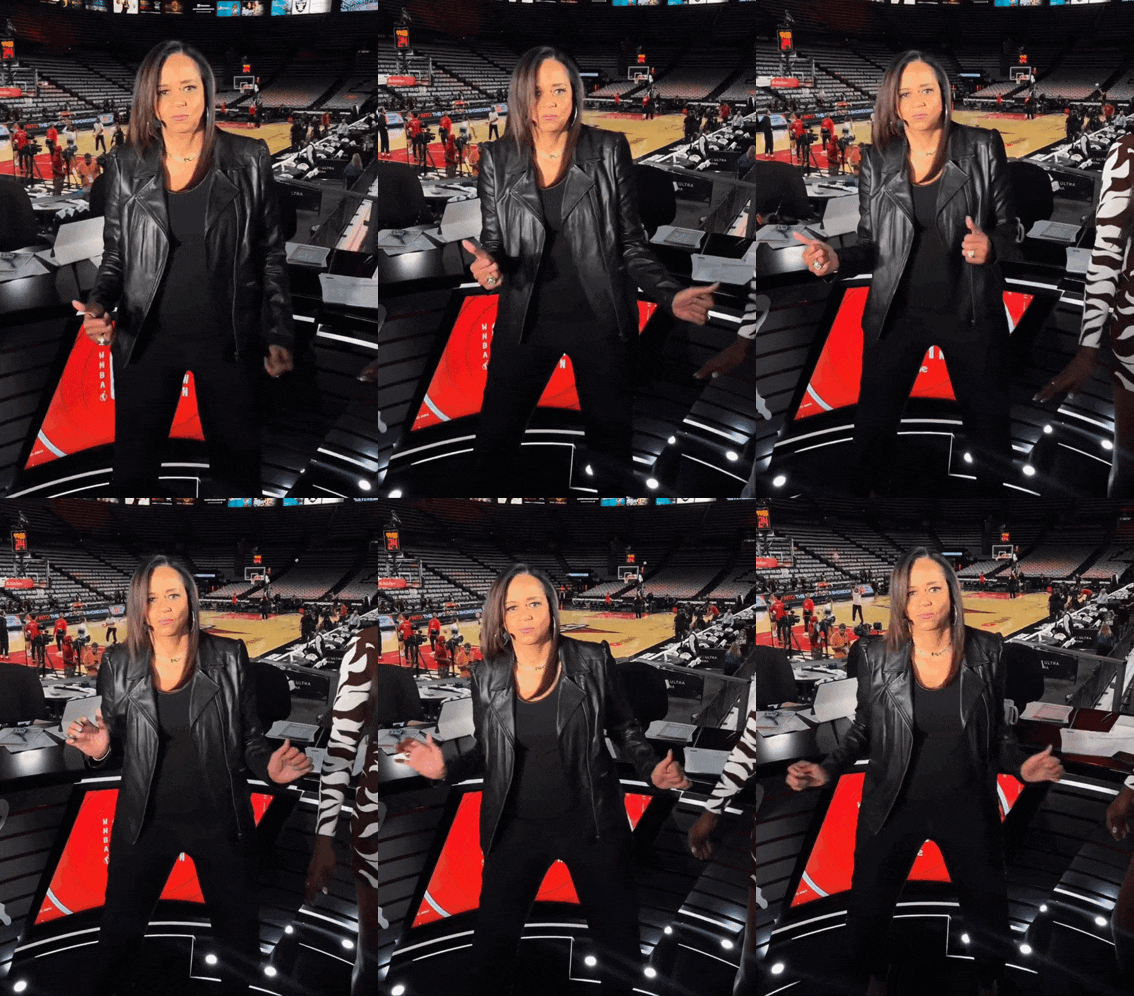
Carolyn Peck was the first African-American coach to win a women’s Division I basketball national championship when Purdue won in 1999. And she was the only one until Coach Staley’s South Carolina team won the 2017 National Championship.
It took 9 years for the Gamecocks program to reach the top of the mountain in the Dawn Era, 17 years from when she started coaching in 2000, and 18 years since Coach Peck won. Have you heard the phrase “even a coach needs a coach”?
In 2015, while Coach Peck was commentating on games for ESPN, she noticed that South Carolina had what it took to win and decided to give Coach a piece of the nets from the 1999 championship. Coach Dawn kept this piece of nylon in her wallet for years as a reminder of who had her back.
And when South Carolina won, it created a tough decision for the new champ. Peck asked Staley for one favor: The only thing I want in return is when you win your national championship. I want you to return this to me, and I want you to give your piece of the net to someone else.
Coach Dawn just couldn’t choose one coach to give it to, so she sent a piece to more than 70 black female head coaches across Division I basketball. And this shared risk amongst these coaches have truly helped raise the bar for women’s basketball.
If you’re finding this valuable so far, share it with a friend!
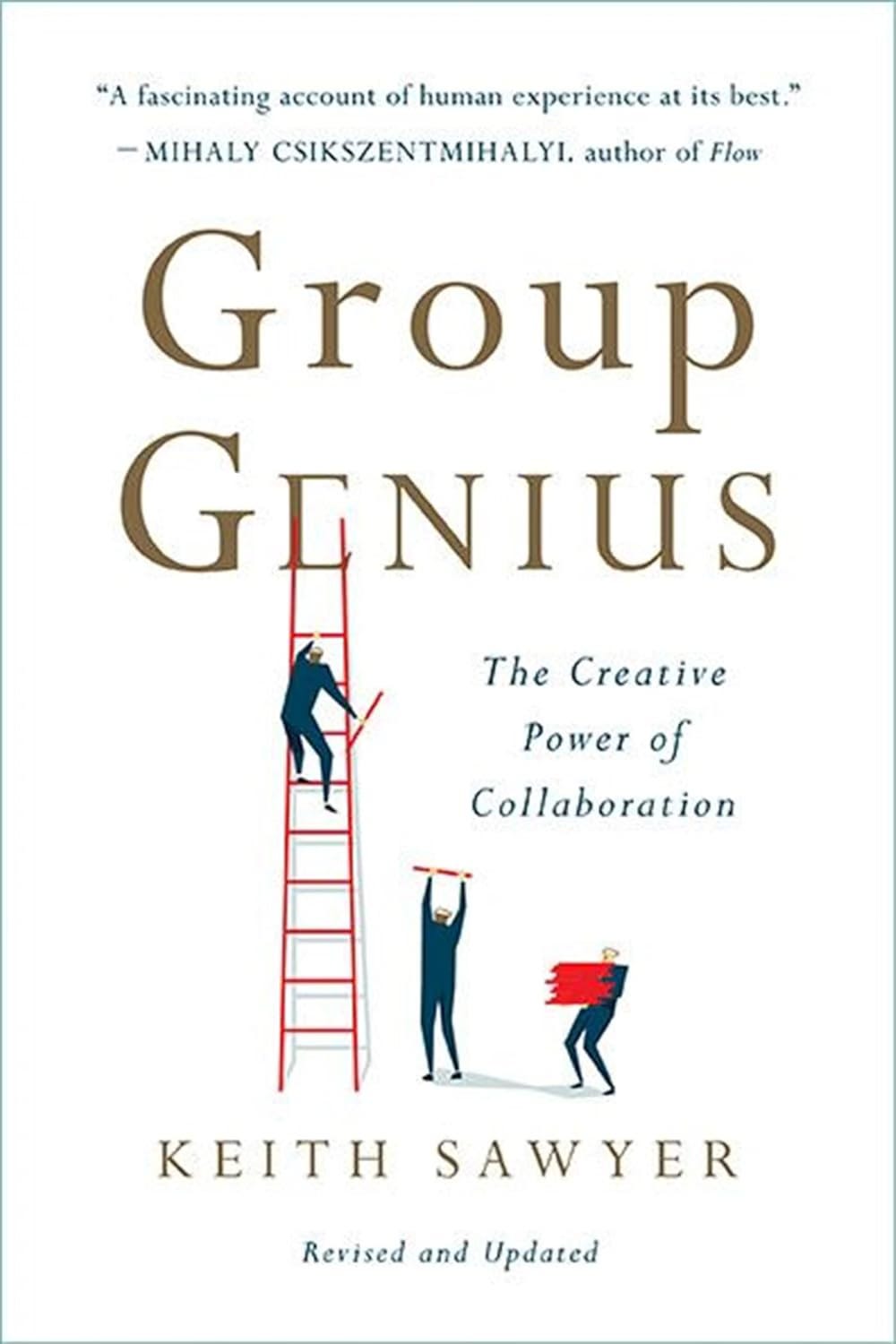
Creativity has long been thought to be an individual gift, best pursued alone; schools, organizations, and whole industries are built on this idea. But what if the most common beliefs about how creativity works are wrong?
Group Genius tears down some of the most popular myths about creativity, revealing that creativity is always collaborative -- even when you're alone. Sharing the results of his own acclaimed research on jazz groups, theater ensembles, and conversation analysis, Keith Sawyer shows us how to be more creative in collaborative group settings, how to change organizational dynamics for the better, and how to tap into our own reserves of creativity.
It’s important to mention that “danger” or “risk” doesn’t have to be life threatening in order to peak the performance of yourself/team and experience flow.
In many cases, shared risk happens without you consciously realizing.
Getting off the bus and walking into another teams “house” is a shared risk…
Waking up early in the morning to endure pre-season conditioning is a shared risk…
Even the play call to end the game that can win it or lose it is a shared risk.
And it applies to the infinite fame of life also.
Two people coming together to get married is a shared risk…
Two companies merging to form one is a shared risk…
A department giving a sales pitch on next campaign’s marketing strategy is a shared risk…
Why…
The potential of failure.
This alone won’t guarantee a peak in performance or tapping into team flow, but it’s a critical part of the equation.
Thanks for reading this edition of Burnout Ends Here. Know someone this would add value to? Forward it their way or hit the share button.
No posts
Comments
Nothing yet. Say the first thing.
Sign in to join the conversation.