
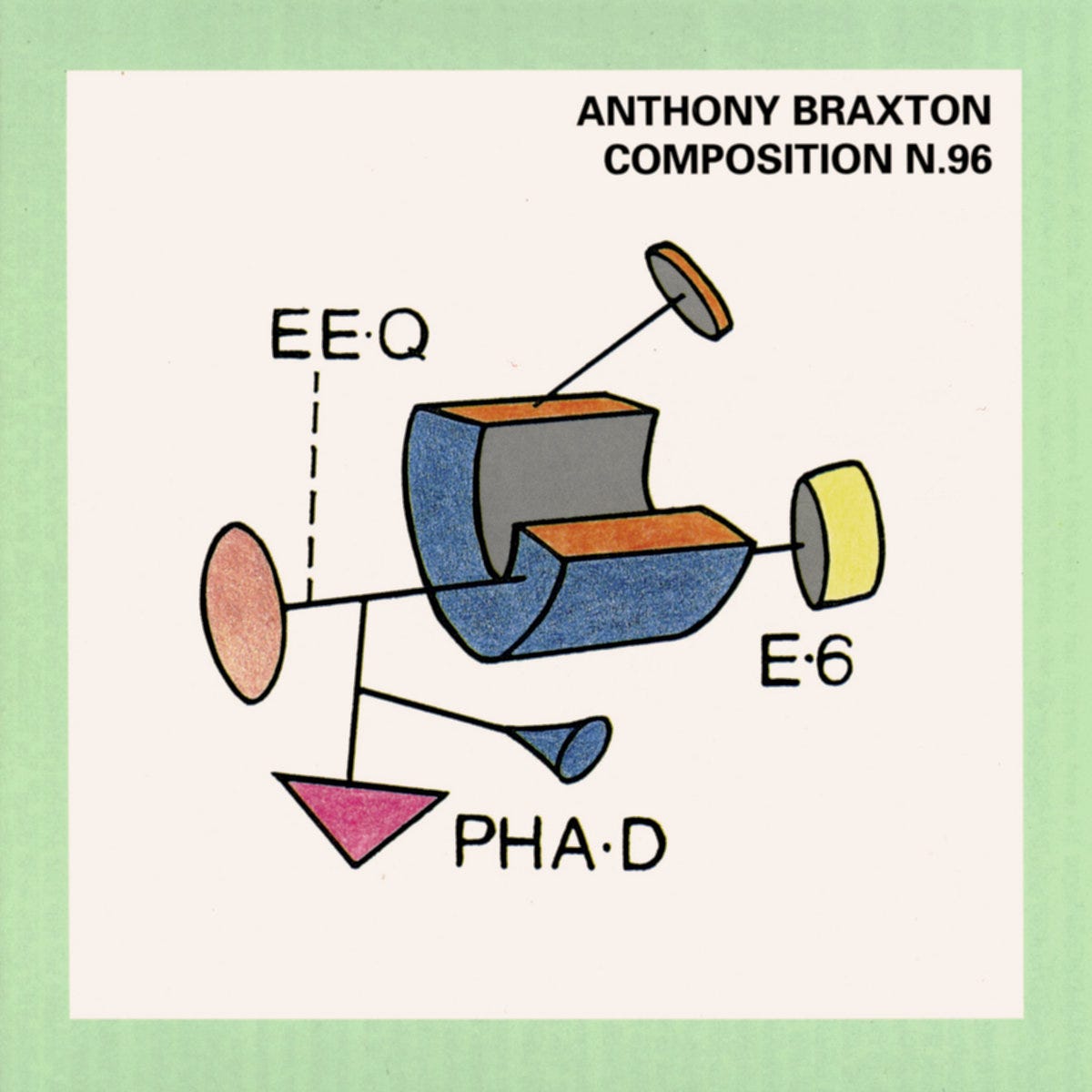
For some reason, the digital reissue of Anthony Braxton’s Composition No. 96 has been selling more copies than expected recently. This large-scale work, composed and performed in 1981 and released on LP in 1989 and CD in 1993, is a classical piece for a 37-member ensemble (including Braxton) of three flutes, two oboes, English horn, bassoon, Eb clarinet, Bb clarinet, bass clarinet, alto saxophone, French horn, two trumpets, two trombones, tuba, seven violins, four violas, three cellos, two basses, harp, and two percussionists. Braxton conducts the music, and eight people run a set of four slide projectors during the performance.
The 55-minute piece is dedicated to Karlheinz Stockhausen, and I can hear that. The way the strings wiggle and zoom, sometimes countered by blaring, almost pagan horns, with thundering tympani and other, smaller rattles and pings buried in the action, are kind of reminiscent of KS’s compositional tics. But of course it’s also possible to hear Braxton’s language(s) at work, too, and there are some fascinating transitions, like the way it shifts around the 15-minute mark from a storm surge to a long passage of harmonizing drones.
I’m a little curious why people have suddenly become interested in this piece, though. There are almost 40 Braxton albums on the Leo Records Bandcamp page, ranging from solos to duos to quartet recordings to other large orchestral works, so what’s drawn people to this one in particular? Perhaps you should check it out for yourself, and see whether it speaks to you.
If you’re a free subscriber, today’s newsletter ends here. If you’re a paying subscriber (or wish to become one), stick around for articles on shred metal, Conspicuous Despair and societal rejection, the work of Catherine Breillat, and imaginary musical instruments.
Comments
Nothing yet. Say the first thing.
Sign in to join the conversation.