
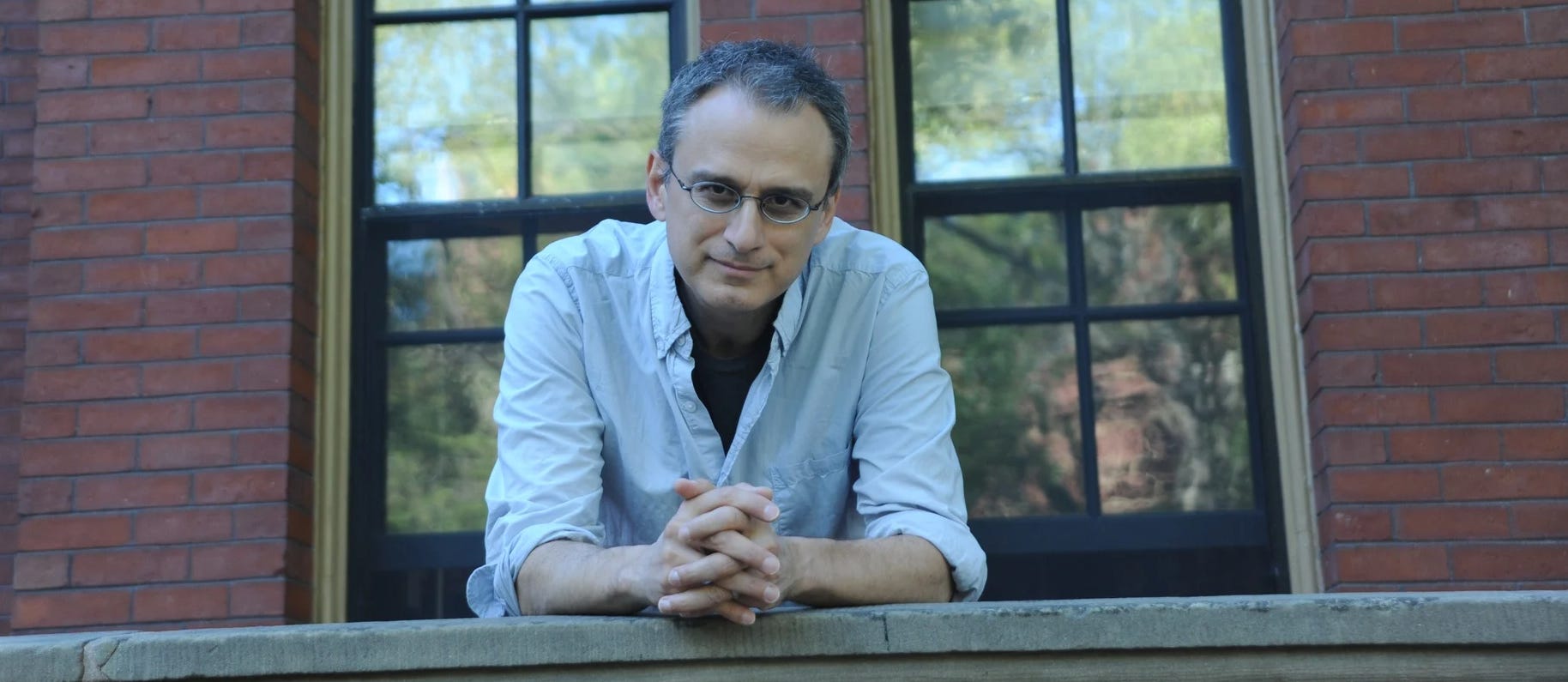
About the guest
William Deresiewicz is an author, essayist, and literary critic. He taught English at Yale from 1998–2008 and was a graduate instructor at Columbia. His work has appeared in The New York Times, The Atlantic, Harper’s, The New Republic, The Chronicle of Higher Education, and elsewhere.
Personal site / newsletter: williamderesiewicz.com and deresiewicz.substack.com
Books mentioned:
Excellent Sheep: The Miseducation of the American Elite and the Way to a Meaningful Life (2014; 10th-anniversary edition, 2024)
The Death of the Artist: How Creators Are Struggling to Survive in the Age of Billionaires and Big Tech (2020)
The End of Solitude: Selected Essays on Culture and Society (2025) — includes the essay “Why I Left Academia (Since You’re Wondering)”
The essay that prompted this conversation:
William Deresiewicz, “Colleges, Maybe Try Teaching!” — Persuasion, May 2026
People, books, and institutions referenced
Roosevelt Montás, Rescuing Socrates: How the Great Books Changed My Life and Why They Matter for a New Generation (2021) — Montás’s memoir of encountering the Columbia Core as an immigrant from the Dominican Republic.
Columbia’s Core Curriculum — the multi-year common-course sequence in literature, philosophy, art, and music that both Deresiewicz and Montás taught in. college.columbia.edu/core
Harvard’s 1945 “General Education in a Free Society” report (the “Redbook”) — the postwar articulation of a shared liberal-education mission for American colleges and secondary schools.
Harold Rosenberg, “Everyman a Professional” — mid-century essay on the professionalization of crafts and occupations, referenced in the discussion of theory overtaking practice in the arts and architecture.
Jane Jacobs, The Death and Life of Great American Cities (1961)
William H. Whyte, The Social Life of Small Urban Spaces (1980)
Zaytuna College — a Muslim liberal arts college in Berkeley, CA, integrating the Western liberal arts and Islamic scholarly traditions. zaytuna.edu
The Catherine Project — a free, tuition-free online great-books program open to adults of all backgrounds. catherineproject.org
Brooklyn Institute for Social Research — independent humanities courses for adults outside the university system. thebrooklyninstitute.com
The Matthew Strother Center for the Examined Life — a free, low-technology, live-in study retreat in Catskill, NY, founded in memory of Deresiewicz’s former student Matthew Strother. Small cohorts spend a week in seminar, shared labor, and communal life around a single great book. matthewstrother.org
Deep Springs College — the small, labor-and-seminar liberal arts college that partly inspired the Strother Center’s model. deepsprings.edu
Build the Next Right Thing is a reader-supported publication. To receive new posts and support my work, consider becoming a free or paid subscriber.
The following transcript has been lightly edited for clarity:
Seth: Hello and welcome to the New School for City Builders. I’m your host, Seth Zaron, a recovering city planner turned neighborhood developer in Providence, Rhode Island. If we want to change how our cities and towns work, we need to change the people who run them. We need a new generation of city builders — architects, engineers, planners, developers, city managers, and civic leaders — and we need a new school to train them.
Today we’re doing something a little different. I’m excited for my guest, author, essayist, and literary critic William Deresiewicz. Bill is not an architect, planner, or developer, but he’s an insightful critic of higher education today. I first encountered Bill in graduate school through his book Excellent Sheep, a critique of the pathologies of elite education. He’s since written The Death of the Artist and, most recently, The End of Solitude.
I invited Bill onto the show because of a recent piece he published in Persuasion called “Colleges, Maybe Try Teaching.” In our conversation, we discuss the value of a liberal arts education, the rise of professionalization, and the opportunities for reforming — or reforming — higher education. Bill, welcome to the New School for City Builders.
Bill: Thank you for having me on.
Seth: It’s really exciting for me. Let’s start with a fundamental question: what are the liberal arts? Sometimes they’re framed as, “Oh, you go off to college, have a good time, stay up late arguing in the common room.” What are they, really, and why do they matter?
Bill: There’s some terminological confusion — the term gets used in a few different ways, though I think all of them are relevant.
This post has bonus content for paid subscribers. Upgrade to get full access.
Seth: The New School for City Builders is a production of the Educational Collaborative for Building Places People Love and Build the Next Right Thing. If you appreciate what we’re doing and want to help bring this school to fruition, please support us by becoming a paid subscriber at buildthenextrightthing.substack.com.
Comments
Nothing yet. Say the first thing.
Sign in to join the conversation.