
Hey Friends,
This is the continuation of a series in which we outline common technologies used in building physical products.
I’ll be covering electromechanical disciplines such as displays, plastics, batteries, PCBs, audio, RF, and more. For example, check this out for everything about the basics of cameras.
As a reminder - this series isn’t meant to be a deep dive, rather it’s supposed to serve as a high level overview for product managers, engineers, designers, and non technical enthusiasts. Think of it like a refresher on the basics.
This week we’ll focus on soft goods, an area which is usually overlooked. This post will focus on two sections:
Use cases
How they’re made
As stated in previous articles we’ll first talk about highlighting customer experience as product development shouldn’t be done in a vacuum. We create things to solve user problems.
Softgoods are underrated given that they’re all around us and enable an integral part of customer experience for physical products. These textiles, fabrics, leathers, and silicone components serve functions to protect and cosmetically enhance products like phones, furniture, automotive airbags, and car instrument panels.
They also require more creativity from a product development perspective given that they’re difficult to constrain. Unlike rigid products they don’t retain their shape easily and have very loose tolerances. This makes them challenging to mass manufacture in a repeatable manner.
There’s also additional variation from natural elements like scars on animal hides when processing leather products.
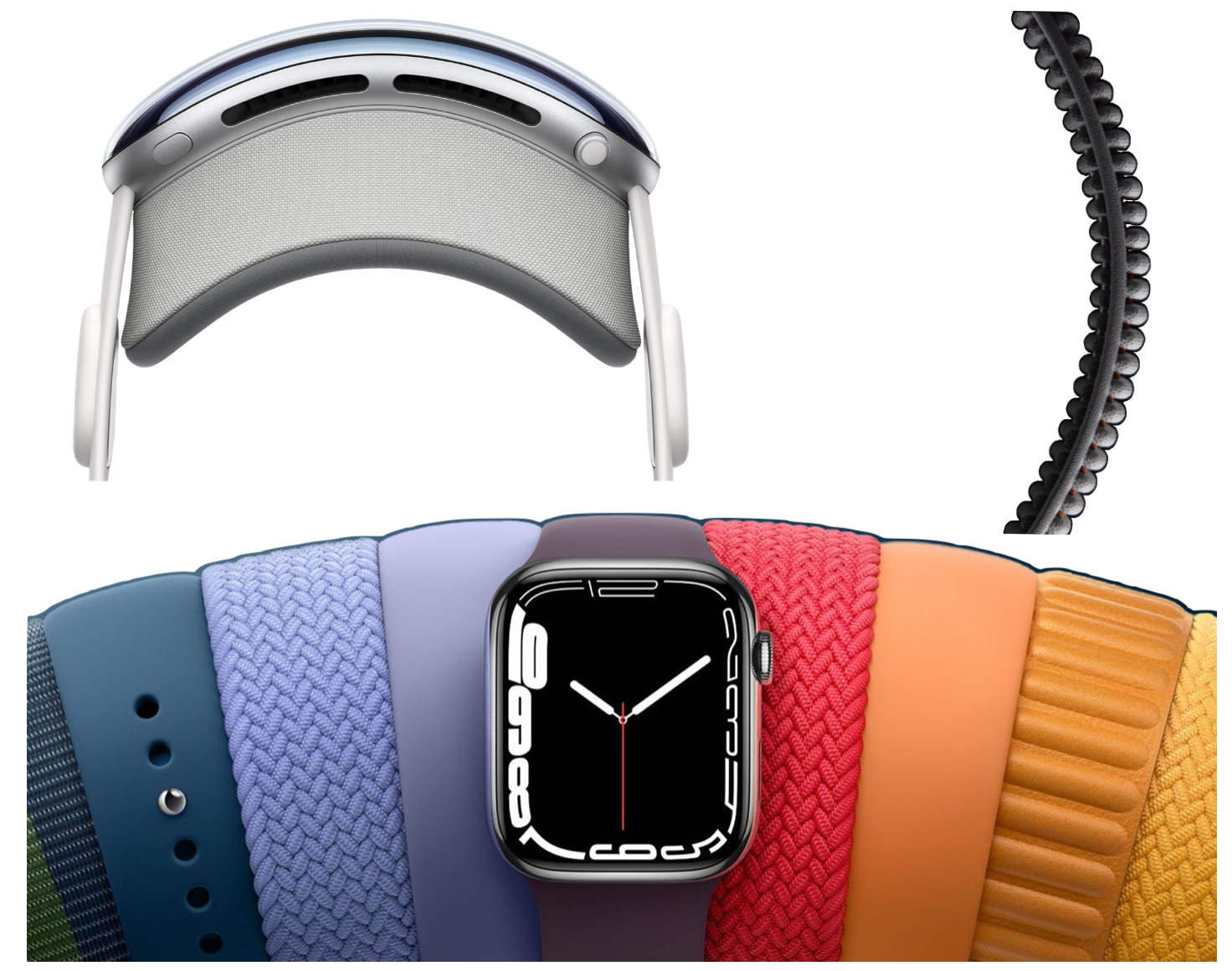
There’s probably no company that does softgoods as iconically as Apple. I remember being surprised with the scale of their softgoods org when working there. They do a great job of combining functional and aesthetic product requirements.
For example, check out how seamlessly the Vision Pro’s light seal and knit band contour with its chassis, all while providing light protection and comfort to the user’s head. Also look at how many companies copy watch band designs like the breathable sport loop or leather magnetic link.
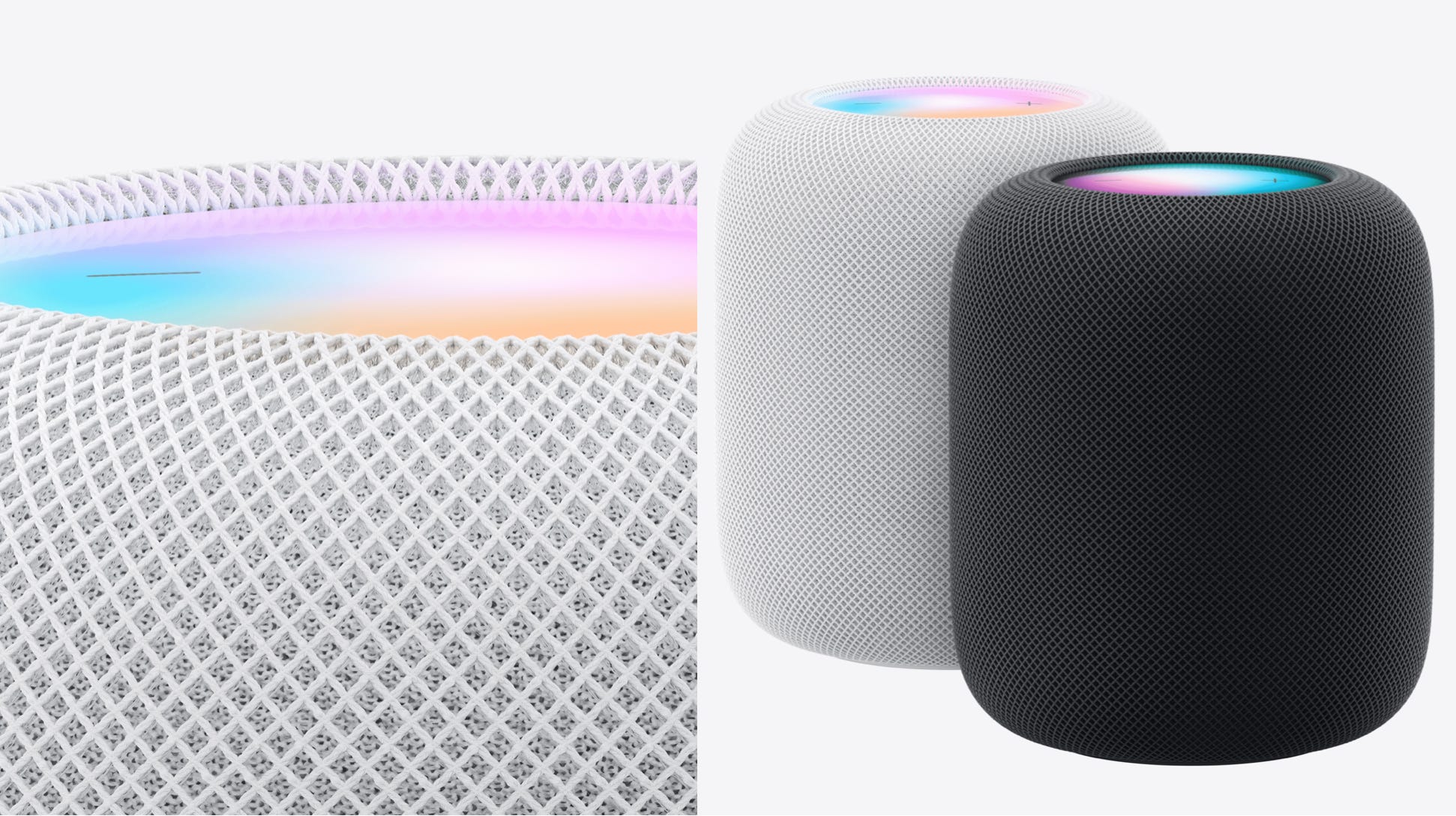
Another example of balancing cosmetics with functionality is Apple’s HomePod woven mesh. It was developed to be acoustically transparent, allowing sound waves to travel through while shielding key internal components from debris.
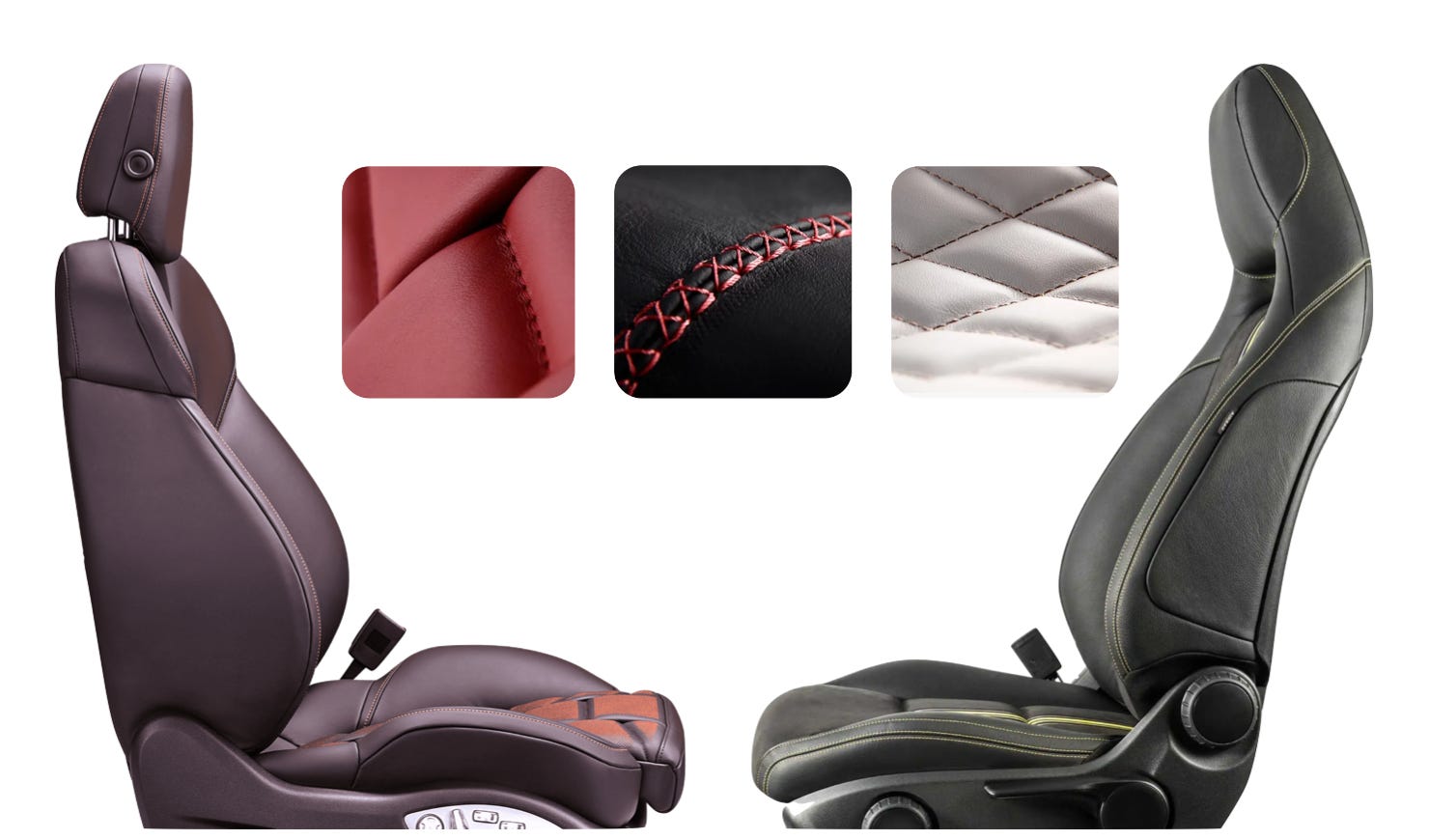
Switching industries, we can see how prevalent the use of softgoods is in automotive. When I used to work on interior systems at Tesla, we would use varying types of textiles - from woven fabrics, to PU leather, to silicone liners. These would be applied on instrument panels, door trims, seats, and (most underrated of all) airbags.
A side note on why airbag fabrics are so cool is because they have to support rapid deceleration and a chemical explosion when deployed at varying altitudes, temperatures, and humidities - all while balancing occupant restraint and preventing injury from the force of deployment. These product requirements make one realize the level of sophistication needed to develop textile trims.
Cosmetics are also a significant consideration in automotive given that things which may seem trivial to the average person are put under a microscope by leadership such as stitching, seam placement, wrinkles, and scuffing resistance.
Our chief engineer had to sign off on the positioning of seat leather seams at a Japanese OEM I was working at and VPs were always giving feedback on textile wrinkling at Apple.
Without trying to be controversial it’s important to point out that leather making is actually one of the oldest recycling processes in the world. Indigenous peoples have been using animal hides for thousands of years to make clothing, armor, and furniture as an effort to not be wasteful after hunting.
One interesting anecdote I picked up when in I was in a leather factory in Mexico that made trims for Mercedes and Toyota was that cows are not killed primarily for leather, rather they’re first farmed for meat production. Their hides are given to leather factories as a byproduct after.
It’s important to be mindful and holistic when talking about global supply chains as animals are also a part of product development value streams. The things we interact with everyday aren’t made in a vacuum.
Moving on, let’s talk about the leather making process flow below.
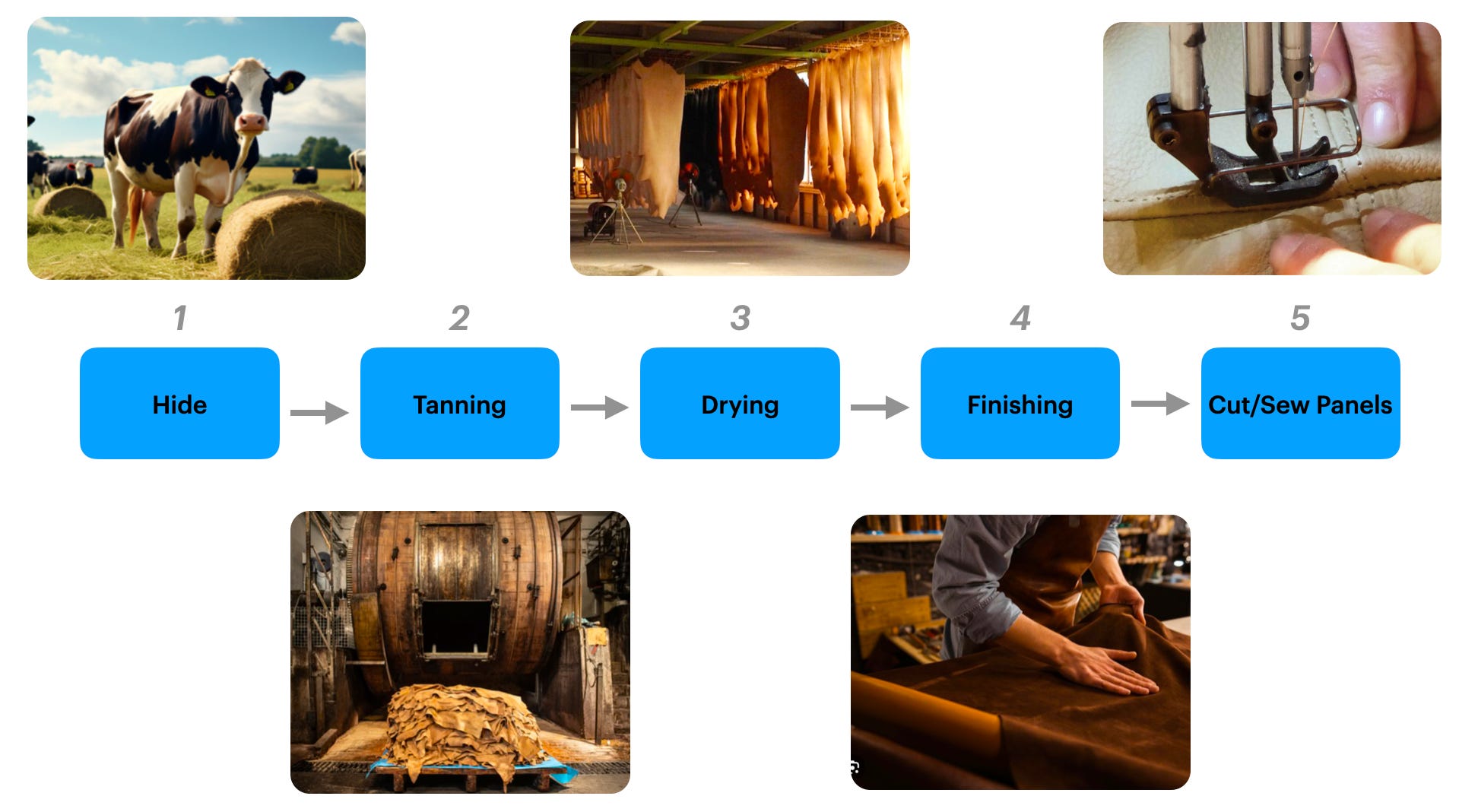
Hide Processing
We start by receiving and cleaning animals hides which come from farms. Their appearance, texture, and attributes will vary based on where the animal came from. For example, Argentinian cattle have different characteristics in their skin versus those from the US based on weather and terrain.
Tanning
The hide is then soaked in giant drum containing various chemicals to covert it to leather, and to prevent decomposition. This is done through altering its protein structure, removing hair, modifying grain, and reabsorbing humidity.
Drying
Hides have salt removed and are either stretched or fixtured onto large equipment for air or vacuum drying. Most factories have a manual process for transporting hides between steps 1-3, something which shouldn’t be overlooked as they can weight between 70-90 lbs each.
Finishing
Once hides are dried they will need to be processed for final cosmetics, malleability, texture, shaving, and blemishes. At this stage you may be able to see scars or bug bite marks on an animals skin - aspects which some consumer products keep to maintain authenticity.
Cutting/Sewing
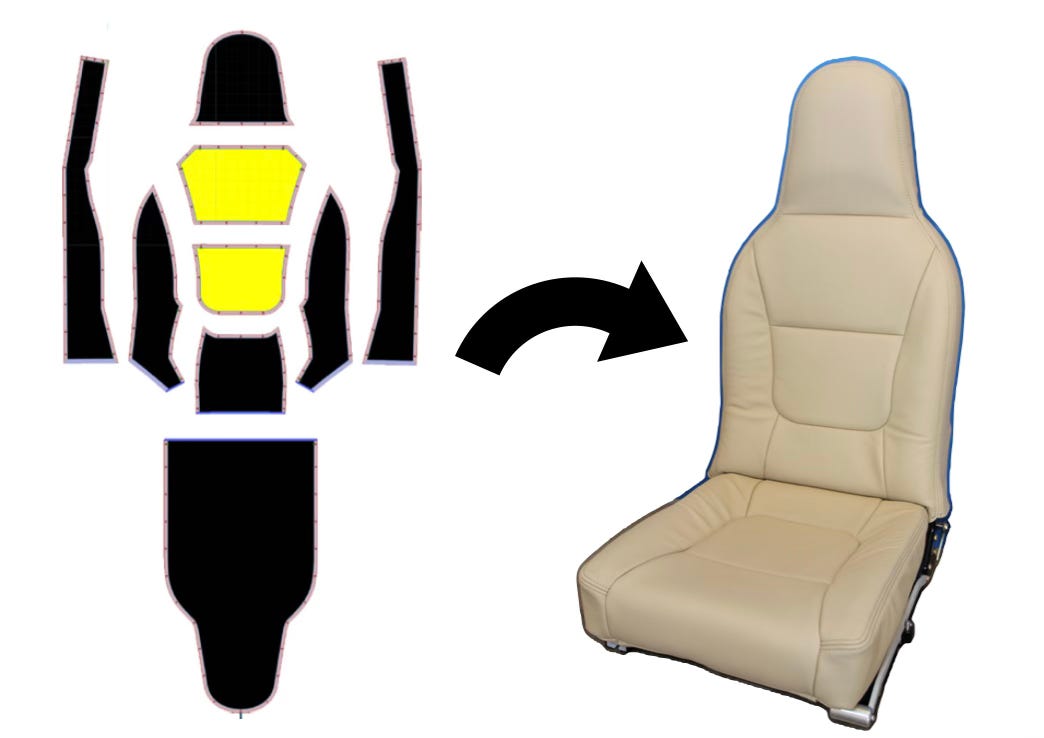
Finally, after hides are finished they’ll be cut into templates using cookie cutter like tools. These templates will be sewn or stitched together to make the final product such as an automotive seat trim, sofa cover, bag, or even an iPhone case.

Example of seat panel trim pieces after cutting and prior to being sewn. Source: 3DVision technologies
A note on Vegan leather..
While it may be an alternative, it’s important to remember that vegan leather is usually only partially sustainable. This is because its often made from a mix of biomaterials, agricultural waste, and plastics like polyurethane.
Moving onto textiles and fabrics, these trims are made from four main sources with the first three being natural:
Plant such as cotton or flax
Animal such as wool or silk
Mineral such as glass or fibre
Synthetic such as nylon or polyester
In general the process flow starts with taking fibers, converting them into yarn, transforming that to fabric via weaving/knitting, pretreating, dyeing, printing, and then finishing. Lastly, similar to leather, we cut/sew individual panels to create a final trim. This process is shown below.
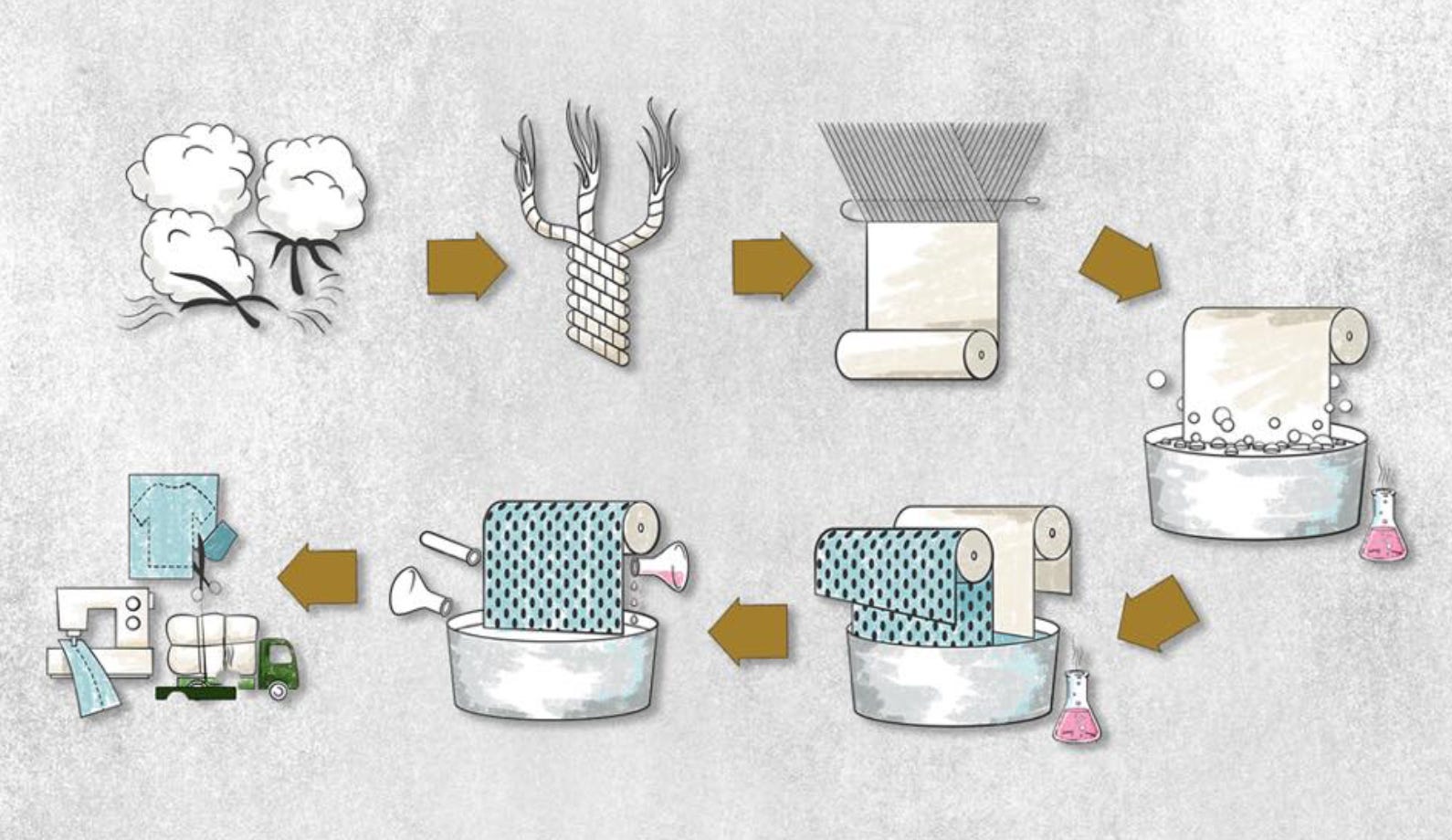
Once fibers are converted to yarn, the most common methods of fabric production are weaving and knitting.
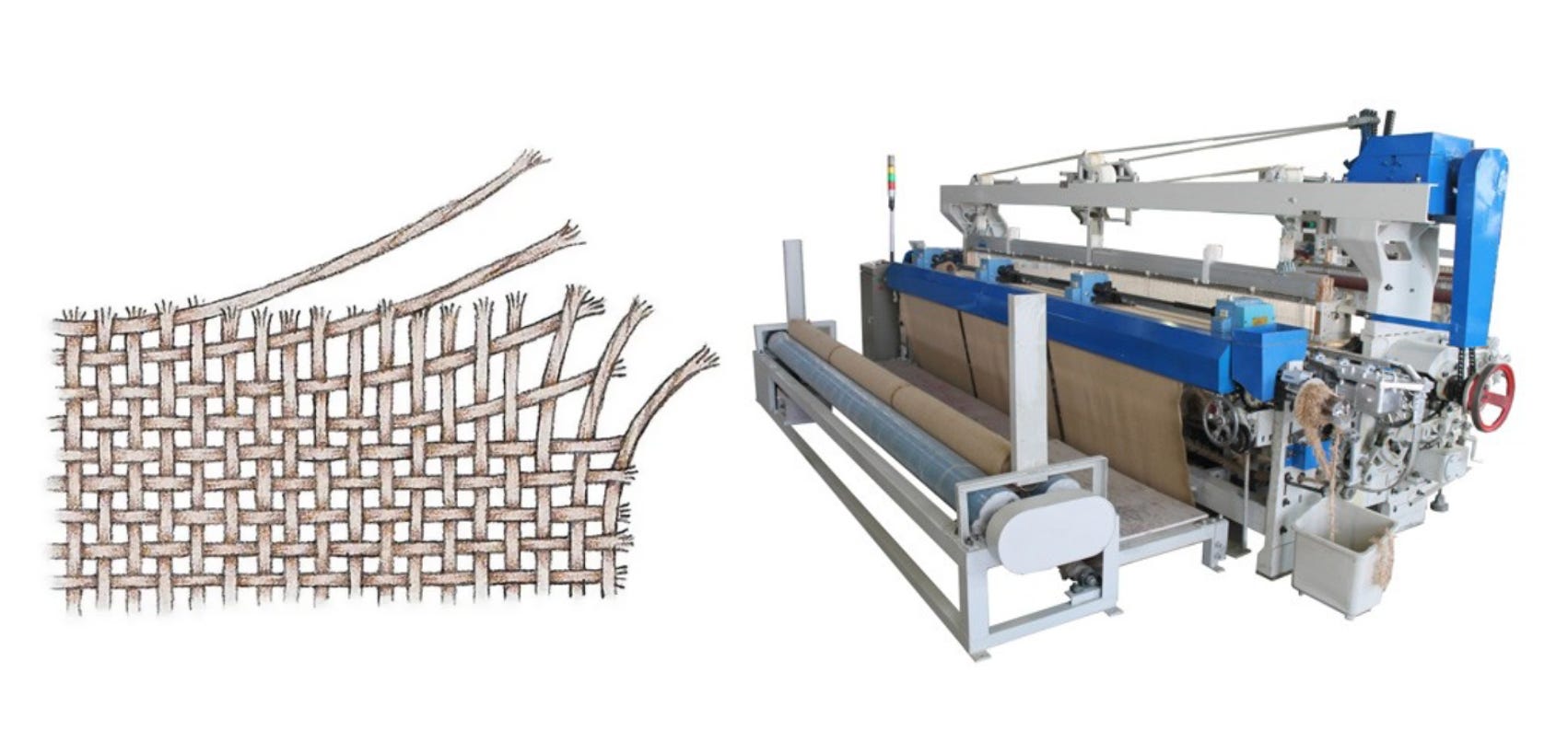
Weaving involves interlinking horizontal threads (weft) with vertical threads (warp). It’s typically used for products that require structure, strength, and durability like tailored clothes, tents, conveyer belts, and most automotive car seats.
Woven fabrics are made using a Loom which is a machine that holds warp threads under tension to enable weft threads to be interwoven.
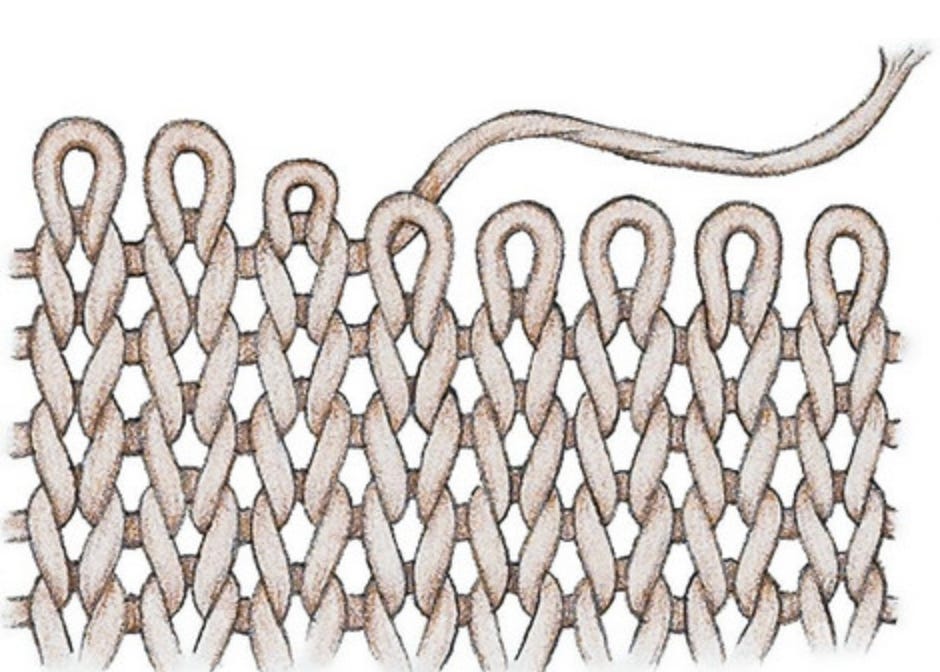
Knitting on the other hand is a fabric production process that involves threads consecutively placed together in loops or stitches. It’s preferred when your end product requires more comfort, breathability, flexibility, and ease of motion like activewear, stretchy furniture covers, and some Apple Watch bands. It’s generally quicker and more cost effective than weaving.
Other common softgoods include polyurethane (PU), silicone, and foam but because they require one form or another of injection molding we’ll be covering those in our plastics technology series.
That’s all for now.
Thanks for reading.
If you enjoyed this please spread the word, subscribe, and like!
No posts
Comments
Nothing yet. Say the first thing.
Sign in to join the conversation.