
Hey Friends🖐️,
What if I told you that there is a pattern that Apple, Tesla, and Google Nest use to make iconic products? Three companies, three different industries, yet their long term template is generally the same.
Today we’ll dive into lessons from their product strategy based on Tony Fadell’s approach to building compelling businesses. We will be referencing Build, one of the books from our 📚recommended reading article for HW builders.
V1 Products: Vision
According to Fadell, the first version of the product (V1) reflects the grand vision. It has to be disruptive and may need to sacrifice profitability to test the market’s reaction to a new idea. V1s need to focus on a core hypothesis, given that there is no customer data to rely on.
Product
These products need to retain a core set of features that are vital to the company’s philosophy. Nice to have features are usually considered scope creep. They get removed because they add unnecessary complexity. Because market feedback is so limited, leaders can shine by proceeding in ambiguity. This is where product sense comes in, the ability to make correct assumptions based on a limited data set. However, as we’ve learned with Humane and the rabbit r1, first gen isn’t an excuse for low quality.
Users
V1 products are for early adopters. These are users who are opinionated, passionate, and can hack their own solutions if needed. They either have an emotional connection with the product space or are tech enthusiasts. Building for their needs can foreshadow larger market trends. They are more forgiving of early bugs but will become pickier as the product matures.
Tech
Fadell states that V1 products have a limited amount of innovation capital. For this reason, reference modules and designs should be used where possible. Practically, this means using off-the-shelf displays, batteries, PCBs, and sensors, instead of re-inventing the wheel for each component. Since V1s have lower volumes, budgets should be strategically used on innovating core user experiences. This means to only design custom technology for a limited set of key features.
Business
These products sell at lower volumes and higher MSRPs. Customer acquisition costs are substantial, while marketing and sales processes are raw. Teams should focus on product market fit, instead of profitability at V1. Given the poor economics, a lot of companies also die at this stage.
Teams
Development teams need to be lean, given the obvious resourcing constraints. Most of the execution is contracted or outsourced at this stage. But also, because having more people leads to designing by consensus, and this prevents opinionated designs from being executed. This dilutes the original product vision. Remember, V1s are about trying to validate taste or disruptive bets.
Examples
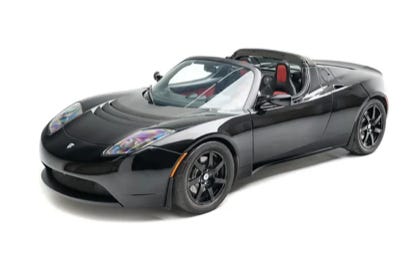
The Tesla Roadster was a low volume, high priced V1 built on a Lotus chassis to save innovation capital for the powertrain. It targeted wealthy environmental and tech enthusiasts to prove that an electric car could be compelling.
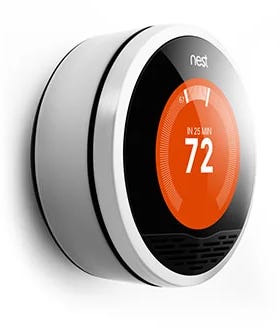
Nest’s first thermostat disrupted a boring utility industry. It proved that managing home comfort could be done with an elegant design. Their tech stack focused on learning habits of niche users to reduce energy costs.
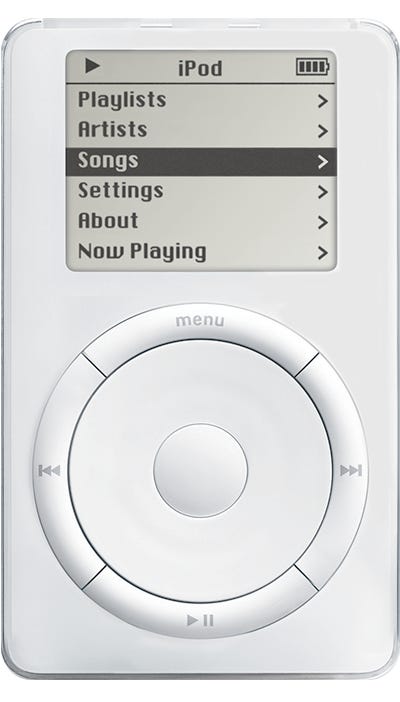
The first iPod challenged the industry. It proved that portable media consumption could be a seamless experience with the famous “1000 songs in your pocket” messaging. It came with a physical scroll wheel and was a high priced, exclusive (Mac users) device for early adopters. It used a Toshiba hard drive and outsourced OS development to PortalPlayer.
V2 Products: Refinement
V2 products improve upon V1 based on user feedback. Core elements are maintained while weaknesses are addressed. Unit economics are improved, but overall profitability is still a work in progress.
Product
This is where the product vision moves from ambiguity to clarity. Product leaders can now make data driven decisions instead of relying on assumptions. For this reason, V2s represent an evolved product feature set, while retaining key elements of the brand’s DNA. For example, despite optimizations over the years, each generation of the iPod kept the navigation wheel. Similarly, future Nest thermostats maintained their circular shape.
Users
V2 products shift to the early majority user base, who gather opinions and reviews from early adopters. They are less forgiving of bugs and want an easier way to search for, purchase, and use the product. Given that companies at this stage have more paying customers, insights are more robust and teams know what problems to prioritize.
Tech
At this stage companies transition to designing for system stability and integration. The off-the-shelf modules from V1 are optimized to perform better, address user issues, and work more cohesively. Engineering may be able to fix size, power, assembly, and cost constraints that they couldn’t in V1. This is also where tech debt is usually addressed. This generation does however cause some frustration due to the fluidity of user feedback impacting a device’s technical architecture. Good leadership teams know when to lock scope and balance market trends.
Business
The product may reach gross profitability, but not by much. While COGs (see our HW financial model template) drop and volumes increase, they still may not be enough to outweigh marketing, acquisition, and technology costs.
Teams
For V2s, companies try to take the outsourced teams from V1 and bring that expertise within the organization. V2s require bringing in core competencies such as engineering, QA, and customer support because of the higher volume of feedback.
Examples
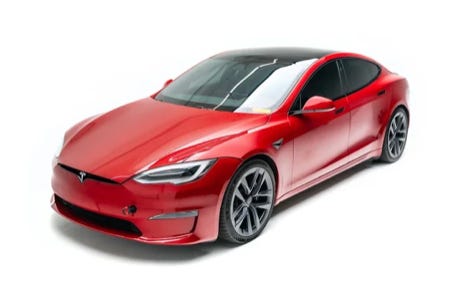
The Tesla Model S was developed using in house manufacturing and engineering. It transitioned the company into providing a premium sedan for early majority users while addressing weaknesses from the Roadster.
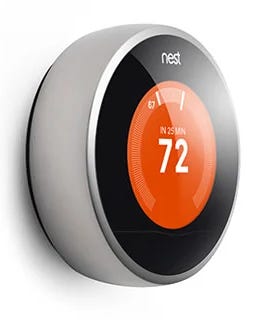
The V2 Nest addressed market feedback regarding bulkiness by making it 20% thinner. They also expanded HVAC compatibility, added premium materials, and fixed corner case wiring issues plaguing early adopters from V1.
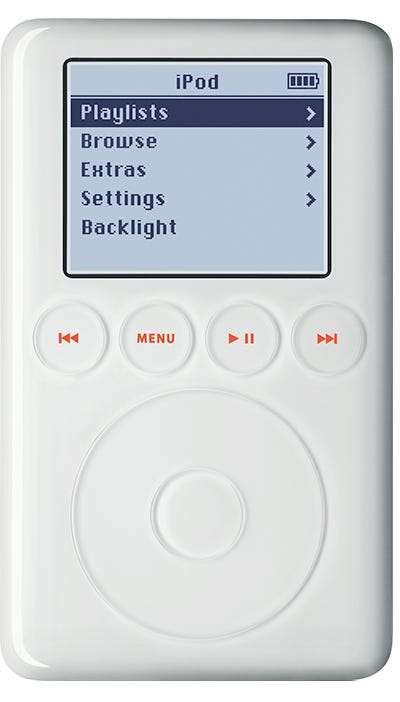
The next couple of iPod generations moved to a touch wheel instead of the mechanical scroll wheel. They expanded storage, varying from 10GB to 40GB, and came with a dock connector. This made the device platform agnostic, growing the market to non Apple users.
V3 Products: Scale
V3 products are where net profit should finally be achieved at scale. Design, engineering, manufacturing, and business processes are stable through lessons from V1 and V2. Mainstream users now feel comfortable purchasing a proven product.
Product
The product should be doing well, and companies should shift their focus to enhance each aspect of the user experience value chain. This also means designing for the nice to haves such as more battery life and less weight. Organizations also spend more time thinking about the business as a whole, especially the ecosystem plays.
Users
V3 is for the majority. These mainstream users ask for the “faster, cheaper, and easier” versions of a product. They have no tolerance for bugs and will be quick to replace the product with whoever is the market leader.
Tech
At this stage, companies start investing in vertical integration and custom designs. For example, newer Apple products feature their own chips and higher end manufacturing techniques (unibody aluminum) that were too risky for a V1. From the outside, V3 may seem easier because of the increased market demand. However, it is important to note that scaling production lines is exponentially more difficult than making a low volume Gen 1 (more on that in our interview with a DFM expert here).
Business
At this stage, most companies may be able to achieve net vs gross margins. The business model should start to stabilize from the higher volumes, improved component pricing, new partnerships, and better distribution opportunities.
Teams
Internal teams inevitably grow and expertise is established. These teams support the core elements of a business, such as product, branding, engineering, and marketing. Some projects are still outsourced, but they will be smaller and less frequent.
Examples
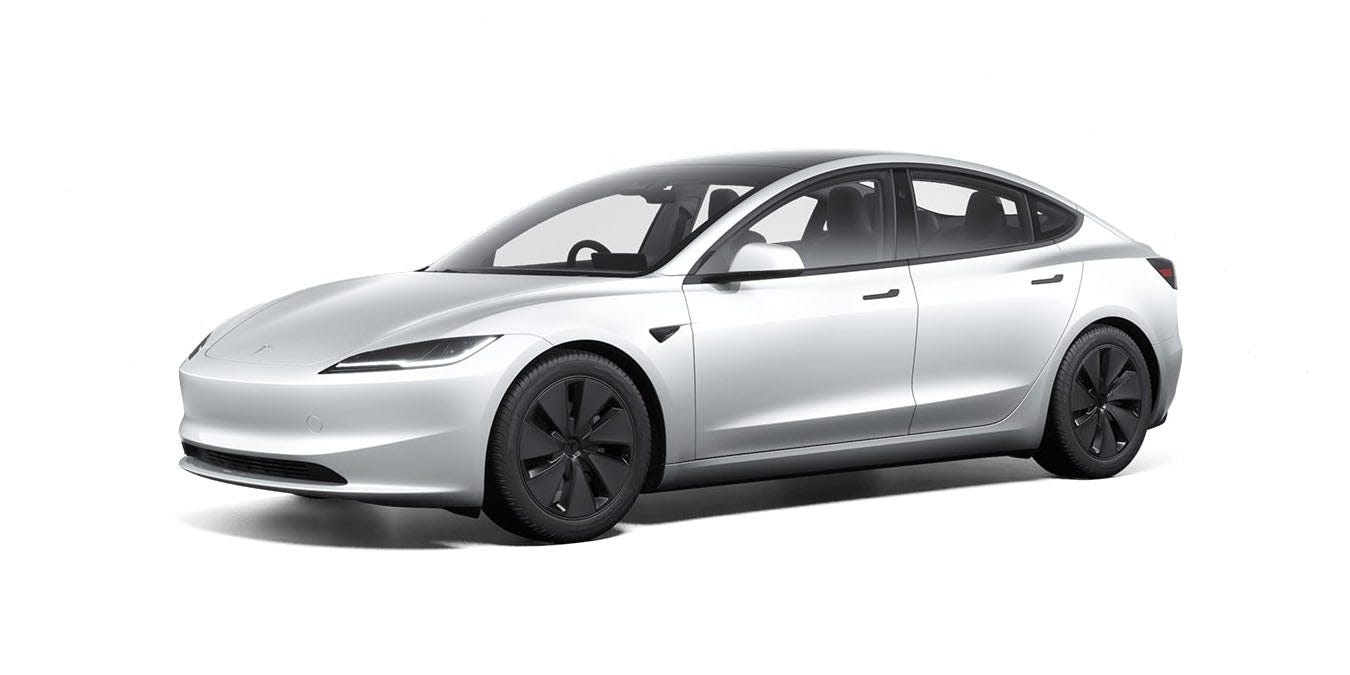
The Model 3 helped transition Tesla to the mass auto market while achieving profitability. It was designed with vertical integration in mind and had to endure “manufacturing hell” during its production ramp up. The result is a product that dominates the North American mid-size sedan EV market.
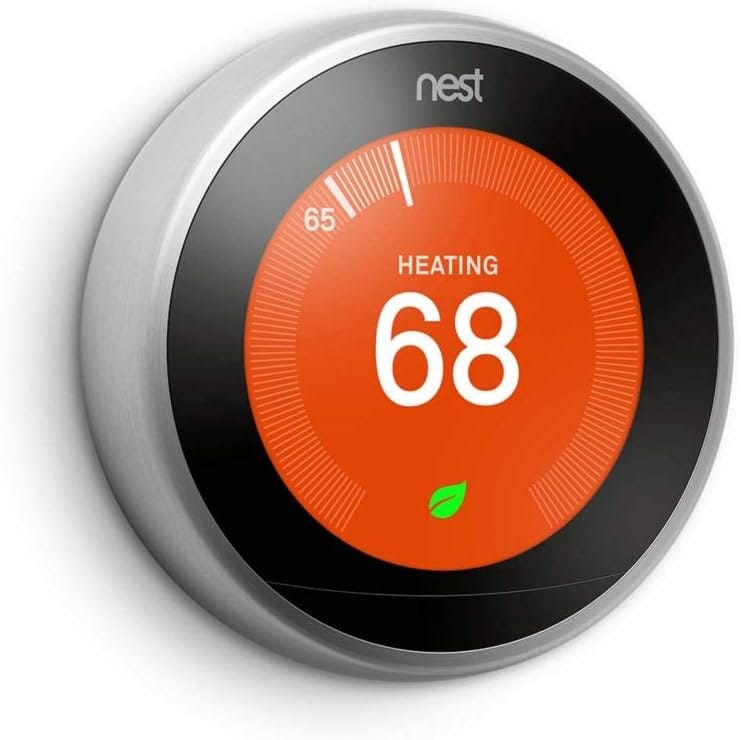
The Gen 3 Nest thermostat reached a mainstream user base with a higher resolution display, enhanced connectivity, and optimized HVAC logic. They expanded into global markets and created a platform approach by scaling the “Works With Nest” smart home ecosystem.
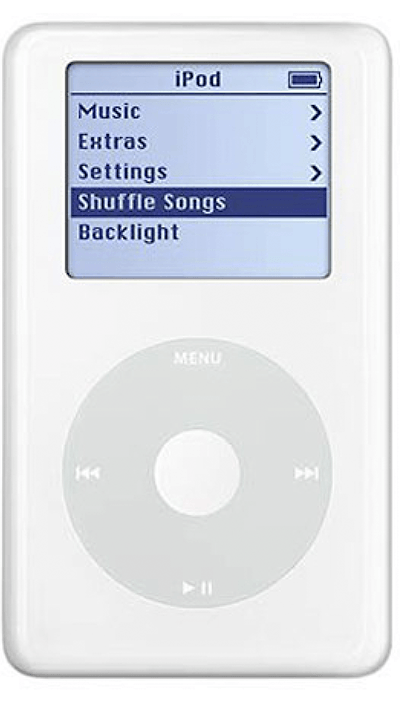
The “V3” iPod, technically gen 4, came with a click wheel that reduced input complexity by moving all buttons onto a single touch surface. Battery life was increased and the MSRP was reduced, positioning the device as a product for the mass market.
Summary
Perhaps the best manifestation of the multi-generational product vision is a Steve Jobs video predicting the MacBook Air from the 1980s.
“We want to put an incredibly great computer in a book that you can carry around with you… we dont know how to do that right now. It is impossible technically…
…Right now it fits in a breadbox and it costs $10,000 and its called Lisa…
…The next thing we’ll do is put in a shoe box and sell it for $2500…
…and then finally we’ll find a way to get it in a book and set it for under $1000.”
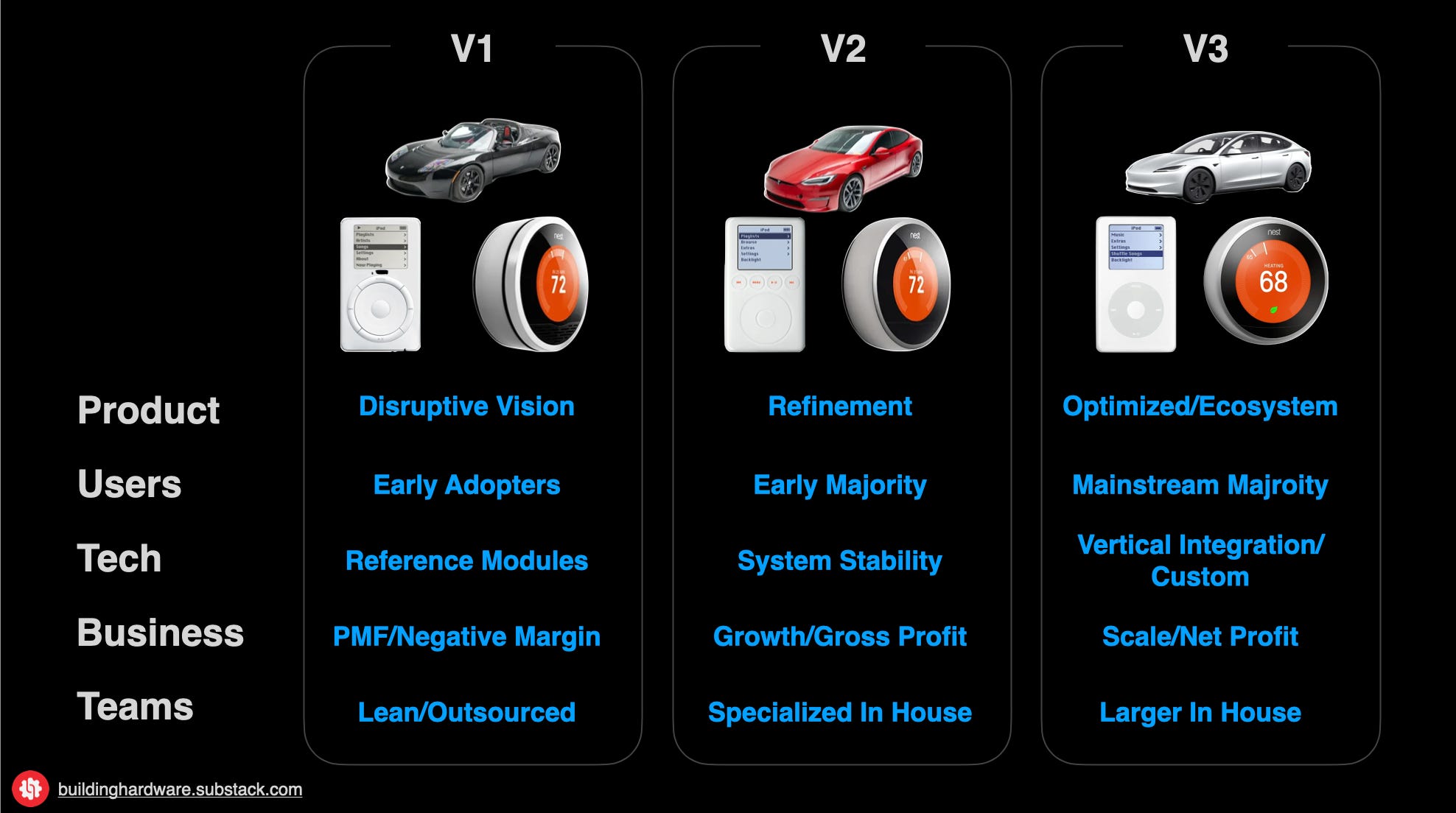
The table below presents a summary of the various product making variables we’ve discussed in our article above.
What can we learn from this about making our own 0-1 devices?
Do we need to put every single feature and risk scope creep into a Gen 1? Should the Gen 1 be lower priced for market penetration? Or, should we focus resources on a tailored, niche, and disruptive experience first?
How can we learn from this approach the next time a Gen 1 product comes out?
Is Apple misguided by making a $3,500 mixed reality headset 👓? Is Tesla foolish by investing efforts in a $20,000+ rumored humanoid 🤖? Or are these companies just following their usual V1-V3 strategy? 🤔
Time will tell.
🤔Interested in learning 0-1 HW Product Management?
Our readers have been requesting a practical guide to taking a hardware idea from concept to mass market.
We’ll be covering principles including HW product sense, business feasibility, go to market planning, user desirability, and technical viability.
Our goal is to help beginners or even experienced product makers sharpen their craft. Drop your email below for access to initial modules and early bird pricing.
Thanks for reading
Make sure you check out some other articles:
Thanks for reading! Subscribe for free to receive new posts and support my work.
Comments
Nothing yet. Say the first thing.
Sign in to join the conversation.