
Hey Friends,
This week we talk about ageism, or actually the reverse of it in the physical product world. The inspiration for this was a reddit post where a Jr. software developer was talking about job anxiety as they get older.
There seems to be an implicit bias in the software world for preferring younger folk when it comes to hiring. While I haven’t come across an official study, there are several anecdotal articles reiterating this problem. See here and here for context.
My experience after years in the hardware space has been the opposite and today I’ll attempt to articulate three reasons for why that is.
Wether it was at Apple, Tesla, Japanese manufacturing, or Canadian IoT I’ve found that careers in hardware get better over time across industries and cultures.
Professionals with long tenure are valued for their wisdom and decision making ability. This goes for everyone - PMs, engineers, supply chain folk, and more.
There’s no getting around it. In order to build physical products you should be there in person. You can’t rely on an engineers assumption or a supplier’s recommendation that X feature can’t be achieved because of Y constraints
Whether it’s being there to open an injection molding tool to troubleshoot plastic part warpage defects or walking the SMT line to design contamination free circuitry physical presence is needed to gauge technical feasibility
This isn’t limited to just engineers, even as a PM your ability to make product decisions and gauge business viability is greatly impacted by your on the ground know how
Hence to build high quality products, to go from idea to execution, there needs to be some level of hands on knowledge of working with suppliers, most of which require international travel - think factories in Mexico, China, Europe, and more
The Japanese referred to this term as Gemba - which means being at the actual place to develop an empathy for the process
Additionally each phase of the process whether its early concept, prototype, or mass production requires equipment, tooling, styling studios, labs, and factories
All of the above naturally takes years of experience to develop an intuition for and can’t be easily learned via online courses or boot camps
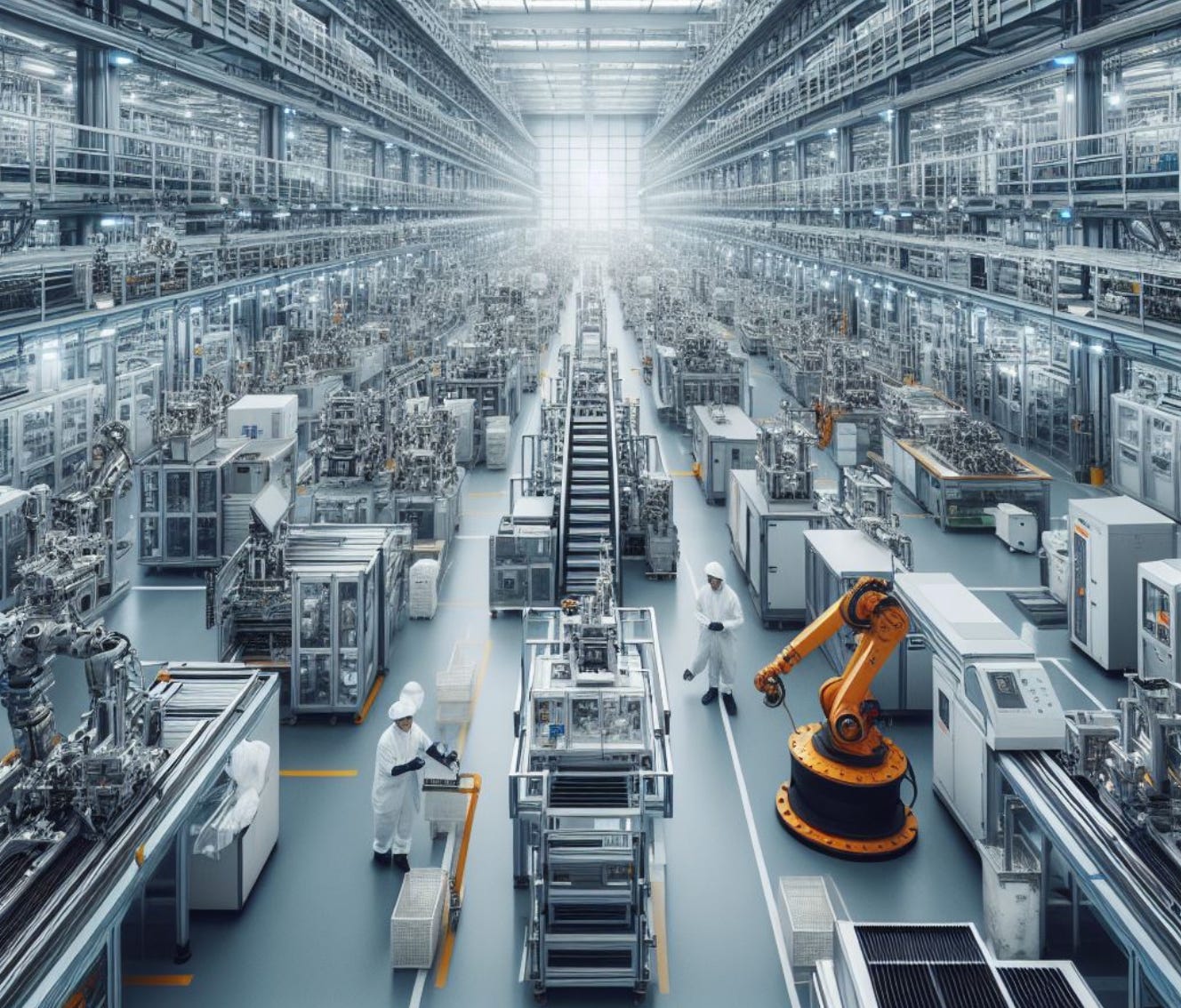
Software landscapes generally change rapidly in contrast to hardware
This bias for disruption can potentially make it more challenging for older software developers to keep up with frameworks vs their younger counterparts
One reason why hardware is more steady is that factories requires years, sometimes even decades to reach a positive ROI - For example, it’s quite common for vehicle engine plants to take 30 years to amortize cost
Another reason is because of regulatory requirements. FMVSS, FCC, and more have stringent, robust test methods which have safety and legal implications if not met. Achieving these specs prolongs the product development cycle
A third reason is product architecture. A processor’s design at a chip manufacturer can stay relatively stagnant for longer periods due to constraints with production capability, tolerances, cleanliness, reliability & spacing
This one’s pretty straight forward. Senior hardware folk are desirable because they are less likely to make mistakes and cost the company
Hardware issues are generally more difficult to reverse due to physical constraints and supply chain nodes
From a profitability POV, gross margins are lower with physical products. Consumer electronics is typically 25 - 40% while automotive is usually just 3-7%
Margins are a function of BOM (Bill of Materials), which is a nuanced topic and requires a separate article
But even if we remove BOM from the picture - IoT, aerospace, biomedical device, and automotive are extremely resource intensive from an overhead POV
Think of the equipment, tooling, and machinery required to fabricate parts. 10 Ton stamping presses, cranes, guided vehicles for material handling, floor space, automation, and more require significant CapEX
Lastly while the points above focus on product cost, we should also note that from an economy perspective physical products generally have more reliable market demand than software, leading to more stable personnel and careers
A few years ago I remember hearing terms like the ones mentioned above and being intimidated. While careers do age better in hardware, it’s also more difficult to break in as a new grad.
I mean what’s a injection molding tool anyways? Surface Mount Technology for PCBs? These terms initially sound expensive, complicated, and foreign.
The good news is that there’s actually a lot you can do to mitigate this concern.
Get busy with side projects. Build something. Break some stuff. Whether it’s a prosthetic hand, a 3D printer, a drone, some furniture, or even a toy.
If making personal projects is difficult due to lack of access to labs or resources then talk to people. In your network or outside - just reach out to startups, professors, TAs, hiring managers or volunteer organizations to help yourself build a resume.
One experience will lead to another until it all snowballs into a solid portfolio.
With everything that was said above, having a career in hardware does sometimes lead many to wonder if the grass is greener on the other side.
Friends and colleagues are often discussing how to hack their way into software gigs. After all, their salaries are higher and jobs seem more abundant.
But my personal recommendation and philosophy is a bit different. If you enjoy building physical products and are somewhat good at it then why not aim to become an expert in your field? Most of our domain and thought leaders are at the age of retirement and the field is ripe for the taking.
Hone your craft. Dive deep and appreciate the art and science behind things.
Wouldn’t it be better to be a big fish in a small pond than a small fish in a big pond?
No posts
Comments
Nothing yet. Say the first thing.
Sign in to join the conversation.