

The report was only one page.
A few numbers.
A few reference ranges.
One value marked clearly: AMH - low.
For a woman trying to conceive, this can feel like more than a blood test. It can feel like a sentence. The mind begins to move quickly.
Can I still get pregnant with low AMH?
Does low AMH mean infertility?
Will IVF work with low AMH?
Is my egg quality poor?
Did I wait too long?
This is the strange power of medical reports. They are meant to inform us. But when they arrive without enough explanation, they can begin to define us.
A woman does not hold the report in her hand.
She begins to hold it in her identity.
But AMH was never meant to carry the weight of an entire motherhood story.
Low AMH does not mean low hope.
It means the body is asking for attention. It means the next step may need clarity. It means fertility planning may need to become more conscious and timely.
But it does not mean the story is over.
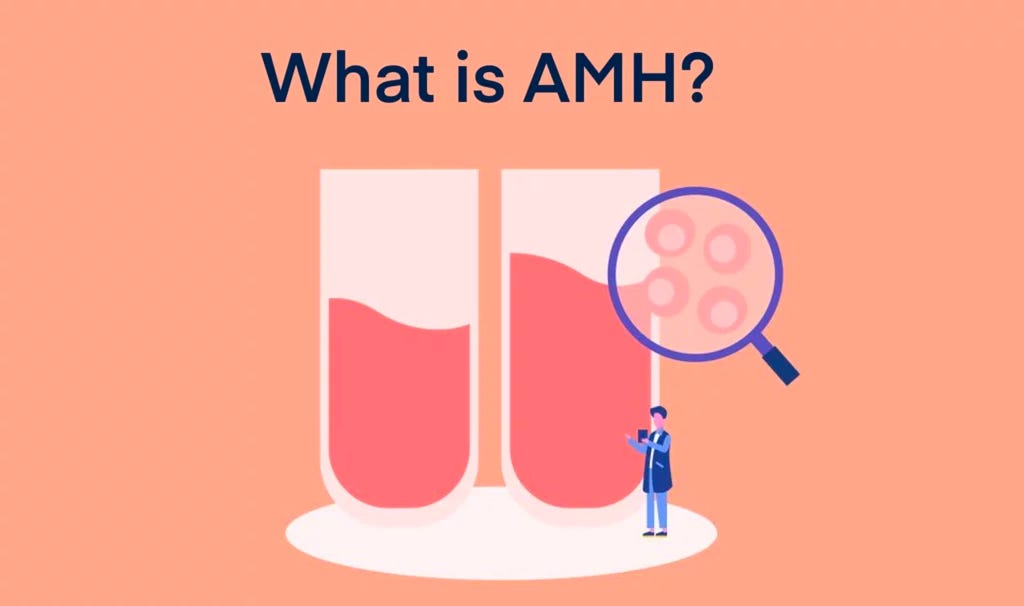
AMH, or Anti-Müllerian Hormone, is produced by small growing follicles in the ovaries. Doctors use the AMH test as one marker of ovarian reserve, which means it helps estimate the number of eggs remaining in the ovaries at that point in time.
That is important information.
But it is not complete information.
AMH is mainly a marker of egg quantity, not egg quality. It can help fertility specialists understand how the ovaries may respond to fertility medicines, especially during IVF stimulation. But ASRM notes that AMH and other ovarian reserve tests are better at predicting ovarian response than independently predicting pregnancy or live birth.
This distinction matters deeply.
Because a woman may hear “low AMH” and think, “My body cannot become pregnant.”
But the report is usually saying something more specific:
Your ovarian reserve may be lower.
Your time may need to be used wisely.
Your doctor may need to look at the full picture.
Your fertility plan may need personalisation.
It is not saying:
You are broken.
You are finished.
You cannot become a mother.
Your future has been decided.
A report can guide you.
It should not become your identity.
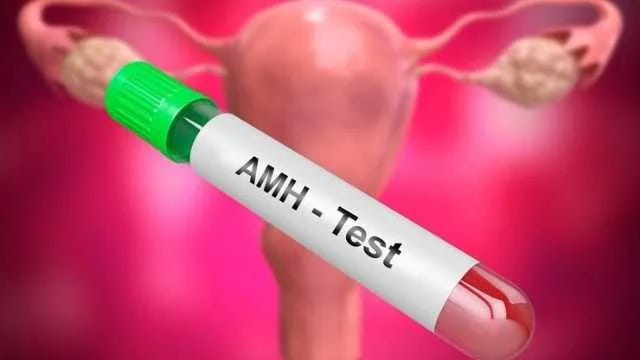
A low AMH level may suggest that the number of eggs available in the ovaries is lower than expected for age. Cleveland Clinic describes lower AMH levels as being associated with fewer eggs and lower ovarian reserve.
This may be relevant if you are:
Trying to conceive naturally
Planning IVF
Considering egg freezing
Preparing for pregnancy after 35
Facing failed fertility treatments
Exploring fertility options with a specialist
But low AMH does not automatically mean pregnancy is impossible.
This is where many women are left alone with fear. They search online. They compare numbers. They read stories. They look at charts. And slowly, one number begins to become bigger than the whole body.
But fertility is rarely a one-number story.
It is a whole landscape.
Age matters.
Ovulation matters.
Antral follicle count matters.
FSH and estradiol may add context.
Thyroid health matters.
Uterine health matters.
Sperm health matters.
Lifestyle, medical history, cycle regularity, and time spent trying all matter.
AMH is one voice in the conversation.
It is not the final verdict.
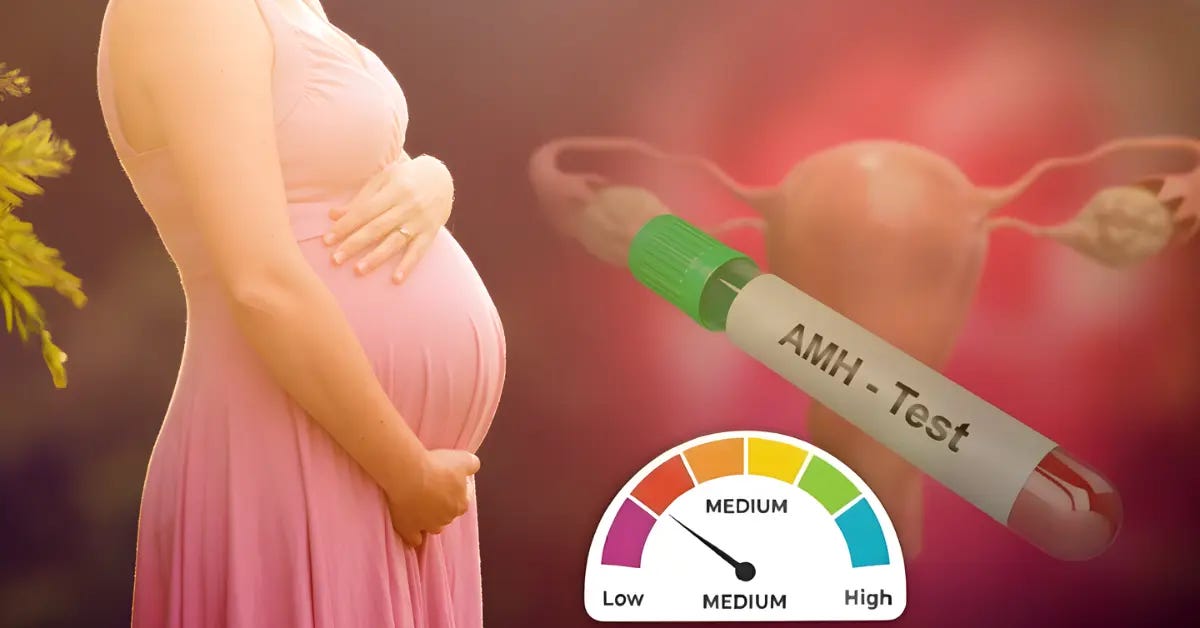
Yes, pregnancy can still be possible with low AMH.
This is one of the most important truths for women trying to conceive.
ReproductiveFacts, an ASRM patient education resource, explains that abnormal ovarian reserve test results may suggest reduced fertility potential, but they do not tell exactly who will or will not conceive.
ACOG also notes that a single AMH level in women with presumed fertility does not appear useful for predicting time to pregnancy and should not be used alone for counselling women about reproductive status.
This does not mean AMH is useless.
It means AMH must be understood in context.
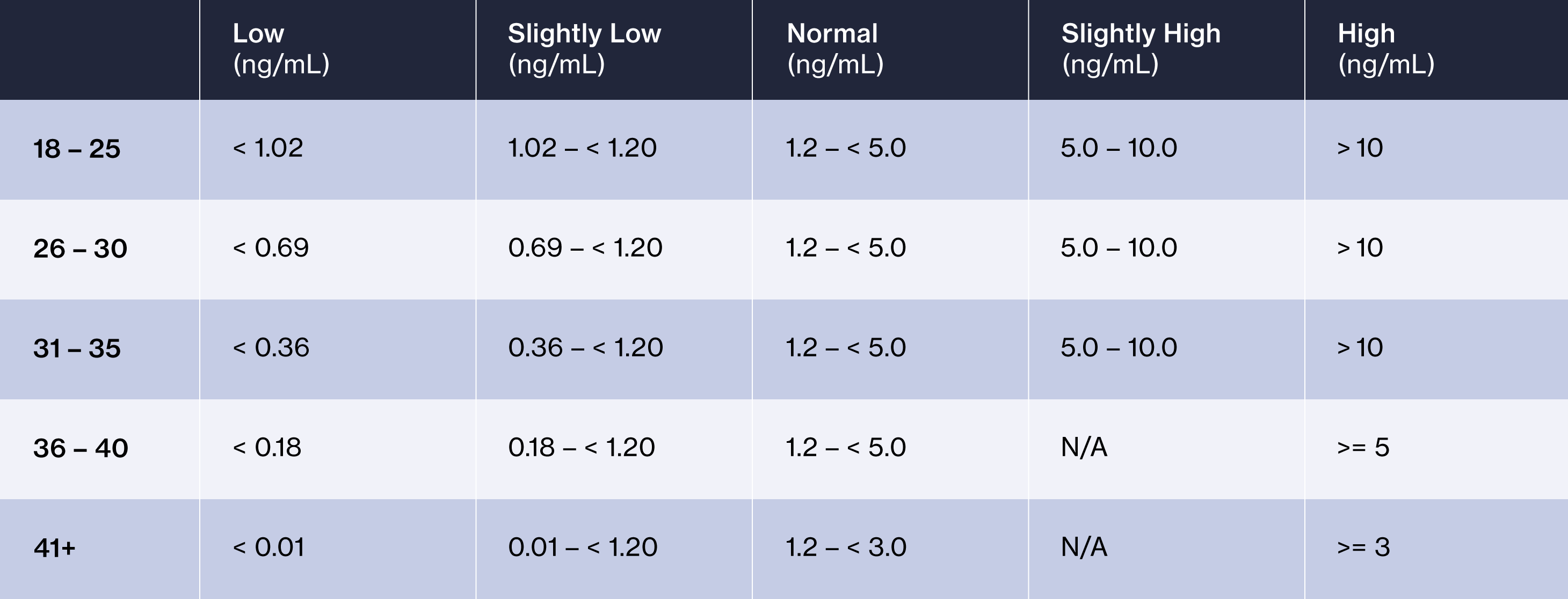
A 30-year-old woman with low AMH and regular ovulation may have a very different fertility picture from a 42-year-old woman with the same AMH level. A woman with low AMH and healthy sperm parameters may have a different path from a couple where male-factor infertility is also present.
The number matters.
But the context matters more.
This is why a low AMH report should not lead to panic. It should lead to a complete fertility evaluation.
One of the most common fears after a low AMH result is:
“Does low AMH mean my egg quality is poor?”
Not necessarily.
AMH is more closely related to egg quantity. Egg quality is influenced more strongly by age and individual biology. This is why two women with the same AMH number may have very different outcomes.
This is also why fertility doctors do not look at AMH alone.
They may consider age, cycle history, ultrasound findings, previous pregnancies, previous IVF response, hormone levels, uterine health, sperm health, and medical background.
The body does not speak in one number.
It speaks in patterns.
A conscious fertility journey is not about ignoring the number.
It is about learning how to read it without fear.
For some women, low AMH may make IVF conversations more urgent. It may mean fewer eggs are retrieved in one cycle. It may mean stimulation protocols need to be personalised. It may mean the couple needs to plan with more awareness and less delay.
But low AMH does not automatically mean IVF cannot work.
ASRM notes that even very low AMH should not be used as the only reason to refuse IVF treatment.
This is where hope becomes practical.
Hope is not pretending the report does not matter.
Hope is not delaying medical guidance.
Hope is not saying, “Everything will happen naturally,” when the body may need support.
Real hope says:
Let us understand the report.
Let us meet the right specialist.
Let us evaluate the whole couple.
Let us ask what is time-sensitive.
Let us choose the next step from clarity, not panic.
For some couples, the next step may be timed intercourse.
For some, it may be IUI.
For some, IVF.
For some, egg or embryo banking.
For some, donor eggs may become part of an honest conversation.
The right path is personal.
But no woman should have to choose it from fear.

At BTNE, we see preconception as more than medical planning.
Medical reports matter.
Hormones matter.
Egg reserve matters.
Doctor guidance matters.
But the inner environment also matters.
A woman preparing to conceive is not only preparing her ovaries and uterus. She is preparing her nervous system, her emotional field, her relationship, her choices, and her sense of trust in her own body.
This is not about blaming the woman for her fertility journey.
It is about supporting her more completely.
Low AMH may ask for medical action.
But it may also ask deeper questions:
Am I making this decision from fear or clarity?
Do I feel supported by my partner?
Am I listening to my body or judging it?
Have we evaluated male fertility too?
What emotional pressure is my womb holding?
Can I prepare without abandoning myself?
The future baby does not only meet biology.
The baby meets the emotional field between the parents.
The baby meets the mother’s inner safety.
The baby meets the father’s presence.
The baby meets the environment being created even before conception.
This is conscious preconception.
It does not reject science.
It brings soul into science.

A low AMH result should not leave you alone with Google and fear.
Take the report to a qualified fertility specialist or reproductive endocrinologist and ask:
What does this AMH mean for my age?
Am I ovulating regularly?
What is my antral follicle count?
How are my FSH and estradiol levels?
Is my thyroid health affecting fertility?
Should my partner’s sperm health be evaluated?
Is natural conception still reasonable for us?
Should we consider IUI, IVF, egg freezing, or embryo banking?
How time-sensitive is our situation?
What is the most conscious next step?
These questions turn panic into participation.
They remind you that you are not helpless in front of a report.
You are allowed to understand.
You are allowed to ask.
You are allowed to take support.
If your AMH is low, do not panic.
First, understand the full picture.
Speak to a fertility specialist and review your age, ovulation, AFC scan, FSH, thyroid health, uterine health, partner fertility, and how long you have been trying.
Ask clearly:
What does this mean for my age?
Am I ovulating regularly?
What are my natural options, IUI, IVF, egg freezing, or embryo banking?
Alongside medical clarity, support your body with better sleep, nourishment, movement, stress regulation, and partner involvement.
A low AMH report may need timely action but not fear-based action.
Let the report guide you.
Do not let it define you.
The problem is not the AMH test.
The problem is when the AMH test becomes the whole story.
A report can be useful. It can help a doctor plan. It can bring urgency where urgency is needed. It can prevent delay. It can open important conversations.
But a report cannot measure your courage.
It cannot measure the love between you and your partner.
It cannot measure your capacity to heal.
It cannot measure the wisdom of timely medical support.
It cannot measure the soul waiting to meet you.
You are not your AMH level.
You are not your ovarian reserve report.
You are not late.
You are not broken.
You are not only a number on a page.
Your report can guide you.
It should not define you.

Before your next fertility decision, pause.
Place one hand on your heart.
Place one hand on your womb.
Ask yourself:
Am I choosing from fear or clarity?
Am I listening to my body or fighting it?
Have I understood the full fertility picture?
Have I included my partner in this journey?
What support do I need before I move forward?
Sometimes the fertility journey needs treatment.
Sometimes it needs timing.
Sometimes it needs emotional healing.
Sometimes it needs all of these together.
The most conscious path is not the one without medical help.
It is the one where you do not lose yourself while seeking motherhood.

Your Low AMH does not mean low hope.
It means your body is asking for timely attention, deeper listening, and a clearer fertility plan.
Let the AMH test guide you.
Let the doctor support you.
Let your partner walk with you.
Let your inner world soften.
Because motherhood does not begin only when the pregnancy test turns positive.
Sometimes, it begins the moment a woman decides:
“I will not turn my report into my identity.
I will meet my body with love, awareness, and courage.”
With love,
Dr Monika Singh Shubhaa
Educational Note:
This newsletter is for awareness and emotional support only. It is not a substitute for medical advice, diagnosis, or treatment. Please consult a qualified fertility specialist or reproductive endocrinologist for your personal reports and treatment options.
No posts
Comments
Nothing yet. Say the first thing.
Sign in to join the conversation.