
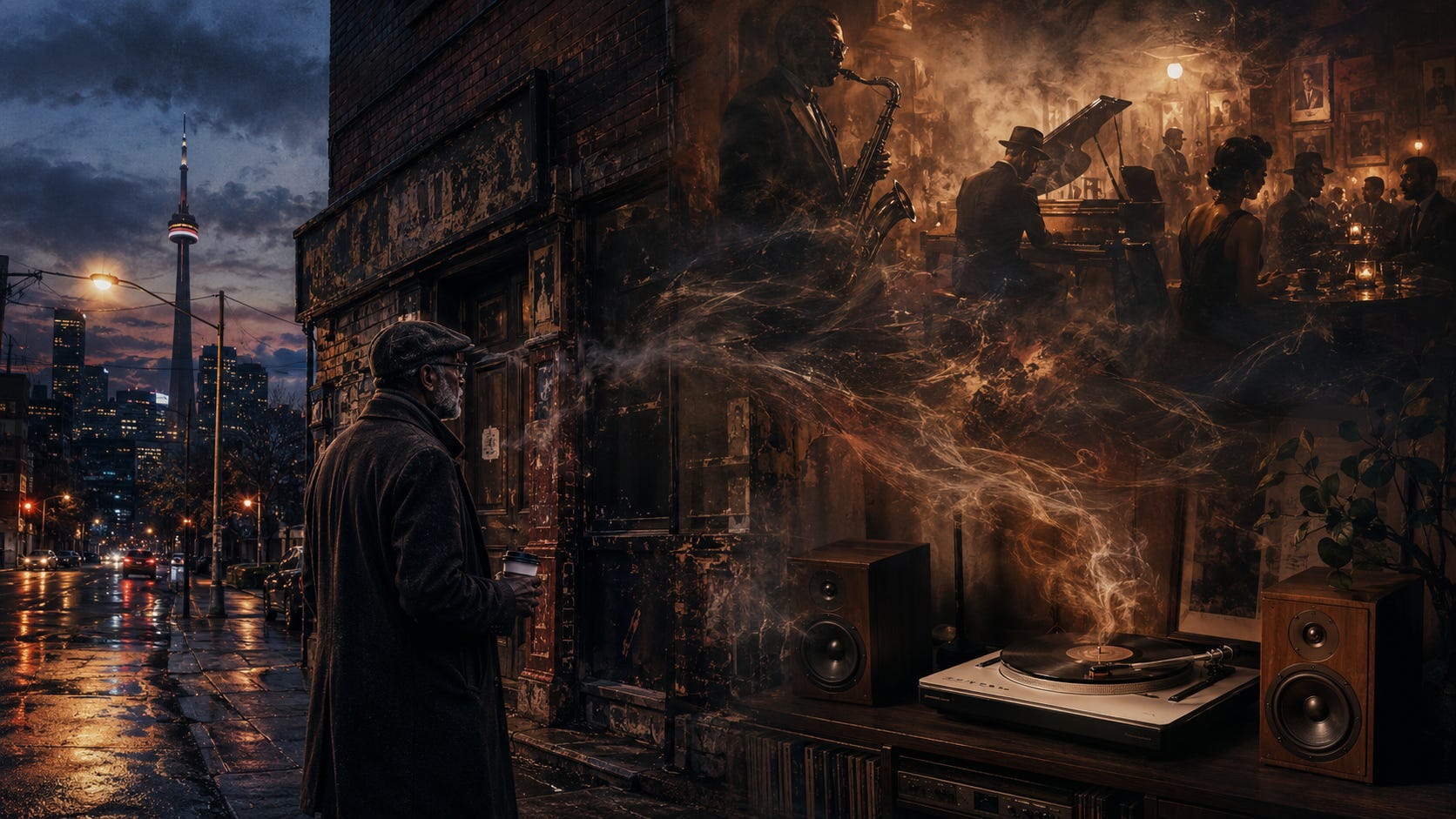
I did not set out to become a storm chaser.
That came later.
At first, the task seemed practical. Mechanical, even.
There was the Beogram.
There were the Boston A70s.
There were old records somewhere in the house.
There was dormant equipment that had once mattered and might still have life in it.
So the first instinct was simple: put life back into the system.
Get the Beogram turning again.
Get the phono stage sorted.
Get the A70s breathing.
Find records worth playing.
Recover sound.
That was the surface project.
But the surface project was lying.
The real project was not sound.
It was atmosphere.
Once the system began to breathe again, I realized I was not trying to become a record collector. I was not interested in building an inventory, chasing matrix numbers, worshipping first pressings, or joining the strange little monastery of men who argue about cables as if civilization depends on oxygen-free copper.
I was trying to find out whether the old machinery could still summon weather.
That is the word.
Weather.
Not volume.
Not fidelity.
Not nostalgia.
Weather.
The pressure change in a room when the right music enters it.
The Beogram was not just a turntable. It was a ritual machine. The Boston A70s were not just speakers. They were old witnesses. Together, they became a way of testing whether certain rooms, certain memories, certain vanished states of being could still be called back into the present.
Then came the tote.
It was almost full.
LPs.
45s.
A plastic chamber of old purchases, old moods, old assumptions, and old songs waiting for someone to lift the lid and find out what remained.
Like so many things in life, I had to go through the physical motions of opening it.
Until I did, the tote remained possibility. It might have held treasure. A John Coltrane. An Oscar Peterson. Some forgotten Blue Note miracle. Some buried fragment of the sound-world I actually cared about.
So I opened it.
I touched the records.
Read the spines.
Sorted through the names.
Let the mystery collapse into fact.
There were notable records in there. Some culturally important. Some commercially successful. Some probably pivotal in the lives of other people.
But they were not pivotal for me.
That was the distinction.
A record can be important and still have no claim on your shelf. It can belong to history, to a chart, to a party, to a summer, to someone else’s living room, to someone else’s memory — and still not belong to your weather.
That is not snobbery.
It is discernment.
The tote served its purpose, but not because of the records. Most of them will go back in, and once that lid closes, I doubt I will ever revisit it. The tote will return to the shelf, not as a failure, but as a completed excavation.
Its purpose was not inventory.
Its purpose was ignition.
It stimulated memories I had almost lost to the ages.
Oscar Peterson at George’s and The Senator.
Paul Desmond and Stan Getz at Bourbon Street.
Eartha Kitt and Ella Fitzgerald singing in the Imperial Room at the Royal York.
Diana Krall plying her trade in the clubs before the world fully claimed her.
That was the weather.
Not just music.
Atmosphere.
Rooms with shadow, intelligence, smoke, polish, risk, adult manners, and the faint sense that something might happen after midnight. Rooms where music was not background decoration for people photographing dessert. Music was the reason the room existed.
Bourbon Street even had cigarette girls then. Not because cigarettes were noble — they weren’t — but because the room still had weather. Human weather. Imperfect weather. Adult weather. The kind of atmosphere that cannot survive compliance lighting, laminated menus, acoustic panels, HR-approved emotions, and the modern belief that danger can be removed from life without also removing half the meaning.
That world is mostly gone now.
The clubs disappeared.
The rooms changed.
The smoke cleared.
The shadows were replaced by LEDs.
The city got cleaner, safer, duller, more expensive, and somehow less alive.
So I chase the weather elsewhere.
The Beogram becomes the bar door.
The stylus becomes the key.
The Boston A70s become the storm front.
When the right record plays through them, the room pressure changes. Not because the equipment is perfect. Not because the format is sacred. Not because vinyl is magic in some precious little lifestyle-magazine sense.
It changes because memory has entered the air.
A piano note can open a room.
A saxophone can bring back smoke.
A voice can restore a table, a glass, a stage light, a woman in an evening dress, a waiter moving silently between chairs, the murmur before the first set begins.
That is what I am looking for.
Not records.
Weather.
The tote reminded me that there is a difference between owning artifacts and recovering meaning. Some records belong to other rooms, other lives, other weather systems. They may be important, but they are not mine.
So they will go back.
And that is fine.
The Abyss did its job.
It showed me that I am not building a collection.
I am following storm tracks.
I did not begin as a storm chaser. I began with the practical business of bringing old equipment back to life. But once the system began to breathe again, I realized the equipment was only the instrument.
The real object was recovery.
Rooms.
Voices.
Smoke.
Lake light.
Club tables.
Piano notes.
Saxophone breath.
The lost weather of a life that had not disappeared so much as gone quiet.
I did not restore a stereo.
I accidentally built a weather machine.
No posts
Comments
Nothing yet. Say the first thing.
Sign in to join the conversation.