
After practicing Reiki for more than thirty years, I’ve heard thousands of students worry about whether they are doing something correctly. In First Degree they worry about remembering the hand positions or whether they are feeling Reiki. In Second Degree the questions often turn to the symbols. Students worry that they will draw one incorrectly, forget a step, or mispronounce one of the Japanese sounds. I remember having many of the same concerns when I was learning Reiki.
I’ve also watched what happens as students practice. In the beginning, they can be very conscious of every hand position and every instruction they were given. They wonder whether their hands are in exactly the right place, whether they should move them, and whether what they are feeling is what they are supposed to feel. With experience, they don’t have to think about these things quite so much. The hand positions become familiar, the symbols become familiar, and their attention gradually moves away from themselves and toward the person receiving Reiki.
I don’t think the desire to get these things right is a problem. We are learning a practice that has been passed from teacher to student for generations, and it deserves our attention and respect. But I’ve also seen students become so concerned about making a mistake that the treatment itself becomes difficult. Sometimes the question they are asking is no longer simply whether they remembered the hand positions or pronounced a Japanese word correctly. They are wondering whether they are good enough to do Reiki at all.
That always reminds me of the following story from my forthcoming book, Where the Light Touches: Reiki Stories of Healing & Presence.
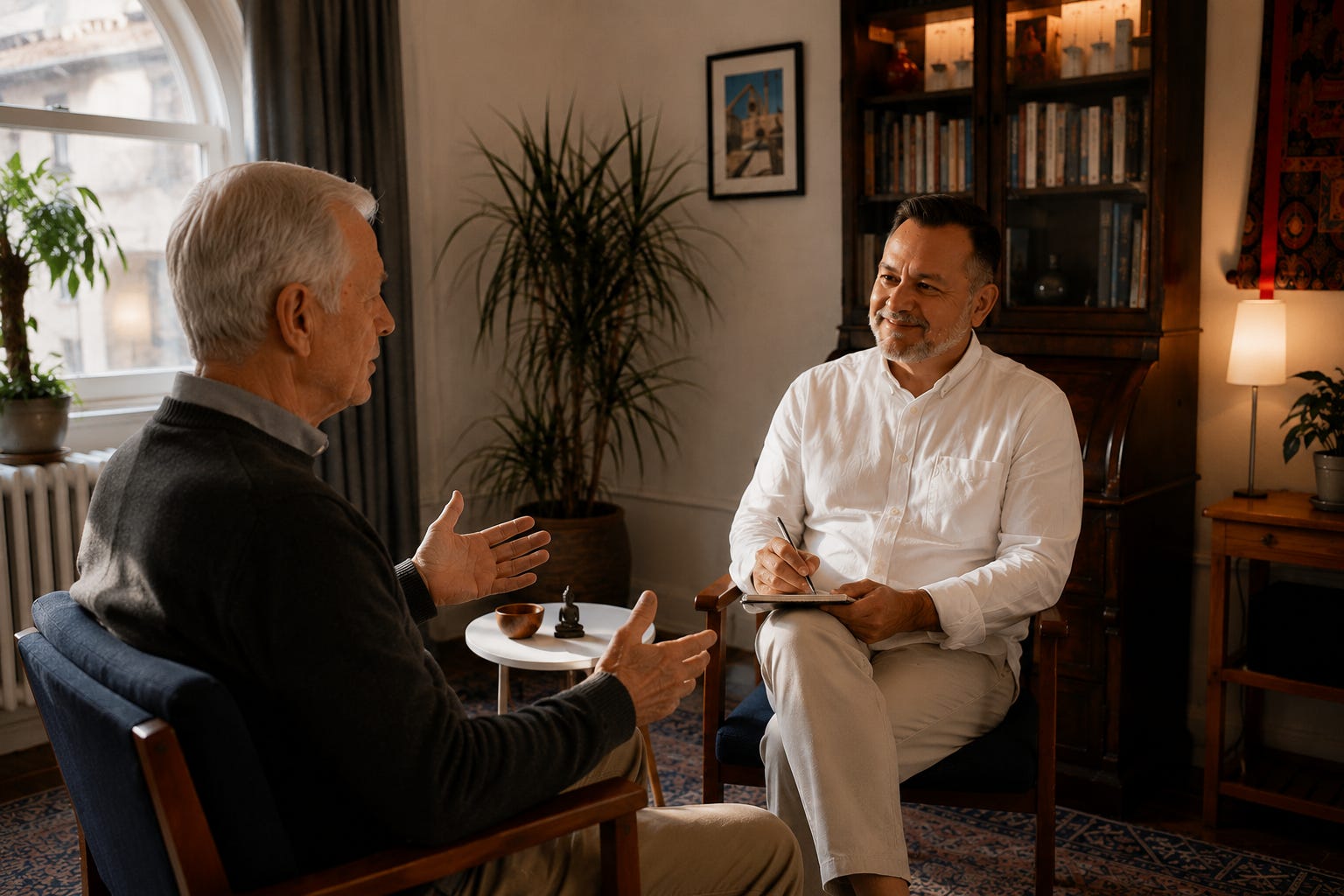
Leo had been a priest in his youth. Now retired and in his seventies, he came to a Second Degree Reiki class. He had spent his life in service to prayer, but he knew there was still more to understand about love. Prayer had taught him compassion. Reiki, he hoped, might help him offer comfort in another way.
When it came time to learn the symbols, Leo struggled with the Japanese pronunciations. He practiced for hours, the syllables catching in his mouth like small pebbles, but he kept trying. Each repetition felt awkward at first, then gradually softened.
Finally, he looked up at the Reiki Master.
“I don’t want to do it wrong,” he said quietly. “These words feel sacred. I don’t want to misuse them.”
The Master nodded thoughtfully before asking a question that surprised him.
“Would you show me how you pray when you’re alone?”
Leo hesitated. Then he closed his eyes. His lips moved, but no sound emerged. His hands rested gently over his heart. The prayer was completely silent, yet unmistakably real.
When he opened his eyes, the Master smiled.
“Did you pronounce it correctly?”
Leo laughed softly.
“I wasn’t speaking.”
“Yet your prayer was received,” she replied. “I felt it.”
A visible softness came over his face. His shoulders relaxed. His breathing deepened.
“So I don’t have to get the words right?” he asked.
“The words aren’t the point,” she answered. “What you offer comes from the heart, not the tongue.”
That evening the class practiced distance Reiki. Leo carefully drew the symbols, pronounced the Japanese words as best he could, and connected with an old friend who had agreed to receive Reiki. His friend had been struggling with severe sciatica for weeks.
The following morning a message arrived.
“I don’t know what you did,” it read, “but I felt something shift. My back is almost completely better.”
Leo read the message several times, smiling a little more each time.
Perfect pronunciation, it turned out, had never been the point.
I’ve watched a lot of students go through some version of what happened to Leo. They arrive in class wanting to remember everything, and sometimes the effort to do things correctly makes it harder for them to relax and allow the treatment. This is particularly easy to see when students start practicing with one another. At first they may be thinking about the next hand position or trying to decide whether what they feel in their hands is Reiki. After enough practice, they don’t have to think about every part of the treatment while they’re giving it.
None of this means that technique doesn’t matter. I still think students should learn the hand positions, practice the symbols carefully, learn the Japanese words, and respect the form they have been taught. These things give us a foundation for practice. What changes over time is how much attention they require. Something that demanded enormous concentration when we were learning it can eventually become something we simply know how to do.
I’ve seen this happen so many times that I now recognize it as part of learning Reiki. Students who once worried about every detail eventually place their hands and begin. They still make mistakes, as all of us do, but they don’t have to make every treatment a test of whether they are good enough. They can give their attention to the person who came to receive Reiki. For me, that is one of the signs that the practice has begun to settle into them.
If you’ve ever worried about getting Reiki right, I hope you’ll continue the journey with me.
No posts
Comments
Nothing yet. Say the first thing.
Sign in to join the conversation.