
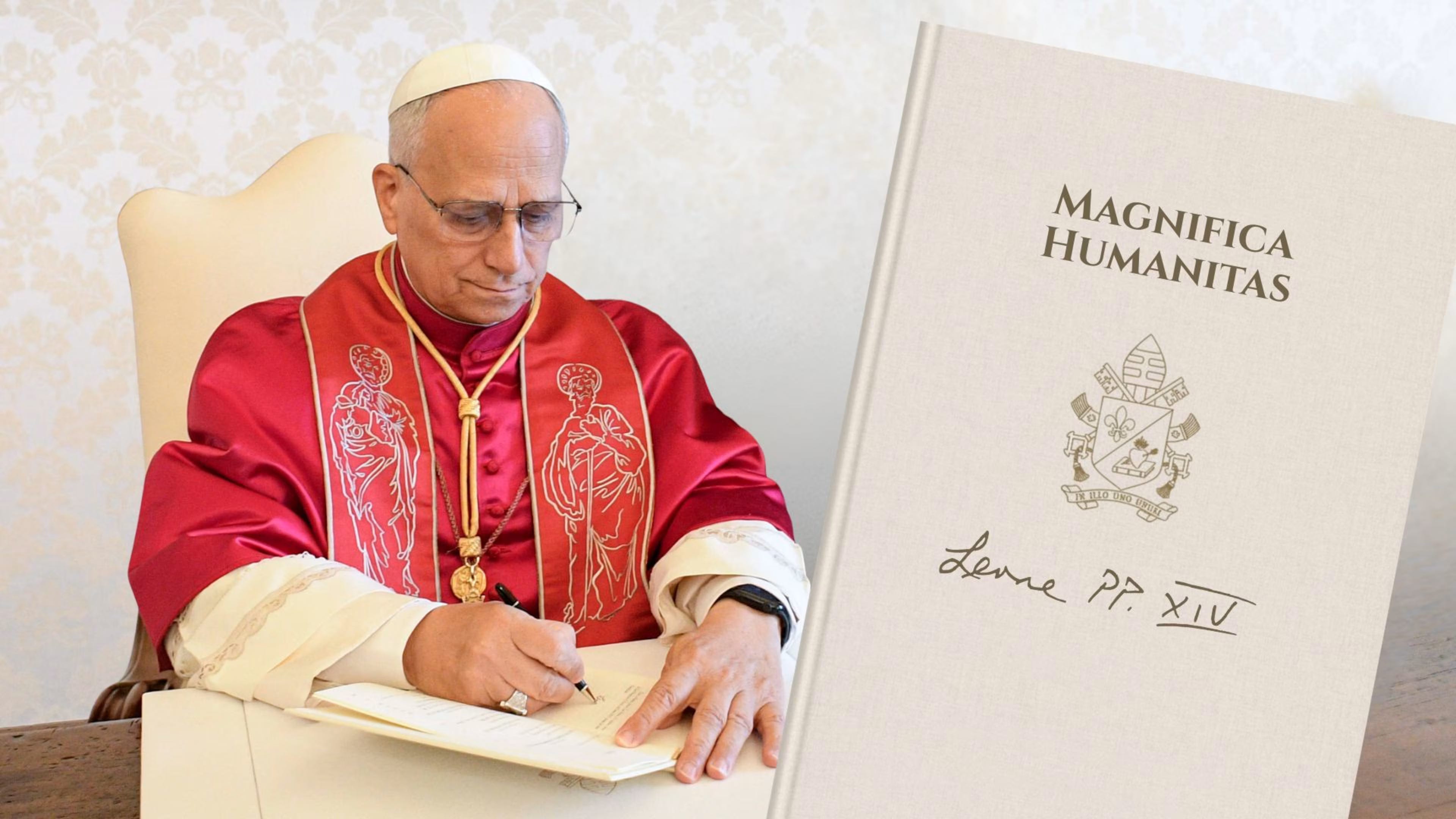
Pope Leo XIV issued a papacy-defining encyclical letter on Monday warning that artificial intelligence “threatens to normalize an anti-human vision” and calling on humanity to counter the excesses of Big Tech with return to everyday rituals like shared meals, community gatherings, and time spent with the lonely.
In his highly anticipated open letter to “all people of good will,” which runs 42,000 words in his native language of English, the pope instantly becomes the public face of the growing global movement to safeguard humanity from AI’s most destructive forces.
While technology is not inherently “antagonistic to humanity,” the pope writes, “the pursuit of greater profits cannot justify choices that systematically sacrifice jobs.” The race for “self-affirmation” cannot trammel “human dignity.”
The pope calls for a series of measures to rein in the excesses of AI, which the New York Times summarizes as follows:
government regulation of the private companies that are driving the development of A.I.
education to help students think critically about the technology
action to protect children from violent, hypersexualized or fake information online that is often generated by A.I.
safeguards to ensure that humans, not artificial intelligence, remain responsible for all decisions regarding the use of weapons.
But to me, his most poignant message echoes the work I’ve been doing over the last four years chronicling the grassroots renaissance of person-to-person ritual gatherings around the world.
Here’s a direct quote from the letter, MAGNIFICA HUMANITAS, or “On Safeguarding the Human Person in the Time of Artificial Intelligence”:
I invite everyone to cherish places and times where physical presence remains crucial, such as shared meals, Christian community gatherings, time spent with the lonely and serving the poor. These are signs of a humanity that continues to believe that every person’s body is a dwelling place of God and a temple of the Holy Spirit. It is precisely this covenant between glory and fragility that becomes the criterion for evaluating the anthropological models offered by contemporary culture.
This language is papal, of course, whereas mine tries to span the religious, the irreligious, and the “I’m not religious but spiritual.” But the larger message parallels almost word for word the theme of my new book, A TIME TO GATHER: How Ritual Created the World—and How It Can Save Us.
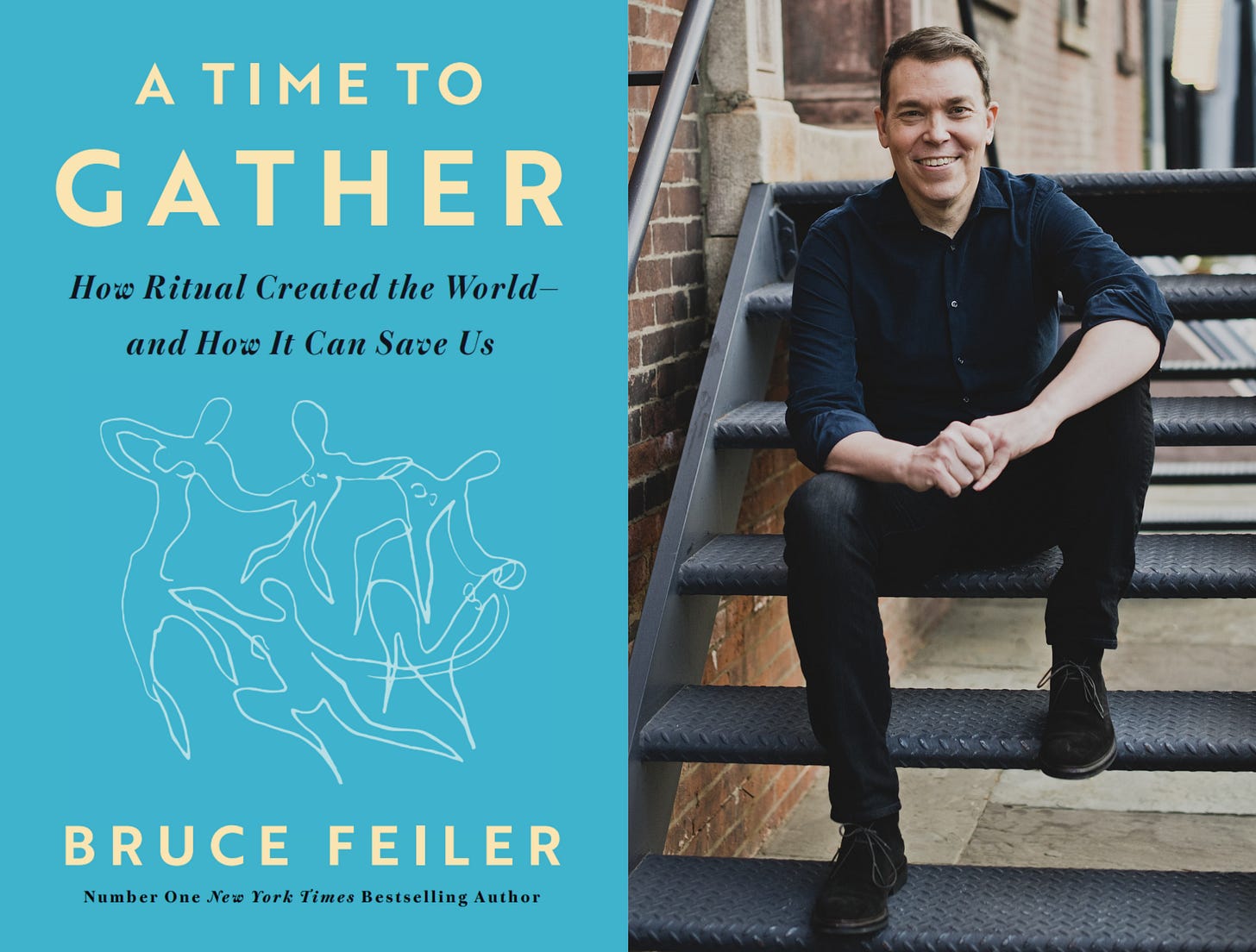
Here’s how I frame the issue in the introduction to A TIME TO GATHER, citing another legendary spiritual leader: We live in a time when our maladies are growing but our remedies are shrinking.
Having spurned our shared gods, weakened our shared trust, and undermined our shared language, will we turn our backs on ritual, one of the few tools we have left that has proven its ability to repair our shared humanity? “The abandonment of ritual can be devastating,” writes the West African spiritual leader Malidoma Patrice Somé. “When the focus of everyday living displaces ritual in any given society, social decay begins to work from the inside out.”
No rituals, no us.
A true community, Somé adds, begins in the hearts of its members. It’s not a place of distraction; it’s a place of restoration. It’s not a world you escape from; it’s a world you return to. Agreeing on a reimagined commitment to ritual, beginning in our backyards and rippling through a more relational world, may be the most critical ingredient to restoring our sense of togetherness and is surely the element that each of us has the most ability to control.
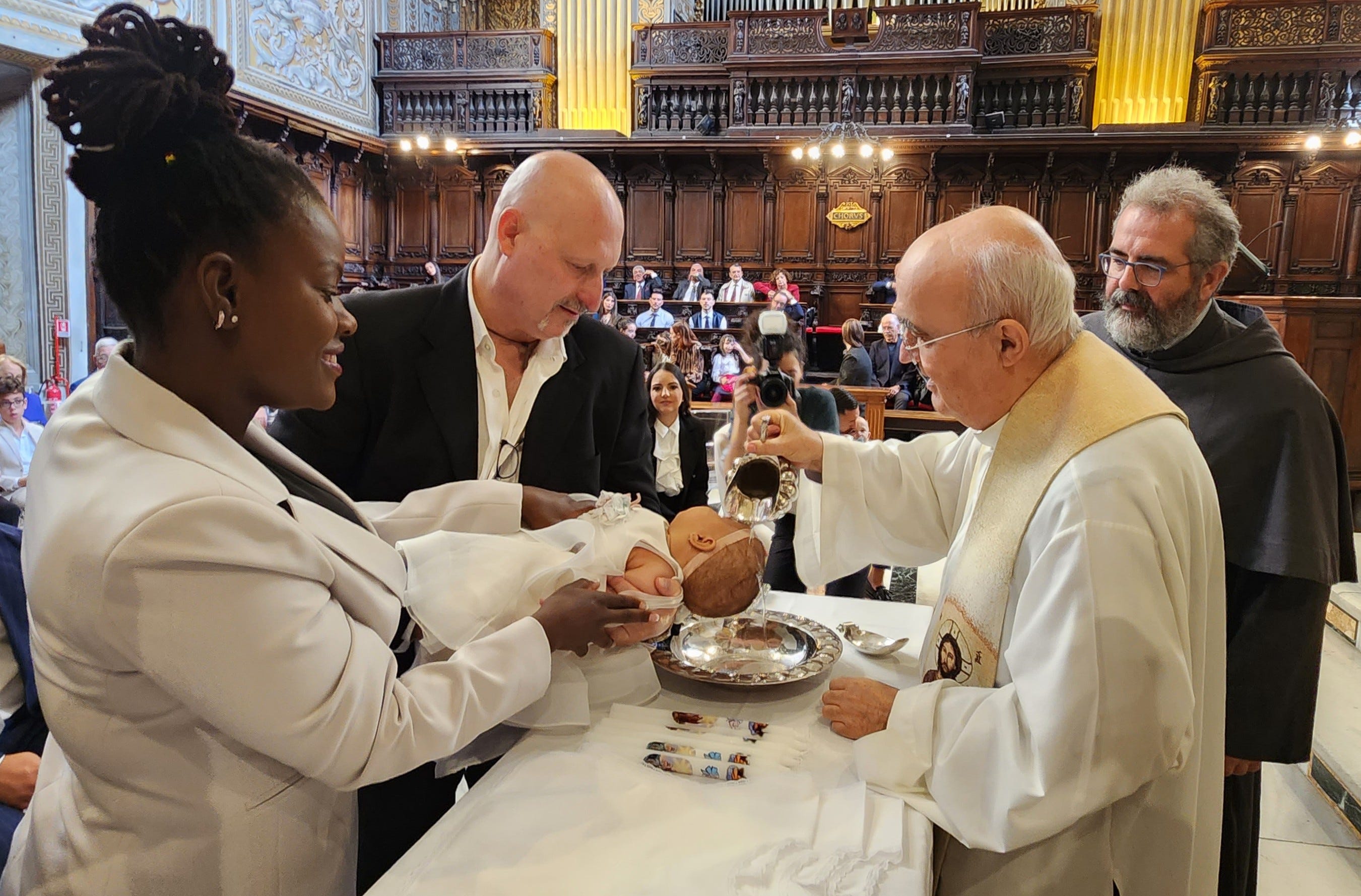
As I said on CNN the night Cardinal Prevost was elected as pope, he chose the name Leo XIV to honor the legacy of Leo XIII, the towering Italian pontiff and fourth-longest serving pope of all time, who reshaped the church between 1878 and 1903. Also serving in a time of extreme technological and societal upheaval, in his case from the industrial revolution, Leo XIII pushed the church to focus more on workers dislodged from jobs, individuals separated from families, and the urban poor cut off from their rural or overseas roots. His encyclical from almost the same date in May 1891, RERUM NOVARUM, or “Rights and Duties of Capital and Labor,” cast him as the “Social Pope.”
Pope Leo XIV is the AI Pope. A mathematician by training and a brawler who’s already proven his willingness to take on high-profile antagonists like President Donald Trump (see my recent appearance with Gretchen Carlson on CNN’s Anderson Cooper 360 where we discussed who’s winning the standoff between the president and the pope), Leo is positioning himself as the voice of the people against the out-of-touch elite of Silicon Valley.
As David Gibson wrote eloquently in the New York Times this weekend, the new encyclical also advances the Vatican’s effort to pivot the church’s focus away from polarizing sexual subjects.
Leo, like his predecessor Pope Francis, is trying to shift Catholicism away from the near fixation on “pelvic theology,” or sexual morality, that has come to define Catholicism, especially in Leo’s home country, the United States. The concern is that decades of focusing on “sins below the waist,” as Pope Francis memorably put it, has fueled the church’s culture war agenda and driven many people away from the central teachings of the Gospels. It has also left workers and the marginalized with a weakened moral voice against the predations of powerful financial interests.
Leo XIV instead returns to two of the oldest metaphors in Scripture: the Tower of Babel versus the City of Jerusalem. Citing the “135th anniversary” of Rerum Novarum, he opens Magnifica Humanitas with this juxtaposition:
Humanity, created by God in all its grandeur, is today facing a pivotal choice: either to construct a new Tower of Babel or to build the city in which God and humanity dwell together. Each generation inherits the task of shaping its own era, of guiding history to become a place where the dignity of every person is safeguarded, justice is promoted and fraternity is made possible. Yet every era also runs the risk of creating an inhumane and more unjust world. Whenever humanity is in danger of marring its true identity, we Christians lift our eyes to the Incarnate God, knowing that it is “only in the mystery of the Word made flesh that the mystery of humanity truly becomes clear.”
As it happens, I have an Opinion Essay in the New York Times today that makes a similar argument.
Our greatest spiritual figures presented us with choices: For Moses it was life or death; for Krishna, freedom or suffering; for the Buddha, enlightenment or delusion; for Jesus, idolatry or truth. What these pairings have in common is the choice between narrowness and openness, between bondage and freedom.
Today we face a similar choice.
“It’s virtual or ritual, URL or IRL. Ritual may not be our last hope, but it may be our best hope — one gathering at a time.”
Magnifica Humanitas is a landmark in the growing battle to shape the future of the civilization. The pressure is on us to make the right choice.
🌞
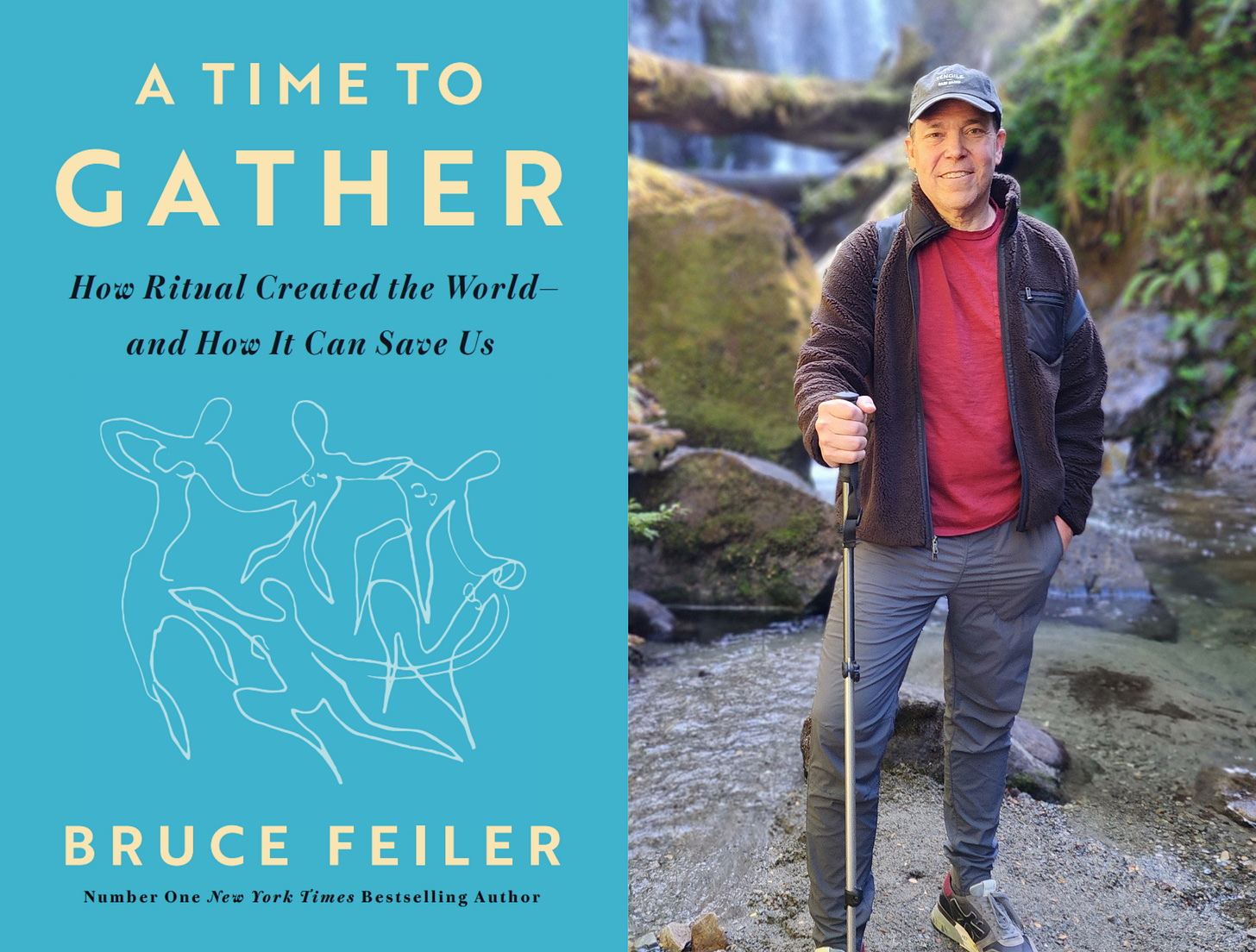
Thank you for reading The Nonlinear Life. This is a reader-supported newsletter. You can support my work by ordering a copy of A Time to Gather or any of my other books. Click on the photo below to learn more.
Meanwhile, help us grow our community by subscribing, sharing, and commenting below. And you might enjoy reading these posts:
My CBS Mornings Interview about A TIME TO GATHER!
How Rituals Can Save Your Family — and the First Review of A TIME TO GATHER!
The Stories That Bind Us: My Most Popular Piece Ever
A Sudden Loss, A Missed Goodbye, A Lesson on How to Gather in Crisis
Or, you can contact me directly.
Comments
Nothing yet. Say the first thing.
Sign in to join the conversation.